

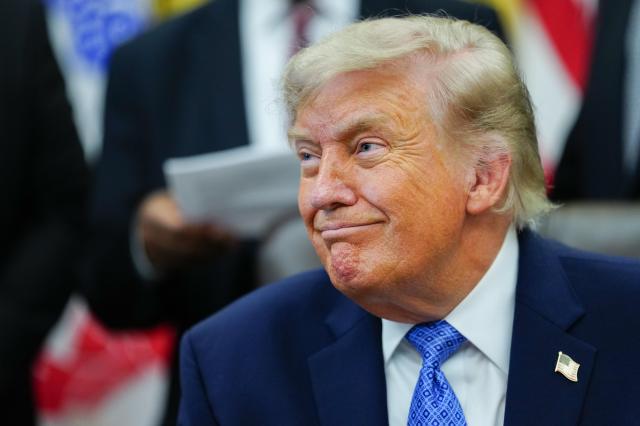
On June 27, Trump posted on social media platform Truth Social, "U.S. aircraft just struck Iranian missile and drone storage facilities and coastal radar bases for violating the ceasefire agreement. They are unlikely to learn their lesson." He added, "There may come a time when we can no longer be reasonable, and we must militarily conclude what we started very successfully. If that happens, the Islamic Republic of Iran will no longer exist."
The U.S. military confirmed the airstrikes against Iran. U.S. Central Command stated that the strikes were a direct response to Iran's ongoing attacks on commercial vessels, hitting ten military targets, including Iranian reconnaissance infrastructure, communication systems, air defense bases, and drone storage facilities.
Iran quickly retaliated, with the Islamic Revolutionary Guard Corps (IRGC) announcing missile and drone attacks on U.S. facilities in Kuwait and Bahrain in response to the U.S. airstrikes.
The IRGC emphasized, "Any future attack by the enemy, regardless of its justification or the perceived insignificance of the targets, will face overwhelming retaliation. The enemy must understand that violating the ceasefire constitutes a breach of Article 1 of the Islamabad Agreement, leading to a complete halt of all related procedures."
Both sides engaged in similar military exchanges the previous day, with the U.S. striking Iranian missile and drone storage facilities in retaliation for attacks on Iranian commercial vessels, while Iran responded with attacks on Bahrain.
Analysts suggest that the ongoing clashes are influenced by ambiguous language in the ceasefire agreement regarding control over the Strait of Hormuz. The New York Times reported that the recent military confrontations stem from both sides vying for control over the Strait before clarifying the vague terms of the agreement.
The memorandum of understanding (MOU) signed on June 17 states that Iran will make its best efforts to ensure the safe passage of civilian vessels through the Strait of Hormuz for 60 days, but it does not specify how this will be implemented. Iran appears to interpret this as a mandate to directly manage navigation in the strait.
Experts believe that Iran is signaling its intent to exercise de facto control over shipping routes while avoiding full-scale war. Gregory Brew, a senior analyst at the geopolitical risk consulting firm Eurasia Group, noted on social media platform X (formerly Twitter), "If Iran is confident that the U.S. will not respond more forcefully, the risks it is willing to take are low. If it can close the Oman route and shift shipping under its control with minimal military action, there is no reason for Iran not to attempt this."
* This article has been translated by AI.
Copyright ⓒ Aju Press All rights reserved.