

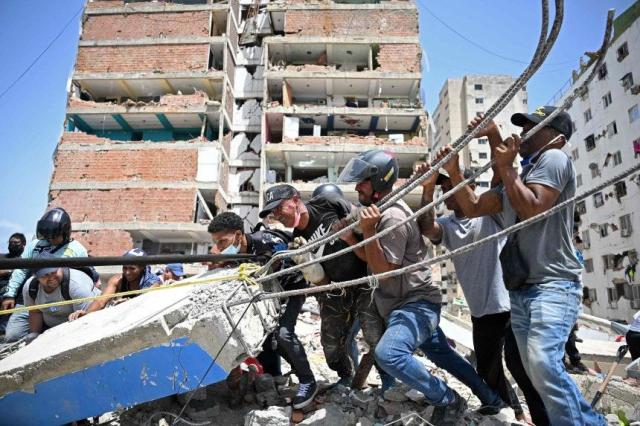
On June 28, Jorge Rodriguez, the President of the National Assembly, reported that the death toll had risen to 1,450, with 3,150 injured and 12,721 displaced. A total of 774 buildings were damaged, of which 189 were completely destroyed.
The earthquakes struck the northern coastal region of Venezuela on June 24, with magnitudes of 7.2 and 7.5. The hardest-hit area is La Guaira, located north of the capital, Caracas. Since the initial tremors, there have been over 430 aftershocks, prompting many residents to sleep outdoors for fear of further collapses.
The influx of civilian volunteers and rescue vehicles has caused major road blockages in the affected areas of La Guaira. International rescue teams arriving from abroad have also faced difficulties accessing the site. Authorities have restricted access to government vehicles and authorized personnel, leading to some pushback from volunteers.
A shortage of excavators and cutting equipment has further complicated rescue efforts. Communication disruptions have delayed the identification of missing persons, prompting some families to create their own online lists to locate loved ones.
Despite the challenging conditions, there have been reports of rescues. Acting President Delcy Rodriguez announced that 33 individuals were rescued during the debris search the previous day. AFP reported that French and American rescue teams successfully saved a father and son in the coastal town of Carabobo and transported them to a hospital.
As of the previous day, the Venezuelan government stated that 521 tons of aid supplies and over 2,700 rescue personnel had arrived from 24 countries. Foreign rescue teams and search dogs have also been deployed to assist in the search efforts.
With the window for finding survivors rapidly closing, Venezuelan authorities are expanding their search efforts. Rodriguez emphasized, "We are in a critical and decisive time."
* This article has been translated by AI.
Copyright ⓒ Aju Press All rights reserved.