

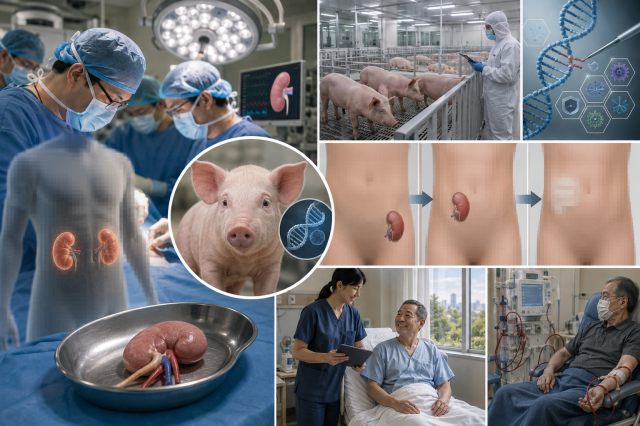
Japan is set to conduct clinical trials for transplanting pig kidneys into patients with chronic kidney failure as early as 2028. This form of xenotransplantation involves using organs from other species, such as pigs, to address the shortage of human organ donors. The procedure could provide a new treatment option to alleviate the burden of dialysis until a human kidney transplant is available. However, concerns about rejection and infection risks remain, making safety verification crucial for practical application.
Asahi Shimbun and Yomiuri Shimbun reported on June 29 that PorMedTec, a venture from Meiji University, plans to initiate Japan's first xenotransplantation clinical trials by 2028. According to Nihon Keizai Shimbun, PorMedTec intends to submit its clinical trial plan to the Pharmaceuticals and Medical Devices Agency (PMDA) around 2027.
The clinical trial will focus on chronic kidney failure patients in their 60s who have been on dialysis for several years. The procedure will utilize pig kidneys that have been genetically modified at 69 sites to reduce the risk of rejection and viral infections. These pigs were developed by the U.S. biotech company eGenesis, and PorMedTec plans to import the relevant cells to create cloned pigs in Japan, which will be raised in specialized facilities for transplantation.
The transplant will involve placing one pig kidney near the bladder while leaving the patient's existing kidneys intact. This approach allows for the pig kidney to be removed if complications arise. Yomiuri Shimbun noted that this xenotransplantation is expected to serve as a 'bridge therapy' to extend the period patients can live without dialysis before receiving a human kidney transplant. PorMedTec aims to evaluate the safety and efficacy of the procedure, particularly whether patients can go more than six months without needing dialysis, with a goal of obtaining conditional early approval by 2030.
The interest in xenotransplantation is driven by the increasing wait times for kidney transplants. According to Yomiuri Shimbun, the average waiting period for kidney transplant candidates in Japan is about 15 years, significantly longer than the approximately four years for heart transplants and one year for liver transplants. Asahi Shimbun reported that there are over 300,000 dialysis patients in Japan, with nearly 15,000 waiting for kidney transplants, while only about 200 deceased donor kidney transplants occur annually. The burden on patients and their families from long-term dialysis is substantial, and successful xenotransplantation could alleviate this pressure.
The United States and China are already ahead in developing xenotransplantation. Asahi Shimbun noted that pig kidney transplants have been performed seven times in the U.S. and once in China. Notably, the genetically modified pig kidneys from eGenesis have been transplanted into four patients in the U.S., with some reportedly living without dialysis for over 30 weeks.
However, challenges related to rejection and infection remain before practical application. Hiroshi Nagashima, a special professor at Meiji University and part of PorMedTec, told Asahi Shimbun, "Xenotransplantation is ultimately a battle against rejection." Even with genetic modifications to reduce risks, long-term use of immunosuppressants is likely unavoidable. Yomiuri Shimbun also highlighted the risk of animal-derived viruses infecting humans through transplanted organs, noting that Japanese government guidelines require medical records to be kept for at least 30 years post-transplant.
Long-term safety and efficacy, as well as societal acceptance, are additional challenges. Asahi Shimbun reported that the longest duration without dialysis after a pig kidney transplant in the U.S. has been 271 days, and it remains uncertain how long the transplanted kidneys will function normally. According to a survey conducted by the National Center for Child Health and Development in January, 77% of respondents expressed discomfort with xenotransplantation.
Cost-effectiveness is also a key consideration. Nihon Keizai Shimbun reported that annual dialysis costs for kidney failure patients can reach 5 to 6 million yen (approximately $47,720 to $57,727), suggesting that reducing pig production costs could lead to lower medical expenses. PorMedTec plans to increase its pig supply capacity from 50 to 100 pigs per year through facility upgrades.
The Japanese government views the practical application of xenotransplantation as a key component of its growth strategy. Both Yomiuri Shimbun and Asahi Shimbun reported that the government included plans for the early practical application of xenotransplantation in its growth strategy roadmap presented on June 24. PorMedTec is currently upgrading its facilities for breeding transplant pigs, supported by approximately 2 billion yen in government subsidies, with an initial production capacity of about 100 pigs per year planned.
Professor Nagashima stated to Asahi Shimbun, "We want to establish a foundation for xenotransplantation using pigs already in use in the U.S. and advance this field." The upcoming clinical trials in Japan may represent a significant turning point for patients suffering from organ shortages, potentially making pig organs a viable option.
* This article has been translated by AI.
Copyright ⓒ Aju Press All rights reserved.