

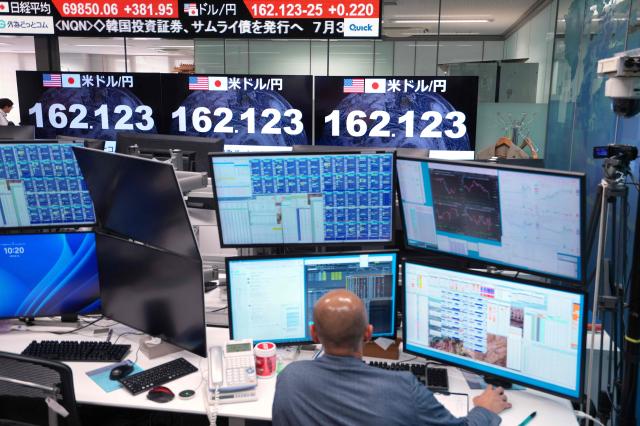
The yen-dollar exchange rate has surpassed 162 yen per dollar, marking the lowest value of the yen in 40 years. Just a few years ago, such news would have signaled alarm bells for South Korean industries. Export companies competing with Japan in sectors like automotive, steel, machinery, and electronics worried about weakened price competitiveness, while the government and market closely monitored the won-yen exchange rate. For a long time, a weak yen was seen as a negative factor for the South Korean economy.
However, is the South Korean economy in 2026 really structured like it was in the 1980s and 1990s? This latest depreciation of the yen raises a different question: rather than asking how much the yen has fallen, we should be asking how much the South Korean economy has changed.
Recent industrial structures show significant differences from the past. The focus of South Korean exports has shifted to semiconductors and advanced information technology, while the share of products that directly compete with Japan has greatly decreased. Many companies have also diversified their global production bases. Analysis indicates that competition between South Korea and Japan in exports is continuously declining. This suggests that the structure is no longer as vulnerable to a weak yen as it once was. In fact, there is potential for positive effects, such as being able to import Japanese parts and materials at lower prices.
Nevertheless, there is no room for complacency. The impact of a weak yen has not disappeared; it has simply shifted direction.
One of the most notable recent changes is the rapid shift of South Korean consumer spending towards Japan. As travel to Japan and direct purchases from Japanese retailers increase, money that could be spent domestically is flowing overseas. This has introduced new challenges, including a worsening service balance and outflow of domestic consumption.
In the past, a weak yen shook factories; now, it is shaking consumer behavior. The service sector is more affected than manufacturing, and domestic consumption is responding more sensitively than exports.
More importantly, the economic fundamentals matter more than the exchange rate itself. Exchange rates can fluctuate significantly due to international capital movements, interest rates, and geopolitical factors. In contrast, productivity, technological capability, and industrial competitiveness are strengths that can be developed internally.
Today, the success or failure of companies in the global market is determined more by artificial intelligence, semiconductors, advanced manufacturing technologies, supply chain stability, and brand value than by exchange rates. The competitive edge created by technology and innovation lasts much longer than temporary exchange rate effects.
The weak yen, occurring for the first time in 40 years, is certainly an economic phenomenon that warrants attention. However, the question South Korea should be asking now is not how much further the yen will fall, but how much more it can grow industries that can compete regardless of exchange rate fluctuations.
Exchange rates are always changing. However, competitiveness is not built overnight. The weak yen after 40 years indicates that the era of explaining the economy solely through exchange rates is coming to an end. South Korea's focus should be on the fields of technology and innovation that nurture future industries, rather than the numbers in the foreign exchange market.
* This article has been translated by AI.
Copyright ⓒ Aju Press All rights reserved.