

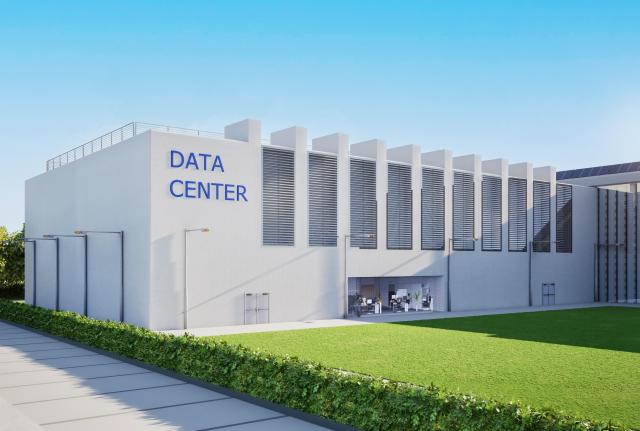
Artificial intelligence (AI) agents are consuming up to 136.5 times more power than traditional generative AI systems designed for simple question-and-answer tasks. This finding has prompted calls for improved infrastructure efficiency rather than merely expanding AI data centers (DC).
According to a study by a research team led by Professor Yoon Min-soo from KAIST's Department of Electrical and Electronic Engineering, AI agents represent a new type of workload that servers and graphics processing units (GPUs) in data centers must continuously manage. The team analyzed the computational demands and energy consumption during actual operations.
AI agents go beyond simply answering questions; they can plan, execute calculations, and utilize various external tools to solve complex problems. This study is the first to quantitatively analyze the computational costs and energy consumption associated with AI agents.
The analysis revealed that AI agents perform, on average, 9.2 times more large language model (LLM) calls compared to traditional step-by-step reasoning methods. As a result, response times increased by as much as 153.7 times, and during the execution of tasks by external tools, GPUs were idle for up to 54.5% of the total execution time.
The increase in power consumption was particularly striking. An AI agent utilizing a 70 billion parameter LLM, which is standard for commercial AI services, consumed an average of 348.41 watt-hours (Wh) to process a single query. Assuming a future scenario where 13.7 billion requests for AI agents are made daily, the power demand for data centers could reach approximately 198.9 gigawatts (GW), equivalent to half of the total average power consumption in the United States.
The research team stated, "This is the first case to quantitatively present how much power and cost are required to implement and maintain AI intelligence, beyond simply making AI smarter. It will become increasingly important to collaboratively design and optimize AI agent models and power infrastructure."
Experts have noted that this research serves as a wake-up call against the current trend of indefinitely expanding AI infrastructure.
Choi Gi-young, a former professor at Seoul National University and former Minister of Science and ICT, remarked, "This paper is significant in highlighting that simply increasing the scale and cost of AI data centers to meet the demands of current AI agents may not be sustainable."
However, he cautioned that the interpretation of the 136.5 times figure should be approached with care. Choi noted, "It is difficult to compare this directly with single-turn conversations, as there are instances where AI agents are used to answer complex questions. Nonetheless, it clearly demonstrates that solving complex problems requires significantly more energy than simple chatting."
As alternatives, he suggested optimizing both hardware and algorithms. Choi added, "Replacing GPUs with more efficient neural processing units (NPUs) is part of efforts to address supply chain, cost, and energy consumption issues. There is also a need to optimize AI agents and their operational methods from various angles, and the findings of this paper could serve as a starting point."
Concerns from a technological philosophy perspective were also raised. Son Hwa-cheol, a professor at Handong Global University, pointed out, "While the power consumption issue of AI has been raised frequently, it is often treated as a minor problem that will be resolved in the development process. If AI raises the cost of energy that everyone needs to use, we must scrutinize what benefits AI provides and for whom."
* This article has been translated by AI.
Copyright ⓒ Aju Press All rights reserved.