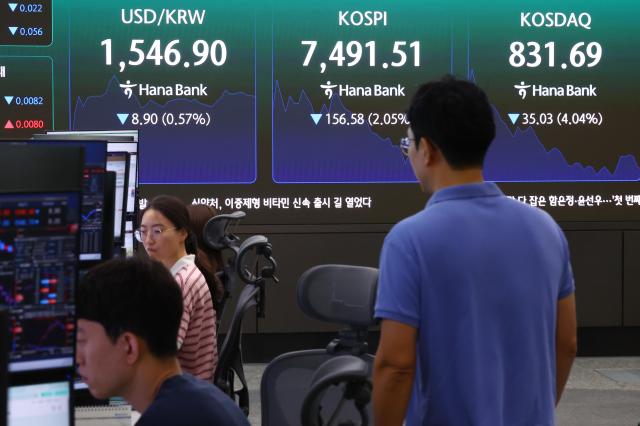
SEOUL, July 04 (AJP) - South Korea's won is likely to remain under sustained depreciation pressure through at least February 2027, driven by surging overseas equity investments by Korean households and companies, particularly into U.S. stocks, according to a report released Saturday by the Korea Institute of Finance.
The report said the dollar-won exchange rate has undergone a structural upward shift since 2024 and is expected to stay near current levels for another 10 months, assuming no major external shocks.
The institute found the average exchange rate has risen in stages over the past decade, from 1,128.96 won per dollar between January 2015 and March 2019, to 1,168.71 won between April 2019 and March 2022, 1,312.41 won between April 2022 and February 2024, and 1,403.19 won from March 2024 through April 2026.
Park Hae-sik, a research fellow at the institute, said his analysis identified three structural breakpoints in April 2019, April 2022 and March 2024 that pushed the average exchange rate to progressively higher levels.
"Based on the duration of each phase, the current trend is likely to continue until around February next year," Park said.
The report attributed the won's weakness primarily to a sharp increase in overseas securities investments by Korean investors, which has boosted demand for U.S. dollars, combined with the continued strength of the greenback. The institute said these structural factors make a rapid return to previous exchange-rate levels unlikely.
Park said domestic financial institutions should closely monitor the impact of a prolonged period of elevated exchange rates on profitability and capital adequacy, warning that the won is more likely to remain around current levels than stage a swift recovery in the absence of new shocks.

Copyright ⓒ Aju Press All rights reserved.