

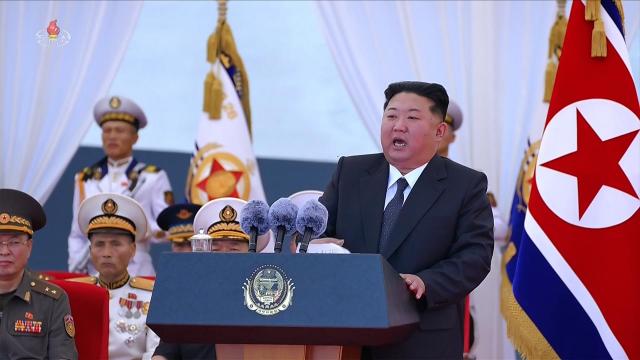
SEOUL, July 03 (AJP) - Defined by its neighbor "hostile state," South Korea is rethinking how to address North Korea.
The Unification Ministry said Friday that growing calls to refer to North Korea by its official name are part of a broader process of building public consensus, as a linguistic debate over inter-Korean relations moves from academic and religious circles into the center of national politics.
At issue is whether South Korea should continue using the term "North Korea" — Bukhan in Korean — or begin referring to the country in official and public settings as the Democratic People's Republic of Korea, or by its shorter Korean name, "Joseon."
The proposal, promoted by some religious leaders, scholars, and officials, is framed as a gesture of mutual respect that could help ease tensions. Critics counter that it risks echoing Pyongyang's claim that the two Koreas are separate, hostile states, and could undermine Seoul's constitutional commitment to peaceful unification.
Jang Yun-jeong, deputy spokesperson for the Unification Ministry, said at a regular briefing in Seoul that the ministry was watching a declaration issued a day earlier by senior leaders of South Korea's major religious communities, which urged the two Koreas to respect each other's official names as a starting point for peaceful coexistence.
"We see these developments as part of a process in which public consensus is being formed over the question of how to refer to North Korea's national name," Jang said, adding that the ministry would follow the debate closely and listen broadly to views across society.
Her remarks stopped short of announcing a formal shift in government terminology, but signaled that the Lee Jae Myung administration is willing to keep the discussion alive at a time when inter-Korean relations remain frozen and North Korea has hardened its stance toward the South.
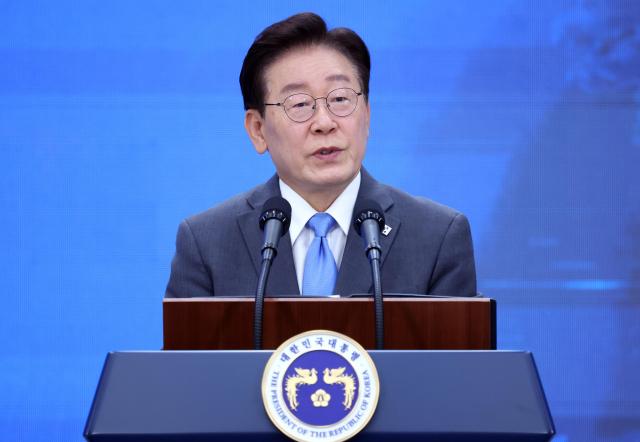
The Korean Council of Senior Religious Leaders issued the "Declaration for Peaceful Coexistence and Mutual Respect on the Korean Peninsula" on Thursday, arguing that peace begins with respecting the other side's name. Signed by senior figures from Catholicism, Buddhism, Protestant Christianity, Won Buddhism, Cheondoism, Confucianism, and Korea's native religions, the declaration noted that the international community already recognizes the two Koreas by their official UN names — the Republic of Korea and the Democratic People's Republic of Korea. Approaching the other side's chosen name with respect, the group said, could be a symbolic first step toward reducing hostility.
Kang Chang-il, executive vice chairperson of the National Unification Advisory Council — a constitutional body on unification policy chaired by the president — endorsed the proposal Thursday in a personal statement: "If North Korea calls us the Republic of Korea, it is only reasonable that we call North Korea the Democratic People's Republic of Korea."
Kang argued that the first step toward converting the armistice into a peace regime would be for both Koreas to use each other's official names, noting that such names appeared in the 1991 inter-Korean Basic Agreement, the same year both countries joined the UN separately. Continued hostility amid a dialogue freeze, he said, would lead only to mutual destruction.
The main opposition People Power Party denounced Kang's comments Friday.
Spokesperson Cho Yong-sul said North Korea's use of "Republic of Korea" is not a gesture of respect but part of Pyongyang's effort to formalize its "hostile two-state" doctrine, and warned that a terminology debate should not be allowed to weaken South Korea's security posture given the North's continued weapons development.
A Larger Question About National Identity
The dispute reflects a broader question facing Seoul: how to respond to North Korea's rejection of the long-standing idea that the two Koreas remain one nation temporarily divided by history.
Since late 2023, Kim Jong-un has described inter-Korean relations as those between two hostile states rather than members of a shared nation, and Pyongyang has increasingly used "Republic of Korea" or "South Korea" instead of terms implying ethnic or national kinship. For some in Seoul, that shift opens the door to a more pragmatic relationship built on mutual recognition. For others, it's a trap that could normalize North Korea's abandonment of unification and erode South Korea's legal and moral standing.
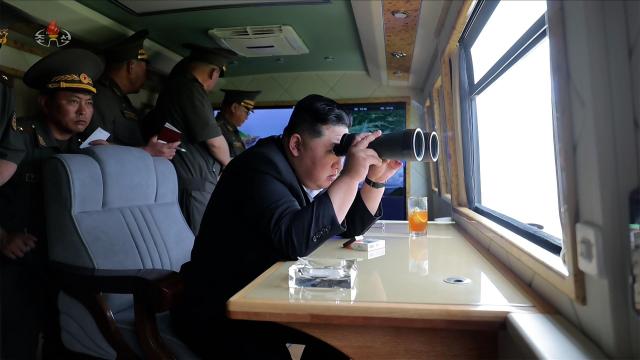
The Lee administration's unification policy has emphasized peaceful coexistence, respect for the North's system, and reduced military tensions. Unification Minister Chung Dong-young has repeatedly used North Korea's formal name in public remarks — speaking of "Korea-Joseon relations" and, at a ministry event earlier this year, referring to the North as the Democratic People's Republic of Korea. In January, he said the government respects the North's system and rejects any German-style absorption unification. In March, at a joint conference with the Korea Institute for National Unification, he again used the North's official name, urging South Korea to turn Pyongyang's hostile two-state line into an opportunity to rethink the inter-Korean paradigm.
At the Ulaanbaatar Dialogue on Northeast Asian Security in Mongolia on June 4, Chung used "DPRK" and proposed four-way talks among South Korea, North Korea, the United States, and China to build a peace regime — one that could later expand to include Mongolia, Japan, and Russia. "We can begin four-party talks among the Republic of Korea, the Democratic People's Republic of Korea, the United States and China," he said.
The use of "DPRK" at an international forum drew attention because, while South Korean officials have long used the term at international bodies, they've been more cautious about it domestically. Ministry officials say no fixed policy exists yet and that any change would require public discussion, expert review, and government-wide coordination.
The issue entered formal public discussion on April 29, when the Korean Political Science Association — backed by the Unification Ministry — held a conference titled "Naming for Peaceful Coexistence: North Korea or Joseon?" examining whether a change in terminology could reshape perceptions, law, and policy.
Sogang University professor Kim Sung-kyung argued that "North Korea" is not a neutral term in South Korean society, shaped as it is by decades of anti-communist ideology, the National Security Act, and threat narratives. Using the North's official name, she said, would signal respect and a willingness to reset relations. She noted that South Koreans bristled when Pyongyang used "South Joseon" for the South, and asked whether continuing to use a name the North rejects for itself really serves the relationship Seoul says it wants.
Kangwon National University professor Lee Dong-ki pointed to West Germany's Cold War-era shift away from West-centered labels for East Germany as part of a broader reconciliation process, suggesting South Korea consider similar language to defuse mutual hostility.
Supporters say adopting "Joseon" would not signal acceptance of Pyongyang's ideology or nuclear program, but would be a limited gesture acknowledging the reality of two governments on the peninsula. They point out that past agreements have used formal titles before: the 1972 July 4 Joint Communique avoided official names amid extreme Cold War caution, while the more formal 1991 Basic Agreement — signed as both Koreas entered the UN as separate members — described inter-Korean relations as a "special relationship" formed temporarily in the pursuit of unification, rather than ordinary relations between foreign states. That formula has let Seoul treat North Korea as a negotiating counterpart while still upholding its constitutional goal of peaceful unification.
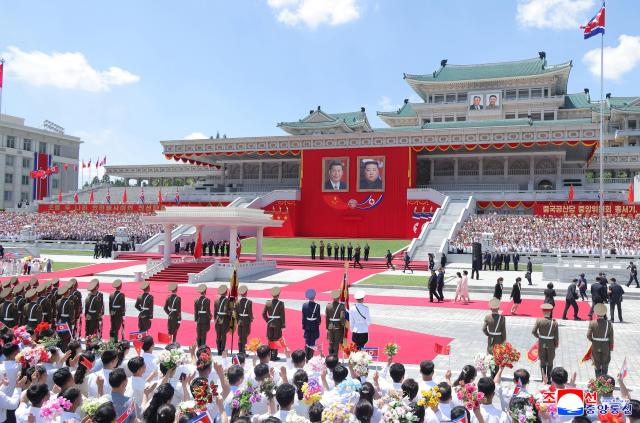
Critics say the proposed shift could upset that balance. South Korea's Constitution defines the Republic of Korea's territory as the entire Korean Peninsula and requires the state to pursue peaceful unification; some conservative politicians and legal scholars warn that officially calling the North "Joseon" could imply acceptance of it as a separate sovereign state, undermining the constitutional basis for unification policy.
Others question whether Pyongyang would reciprocate at all, arguing that North Korea's own terminology shift was never conciliatory — but rather a strategy to sever ethnic and political ties with the South, brand the Republic of Korea a hostile foreign state, and justify a more aggressive military posture.
The Unification Ministry has tried to frame the issue as one for public deliberation rather than swift decision. Vice Unification Minister Kim Nam-joong told the April conference that language can either deepen distrust or ease tension, and that institutions and language recognizing the other side's existence are needed to break the cycle of confrontation. But he acknowledged the issue is far from simple, requiring South Korea to weigh its constitutional order, the special nature of inter-Korean relations, domestic law, international practice, and public consensus.
A Politically Fraught Symbol
North Korea policy in South Korea has long swung between engagement and pressure depending on the administration, and even symbolic steps can become partisan flashpoints — especially when they touch on the North's statehood, nuclear program, or claims over the South.
The Lee administration is seeking room for engagement at a time when Pyongyang shows little interest in dialogue: North Korea has expanded its nuclear and missile programs, deepened ties with Russia, rejected Seoul's offers for talks, and left inter-Korean communication channels severed.
Supporters of the terminology shift argue that in this climate, small symbolic gestures may be among the few tools available to reduce animosity, since language shapes how the public understands the other side and how policymakers imagine future agreements. Opponents counter that symbols cut both ways — that changing terminology without any reciprocal move from Pyongyang could signal weakness and blur South Korea's goals, and that Seoul should instead focus on deterrence, sanctions enforcement, and alliance coordination.
The debate has been sharpened by North Korea's own conduct: its use of "Republic of Korea" has often appeared in hostile contexts rejecting reunification and casting the South as a permanent enemy, even as Pyongyang revises its domestic political language to strip out references to peaceful unification.
For many South Koreans, "Joseon" carries layered meaning — it's the short name North Korea uses for itself, but also evokes the premodern Joseon Dynasty and a shared national history. "North Korea," by contrast, reflects division while implying the peninsula remains connected by history, language, and identity.
The practical implications of any change remain unclear. The government could keep using "North Korea" domestically while continuing to use "DPRK" at international conferences, as it often already does; it could encourage academic, civic, and religious groups to adopt the official name without making it government policy; or it could eventually use "Democratic People's Republic of Korea" in certain official documents or inter-Korean proposals while keeping "North Korea" as the standard public term.
Whether the proposal can win broader public support remains uncertain. Polling has not yet established a clear national consensus, and the issue is likely to stay vulnerable to partisan framing.
Copyright ⓒ Aju Press All rights reserved.
