SEOUL, August 19 (AJP) - Kazakhstan has given itself a month to prepare agreements for a new set of Chinese-built waste-to-energy plants, the government said Wednesday, extending a program that has yet to put a single incinerator into operation anywhere in the country.
Three plants are already under construction, in Astana, Almaty and Shymkent, at a combined cost of 293.3 billion tenge ($637.4 million). Together they are designed to burn 4,500 tons of municipal waste a day and generate 134 megawatts of electricity. None is finished, and the Ministry of Ecology and Natural Resources said this month that Kazakhstan has no operating incineration plants at all.
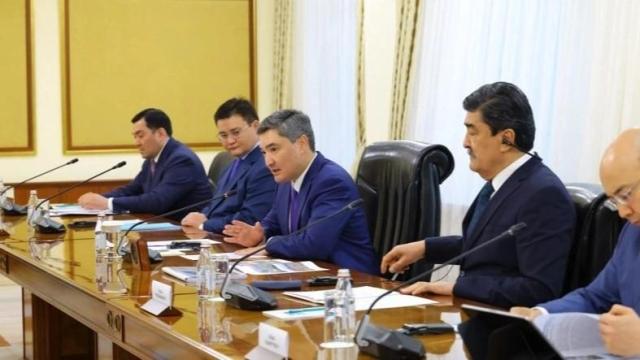
The instruction came out of a meeting between Prime Minister Olzhas Bektenov and Dai Daoguo, chairman of the board at Hunan Junxin Environmental Protection, the Chinese company building the Almaty plant. Bektenov told the ministry and other state bodies to examine all aspects of further cooperation with the company as a matter of urgency, and to prepare agreements for signing within a month covering plants in a number of major cities, according to the statement from the prime minister's press service.
Work on the Almaty project began in May under an investment agreement signed with the ministry last August. The government put the investment at 145 billion tenge. Dai said the site was preparing to start construction and installation work.
Once running, the plant is designed to process up to 2,000 tons of waste a day and generate up to 60 megawatts of electricity. The company expects it to cut carbon dioxide emissions by roughly 200,000 tons a year and to save around 800,000 cubic meters of landfill space annually. At least 700 jobs are planned during construction, and 120 permanent positions once the plant starts operating. Commissioning is due within two years of the May start.
Waste-to-energy plants burn household rubbish and use the heat to drive turbines, cutting the volume that goes into landfill while producing power. Under Kazakhstan's Ecological Code, adopted in 2021, waste can be burned only after recyclable material has been pulled out of the stream. The ministry estimates that five to 10 percent of the original volume survives the furnace as ash and residue, which still has to be buried, leaving landfills in the system with a narrower role.
Bektenov said at the meeting that President Kassym-Jomart Tokayev pays particular attention to environmental responsibility, and that the new Constitution, which took effect July 1 after a March referendum, makes environmental protection one of the founding principles of state policy and civic responsibility.
It was the second such deadline in five weeks. On July 16, Bektenov instructed the same ministry to finish talks with China Tianying Inc. and submit an investment agreement within two weeks for waste plants in at least three major cities. The government has not said which cities either company would build in.
Electricity from waste-to-energy plants qualifies for a feed-in tariff of up to 55 tenge per kilowatt-hour, and the projects are carried out through investment agreements with the state.
Hunan Junxin has described larger ambitions in Kazakhstan than incineration. In talks with the state investment promotion company Kazakh Invest in July last year, Dai put the company's plan at $600 million across three plants and said it would extend to data centers running on the power those plants generate, training facilities and automated waste management systems.
The company built Central Asia's first waste-to-energy plant, which opened at Bishkek's main landfill in December last year. It started a second phase there in June, designed to add up to 2,000 tons a day and 60 megawatts, and is building another plant in Osh, Kyrgyzstan's second largest city.
The government is working on waste plants in Karaganda, Atyrau, Aktobe, Pavlodar and other cities.
Copyright ⓒ Aju Press All rights reserved.