

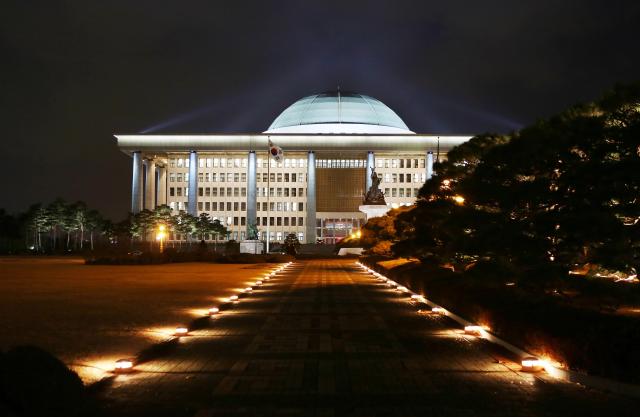
SEOUL, July 03 (AJP) - South Koreans are being forced to watch their language and behave online as amendments to the Information and Communications Network Act take effect on July 7.
The mock tests are already underway.
Rather than making direct assertions, some users now recommend softer wording — phrases such as "it is said," "some claim" or "I heard" — reflecting growing uncertainty over where the legal boundaries of online speech may lie.
Whether those linguistic workarounds would provide any legal protection remains unclear. Simply adding qualifying language does not automatically shield users from liability.
Yet the advice continues to circulate, suggesting that public perceptions of the law are already influencing how some internet users choose to express themselves online, days before the amendments take effect.
The amendments prohibit the deliberate distribution of false or manipulated information intended to cause harm or obtain an improper benefit.
Courts may award punitive damages of up to five times the recognized amount of harm against certain professional publishers that meet thresholds for subscribers, publication volume or viewership to be specified by presidential decree.
Large online platforms will face new reporting, transparency and appeals obligations, while repeated redistribution of information already found by a final court judgment to be illegal, false or manipulated could trigger administrative fines of up to 1 billion won ($650,000).
Supporters say the amendments are intended to curb increasingly sophisticated misinformation while strengthening legal remedies for victims.
They also note that the law explicitly exempts satire and parody, includes protections against abusive lawsuits intended to silence public-interest criticism, and provides exemptions for whistleblowing and other public-interest reporting.
Critics, however, argue that uncertainty over how courts and platforms will interpret concepts such as "false" or "manipulated" information may make users more cautious long before those legal boundaries are ever tested.
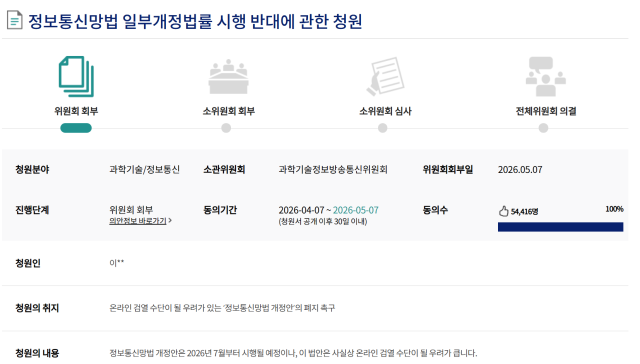
An online petition opposing the amendments had drawn more than 140,000 signatures as of late June, while the U.S. State Department has separately expressed concern that the law could create barriers to free expression and online trade.
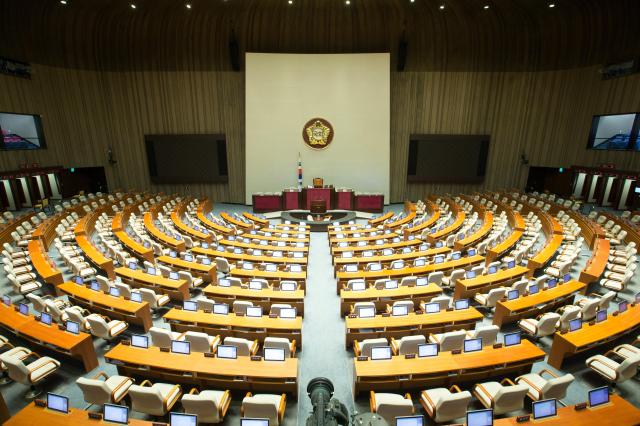
"It's not that people suddenly understand the law," said Frank Hur, 31, an office worker in Seoul. "It's that people aren't sure where the line is, so they'd rather just be careful."
Hur said nearly all of his conversations — personal and professional alike — now take place through messaging apps and social media. Even workplace documents are routinely shared over KakaoTalk, he said.
"If there's a team out there reviewing that kind of thing, doesn't that just mean someone's listening in on private conversations?" he said. "Honestly, it's a little frightening."
Hur said he and many people around him regularly use satire to cope with everyday frustrations and politics — the very kind of expression the amended law explicitly excludes from its definition of prohibited false or manipulated information.
That safeguard has done little to ease his concerns, he said, because what worries him is less the wording of the law than how it may ultimately be enforced.
Kim Su-jeong, 46, another office worker in Seoul, said she understands why governments want stronger tools to combat misinformation, given the real harm malicious online content can cause. What she questions is whether legal uncertainty may end up affecting far more people than those intentionally spreading falsehoods.
"A handful of people keep doing what they do, and everyone else — people just trying to live their lives — ends up getting blamed along with them," Kim said.
She added that sensational headlines and unverified information have already made it difficult for many people to distinguish fact from opinion, making the uncertainty surrounding the new law feel even more unsettling.
Both said they have become more cautious about what they post online — not because they expect immediate enforcement, but because they remain unsure how the new rules will ultimately be interpreted.
In practice, the amendments are narrower than much of the online discussion surrounding them suggests.
The enhanced damages provision applies only to publishers that distribute information professionally and meet thresholds to be defined by presidential decree. Courts must also find that the publisher knew the information was false or manipulated, intended to cause harm or obtain an improper benefit, and actually caused legally recognized harm.
Ordinary social media users generally fall outside that enhanced liability framework.
Satire, parody and certain forms of public-interest reporting are explicitly excluded from the law's prohibition, while separate anti-SLAPP provisions seek to prevent powerful individuals from using punitive-damages lawsuits to suppress legitimate public-interest criticism.
Large online platforms will be required to establish reporting systems, publish transparency reports and provide appeals procedures. News organizations, internet news services and internet broadcasters, however, are exempt from several of the law's strongest platform-enforcement measures, including mandatory content removal and account suspension.
South Korea is not alone in struggling to balance efforts to curb harmful online content with protecting freedom of expression.
Germany's 2018 Network Enforcement Act, or NetzDG, similarly expanded platform responsibility for removing illegal content, prompting years of debate over whether companies were incentivized to remove lawful speech to avoid liability. In one widely cited case, the satirical magazine Titanic had content removed despite its apparent satirical intent.
The European Union's Digital Services Act, which some Korean lawmakers cited as a model during the legislative process, likewise expanded transparency and risk-management obligations for major platforms, although it relies primarily on platform compliance rather than direct government review of individual content.
Singapore's Protection from Online Falsehoods and Manipulation Act has drawn the sharpest criticism among comparable laws. It allows individual government ministers to declare an online statement false and order its correction or removal. Rights groups say the law has disproportionately targeted opposition politicians and government critics. In March, a government critic became the first person criminally charged under the law after repeatedly ignoring correction orders.
Whether South Korea's amendments ultimately reshape online discourse will depend on how courts, regulators and platforms apply them after they take effect.
For now, what appears to be changing is not necessarily the law itself, but public perceptions of it — and those perceptions are already influencing how some users choose their words online, even before the amendments come into force.

Copyright ⓒ Aju Press All rights reserved.
