

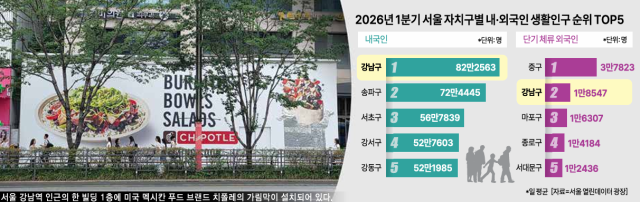
Recently, both domestic and international restaurant brands have been competing to open strategic stores and flagship locations in Gangnam. While areas like Seongsu have gained attention, the consensus is that Gangnam remains the most effective location for quickly building brand recognition and buzz.
According to the restaurant industry on July 5, MZ Seed, a subsidiary of Maeil Dairy Industry, opened a large strategic store in Gangnam on July 3, near Sinnonhyeon Station, for its specialty coffee brand, Paul Bassett. The store features a collection of its main offerings, including coffee, ice cream, and bakery items, along with limited menu items exclusive to the Gangnam location.
BHC (Dining Brands Group) is set to officially open its first experiential flagship store near Gangnam Station on August 4. The store will offer a customizable chicken menu called Crispik, where customers can choose their preferred cuts and sauces. The first floor will cater to office workers and takeout customers, the second floor will be designed for small groups and solo diners, and the third floor will accommodate larger groups and foreign tourists, each with distinct concepts.
International brands are also making their mark in Gangnam. Two Some Place, which operates in South Korea, opened its first domestic location for the New York premium ice cream brand Van Leeuwen near Gangnam Station on July 3. To establish brand recognition, the strategy involves concentrating the initial three stores in key Gangnam areas, including the Gangnam Station location, Shinsegae Department Store Gangnam's Sweet Park, and near Sinnonhyeon Station.
Chinese premium tea brand Chagee opened its flagship store in Gangnam in April and is preparing to enter Shinsegae Department Store Gangnam's Sweet Park later this year. Meanwhile, American Mexican food brand Chipotle is collaborating with SPC Group's Big Bite Company to open its first Asian location along Gangnam Boulevard while also pursuing a spot in Sweet Park, strengthening its presence in the area.
Industry experts view Gangnam as more than just a major commercial district; it serves as a "testbed" for evaluating brand competitiveness. According to Seoul's Open Data Plaza, Gangnam District had an average daily population of 823,000 in 2025, the highest among Seoul's 25 districts. Notably, the area has a significant concentration of high-income residents aged 30 to 40, with a peak of around 1 million people during lunch hours, supporting demand for dining and dessert options. The short-term foreign resident population is also substantial at 18,547, making it the second-largest in Seoul after Jung-gu, allowing businesses to cater to both local office workers and international tourists.
However, there are concerns that opening in Gangnam does not guarantee success. High rental and labor costs create a significant burden, making it difficult to recover investment capital based solely on short-term buzz. An industry insider stated, "Gangnam is a representative commercial area frequented by diverse consumer groups and foreign tourists, making it the most suitable place to launch new brands while also gaining online visibility. However, due to the high fixed cost barriers, it is essential to have strong product quality and a well-crafted localization strategy to ensure long-term success beyond initial interest."
* This article has been translated by AI.
Copyright ⓒ Aju Press All rights reserved.