

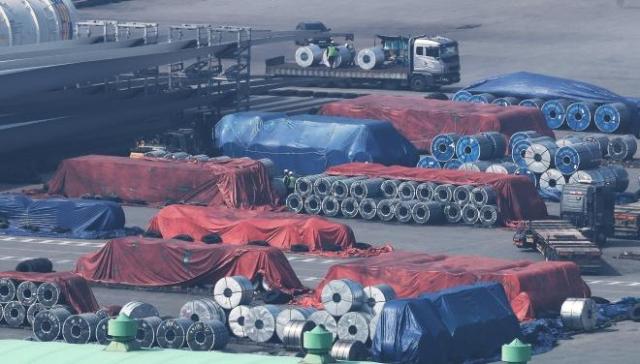
According to industry sources on July 5, POSCO Holdings is projected to report an operating profit of around 780 billion won for the second quarter, while Hyundai Steel is expected to earn 160 billion won, Dongkuk Steel 20.5 billion won, and SeAH Steel approximately 22 billion won.
POSCO Holdings attributes its expected performance to the reflection of price increases in the steel sector and a potential easing of cost pressures. In the first quarter, the company faced significant raw material costs due to rising exchange rates, but analysts suggest that price increases for hot-rolled products and others starting in the second quarter could improve profitability.
Hyundai Steel recorded an operating loss of 72.5 billion won in the first quarter, but it is expected to turn a profit in the second quarter due to price hikes for cold-rolled steel and increased demand for rebar from data centers.
Dongkuk Steel is also expected to see improved results in the second quarter, driven by a recovery in sales of rebar during the seasonal peak and increased sales of heavy plates. Notably, demand for structural steel is rising due to the expansion of semiconductor fabrication plants, and exports of rebar to the U.S. are helping to quickly improve domestic supply and demand. However, the construction downturn may limit the extent of this recovery, particularly for rebar and structural steel products.
SeAH Steel is projected to benefit from a recovery in demand for steel pipes. Increased sales related to energy, offshore wind, and LNG projects, along with a rebound in prices for oil country tubular goods (OCTG) and favorable exchange rates, could enhance export profitability. However, a decrease in shipments to Canada and export disruptions due to conflicts in the Middle East are seen as potential burdens on performance.
While the four major steel companies are likely to defend their performance, challenges remain. Hyundai Steel and Dongkuk Steel's core products, rebar and structural steel, are directly affected by the construction downturn. The influx of low-cost Chinese steel products also limits price increases. Coupled with rising raw material and electricity costs, steel companies may find it difficult to recover margins even if they increase sales.
Looking ahead to the second half of the year, there are expectations that a trend toward protectionism could provide some support for price defense. The EU has implemented measures to reduce its tariff-free import quota for steel, imposing a 50% tariff on quantities exceeding the quota starting this month. This action aims to curb global oversupply and the influx of low-cost Chinese products, potentially alleviating downward pressure on steel prices as Europe follows the U.S. in raising import barriers.
In South Korea, the implementation of the K-Steel Act is also laying the groundwork for enhancing the competitiveness of the steel industry. The K-Steel Act includes the establishment of a special committee to strengthen the competitiveness of the steel industry, certification for low-carbon steel, and designation of low-carbon steel special zones.
An industry official stated, "In the second quarter, we expect improved performance compared to the previous quarter due to price increases and seasonal demand. However, it is difficult to be optimistic about demand recovery as the construction downturn continues." They added, "The impact of the K-Steel Act, the EU's 50% tariff measures, and anti-dumping effects on price defense and profitability improvement in the second half will be key variables."
* This article has been translated by AI.
Copyright ⓒ Aju Press All rights reserved.