

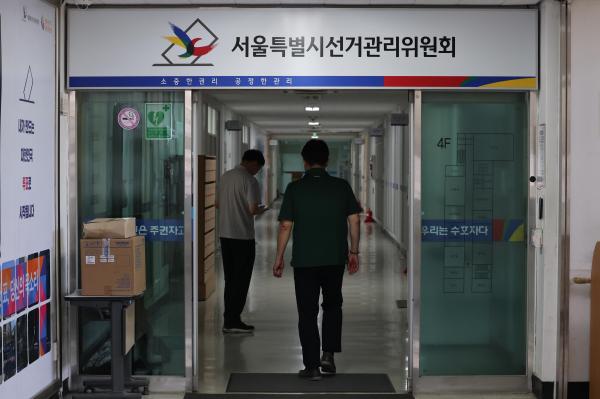
According to Yonhap News on July 5, the joint investigation team has taken over the hiring scandal case that was recently referred to the Suwon District Prosecutors' Office by the Gyeonggi Southern Police Agency.
Previously, the Gyeonggi Southern Police Agency had sent the case to prosecutors involving the head of the general affairs department and the personnel manager at the Gyeonggi Election Commission, who allegedly manipulated interview scores for some candidates during the hiring process in 2021.
The case reportedly involves personnel officials at the Gyeonggi Election Commission who were caught altering the scoring sheets of interviewers during the selection process.
To facilitate the investigation, the joint team has established a dedicated personnel and budget team to examine the hiring scandal and allegations of unnecessary business trips, among other operational issues. On July 1, they received an additional prosecutor, Im Hong-seok, from the Changwon District Prosecutors' Office, and starting July 6, two more prosecutors will join the team. The team is also in the process of acquiring additional police personnel to bolster their investigative capacity.
The dedicated team will also investigate allegations of unnecessary business trips involving former Election Commission Chairman Noh Tae-ak and other officials.
Additionally, the joint investigation team has uncovered evidence suggesting that local election commissions were aware of the potential for ballot shortages but failed to implement relevant guidelines. They secured an email titled 'Guidelines for Voting Management' during a search of the central election commission's server.
On May 31, shortly after early voting, the central election commission sent a communication to local election commissions stating that 'there may be a shortage of ballots in polling places with low early voting rates, and measures such as distributing additional unnumbered ballots are necessary.'
The joint investigation team believes that despite receiving this communication after the early voting rates were known, local election commissions did not properly implement the guidelines. They argue that if they had confirmed the low early voting rates, they should have prepared for potential ballot shortages according to the communication.
Furthermore, the team continues to investigate the circumstances surrounding the decision to reduce the number of printed ballots to 50% of the required amount, having summoned one election commission member from Songpa-gu as a witness.
* This article has been translated by AI.
Copyright ⓒ Aju Press All rights reserved.