

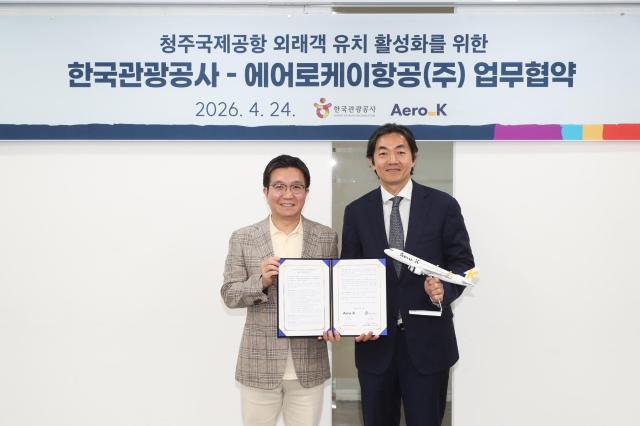
The Ministry of Culture, Sports and Tourism and the Korea Tourism Organization are accelerating efforts to transform regional airports into international tourism hubs, aiming to diversify the influx of foreign visitors currently concentrated at Incheon International Airport and to revitalize local tourism. This initiative seeks to address the concentration of tourism in the metropolitan area and improve the tourism ecosystem in regions facing decline.
On July 6, the Korea Tourism Organization announced that it has achieved visible results in expanding flight routes and discovering regional tourism content through its 'Regional Airport International Tourism Hub Task Force,' which was launched in April.
By May of this year, over 50,000 foreign tourists had arrived at Cheongju Airport, marking an increase of more than 114% compared to the same period last year. Daegu Airport also attracted approximately 46,000 foreign visitors during the same timeframe, emerging as a new pillar in the inbound tourism market due to active overseas marketing efforts.
To enhance the activation of Cheongju and Daegu airports, the Korea Tourism Organization has diversified partnerships with global travel channels, including China Airlines and Japan's HIS. Notably, agreements have been established with Aero K Airlines, based at Cheongju Airport, and T'way Airlines, based at Daegu Airport, securing a total of 356 charter flights by the end of the year, exceeding the initial target by more than double. This achievement lays the groundwork for tapping into potential demand from 11 regions, including Kunming in China and Matsumoto in Japan.
A total of approximately 333 local specialized content options have been identified, linking airport infrastructure with regional tourist attractions. Additionally, 35 new regional and super-regional tourism courses have been designed, with dedicated toolkits distributed to overseas branches for immediate commercialization.
Key routes include itineraries for Cheongju Airport arrivals to visit Daejeon’s Seongshim Bakery, the Boryeong Mud Festival, and the Taean Marine Healing Center, as well as K-traditional culture tours for Daegu Airport arrivals to pilgrimage sites such as Haeinsa Temple in Hapcheon, the Jinju Lantern Festival, and Haedong Yonggungsa Temple in Busan.
Infrastructure improvements to enhance the mobility of foreign tourists are also underway. Over 7,000 passengers have utilized the regional circular bus and demand-responsive transport (DRT) services linked to Cheongju Airport in the first half of the year. Plans for the second half include expanding cashless payment services (QR/NFC) within the airport commercial area, as well as implementing luggage delivery services between hotels and the airport, and introducing unmanned currency exchange and post-tax refund kiosks.
A regional tourism governance council, involving local governments, Korea Airports Corporation, and military authorities, is also a key factor in enhancing execution. This collaborative body addresses challenges such as establishing international routes and regulatory easing, which individual agencies find difficult to tackle alone.
Park Seong-hyeok, President of the Korea Tourism Organization, stated, "Establishing regional airports as hubs for local tourism is the key to diversifying foreign visitor attraction and alleviating the concentration of tourism in the metropolitan area. Based on the successful model verified in Cheongju and Daegu this year, we plan to gradually expand the initiative to other regional airports starting in 2027."
* This article has been translated by AI.
Copyright ⓒ Aju Press All rights reserved.