The ministry said Lt. Gen. Han Ki-sung, commander of I Corps, was removed from his post as an investigation continues into recent incidents involving the corps. The commander of the Army Training and Doctrine Command will serve as acting I Corps commander during the period, officials said.
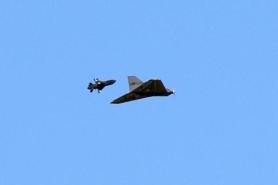
The move came after the Joint Chiefs of Staff found that a communication failure between South Korean and U.S. working-level officials led South Korean forces to prepare to intercept a U.S. military drone operating near the inter-Korean border in Paju, Gyeonggi Province, on July 30.
According to the JCS inspection, the U.S. side notified an I Corps official of the drone flight plan by text message the previous day. The official reportedly replied that there were no restrictions but failed to report or share the information with superiors or related units.
The official reportedly treated the flight as a routine low-altitude drone operation conducted as part of joint Marine exercises and did not consider it necessary to escalate the matter beyond the corps level.
The drone, however, flew at a higher altitude than expected. South Korean forces then classified it as an unidentified aerial object and issued “Durumi,” an air defense posture for possible enemy drone threats. The military was preparing for a possible interception before the aircraft was confirmed to be a U.S. drone.
A JCS official said the U.S. side also failed to follow the proper process. Under the rules, a flight plan should be submitted in advance through official documents and approved by either the Air Force Operations Command or the Ground Operations Command. In this case, however, the plan was shared only through text messages between working-level officials a day before the flight.
I Corps was also under scrutiny over a separate controversy involving guard duty along the western front.
Since early this year, the corps had reportedly ordered troops at front-line guard posts and general outposts not to keep live rounds loaded in crew-served weapons, including K4 automatic grenade launchers and K6 heavy machine guns. The ammunition was instead kept in boxes nearby.
The change was reportedly aimed at preventing accidental discharges, but critics said it could undermine readiness in a sensitive border area that serves as a key approach route to Seoul.
The JCS was not informed of the change, even though front-line guard operations generally require weapons to be loaded with live ammunition. I Corps reportedly notified only the Ground Operations Command, its higher command, and kept the practice in place for about six months.

Copyright ⓒ Aju Press All rights reserved.