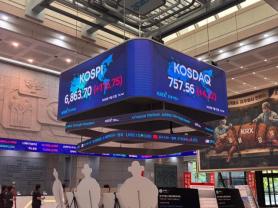
SEOUL, August 04 (AJP) - Samsung Electronics' record first-half earnings have exposed an unusual corporate paradox: the semiconductor division generated almost all of the company's profits, but in doing so widened an internal pay gap that is now splintering the company's long-held "One Samsung" culture.
Samsung's Device Solutions (DS) semiconductor division earned 146.7 trillion won ($106 billion) in operating profit during the first half, dwarfing the 3.8 trillion won generated by the Device eXperience (DX) division, which houses its smartphone, television and home appliance businesses.
The disparity has translated into sharply different employee compensation, fueling resentment among workers in the DX division whose profitability has been squeezed partly by the soaring memory chip prices that enriched their semiconductor counterparts.
Although Samsung recently reached a compensation agreement with unions representing semiconductor employees, workers in the DX division have rejected a similar settlement and plan a large-scale rally outside the company's Seocho headquarters on Aug. 21.
The unrest follows a closely watched labor victory for the DS division last month. After weeks of escalating tensions and a high-profile protest at Samsung's Hwaseong semiconductor campus, management agreed to provide special performance bonuses to chip employees.
The agreement helped avert a prolonged strike that could have disrupted global memory chip supplies, but it immediately triggered backlash from employees in the DX division, who argue they have been treated unfairly despite belonging to the same company.
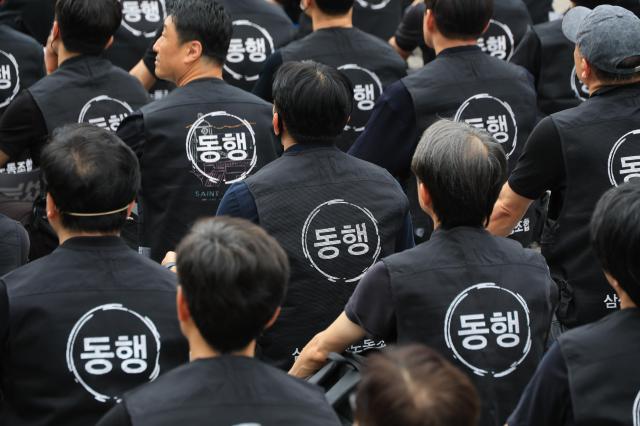
Leading the protest is the Samsung Electronics Company Union (SECU), better known as Donghaeng, whose membership is concentrated in the DX business.
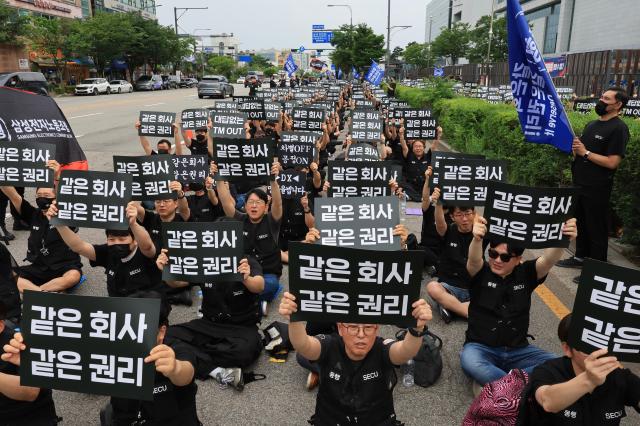
The union said it will stage a rally at Samsung's Seocho headquarters on Aug. 21 under the slogan, "Same company, same rights."
The slogan deliberately echoes chants heard during the semiconductor workers' protests in Hwaseong, underscoring how the successful tactics used by DS employees are now being adopted by another part of Samsung.
"Management has remained completely silent despite repeated official requests from the union," a SECU representative said in explaining the decision to escalate the dispute to the company's headquarters.
The dispute is exposing what labor observers describe as a new kind of conflict inside Samsung—not between labor and management, but between different groups of employees whose fortunes have increasingly diverged as the company's businesses move in opposite directions.
The gap reflects Samsung's changing earnings structure. While demand for artificial intelligence memory chips has produced record profitability for the semiconductor business, the smartphone and consumer electronics division has faced margin pressure from weaker consumer demand and higher component costs, including expensive memory chips supplied internally.
The widening divide has also fractured Samsung's labor movement.
SECU has increasingly distanced itself from Samsung's umbrella union, arguing that DX employees' interests were being overshadowed by the semiconductor division's dominant bargaining position. By pursuing separate negotiations, the union believes it can press more aggressively for compensation reflecting the contributions of non-chip businesses.
The umbrella union has declined to participate in the upcoming Seocho rally, saying it has no official position on the demonstration, highlighting the growing fragmentation within Samsung's labor organizations.
For Samsung management, the dispute presents a delicate balancing act. Conceding to DX employees risks undermining the costly peace agreement recently reached with semiconductor workers, while refusing their demands could deepen internal divisions at a time when the company is relying more than ever on its AI-driven chip business.

Copyright ⓒ Aju Press All rights reserved.