Royalty is no exception.
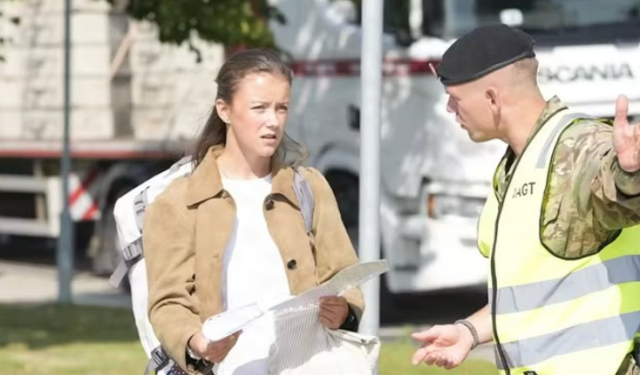
Princess Isabella, second in line to the Danish throne, made international headlines on Monday when she reported to a military barracks in Slagelse to begin 11 months of military service, joining about 1,600 recruits in the first intake under Denmark's expanded conscription system.
The 19-year-old princess will serve with the Guard Hussar Regiment as Denmark lengthens compulsory military service from four months to 11 months and extends conscription liability to women for the first time. Copenhagen plans to increase annual conscription from about 5,000 recruits to 7,500 by 2033.
The new recruits will undergo five months of basic training followed by six months of operational service. Denmark is also introducing specialized tracks, including a drone platoon under its Special Operations Command, illustrating how modern militaries are pairing advanced technology with larger manpower requirements.
Later this month, Denmark plans to deploy conscripts to Greenland for the first time. More than 100 soldiers are expected to spend a month there performing operational duties previously handled by professional troops.
The move reflects growing concern over Russia and Arctic security, while also highlighting tensions with Washington after U.S. President Donald Trump repeatedly expressed interest in bringing the semi-autonomous Danish territory under U.S. control. Denmark and Greenland have firmly rejected the idea.
Europe has become the epicenter of the broader shift.
Russia's full-scale invasion of Ukraine has forced governments to reconsider whether the relatively small professional militaries built after the Cold War can generate enough troops and reserves to sustain a prolonged war.
An analysis by the European Parliamentary Research Service found that conscription has increasingly returned to European and global policy debates since Russia invaded Ukraine in 2022.
The war has exposed a hard lesson for military planners: drones, artificial intelligence and precision weapons can transform the battlefield, but they cannot replace soldiers.
"Lessons from the battlefield in Ukraine have shown that technology cannot replace head counts," Carnegie Endowment researchers Sophia Besch and Katrine Westgaard wrote, noting that Ukraine has struggled to recruit enough troops to match Russia's mobilization while European militaries have long grappled with recruitment and retention problems.
The scale of the conflict underscores the challenge. A July 2026 estimate by the Center for Strategic and International Studies put combined Russian and Ukrainian military casualties at more than 2 million, while Ukraine sought around 2 million large-caliber artillery rounds for 2025 alone.
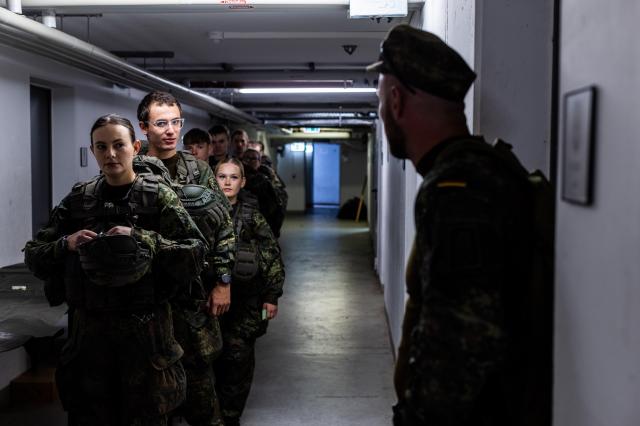
Unlike the smaller overseas missions that shaped many European militaries after the Cold War, the alliance's regional defense plans assume a prolonged conflict requiring substantially larger numbers of active-duty personnel and reservists.
"We are in collective defense and likely in an attrition war that requires way more manpower than we currently have," a senior NATO official told The Associated Press.
Questions over the future scale of U.S. military support have added further urgency.
A joint study by Bruegel and the Kiel Institute estimated that Europe would need roughly 50 additional brigades to replace the combat capability the United States could provide during a major conflict. The researchers estimated Europe could require 300,000 additional troops and at least 250 billion euros in extra annual defense spending to deter Russian aggression in the near term.
Public interest in military service also appears to be recovering in parts of Europe.
All 1,600 recruits entering Denmark's new 11-month program this month volunteered, according to the Danish military.
Germany received about 56,000 military-service applications in 2025, up 9 percent from a year earlier, while new enlistments rose 23 percent to around 25,000, the strongest result since conscription was suspended in 2011.
The Netherlands has likewise reported growing interest in reserve service, helped by the highly publicized participation of Crown Princess Amalia.
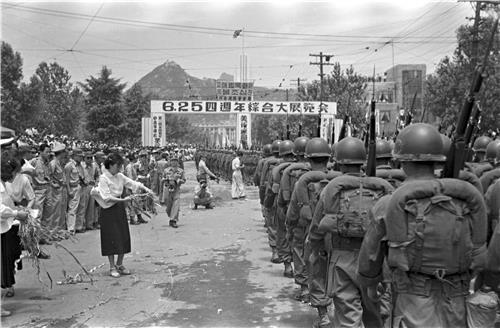
Unlike much of Europe, it never abandoned conscription. Instead, the country is confronting a rapidly shrinking pool of military-age men as its record-low birth rate collides with growing security demands.
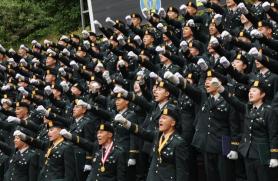
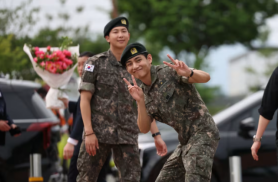
South Korea has maintained compulsory military service for more than seven decades, beginning with the Military Service Act of 1949 and reinforcing the system during and after the Korean War.
Men are registered for military service in the year they turn 18 and generally undergo physical examinations at 19 before being assigned to active duty or other forms of service based on their physical classification. Army service currently lasts 18 months.
The demographic squeeze has fueled debate over a more selective volunteer system, greater reliance on technically skilled noncommissioned officers and whether women should eventually be included in compulsory service.
The Defense Ministry is simultaneously pursuing a more manpower-efficient force built around artificial intelligence, manned-unmanned teaming, professional personnel and stronger reserve forces. Yet Ukraine's experience has underscored the limits of relying on technology alone.
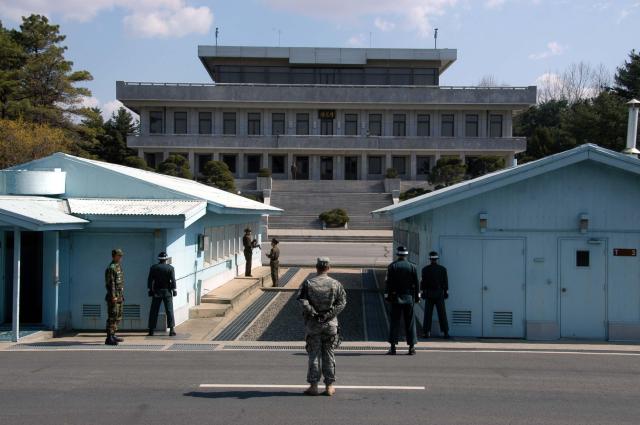
Male students in medicine, dentistry, Korean medicine and veterinary medicine who postpone enlistment may later serve for about three years as commissioned medical or veterinary officers. Because ordinary Army service lasts 18 months, some choose to enlist before graduation to complete their obligation sooner.
Kim Jae-hyun, a 26-year-old veterinary medicine student at Kangwon National University, was one of them.
"I entered university after taking the college entrance exam three times, so I felt that graduating and then serving another three years as a veterinary officer would set me back too much," Kim said.
"My parents agreed. I knew enlisted service might be more physically demanding, but I wanted to finish my obligation as quickly as possible."
Even then, he questioned the cost.
"Even though I served only a year and a half, it still felt like lost time," he said. "It felt like a waste."
That tension between recognizing the need for national defense and accepting its personal cost extends well beyond South Korea.
A 2025 Ipsos survey across 30 countries found that 52 percent of respondents supported mandatory military service for young people. Yet only 48 percent said they would personally participate in formal military training to prepare for a foreign invasion.
Support for compulsory service reached 76 percent in Malaysia, 73 percent in Singapore and 68 percent in South Korea, but fell to 35 percent in the United States and just 17 percent in Japan.
South Koreans also showed relatively strong personal willingness to train, at 62 percent, compared with 39 percent in the United States and 32 percent in Japan.
The findings highlight the dilemma confronting governments across the world.
After decades of shrinking armies while investing heavily in increasingly sophisticated weapons, prolonged wars are reminding defense planners that deterrence ultimately depends not only on drones, missiles and artificial intelligence, but also on having enough people willing—or required—to fight.
Governments are rediscovering the value of manpower. Whether their citizens are equally prepared to make the sacrifice remains the more difficult question.

Copyright ⓒ Aju Press All rights reserved.