The New York Stock Exchange-listed company reported an operating loss of $556 million for the second quarter ended June 30, compared with operating income of $149 million a year earlier. Net loss widened to $570 million from $32 million a year earlier.
The 624.7 billion won administrative charge tied to South Korea's record privacy fine accounted for much of the swing into the red. Even excluding the penalty, however, Coupang recorded an adjusted operating loss of $146 million, underscoring that margin pressure had already begun weighing on the business before the exceptional charge.
The financial hit is also unlikely to end with the second quarter.
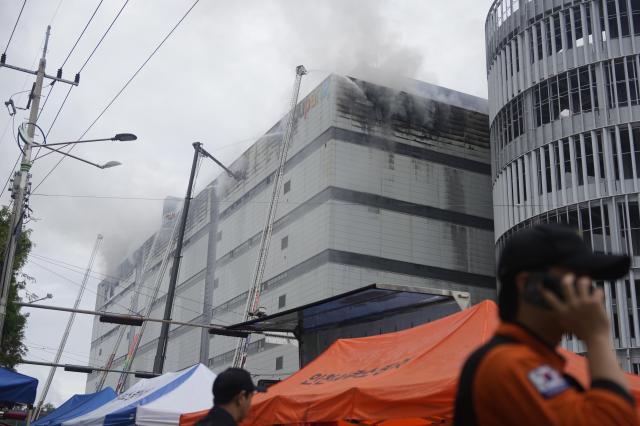
Coupang expects to recognize another 370 billion won ($246 million) loss in the third quarter from last month's fire at its Incheon fulfillment center.
As result, Coupang's first-half operating loss of about 1.19 trillion won has nearly erased the 1.28 trillion won in operating profit the company generated over the previous two years combined.
Revenue rose 3.9 percent to $8.86 billion (13.3 trillion won), below analysts' expectations of roughly $9.05 billion.
Excluding currency effects, however, revenue increased 10 percent, illustrating how the Korean won's sharp appreciation against the U.S. dollar masked much stronger underlying growth.
According to the company, exchange-rate movements reduced reported quarterly revenue by roughly $548 million.
The quarter was dominated by the record privacy sanction imposed in June by South Korea's Personal Information Protection Commission.
The company estimated the penalty at approximately $410 million, making it the largest administrative sanction ever levied under South Korea's Personal Information Protection Act.
The fine stems from a data breach disclosed in November 2025 that affected more than 37 million customers - or almost all of its users in Korea , together with findings that Coupang collected users' browsing activity without proper consent.
Although Coupang has filed an administrative lawsuit seeking to overturn the regulator's decision, U.S. accounting rules required the company to recognize the entire charge during the quarter regardless of the outcome of the litigation.
The case carries unusual significance because South Korea generates the overwhelming majority of Coupang's revenue despite the company being incorporated in Seattle and listed on the New York Stock Exchange.
The dispute has also spilled into bilateral relations.
South Korean Ambassador to the United States Kang Kyung-wha returned to Seoul for consultations as tensions over the case intensified. A separate report by the U.S. House Judiciary Committee accused Seoul of discriminating against American technology companies, a claim rejected by Korea's foreign ministry, which argued the report reflected only Coupang's position.
Beneath the exceptional charges, the operating picture was more mixed than the headline results suggested.
Adjusted EBITDA totaled $163 million, down 62 percent from a year earlier, while adjusted diluted loss per share narrowed to 9 cents after excluding the privacy fine. Reported diluted loss per share was 32 cents.
The company's core Product Commerce business, which generates the bulk of revenue, showed slowing momentum. Revenue increased just 1 percent on a reported basis to $7.42 billion, although growth reached 8 percent on a constant-currency basis. Gross profit fell 5 percent, while segment adjusted EBITDA dropped 42 percent to $382 million, reflecting weaker profitability even before the regulatory charge.
Product Commerce active customers increased 3 percent from a year earlier to 24.7 million, but revenue per active customer declined 2 percent in reported dollar terms, another sign that the stronger won distorted headline growth. On a constant-currency basis, spending per active customer increased 5 percent.
By contrast, the company's Developing Offerings segment—including Coupang Eats, Taiwan and newer businesses—continued to expand rapidly. Revenue climbed 20 percent to $1.43 billion, gross profit jumped 32 percent, and adjusted EBITDA losses narrowed to $219 million from $235 million a year earlier, suggesting newer businesses are moving gradually toward scale.
Cash generation also weakened during the quarter.
Quarterly operating cash flow fell 33 percent to $367 million, while free cash flow declined 79 percent to $51 million. On a trailing 12-month basis, free cash flow plunged to $105 million, down 87 percent from a year earlier, reflecting heavier investment and weaker profitability.
The company continued indulging shareholders despite the quarterly loss.
Coupang repurchased 23.2 million Class A shares for $459 million during the quarter under the $1 billion buyback program approved earlier this year. The purchases contributed to a decline in shareholders' equity to $2.99 billion from $4.62 billion at the end of 2025, while short-term borrowings more than doubled during the period.
Shares of Coupang closed at $16.78 on the New York Stock Exchange on Tuesday before falling about 5 percent in after-hours trading following the earnings release. The stock has lost roughly one-third of its value this year and trades near its 52-week low, leaving the company with a market capitalization of about $30 billion.
Founder and Chief Executive Bom Kim has consistently characterized the major financial hits—including customer compensation following the data breach, the privacy fine, the Incheon warehouse fire and the tax assessment—as exceptional events rather than indicators of a structural deterioration.
Copyright ⓒ Aju Press All rights reserved.