The request was included in the administration’s July 21 policy statement on the House version of the fiscal 2027 National Defense Authorization Act.
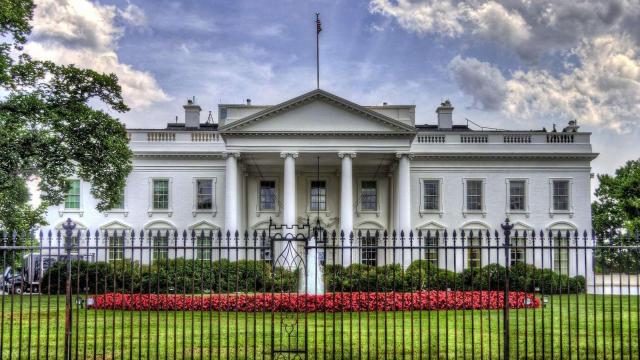
The White House Office of Management and Budget objected to a House provision that would block the Navy from purchasing battle-force ships built abroad. It said the administration instead wants authority to contract foreign yards for four ships, while requiring the builders to make significant investments in U.S. shipyards.
The administration argues that limited overseas construction could help ease delays at American shipyards and expand domestic capacity over the longer term.
Its proposal draws on what officials call the “Finland model,” under which the first vessels are built rapidly at an allied shipyard while the foreign builder invests in U.S. facilities and transfers production technology. Subsequent ships would then be built in the United States. The model was first applied to the U.S. Coast Guard’s Arctic Security Cutter program.
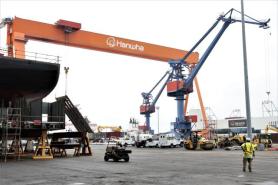
South Korea and Japan are widely viewed as leading candidates. An OMB official said in May that the administration had been in discussions with South Korea’s Hanwha, HD Hyundai and Samsung Heavy Industries, as well as several Japanese shipbuilders, over possible U.S. Navy construction projects.
Under the concept discussed by the administration, the hull and other non-sensitive portions of the first warships could be built overseas, while an American defense contractor would handle combat-system integration. Foreign builders would also be required to establish or expand shipbuilding facilities in the United States.
The proposal, however, faces resistance in Congress. The House-passed NDAA would prohibit the acquisition of battle-force ships built at foreign yards, while the Senate Armed Services Committee’s version would permit only up to two bulk fuel or strategic sealift vessels to be procured overseas.
The Senate proposal would also require the foreign contractor to invest in the U.S. maritime industrial base and move production and supply chains to the United States for follow-on vessels.
Current federal law generally requires U.S. Navy ships to be built domestically, although the president may waive the restriction when doing so is considered necessary for national security. The differences between the administration and Congress are expected to become a major point of debate as lawmakers negotiate the final version of the defense bill.
Key Takeaways
○ On July 21, 2026, the White House asked Congress to let the U.S. Navy build four ships (two surface combatants, two auxiliaries) overseas under the FY2027 NDAA, requiring foreign builders to invest in U.S. shipyards.
○ Discussed candidates (as of May 2026): South Korea's Hanwha, HD Hyundai, Samsung Heavy Industries, and Japanese shipbuilders.
○ Model: the "Finland model" — allied yards build first ships fast, transfer tech to U.S. facilities, later ships built domestically.
○ Congress is split: the House NDAA bans foreign-built battle-force ships; the Senate version allows up to two overseas-built sealift/fuel vessels.
○ U.S. law requires domestic shipbuilding by default, but the President can waive it for national security.

Copyright ⓒ Aju Press All rights reserved.