

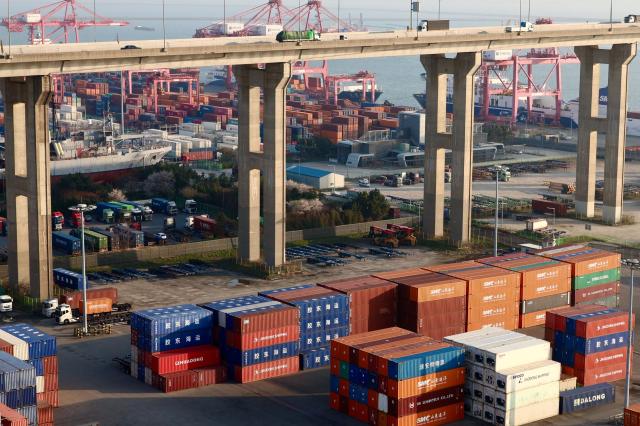
China's imports from South Korea nearly doubled in July, extending an AI-fueled trade boom that has transformed Korea into one of the biggest beneficiaries of the global race to build data centers and AI infrastructure.
China imported $31.05 billion worth of Korean goods in July, up 97.8 percent from a year earlier, according to data released Friday by the General Administration of Customs.
Chinese exports to South Korea rose a slower 46.6 percent to $18.12 billion, while imports from Korea increased 67 percent over the first seven months of the year.
The latest figures came as China's overall imports climbed 27.5 percent in July and exports rose 23.9 percent, both exceeding market expectations.
Although July's country-by-product breakdown has yet to be released, recent trade data point overwhelmingly to semiconductors as the principal driver.
South Korea's exports to China also jumped 96 percent in July, while total semiconductor shipments surged 179 percent as soaring memory prices and continued investment in artificial intelligence infrastructure fueled demand.
Overall exports rose 62.8 percent to $98.89 billion.
The surge has become large enough to alter Asia's export rankings.
South Korea exported $496.3 billion worth of goods during the first half of the year, surpassing Japan's $384.4 billion for the first time on record, according to trade data compiled by Nikkei from official statistics in South Korea, Japan, Taiwan, JETRO and the United Nations.
Taiwan also overtook Japan, underscoring how AI has shifted export growth toward semiconductor-producing economies.
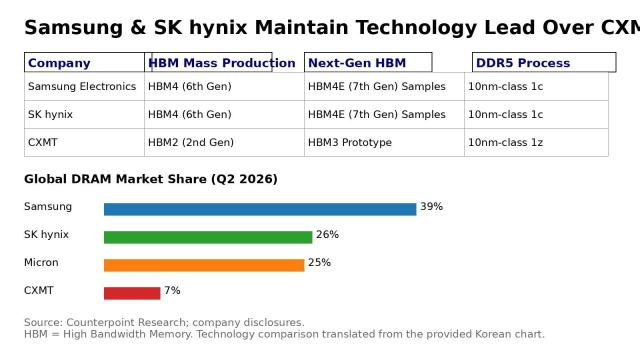
Unlike Japan, whose exports remain anchored by automobiles, machinery and industrial equipment, South Korea has emerged as one of the world's biggest beneficiaries of the AI investment cycle through Samsung Electronics and SK hynix, the two dominant suppliers of high-bandwidth memory used in AI servers.
China has become one of the largest destinations for that demand.
Korean semiconductor exports to China and Hong Kong climbed steadily from $9.63 billion in January to a record $20.03 billion in June. Annual growth accelerated from 122.5 percent in January to 227.4 percent in June, with semiconductors accounting for the majority of Korea's ICT exports to the two markets.
The Ministry of Trade, Industry and Energy has attributed the gains to expanding demand for AI servers and sharply higher DRAM and NAND flash prices. Korea's semiconductor exports reached a record $44.82 billion in June, nearly triple the level a year earlier.
The trend is particularly striking because China has simultaneously accelerated efforts to reduce reliance on imported memory.
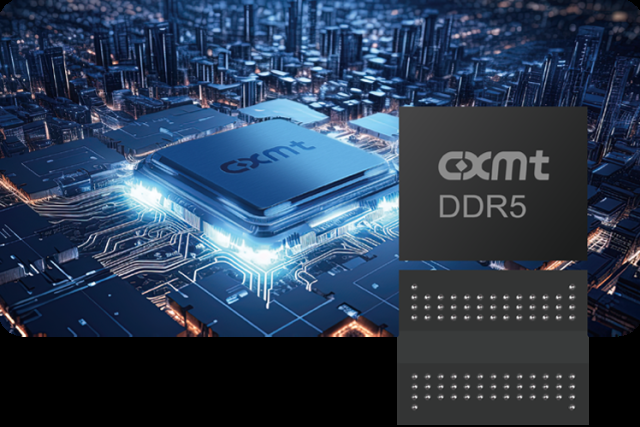
ChangXin Memory Technologies (CXMT) has expanded into the world's fourth-largest DRAM producer, while Yangtze Memory Technologies continues to increase NAND production. Yet the pace of AI-driven demand appears to have outstripped domestic supply, leaving Chinese manufacturers heavily dependent on imported Korean memory chips.
CXMT completed a record 57.9 billion yuan ($8.6 billion) initial public offering on Shanghai's STAR Market in July, the largest semiconductor listing on mainland China and Asia's biggest IPO this year and dealing a brief upset to Korean chipmakers.
The company has said it will use the proceeds primarily to expand DRAM production capacity and upgrade manufacturing technology as Beijing accelerates its drive for semiconductor self-sufficiency.
CXMT currently operates three 12-inch DRAM fabrication plants in Hefei and Beijing, with industry estimates putting combined capacity at roughly 300,000 wafers per month.
The company is planning an additional 12-inch fabrication plant in Beijing while pursuing further expansion in Shanghai and Hefei, projects that could more than double its production capacity over the coming years.
Much of that memory is incorporated into servers, smartphones, personal computers and other electronics assembled in China before being sold domestically or exported worldwide.
China's own export data tell a similar story. Semiconductor exports nearly doubled in value in July, while shipments of high-tech products rose 40.7 percent, underscoring how the AI investment cycle is boosting trade across the region even as parts of China's domestic economy remain under pressure.
While detailed July customs data have yet to confirm how much of Korea's export surge came specifically from semiconductors, the first-half trend strongly suggests AI memory remains the engine behind the rapidly expanding Korea-China trade relationship.
A clearer breakdown will depend on the release of Korea's July ICT trade figures or Chinese customs data showing July imports of Korean integrated circuits, including HS 8542.
__________________________________________________________________________________
AJP Takeaways
China imported $31.05 billion of South Korean goods in July, up 97.8 percent from a year earlier, while Korean exports to China rose 96 percent.
Korean semiconductor exports to China and Hong Kong climbed from $9.63 billion in January to $20.03 billion in June, suggesting chips likely remained an important driver of bilateral trade in July even though detailed country-by-product data are not yet available.
China's CXMT and YMTC are rapidly expanding domestic memory production, but Korean chip shipments have continued to rise as AI-server demand and higher memory prices outpace the growth in Chinese supply.

Copyright ⓒ Aju Press All rights reserved.
