

It is not as crowded as Seoul's hip Hongik University neighborhood, a popular nightlife district known for its youthful energy or as busy as nearby Itaewon, Seoul's best-known international and entertainment district.
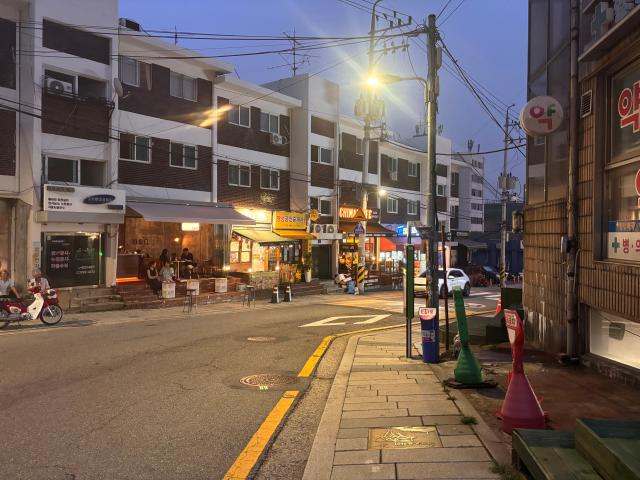
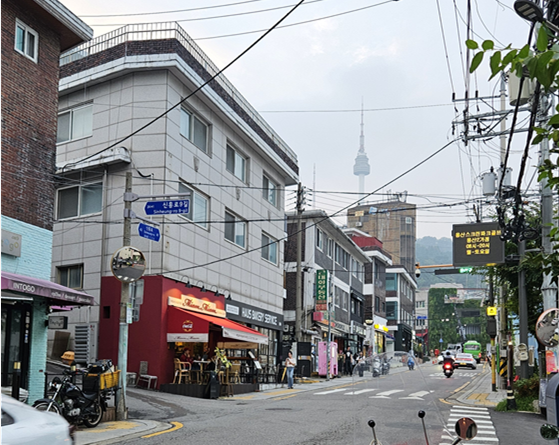
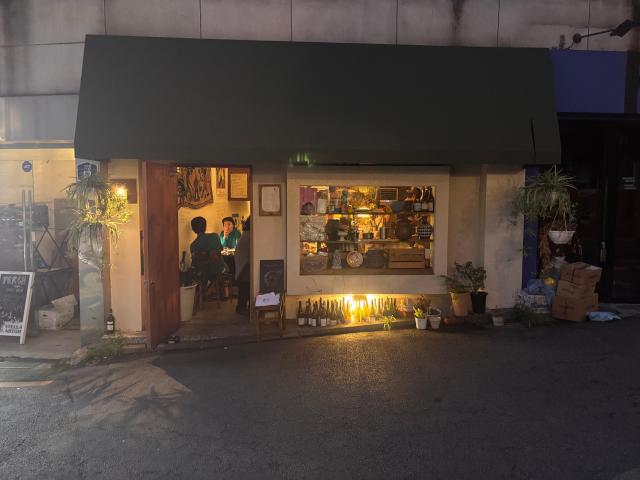
Yet Haebangchon has plenty of bars, restaurants and cafés within walking distance, food from around the world and quiet side streets that offer a break from the city's crowds.
For Aurelia Rhinan, a 38-year-old visitor from France who was walking through Haebangchon with her nephew on Thursday, that mix felt just right.
"It's the perfect in-between," she said.
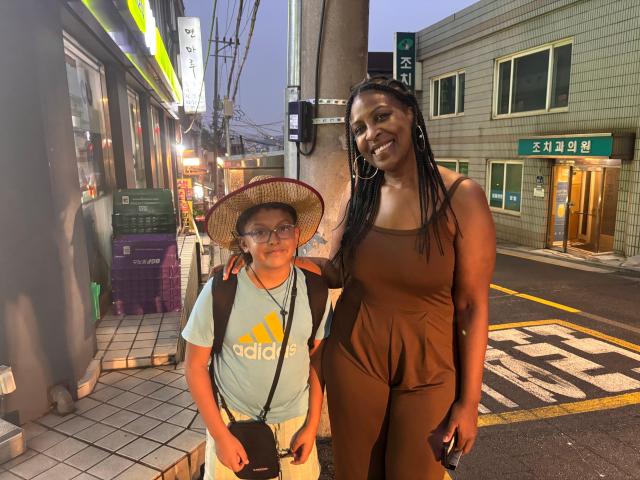
"It's peaceful, but not too quiet," she said. "If you want to go out, have a drink or something like that, you can."
That "middle ground" came up repeatedly in conversations with foreigners AJP met in Haebangchon. Residents and visitors alike described a place that feels international and lively without being overwhelmed by its growing popularity.
Rhinan said she would surely recommend the neighborhood to friends and could imagine making a home there herself. "If I can ever live here, why not?" she said. "This is just what I like personally."
A neighborhood built by newcomers
Haebangchon, a hillside neighborhood in central Seoul's Yongsan District, has long been home to newcomers. Its name translates literally as "Liberation Village," reflecting its origins after Korea's liberation from Japanese colonial rule in 1945, when Koreans returning from overseas and those who had come south from northern Korea began settling on the slopes below Mt. Namsan. More refugees arrived during and after the Korean War.
Another wave followed from the 1960s, as people from across the country sought relatively cheap housing in Seoul. Many made a living in the neighborhood's growing knitwear industry, producing garments for Namdaemun Market, one of Seoul's largest wholesale markets and Myeong-dong, a major shopping district. The industry remained a major source of livelihood for residents through the 1980s.
U.S. military personnel and other foreigners living around nearby Itaewon and Hannam-dong were among those who made their way into the area. In more recent years, artists, young entrepreneurs and residents from a broader range of countries have further reshaped the neighborhood.
A foreign community inside Seoul
Eventually, the community that had formed there became another reason to come.
For Ella Ishimwe, a 28-year-old from Burundi, the draw is less about being trendy than about being able to build a life.
Ishimwe came to South Korea to study and work, and has lived in Seoul for three years while working at a pizza restaurant. She plans to pursue a doctorate in global leadership.
"Lots of foreigners," she said when asked what appealed to her most. "You can meet a lot of people while you're still in Seoul," she said with a smile, reflecting her affection for life in Korea.
She described the Koreans she had met in the neighborhood as open-minded and kind, adding that many were naturally speaking English, which made daily life easier.
The neighborhood is "peaceful" and "convenient," she said, but still fun.
In the three years she has been here, she has also seen the foreign community grow.
"There are so many foreigners here than three years ago," she said.
Official figures point in the same direction. In 2023, about 1,324 foreign residents lived in Haebangchon, accounting for roughly 10 percent of the neighborhood's population. By 2025, foreigners made up 16 percent of residents in Yongsan 2-ga-dong — about one in every six people — according to the local community service center.
The center said the number of foreign residents had been increasing each year. The concentration is high enough that the office now provides foreign-language information on taxes, garbage disposal and parking, connects residents with legal and tax consultations.
That concentration creates practical networks, too. "You can find a job easily as a foreigner," she said. In her experience, the neighborhood's international community made it easier for foreigners to find work in the area.
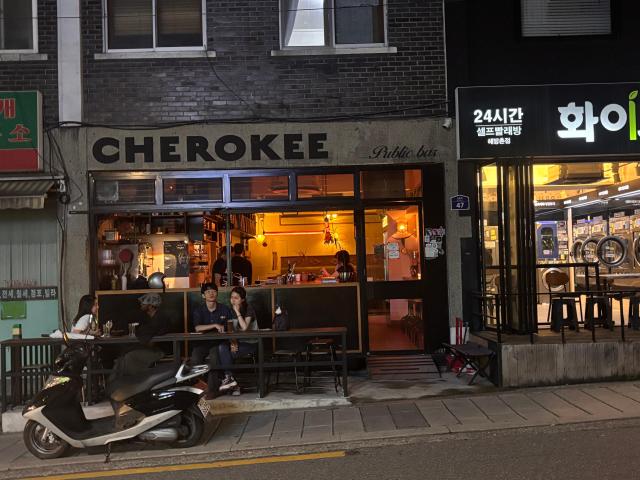
Yet for some foreigners, what sets the area apart is how much of its older, local character remains alongside it.
Luca Nowakowski, a 26-year-old Italian model, was sitting on the pavement with a friend he affectionately calls his "uncle," who lives in the neighborhood, when AJP met him.
"I like this area because it's more local than Gangnam," he said. "If I would live somewhere, I would live in this area."
For Nowakowski, much of the appeal lies farther up the hill, where the streets narrow, views of Seoul open up and small local businesses are tucked into side alleys. "If you go up a little bit more, you have a super nice view," he said. "You have a lot of side streets. You will find some more local spots."
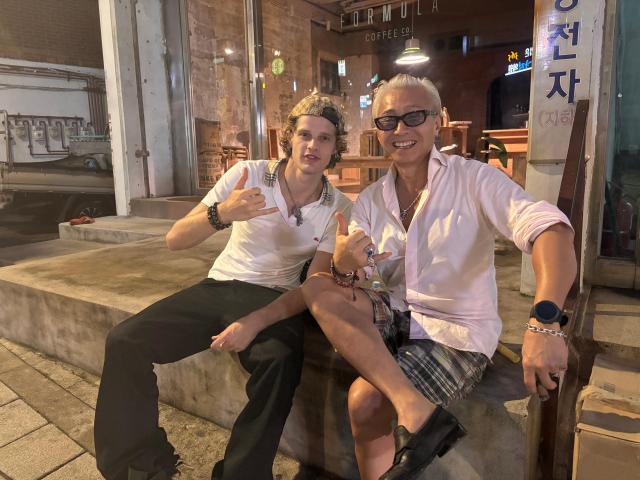
He said he did not want the neighborhood overrun by tourists or transformed into another district dominated by younger crowds and commercial trends.
Asked to name his favorite places, Nowakowski laughed and resisted. "I want to gatekeep," he said. "I don't want my favorite restaurants to have long queues of foreigners.”
Beyond the newer cafés and shops, parts of the hillside still carry much older traces of the neighborhood's history.
The 108 Stairs, a stone staircase built in 1943 during Japanese colonial rule, originally served as an approach to Gyeongseong Hoguk Shrine, a Shinto shrine built by imperial Japan to enshrine those who died in war. The shrine was dismantled after the liberation in 1945, but the stairs remained as a passageway for local residents. In 2018, an inclined elevator, which travels diagonally along the slope, was installed to make the climb easier for elderly residents.
From fading market to destination
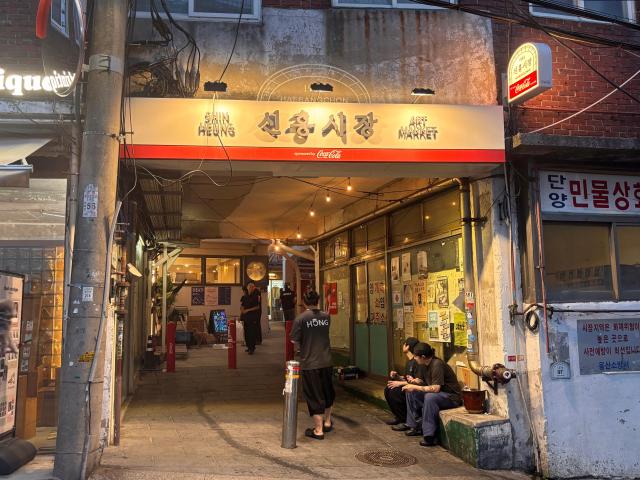
The market flourished in the 1970s and 1980s alongside the area's booming knitwear industry, serving as a hub where goods produced in small workshops and homes were gathered and distributed. When the industry declined in the 1990s, the market faded with it.
By the 2010s, however, cafés and workshops had begun taking over vacant storefronts. Seoul designated the area as an urban-regeneration area in 2015 and made the revitalization of the Market one of its core projects. The plan sought to build on the businesses already emerging there while improving the market's aging infrastructure and strengthening the local community.
By 2021, older shops were operating alongside cafés, workshops and other newer businesses. Television dramas, variety shows and social media later helped turn the market into a destination for a younger crowd.
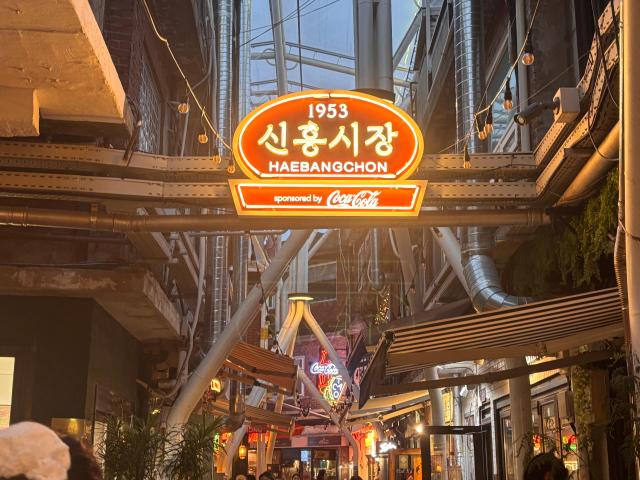
The transformation was easy to see on Thursday. Visitors stopped beneath the market's red "1953 Shinheung Market" sign to take photos before heading into narrow lanes lined with restaurants and cafes.
A taste of home
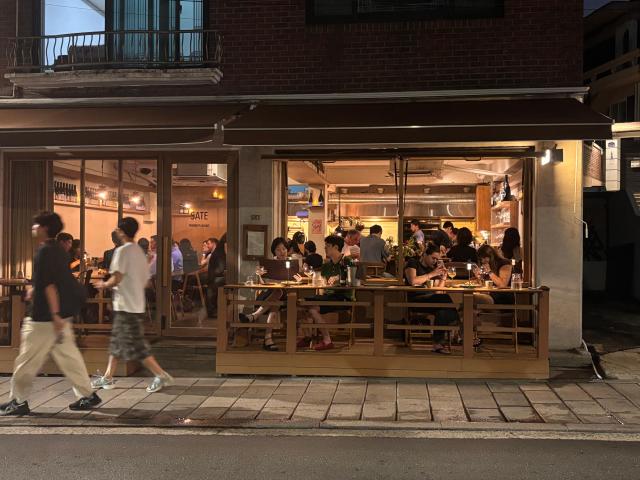
Not everyone comes to Haebangchon to live. At a Mexican restaurant, four Mexican visitors in their 20s, who declined to give their names, had crossed the area for something more familiar.
"We came here to eat our home food," one said, laughing. The irony of traveling to South Korea and then seeking out Mexican food wasn't lost on them. One compared it to Koreans going overseas and eventually finding their way to a Koreatown.
Another said the food alone was worth the trip, adding, "There are so many different nationalities here. It has a vibe that's pretty distinct from the rest of Seoul."
Haebangchon and nearby Itaewon have long drawn Koreans looking for authentic international food. Now, social media is also bringing foreigners to the area in search of a taste of home.
More broadly, Seoul is drawing record numbers of overseas visitors, with tourists increasingly venturing beyond the city's traditional attractions. A record 8.23 million foreign tourists visited the capital in the first half of 2026, up 21.3 percent from a year earlier, according to the Seoul Metropolitan Government on July 29.
From behind the counter
For longtime Korean shopkeepers, the change is visible not in statistics or social-media posts, but in who walks through the door.
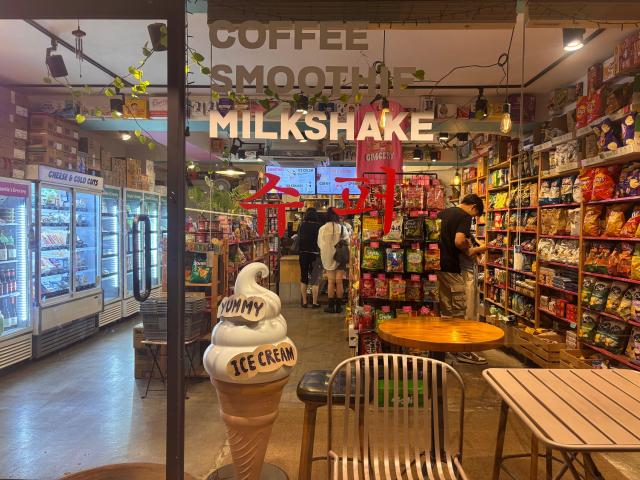
At an old supermarket in Haebangchon, a Korean owner in her 70s said she had watched the number of foreign customers rise over the years.
"Half of my customers are foreigners," she added, saying Filipinos and Nigerians are among her regular shoppers.
Her store offers a glimpse of how ordinary that international presence has become.
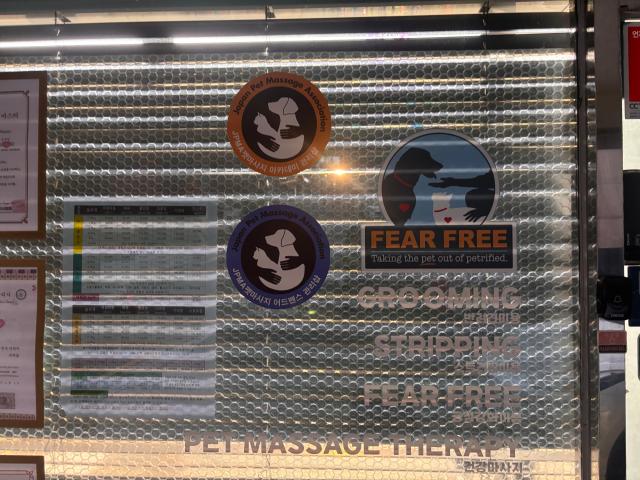
Just down the street, a pet-grooming shop displayed its name prominently in English, another small sign that businesses here increasingly cater to people from different backgrounds.
In that sense, today's Haebangchon continues a long pattern. The people arriving have changed over time, but the neighborhood has repeatedly become a home for newcomers — from Koreans returning after liberation and families coming south from the North, to workers during industrialization and, later, residents from abroad.
What has changed is what draws the next wave. Cheap housing once helped foreigners establish a foothold. Over time, that community created its own restaurants, businesses and social networks, turning the neighborhood itself into part of the attraction.
Rhinan would recommend it to her friends. Nowakowski would happily live there.
Both are drawn to the same place for much the same reason — the energy of central Seoul without quite surrendering to it.
Not too crowded. Not too quiet. "The perfect in-between."
Copyright ⓒ Aju Press All rights reserved.
