
SEOUL, September 14 (AJP) - Beggars at bus terminals and market stalls in Kazakhstan set out a coin tin and, beside it, a transfer number. Most people walking past do not reach for change. They open an app and send the money.
The app is Kaspi, and almost everything in the country now moves through it. Order coffee in an Almaty café and nine of 10 customers take out a phone, because a QR code taped to the wall does the work a card terminal used to do. The same application handles utility bills, traffic fines, loans, flight bookings, property listings and driving licence renewals. Kaspi.kz became the first Kazakh company to list on the Nasdaq in January 2024. Its palm-recognition service, Kaspi Alaqan, opened in Almaty last December and registered more than 500,000 users in under three months, about a third of the city's adult population, according to the company's own results.
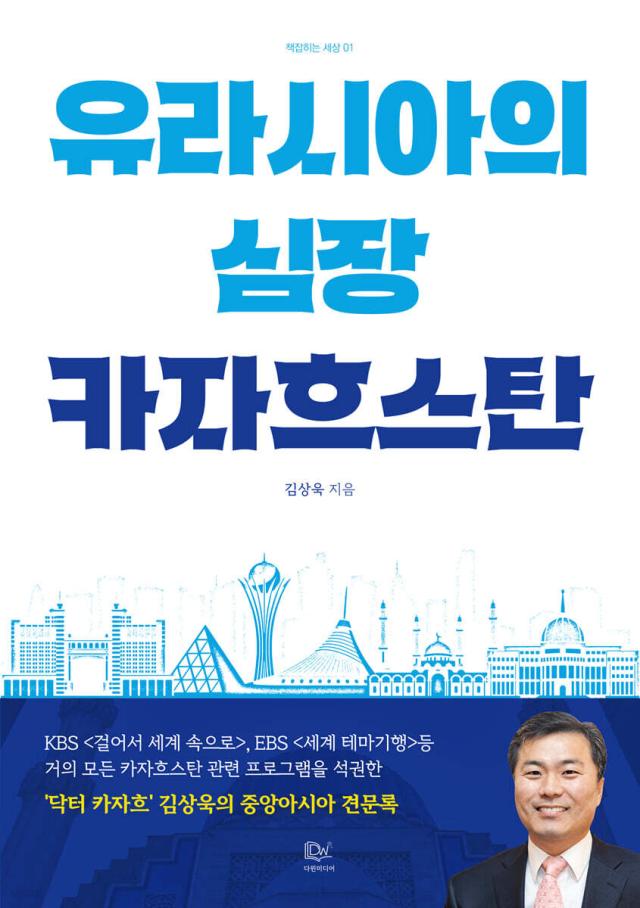
None of that fits the picture most South Koreans carry of Kazakhstan, and closing that gap is why Kim Sang-wook spent two years writing a book about it. "Kazakhstan, Heart of Eurasia," published by DaWin Media on August 31, runs 324 pages and covers the steppe, the Soviet century, energy, diplomacy and the ethnic Korean community that has lived there since 1937. Its author has been in Almaty since 1995.
"Kazakhstan reaches South Korean readers as steppe, nomads and yurts," he said. "I wanted to show an ultramodern state built on AI."
The country is trying to build one. President Kassym-Jomart Tokayev signed a decree on June 9 approving Digital Qazaqstan, a national strategy running to 2029 that puts artificial intelligence into public administration, industry, logistics and energy, with investment estimated at $10.5 billion to $16.5 billion over three years. Kazakhstan has a minister for AI. South Korea does not.
Kim argues that diplomacy is the more interesting story, and that it is older than the state. His book traces Kazakhstan's habit of never committing fully to one power back to the steppe, where tribes and alliances formed and dissolved, today's partner could be tomorrow's rival, and staying mobile was how people survived. What that left behind, he writes, was an instinctive wariness of strong central authority and a stubborn attachment to autonomy.
That habit now has a name. Kazakhstan declared a multi-vector foreign policy early, keeping Russia close without being absorbed by it, opening to China, the United States and Europe at the same time, and refusing to sit in anyone's camp. "Kazakhstan's standing in the world runs well ahead of its economy," Kim said, and the comparison is not flattering to the economy. The International Monetary Fund puts Kazakhstan's output this year at about $360 billion, roughly a fifth of South Korea's.
He does not soften the rest. "Authoritarian political culture from the Soviet period is still there," he said.
What has changed since his two earlier books on the region, he said, is that Kazakhstan worked out what its size is for. The country is the ninth largest on earth, about 27 times the area of South Korea, and it sits between China and Europe. Astana has been modernizing roads and rail to serve the Middle Corridor, a route of some 4,250 kilometers of track plus a Caspian crossing that reaches Europe through Azerbaijan, Georgia and Türkiye without touching either Russia or Iran. That mattered less when he started writing. It matters more now that the U.S. and Israel began strikes on Iran on February 28 and Tehran closed the Strait of Hormuz. "Kazakhstan has become the giant of Central Asia," he said.
The app in the coffee shop belongs to that story too. Vyacheslav Kim, who co-founded Kaspi.kz and chairs its board, was born in Almaty in 1969 into the Koryo-saram, the ethnic Koreans deported from the Russian Far East to Central Asia on Soviet orders in 1937. Forbes valued his holdings at $7.8 billion in May and ranked him the wealthiest person in the country.
Kim Sang-wook arrived in 1995 to teach Korean at Almaty State University, and did not plan to stay. He cannot name the moment he decided to. Asked to try, he chose the year after the 1997 financial crisis, when a university senior of his was importing South Korean goods into a market where the collapsed won made every dollar go further, and got rich selling powdered coffee creamer to Kazakhs who took their tea with milk. Kim spent time with that family and their Koryo-saram business partners, and the country stopped feeling foreign. The senior urged him to quit teaching and go into business while the market was still opening. He said no, and is still teased about it. Three children were born and raised there.
Instead, he founded a newspaper. Hanin Ilbo, started in 1999 with his own former students, has published in Korean in Kazakhstan ever since.
The culture center came about by accident. Almaty provides office space to its minority communities, and when the city took back the room the Korean groups had been using and converted it into a courthouse, the replacement was too small for the choirs to rehearse in. Kim renovated the empty second floor of a building he owned, about 180 square meters, and handed it over. It now runs as an office, a rehearsal hall and a gathering place for older members of the community. "I may be the legal owner, but the people who use it are the real owners," he said.
The Assembly of the People of Kazakhstan, a presidential body chaired by Tokayev, named him a goodwill ambassador in 2023, the first South Korean to hold the title. He describes the advantage of doing this work privately in practical terms. "I am on the ground, so I can reflect what is actually needed," he said. Last September he brought a Koryo-saram choir to South Korea for four performances over 10 days, at the National Assembly and in Ansan, Gwangju and Jeju, paid for by friends.
The community he writes about is the subject of the book's longest argument. Kazakhstan divides historically into three zhuz, the tribal confederations that organized the steppe, and Kim places the Koryo-saram inside that structure rather than beside it. Deported to Kyzylorda with nothing, they turned empty ground along the Syr Darya into the leading rice-growing region in Central Asia.
What happens next to them is less settled. Most have lost the language, he said, and Russian took its place. But the generation now coming up grew up on Korean drama and music, the way their Kazakh and Russian classmates did, and wants to study in Seoul.
"They learn Korean before their parents think to teach them, because they want to," he said. "After 163 years, the number of Korean speakers hit bottom and started climbing again."
AJP Takeaways
- Kim Sang-wook, director of the Koryo Culture Center in Almaty and a resident of Kazakhstan since 1995, published "Kazakhstan, Heart of Eurasia" through DaWin Media on August 31, a 324-page account arguing that South Korean readers still picture the country as steppe, nomads and yurts when it is rebuilding itself around artificial intelligence.
- Kaspi.kz, whose app handles payments, utility bills, traffic fines, loans, flight bookings and driving licence renewals across Kazakhstan, said its palm-recognition service registered more than 500,000 users in Almaty within three months of launching last December, about a third of the city's adult population, and the company listed on the Nasdaq in January 2024.
- Forbes ranked Vyacheslav Kim, the Almaty-born co-founder and chairman of Kaspi.kz, as the wealthiest person in Kazakhstan in May with holdings valued at $7.8 billion, and he belongs to the Koryo-saram community deported from the Russian Far East in 1937. AJP confirmed his background and the Forbes ranking independently; neither appeared in the author's responses.
Copyright ⓒ Aju Press All rights reserved.