SEOUL, Sep. 15 (AJP) - South Korean and Japanese stayed nearly flat in Tuesday early session as investors sidelined amid rising U.S. Treasury yields and oil prices, coupled with concerns over the pace of artificial intelligence (AI) investment.
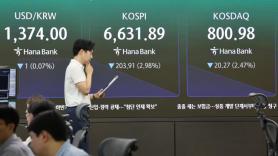
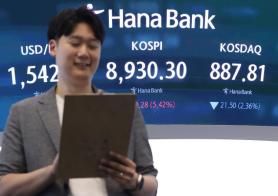
The KOSPI stood at 6,691.10, up 6.73. points or 0.1 percent at around 10:30 a.m. Seoul time. The Nikkei 225 was at 63,849.23, 355.01 points, or 0.55 percent.
The KOSDAQ however added 2 percent to 823.63.
Seoul's semiconductor heavyweights showed some resilience after leading Monday's selloff.
Samsung Electronics was at 255,500 won ($190), up 0.60 percent. SK hynix rose 0.77 percent to 1.71 million won ($1,272).
The rebound in chip stocks helped limit the KOSPI's decline, even as foreign and institutional investors remained net sellers early in the session.
Investors were still digesting a sharp rise in U.S. Treasury yields, with the 10-year yield moving above 5 percent, while higher oil prices added to concerns that inflation could remain elevated.
U.S. stocks also closed lower overnight, with the Standard & Poor's 500 (S&P 500) falling 0.48 percent and the Nasdaq Composite losing 0.56 percent. The Philadelphia Semiconductor Index tumbled 5.86 percent.
The semiconductor selloff followed renewed concerns about the sustainability of the AI investment boom.
Anthropic CEO Dario Amodei called for a slower pace of AI development, prompting other technology executives to voice support for greater caution.
Japan's market showed greater resilience Tuesday, with the Nikkei recovering modestly after semiconductor-related shares helped drive Monday's decline.
The yen and expectations for central-bank policy also remained in focus, with investors looking ahead to the Federal Reserve's policy decision Wednesday and the Bank of Japan's decision later this week.
The Seoul bourse underwent a major change Monday as the Korea Exchange (KRX) launched a new real-time after-market session running from four p.m. to eight p.m., replacing the previous 10-minute batch-matching system.
The first session generated 1.8177 trillion won ($1.33 billion) in turnover, equivalent to about 8.03 percent of trading on the KRX's regular session.
The debut also immediately intensified competition with Nextrade (NXT), which already operates an after-market through eight p.m., with KRX and NXT recording almost identical turnover on Monday.
The new KRX session covers most KOSPI and KOSDAQ stocks. It gives investors a broader pool of shares to trade after the regular market closes and allows new information released during the evening to be reflected in prices more quickly.
For Tuesday, investors will watch whether Seoul's semiconductor stocks can extend their early recovery and whether Tokyo can maintain its rebound as markets await major U.S. and Japanese monetary-policy decisions.
AJP Takeaways
-South Korean stocks opened lower while Japanese stocks edged higher after both markets suffered sharp losses Monday.
-Samsung Electronics and SK hynix showed early resilience as investors weighed higher U.S. yields and concerns over artificial intelligence investment.
-Korea Exchange's new after-market session generated 1.8177 trillion won ($1.33 billion) in turnover on its first day, equivalent to about 8.03 percent of regular-session trading.
Entity tags: Samsung Electronics, SK hynix, Anthropic CEO Dario Amodei, Federal Reserve, Bank of Japan, Korea Exchange, Nextrade, KOSPI, Nikkei, KOSDAQ.
Copyright ⓒ Aju Press All rights reserved.