Some 12,267 EVs were sold in the domestic market last month, up 95.9 percent from 6,261 a year earlier and 62.5 percent from September, according to data released by the automakers on Monday.
Their combined sales from January through October reached 116,159 units, up 77.1 percent from the same period last year.
Kia sold 8,650 EVs in October, well ahead of Hyundai's 3,617 EVs, as its more affordable models drove demand.
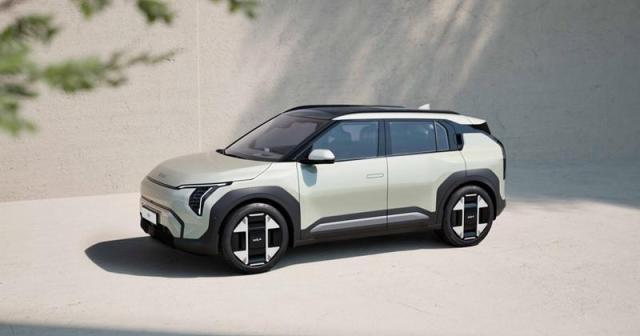
Kia sold 3,558 EV5s in October, up 209.4 percent from a year earlier. EV3 sales also rose 119.5 percent to 3,124 units, followed by the EV4, with 950 units sold, up 45.3 percent.
At Hyundai, the Ioniq 5 remained the best-selling model with 1,903 units, followed by the Ioniq 9 with 1,099 and the Ioniq 6 with 615.
The increase in sales was attributed to a wider selection of relatively affordable electric vehicles and discounts that made purchases more attractive, as buyers sought to take advantage of government subsidies before they are reduced.
The boost in sales was not limited to the domestic market, with Hyundai delivering 575,000 EVs worldwide during the same period, up 19 percent from a year earlier. Its global market share also rose to 3.6 percent from 3.2 percent.
Hyundai and Kia, however, face growing competition from Chinese-made electric vehicles, which are gaining ground with their competitive prices. New registrations of China-made passenger EVs in South Korea reached 112,417 units for the first nine months of this year, more than double the 51,535 registered during the same period a year earlier, according to data from the Korea Automobile Importers & Distributors Association.
Their share of the domestic market climbed to 43.5 percent, up 8.4 percentage points, while the share of domestically produced EVs fell 6.2 percentage points to 48.7 percent, highlighting the growing competitive pressure on local automakers.
Their market share in the domestic market climbed to 43.5 percent, up 8.4 percentage points, while domestically produced EVs saw their share fall 6.2 percentage points to 48.7 percent, posing a growing challenge for local automakers.
Copyright ⓒ Aju Press All rights reserved.