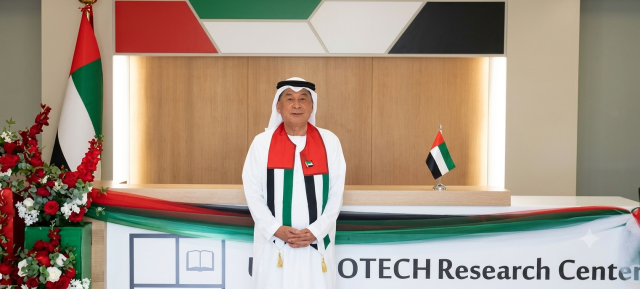
Hwang's name was included on a list of individuals who lost their Korean citizenship, published in August by an immigration office in Cheongju, North Chungcheong Province. It identifies a man surnamed Hwang, born in 1953 in Buyeo, South Chungcheong Province, who lost his citizenship on April 9 after acquiring UAE nationality.
The birth year and hometown match those of the 73-year-old former Seoul National University professor, who is now based in the UAE. Although the notice does not explicitly identify him as the scientist, the details indicate that it likely refers to Hwang.
South Korean law stipulates that citizens automatically lose their nationality if they voluntarily acquire another country's citizenship.
Hwang, once hailed as a hero in the early 2000s for his cloning and stem cell research, which raised hopes of developing treatments for serious diseases before his findings were found to be fabricated, now heads the UAE Biotech Research Center in Abu Dhabi, where he continues to conduct research on animal cloning and related fields.
His move to the UAE came after years of controversy in South Korea over his research achievements. Despite being dismissed from the prestigious university in 2006, he reportedly began receiving substantial investment from the UAE around 2019.
Hwang is believed to have obtained UAE citizenship with the support of Sheikh Mansour bin Zayed Al Nahyan, the UAE vice president and owner of English Premier League club Manchester City. In a research paper on camel cloning published in March 2024, Hwang thanked Mansour for his support of the research.
Copyright ⓒ Aju Press All rights reserved.