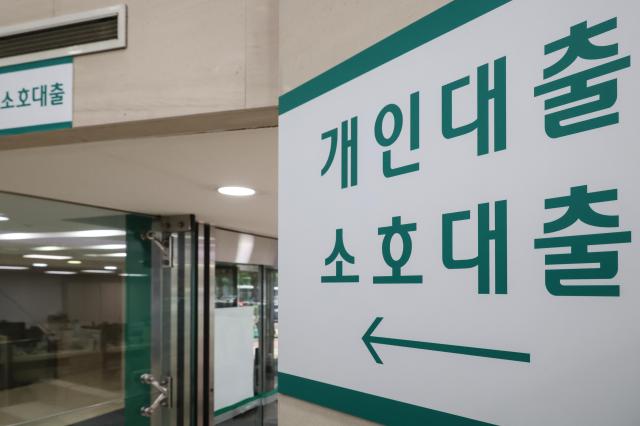
SEOUL, November 11 (AJP) — South Korea's bank household lending jumped by 5 trillion won ($3.7 billion) in October as mortgage growth accelerated and stock purchases helped revive other borrowing, central bank data showed Wednesday.
The increase widened sharply from a revised 500 billion won in September, bringing outstanding bank household loans to 1,203.9 trillion won, according to the Bank of Korea (BOK).
It marked the largest monthly increase since July, reversing three consecutive months of slowing loan growth.
The rebound was driven largely by a turnaround in other household loans, including unsecured credit and securities-backed borrowing, which increased by 1.7 trillion won after declining by 2.3 trillion won in September.
The BOK attributed the turnaround partly to individuals' net purchases of stocks and seasonal effects that had depressed lending in September, including bad-loan disposals and holiday bonus payments.
Mortgage lending also accelerated, increasing by 3.3 trillion won from 2.9 trillion won a month earlier as banks extended more collective loans for construction payments and relocation expenses.
The increase came despite continued weakness in jeonse loans, which declined by 800 billion won following a 900 billion won decrease in September.
The October rebound preceded a turbulent start to November, when a sharp stock market selloff prompted regulators to temporarily relax margin lending requirements to limit forced selling.
From November 9, securities firms were exempted for three months from the requirement to maintain a 140 percent collateral ratio on margin loans, allowing them greater flexibility in managing borrowers' collateral.
The measure applies to brokerage margin lending, which is distinct from the bank household loans covered by the BOK's monthly figures.
The renewed expansion in household credit comes as the central bank assesses the effects of its two consecutive interest rate increases in July and August.
The BOK kept its base rate unchanged at 3.00 percent in October, weighing persistent inflation and financial stability risks against the need to assess the impact of earlier tightening.
Corporate borrowing also remained elevated, with bank loans to companies increasing by 10.2 trillion won in October after a 10.7 trillion won rise in September.
Loans to small and medium-sized enterprises increased by 6.2 trillion won, nearly doubling the previous month's gain as banks expanded lending and companies sought funds for value-added tax payments.
Large-company borrowing increased by 4 trillion won, compared with 7.5 trillion won in September, partly reflecting demand for funds to repay corporate bonds.
Corporate bank loans increased by 87.9 trillion won during the first 10 months of the year, compared with 50.9 trillion won over the same period in 2025.
Corporate bonds, meanwhile, recorded 22.3 trillion won in net redemptions over the January-October period, reversing from net issuance of 6.4 trillion won a year earlier.
The figures point to continued corporate reliance on bank borrowing as companies use loans and other financing channels in place of bond issuance.
Funding conditions showed divergent trends across maturities.
The three-year government bond yield fell to 3.72 percent at the end of October from 4.01 percent in September, while the 10-year yield dropped to 4.01 percent from 4.41 percent.
The BOK attributed the declines to stronger demand for safe-haven assets amid falling stock prices, lower overseas bond yields and expectations of reduced government bond supply.
Short-term funding costs moved in the opposite direction, with the 91-day commercial paper rate climbing to 3.84 percent from 3.42 percent, reflecting expectations of further monetary tightening and increased funding demand.
Banks also stepped up their own financing, with time deposits increasing by 24.1 trillion won in October, compared with 2.1 trillion won in September.
Bank bond funding rose by 15.4 trillion won, up from 5.7 trillion won, as lenders sought to secure funds ahead of corporate deposit maturities and bond repayments.
Stock investment funds recorded a 26.5 trillion won decline in their reported balances during October, largely reflecting falling equity valuations.
Excluding valuation losses, however, the funds received 8.3 trillion won in fresh inflows, indicating that investors continued allocating money to equities despite the market downturn.

Copyright ⓒ Aju Press All rights reserved.