

Journalist

Joonha Yoo유준하
joonhayoo94@ajupress.com
ReporterCOEX Sejong Center for the Performing Arts & Music, Culture, Entertainment, Automotive
Joonha Yoo is a bilingual journalist at AJU Press (AJP), covering music, culture, entertainment and Korea’s automotive industry.
Raised in Fort Collins, Colorado, he often writes from the scene, bringing firsthand detail to stories ranging
from BTS comeback concerts to unique cultural events that catch the world's eye. "I write from the scene, not from the sidelines."
Raised in Fort Collins, Colorado, he often writes from the scene, bringing firsthand detail to stories ranging
from BTS comeback concerts to unique cultural events that catch the world's eye. "I write from the scene, not from the sidelines."
Latest by Joonha Yoo
-
 Korea targets Chinese tour demand for regional travel push SEOUL, September 10 (AJP) - South Korea will bring Chinese travel agencies to meetings with Korean tourism officials this week as part of a push to send more Chinese visitors beyond Seoul, the culture ministry said Thursday. The first Korea-China travel industry exchange will be held in Incheon on Thursday, followed by a regional tourism briefing and business-to-business travel market in Andong, North Gyeongsang Province, on Friday. The program is hosted by the ministry and organized by the Korea Tourism Organization and the Korea Association of Travel Agents. About 200 people are expected to attend the Incheon event, including executives from the China Association of Travel Services, around 50 Chinese outbound travel agency officials and 50 Korean inbound tour operators. The event will include business meetings aimed at developing and selling group tour products for Chinese visitors to Korea. The Korea Association of Travel Agents will present 68 selected travel products covering themes such as family trips, K-beauty, wellness, leisure sports and regional tourism. The second day will shift to Andong, where Chinese travel firms, media representatives, airline officials, Korean local governments and regional tourism organizations will discuss new tour routes. Seven local governments, Gangwon, South Gyeongsang, North Gyeongsang, Daegu, North Jeolla, North Chungcheong and South Chungcheong, will introduce regional tourism products linked to nearby international airports. The travel mart will focus on packages designed to keep visitors longer in regional areas, rather than limiting trips to Seoul and other established stops. Separately, 120 Chinese travel agency officials and journalists are taking part in familiarization tours from Sept. 8 to 15, covering routes through Jeju, Busan, Daegu, Andong, Gyeongju, Daejeon and Danyang. Culture Minister Choi Hwi-young will attend a Korea-China tourism industry networking event in Andong on Friday. He will also inspect tourism sites in Andong ahead of the Chuseok holiday, including Andong Old Market, Byeongsan Seowon, Hahoe Village and the Hahoe Seonyu Julbulnori fireworks event. The ministry said the program is part of a broader effort to attract repeat foreign visitors to regional destinations and encourage longer stays. The government has proposed a record 1.76 trillion won ($1.31 billion) tourism budget for 2027, up 19 percent from this year. The plan includes funding for tourism zones centered on regional airports, loans for tourism businesses and local travel vouchers for rural areas facing population decline. AJP Takeaways - Korea and China are holding their first travel industry exchange this week. - The program is aimed at turning Chinese travel demand toward regional destinations outside Seoul. - About 200 people will attend the Incheon event, including Chinese travel agencies and Korean tour operators. 2026-09-10 11:03:21
 -
 How social media is rewriting presidential politics SEOUL, September 8 (AJP) - Donald Trump did not need a podium or a press conference to dominate the political conversation over the U.S. Labor Day weekend. He needed his social media account. The U.S. president posted more than 60 times on Truth Social on Sunday alone, filling his feed with political messages, memes and AI-generated images. Some mocked foreign countries and political opponents, while others depicted Trump in exaggerated or imaginary scenes. An independent archive tracking his Truth Social activity counted 972 posts from Trump in August alone, an average of more than 31 a day. The barrage was an extreme example of a broader shift reshaping how political leaders reach the public, allowing their messages to circulate before traditional media can verify or contextualize them. A structural shift, not just a new channel Political leaders once relied heavily on speeches, press conferences and news organizations to carry their messages to the public. Social media now allows them to publish directly and receive an almost immediate response through views, likes, comments and reposts. Kim Chun-sik, a professor of media communication at Hankuk University of Foreign Studies, said newspapers and broadcasters once acted as filters between politicians and mass audiences. "Social media has become a direct channel through which politicians can reach the public," Kim said. "They no longer have to go through newspapers and broadcasters." In the traditional mass-media system, political messages were selected, checked and framed by journalists before reaching a broad audience. But Kim said the rise of social media does not mean gatekeeping itself has disappeared. "In the mass-media era, newspapers and broadcasters performed the gatekeeping role in both news production and distribution," he said. "Now they can still perform that role in production, but they can no longer control distribution." Such power has increasingly shifted toward platforms and their algorithms. Kim said social media companies can influence which information receives greater exposure even though they do not produce the news themselves. Their commercial incentives can also favor content that generates clicks and reactions, particularly posts built around conflict, anger and other strong emotions. The shift is unfolding as audiences increasingly turn to social and video platforms for news. Across 48 markets surveyed in the Reuters Institute's 2026 Digital News Report, 54 percent of respondents said they used social media and video networks for news, compared with 51 percent who used news organizations' own websites and apps. It was the first time platform-based news access had overtaken direct use of news outlets' own digital channels. Among people aged 18 to 24, 52 percent said social media, video platforms and AI chatbots were their main way of accessing news. South Korea is moving in the same direction. The Korea Press Foundation's 2025 Media Users Survey found that the share of people consuming news through online video platforms rose to 30 percent from 18.4 percent a year earlier. Short-form news consumption more than doubled to 22.9 percent from 11.1 percent. South Korean President Lee Jae Myung has expanded his digital communication alongside that shift. Lee operates accounts on X, Facebook, Instagram, YouTube and a blog, and added TikTok in February. An analysis of Lee's X account found that he posted 601 messages between June 8, 2025 and May 22 this year, generating about 318 million views. Lee has used social media not only to promote government policies but also to comment on current issues, raise questions and signal matters he wants officials to examine. For some younger users, following a presidential account offers a faster way to keep up with politics than watching broadcasts or reading full news reports. "I don't always have time to watch political programs or read full news articles," said Choi Eun-young, a 27-year-old job seeker in Hanam who follows Lee on X. "Social media is one of the fastest ways to see what the president is trying to do and what issues he is talking about." Choi said it has also changed how distant political leaders feel. "Presidents used to feel very distant and intimidating," she said. "Social media makes them seem more familiar and sometimes even entertaining." She cited Trump's AI-generated images as an example of content that could make politics feel more approachable to people her age. Presidents can reach citizens faster and with fewer intermediaries, but users may have less certainty about why a particular message appeared in their feed, how representative the reaction to it is or whether information surrounding it has been verified. Im Joo-eun, a 36-year-old office worker in Seoul's Yongsan District, said she often encounters breaking news first through social media but rarely treats it as the final source. "Sometimes I don't know whether what I am consuming is actually accurate," Im said. "Anyone can make something that looks like a news report, and if people keep reposting it, unverified information can start to look like legitimate news." When a post catches her attention, Im said she searches Naver for reports from established news organizations. "In that sense, social media may actually make the role of journalism clearer," she said. "You see something online and then look for a proper news report to find out what really happened." She also questioned whether the prominence of an issue on her feed necessarily reflected broader public attention. "Social media keeps showing me the kinds of information I am already interested in," she said. "Sometimes I can't tell whether an issue is genuinely receiving widespread attention or whether it only looks important because of what my feed is showing me." The Reuters Institute found that 62 percent of respondents worldwide in 2026 were concerned about distinguishing fake or misleading information online. Generative AI adds another dimension to the transformation. Political leaders are no longer limited to distributing their interpretation of real events through words, photographs or video. They can now produce images of scenes that never happened and release them instantly through an official account. Trump's AI-generated posts illustrate how political communication can move from presenting a version of reality to creating an entirely imagined one. What one user views as humor or political branding may carry greater weight for another because it comes directly from the account of a president. Kim said the risks grow when people repeatedly consume political information that reinforces their existing beliefs, potentially limiting their exposure to competing or verified information. The shift does not necessarily make journalism obsolete. Rather, it changes where journalism enters the political information chain. A presidential message can now reach millions of people before a reporter writes a sentence about it. The press is increasingly left to verify the claim, establish what is true and provide the context that a social media feed does not. AJP Takeaways - Social media has replaced much of the traditional media's role in distributing political messages, even as newsrooms retain their role in producing verified news — shifting gatekeeping power toward platforms and their algorithms. - Reuters Institute data shows social media and video platforms overtook news organizations' own sites as the leading source of news in 2026 (54 percent vs. 51 percent), with 52 percent of 18-24 year-olds naming platforms and AI chatbots as their main news source. - South Korea's shift is measurable: online video platform news use rose to 30 percent and short-form news use to 22.9 percent in 2025, both roughly doubling year-on-year, according to the Korea Press Foundation. 2026-09-08 17:55:08
 -
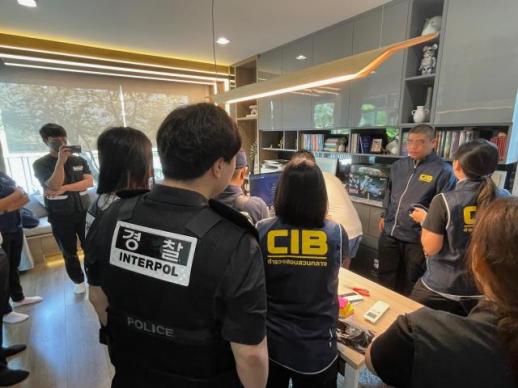 Korea, Thailand deepen police cooperation against K-content piracy SEOUL, September 08 (AJP) - South Korea's culture ministry signed an agreement with Thailand's police agency Tuesday to strengthen joint investigations into cross-border copyright crimes involving Korean content. The Ministry of Culture, Sports and Tourism and the Central Investigation Bureau of the Royal Thai Police signed the memorandum of understanding at JW Marriott Dongdaemun Square Seoul in Jongno District, the ministry said. The agreement covers cooperation on law-enforcement operations against copyright infringement, information sharing on copyright crimes and investigations, and joint policy work on copyright protection and public awareness. The agreement builds on a February multinational operation against an illegal IPTV network based in Thailand and Malaysia. South Korea's culture ministry joined the National Police Agency, Interpol, the Royal Thai Police, the Royal Malaysia Police and U.S. Homeland Security Investigations in the crackdown. Officials said the group had illegally distributed Korean and other global broadcast content since 2015, mainly across Southeast Asia, including Thailand, Malaysia, Singapore and Indonesia. Its service carried 426 live channels worldwide, including eight South Korean broadcasters such as tvN, KBS World and SPOTV, along with more than 8,000 video-on-demand titles. Industry estimates put losses for Korean content owners at about 35 billion won ($25 million). Investigators raided homes and offices in Chiang Mai, Thailand, and Selangor, Malaysia, taking four suspects into custody: one Thai national and three Malaysian nationals. After evidence reviews and questioning, local investigators verified charges against two Malaysian suspects in April and one Thai suspect in May, sending them to trial. The operation was supported by a cooperation network built under the second phase of the Interpol Stop Online Piracy project, known as I-SOP. South Korea's culture ministry, National Police Agency and Interpol signed the I-SOP agreement in January 2025. A copyright enforcement meeting hosted by the ministry last June with Thai investigators and Interpol officials also helped build trust before the joint operation, officials said. Kim Jae-hyun, the ministry's director general for culture and media industry policy, said South Korea will keep working with Interpol and foreign law-enforcement agencies to strengthen its response to transnational copyright crimes. AJP Takeaways - South Korea's culture ministry and Thailand's Central Investigation Bureau will sign a copyright protection MOU in Seoul. - The agreement focuses on joint enforcement operations, investigation information sharing and copyright policy exchanges. - The move follows a February multinational crackdown on an illegal IPTV network based in Thailand and Malaysia. 2026-09-08 13:00:19
 -
 KOSPI tops 7,100 as nuclear, construction stocks rally SEOUL, September 08 (AJP) - South Korean KOSPI climbed above 7,100 Tuesday morning as construction and nuclear power shares surged on expectations that Korea might invest in the United States' major power projects. The benchmark KOSPI stood at 7,112.63 as of 10:45 a.m., up 1.7 percent from the previous session. The index rose as high as 7,115.92 after touching an intraday low of 7,018.53. The move took the index firmly above both the 7,000 and 7,100 levels after it closed at 6,995.39 on Monday. Institutional investors bought 402.2 billion won ($300 million) worth of shares, as foreign investors followed with 78.7 billion won worth of purchase. However, the retail investors sold 947.9 billion won. Construction and power-related stocks were the heavy performers. The construction sector jumped 4.9 percent, while electric utilities gained 4.8 percent, both sharply outperforming the broader market. Daewoo Engineering & Construction surged 12.2 percent to 20,650 won. KEPCO Engineering & Construction climbed 11.5 percent, while Doosan Enerbility gained 4.2 percent to 91,600 won. Buying also spread across smaller nuclear-related shares. Orbitech jumped 21.9 percent and Woori Technology rose 6.96 percent. The rally followed reports that Korea and the United States are discussing power infrastructure projects as part of Seoul's $350 billion U.S. investment commitment. The discussions reportedly include the possible construction of up to eight large nuclear reactors in the United States. Reports have suggested that as much as $120 billion of the $200 billion investment pool excluding shipbuilding could eventually be directed toward nuclear projects. South Korea is also considering a large gas-fired power project in Encinal, Texas, to meet growing electricity demand from semiconductor plants and AI data centers. No final agreement on the nuclear projects has been announced, however, and key details including reactor types, project locations, construction schedules and participating companies remain unsettled. The uncertainty has not stopped investors from betting on Korean companies that could participate in U.S. power projects. Doosan Enerbility is considered a potential beneficiary because it can supply equipment for both Korea's APR1400 reactor and Westinghouse's AP1000 design. Construction companies could also benefit depending on how engineering, procurement and construction contracts are allocated. Semiconductor shares provided another pillar of support for the KOSPI. SK hynix rose 3.5 percent to 1,846,000 won, while Samsung Electronics gained 1.8 percent to 274,750 won. Chip stocks have extended gains following OpenAI's unveiling of its latest AI model Astra, which has strengthened expectations that increasingly computing-intensive AI services will drive further demand for high-bandwidth memory, DRAM and other memory products. Jusung Engineering also jumped 7.9 percent to 202,000 won. The tech-heavy KOSDAQ was more subdued, rising 0.45 percent to 825.90. It traded between 820.58 and 830.05. Retail investors bought 102.8 billion won on the junior market, while foreign investors sold 9 billion won and institutions followed with 94.3 billion won of sale. The Korean won strengthened alongside equities. The won traded at 1,339.1 against the U.S. dollar, up about 0.6 percent. Oil prices remained elevated amid renewed tensions between the United States and Iran around the Strait of Hormuz. U.S. crude traded around $92.30 a barrel and Brent crude at $97.05, keeping energy supply risks in focus. Meanwhile, Japan's Nikkei 225 rose 0.3 percent to 66,567.12 and China's Shanghai Composite gained 0.34 percent to 3,945.99. Hong Kong's Hang Seng Index fell 0.6 percent to 25,253.93. AJP Takeaways - KOSPI tops 7,100: The benchmark rose 1.7 percent to 7,112.63 as institutional and foreign buying outweighed heavy retail selling. - Nuclear, construction lead gains: Construction and electric utility shares jumped nearly 5 percent on expectations that Seoul's U.S. investment package could include large-scale nuclear and power projects. - Chips add support: SK hynix gained 3.5 percent and Samsung Electronics rose 1.8 percent as AI-driven memory demand optimism continued. 2026-09-08 11:15:23
 -
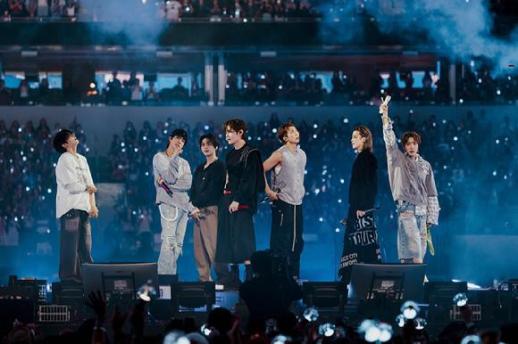 BTS draws 1.92 million on North American 'Arirang Tour' SEOUL, September 08 (AJP) - BTS drew about 1.92 million people across North America on its "ARIRANG" world tour with four sold-out shows at SoFi Stadium in Los Angeles, the group's agency BigHit Music said Tuesday. The North American leg covered 31 concerts in 12 cities and ended with performances in Los Angeles on Sept. 1, 2, 5 and 6. The four LA shows drew about 282,000 people, according to the agency. The concerts were also streamed live on fan platform Weverse and watched from 177 countries. With the latest run, BTS has now performed eight concerts at SoFi Stadium, including four shows from its 2021 "BTS Permission to Dance On Stage - LA" series. BigHit Music said BTS has become the act with the most concerts at the venue and the group with the largest cumulative audience there since the stadium opened, with the eight shows drawing about 496,000 people combined. The LA finale also highlighted the Korean roots running through the tour. During "Body to Body," a track from the group's fifth studio album, fans held up Korean flags and sang along to a section built around the traditional folk song "Arirang." The Los Angeles Times said BTS' return showed the continuing cultural reach of K-pop in the United States, noting how "Arirang" links the group's Korean roots with its global pop and hip-hop sound. Speaking to Forbes ahead of the final two LA shows, RM said "Returning to SoFi Stadium for the last North American stop was a joy and that the fans we met across the tour left a strong impression." The Los Angeles run also included fan celebrations tied to members' birthdays. Fans marked Jungkook's birthday on Sept. 1 with a gold-themed singalong and also celebrated RM ahead of his Sept. 12 birthday during the final show. BTS will begin the South American leg of the tour on Oct. 2 in Bogota, followed by shows in Lima, Santiago, Buenos Aires and Sao Paulo. AJP Takeaways - BTS drew about 1.92 million people across 31 North American concerts. - The group ended the leg with four sold-out shows at SoFi Stadium in Los Angeles. - BTS has now performed eight concerts at SoFi Stadium, drawing about 496,000 people there in total. 2026-09-08 11:06:17
 -
 Seoul picks three operators for autonomous taxi platform SEOUL, September 07 (AJP) - Seoul has selected Kakao Mobility, Hyundai Motor and T-money Mobility to operate private platforms for autonomous vehicle transport services, shifting the city's robotaxi system from a single-app model to a three-way platform structure. The move is expected to end Kakao Mobility's two-year run as the sole platform operator for Seoul's autonomous taxi calling service. Under the city's recruitment notice, selected operators will be allowed to provide platform services for two years from the date of their agreement with Seoul. The platforms must support real-time reservations, ride-hailing, dispatch, payment and route guidance for autonomous passenger transport services. Operators are also required to share transport-related data with the city and autonomous driving companies. Seoul opened the recruitment on Aug. 4 and accepted applications through Aug. 24. The city said in the notice that applicants had to own a mobile app capable of supporting paid autonomous vehicle transport services for citizens and autonomous vehicle operators. Applicants also had to operate the service as a non-profit project, without charging platform usage fees or settlement commissions to Seoul or autonomous vehicle operators. Payment-related fees charged through card companies or payment gateway firms must be kept within 2 percent. Selected operators are required to build their systems in line with Seoul's standard interface rules and launch public services, including calling, payment and autonomous vehicle route guidance, by Dec. 31. The city also required operators to provide map data on routes, stops and passenger pickup points, along with real-time monitoring screens showing ride status and vehicle operation data. The recruitment notice said Seoul could select one or more operators that scored at least 85 points in the evaluation. The evaluation covered service goals, technical capability, route guidance, dispatch plans, monitoring, payment settlement, data-sharing systems and cooperation with autonomous vehicle companies. The platform competition is likely to widen access points for Seoul's autonomous taxi services, which have so far been closely tied to Kakao T. Hyundai Motor's entry would mark the first time an automaker directly joins Seoul's robotaxi platform operation. The three selected operators are expected to sign agreements with the city and connect their platforms before services begin in earnest later this year. Seoul has been expanding its autonomous taxi program, including nighttime services in Gangnam, as it prepares to broaden operating areas in stages. AJP Takeaways - Seoul selected Kakao Mobility, Hyundai Motor and T-money Mobility for its autonomous vehicle transport platform project. - The city’s robotaxi calling system is set to shift from Kakao Mobility’s single-app model to a three-platform structure. - Selected operators will provide reservation, ride-hailing, dispatch, payment and route guidance services. 2026-09-07 17:26:59
 -
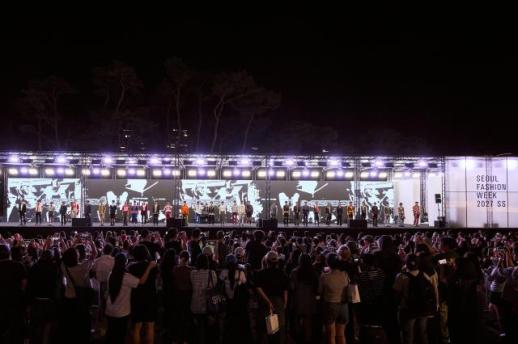 K-pop boy group NCT collabs with Seoul fashion week SEOUL, September 07 (AJP) -K-pop boy group NCT celebrated the 10th anniversary of its brand launch with a Seoul Fashion Week program that brought the group's stage costumes, music and choreography to a public space in Seoul's Jamsil area, SM Entertainment said Monday. The three-day program ran from Friday to Sunday at the lawn plaza of Lotte World Tower as part of Seoul Fashion Week's 2027 spring-summer season. It featured an exhibition of stage costumes worn by NCT and its units, including NCT 127, NCT DREAM, WayV and NCT WISH. The display showed how the group's visual style has changed alongside its music over the past decade. A curated runway show was held Sunday as the main program. The show combined NCT's music, costumes and choreography, tracing the group's start, expansion into multiple units and more recent direction. ScreaM Records, SM Entertainment's dance music label, provided the runway's soundtrack through a live DJ set by 2SPADE built around NCT songs. A dance crew led by choreographer Lee Il-hyung, who has worked on NCT's choreography, also performed rearranged versions of the group's signature moves. Several members visited the site during the event. NCT DREAM's Jisung stopped by Friday, while NCT 127's Johnny and Taeyong joined WayV's Kun and Yangyang on Sunday. They toured the costume exhibition and a large NCT-themed art balloon installed near Seokchon Lake before greeting fans at the site. The art balloon has been on display at Seokchon Lake since Sept. 3 and will remain there through Sept. 27. Starting Monday, the lake will also be lit at night in Pearl Neo Champagne, NCT's official color, through Sept. 25. AJP Takeaways - NCT marked its 10th anniversary through a Seoul Fashion Week collaboration in Jamsil. - The program included stage costume displays and a curated runway show. - The runway reinterpreted NCT's music, fashion and choreography from the past decade. 2026-09-07 16:57:14
 -
 NiziU to return with first mini album SEOUL, September 07 (AJP) - K-pop girl group NiziU will release its first Korean mini album, marking the JYP Entertainment girl group's first domestic comeback in about 18 months, the agency said Monday. The album, "Sour Grapes," will be released at 6 p.m. (0900GMT) on Sept. 28. NiziU announced the release through a prologue film posted on its official social media channels at midnight Monday. The new album will be the group's first mini album released in Korea and its first domestic release since its second Korean single, "LOVE LINE," in March 2025. The prologue film uses grapes as a central image, showing the members encountering the fruit in different scenes before ending with a darker, more surreal turn. The video hints at a concept built around temptation, desire and curiosity, though JYP did not disclose the album's track list or lead single. NiziU made its official Korean debut in October 2023 with the single album "Press Play." The group later released "LOVE LINE" in Korea in March 2025. The title tracks from the two releases, "HEARTRIS" and "LOVE LINE," both won first place on Korean music programs. NiziU has also remained active in Japan this year. The group's second Japanese EP, "GOOD GIRL BUT NOT FOR YOU," topped Oricon's weekly album ranking and weekly combined album ranking. Its first Japanese best album, "Portfolio," received a Gold Disc certification from the Recording Industry Association of Japan. NiziU also held an arena tour across five regions in Japan along with its second dome tour, "NiziU Live with U 2026 'NiziU : THE CINEMA.'" AJP Takeaways - NiziU will release its first Korean mini album, "Sour Grapes," on Sept. 28. - The album marks the group's first domestic comeback in about 18 months. - NiziU announced the release through a prologue film posted Monday. 2026-09-07 16:38:01
 -
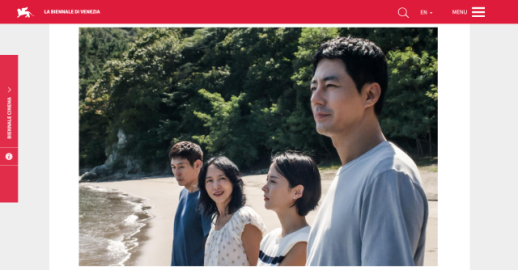 'Possible Love' stirs Venice sensation with 6-minute ovation SEOUL, September 07 (AJP) - Lee Chang-dong's "Possible Love" emerged as one of the early sensations of the Venice Film Festival after drawing a six-minute standing ovation and rave reviews, putting the Korean auteur's first feature in eight years among the closely watched contenders for the Golden Lion. The Netflix-backed film premiered Sunday at the Sala Grande on the Venice Lido as part of the main competition at the 83rd Venice International Film Festival. The 164-minute drama stars Jeon Do-yeon, Sul Kyung-gu, Zo In-sung and Cho Yeo-jeong. International critics praised Lee's direction and the ensemble cast while highlighting the film's examination of labor, class, human dignity and the moral responsibility involved in turning another person's suffering into art. The Guardian described "Possible Love" as a "finely judged" and "beautifully acted" work, while TIME praised its "gentle, generous spirit." Vulture went further, asking whether it could be the best film at Venice this year and describing the drama as one of the most powerful and political works of Lee's career. "Possible Love" follows two married couples from sharply different social backgrounds whose lives become entangled through a documentary project. Sul plays Ho-seok, a former factory worker struggling after losing his job, while Jeon plays his wife Mi-ok. Cho plays Ye-ji, a documentary filmmaker who approaches the couple as subjects for a film, while Zo plays Sang-woo, her wealthy husband. The film marks Lee's return to feature filmmaking after "Burning" in 2018 and brings him back to Venice more than two decades after one of the defining victories of his career. Lee won the Silver Lion for best director at Venice in 2002 for "Oasis." His return to the main competition comes 24 years after that win. "Possible Love" is among 21 films competing for the Golden Lion at this year's festival, which runs through Sept. 12. The strong Venice reception could also give the film an early boost in the coming awards season. South Korea has selected "Possible Love" as its official submission for the Best International Feature Film category at the 99th Academy Awards. The Korean Film Council cited the film's cinematic completeness, clear message and Lee's portrayal of its multidimensional characters in choosing it as the country's contender. The film will open in South Korean theaters on Sept. 23 before expanding to selected overseas markets in October. Netflix will stream "Possible Love" globally from Nov. 6. AJP Takeaways - Lee Chang-dong returned to the Venice Film Festival’s main competition with Possible Love, his first feature since Burning in 2018. - The 164-minute film stars Jeon Do-yeon, Sul Kyung-gu, Zo In-sung and Cho Yeo-jeong. - The story follows two married couples drawn together through a documentary project, with themes of labor, class and human dignity. 2026-09-07 16:26:06
 -
 Hanwha foots full bill for Seoul fireworks festival SEOUL, September 07 (AJP) - South Korea's Hanwha Group has footed the entire 13 billion won ($9.7 million) bill for this year's Seoul International Fireworks Festival, keeping alive a tradition spanning more than two decades as the explosives-rooted conglomerate rises as one of the world's fastest-growing defense suppliers. About 1 million spectators packed Yeouido Hangang Park and surrounding stretches of the Han River on Saturday for the 22nd festival, according to Hanwha. Teams from South Korea, the United States and Britain filled the night sky with displays ranging from fireworks mounted around Wonhyo Bridge to symmetrical bursts launched from both sides of the river. Hanwha covered the entire cost rather than charging admission or relying on ticket revenue. Of the 13 billion won spent this year, 4.5 billion won went to safety management, up about 17 percent from 3.85 billion won last year. About 5,000 safety and crowd-control personnel were deployed, the largest number for the event, including some 1,200 Hanwha employees volunteering at the site. The group has maintained the festival since its first edition in 2000, apart from years when events were suspended because of unavoidable circumstances including the COVID-19 pandemic. What began as a corporate-sponsored fireworks show has grown into one of Seoul's largest annual public gatherings. Hanwha Group Chairman Kim Seung-youn has tied the continued spending to his management philosophy of "Together, Further." "The reason Hanwha sends fireworks into the sky is because the happiness can be shared by everyone looking up at it," Kim said ahead of this year's event. The event also carries a historical link to Hanwha itself. The conglomerate was founded in 1952 as Korea Explosives Co. and built its early business around industrial explosives before expanding into chemicals, energy, finance, aerospace, shipbuilding and defense. Hanwha says it became the first South Korean company to manufacture dynamite using domestic technology in 1959. The same expertise in explosives and energetic materials that underpinned the group's origins eventually became part of a much broader defense business. Hanwha Aerospace today produces some of South Korea's best-known weapons systems, including the K9 self-propelled howitzer, K239 Chunmoo multiple rocket launcher and Redback infantry fighting vehicle, alongside ammunition, air-defense systems and unmanned military platforms. Those businesses have gained traction as governments increase military spending and rebuild weapons inventories amid the war in Ukraine and wider geopolitical tensions. Poland has emerged as a particularly important customer for South Korean weapons, while Hanwha has also secured K9 contracts in countries including Finland, Romania, Australia and India. Hanwha Aerospace's European land-arms order backlog had surged to 30.3 trillion won by mid-2024 from 3.1 trillion won in 2020 as demand accelerated after Russia's invasion of Ukraine. Hanwha ranked 16th in Defense News' 2026 list of the world's 100 largest defense companies, up six places from the previous year. Its defense revenue reached $10.44 billion in 2025, compared with $6.82 billion a year earlier. Hanwha Aerospace also broke into the U.S. arms market in August with a contract to supply six prototypes of its wheeled K9 Mobile Howitzer to the U.S. Army, which the company described as the first contract between the U.S. military and a South Korean company for a domestically developed weapons system. This year's fireworks drew inspiration from Vincent van Gogh's "The Starry Night," while displays formed words including "SEOUL" across the sky. Hanwha also invited about 300 veterans and their families and streamed the event online, drawing 2.68 million views and a peak concurrent audience of 260,000. Safety operations included real-time crowd-density monitoring through Hanwha's Orange Safety app and CCTV feeds supported by KT's 5G network-slicing technology. AJP Takeaways - Hanwha Group paid the full 13 billion won cost of this year’s Seoul International Fireworks Festival, which drew about 1 million spectators. - The conglomerate has kept the festival running for more than two decades since launching it in 2000, aside from unavoidable cancellations including during the COVID-19 pandemic. - The tradition reflects Hanwha’s explosives roots even as the group expands globally in defense and aerospace, with exports of systems such as the K9 howitzer and Chunmoo gaining traction amid rising geopolitical risks. 2026-09-07 14:14:58