

Journalist

Joonha Yoo유준하
joonhayoo94@ajupress.com
ReporterCOEX Sejong Center for the Performing Arts & Music, Culture, Entertainment, Automotive
Joonha Yoo is a bilingual journalist at AJU Press (AJP), covering music, culture, entertainment and Korea’s automotive industry.
Raised in Fort Collins, Colorado, he often writes from the scene, bringing firsthand detail to stories ranging
from BTS comeback concerts to unique cultural events that catch the world's eye. "I write from the scene, not from the sidelines."
Raised in Fort Collins, Colorado, he often writes from the scene, bringing firsthand detail to stories ranging
from BTS comeback concerts to unique cultural events that catch the world's eye. "I write from the scene, not from the sidelines."
Latest by Joonha Yoo
-
 Stray Kids' Felix to roll out solo track SEOUL, September 01 (AJP) - Felix of Stray Kids will release a solo digital single, "Slow It Down" on Tuesday as the second installment of the group's self-produced project SKZ-PLAYER, JYP Entertainment said. SKZ-PLAYER is a Stray Kids project in which the group's eight members release music and visual content they helped create, with a focus on their work as musicians and artists. Member Han opened the project in June with "back to life," making Felix the second member to take part. "Slow It Down" is an acoustic hip-hop track built around a guitar loop and hip-hop beat. JYP said the song is about pausing in a fast-moving world and looking back on time spent with loved ones and on one's dreams. Felix took part in writing and composing the song. The music video features actor Roh Yoon-seo, known for the drama series "Our Blues" and "Crash Course in Romance." Roh plays Yunseo, a young woman trying to pursue her dream while navigating daily life. Felix appears in the video as a figure who encourages her as she moves between reality and aspiration, according to JYP. Stray Kids' mini album "THIS & THAT," released Aug. 7, debuted at No. 1 on the Billboard 200 chart dated Aug. 22. JYP said it was the group's ninth consecutive album to enter the chart at No. 1, the first such streak in Billboard 200 history. The agency said the record also makes Stray Kids the group with the most Billboard 200 No. 1 albums in the 21st century. The title track, "This & That," also entered the Hot 100 at No. 38, the group's highest ranking on the chart. Stray Kids performed at Tokyo National Stadium on Aug. 29 and 30 as part of its world tour "RUN IT." JYP said the group became the first foreign male artist to hold a solo concert at the venue. The group is also set to headline Rock in Rio in Brazil and STRAYCITY, a new Stray Kids-led festival series across three locations in Latin America. AJP Takeaways Felix of Stray Kids will release "Slow It Down" at 6 p.m. Monday. The single is part of SKZ-PLAYER, Stray Kids' self-produced project. Felix is the second member to release music through the project after Han. 2026-09-01 13:40:12
 -
 Korea exceeds $90 billion in export SEOUL, September 01 (AJP) - South Korea's exports topped $90 billion for a third straight month in August, as record semiconductor shipments offset weaker sales of cars and ships, the trade ministry said Tuesday. Exports rose 68.7 percent from a year earlier to $98.25 billion, while imports climbed 22.5 percent to $63.51 billion, leaving a trade surplus of $34.75 billion, the Ministry of Trade, Industry and Resources said. The surplus stayed above $30 billion for a third consecutive month. Semiconductor exports surged 209 percent to a record $46.65 billion on continued demand for AI infrastructure. Chip exports have now topped $40 billion for three straight months. Computer exports also hit a monthly record, jumping 419.5 percent to $6.24 billion on rising NAND prices. Wireless device exports rose 21.2 percent to $1.88 billion, extending gains for a 10th straight month on strong sales of Samsung's Galaxy S26 lineup. Cars and ships were the main drags. Auto exports fell 29.8 percent to $3.85 billion as summer shutdowns at major automakers shifted into early August and partial strikes disrupted output. Ship exports slid 45.9 percent to $1.69 billion on fewer deliveries. Petroleum product exports rose 65.3 percent to $6.84 billion, lifted by higher crude prices amid instability around the Strait of Hormuz. Rechargeable battery exports gained 24 percent to $600 million, staying positive for a fourth month on electric vehicle and energy storage demand. By destination, shipments to China more than doubled to $24.1 billion, up 119.3 percent, on strong semiconductor and machinery sales. Exports to the United States climbed 89.3 percent to $16.5 billion, while shipments to Southeast Asian countries jumped 75.4 percent to $19.09 billion, the best August figure on record. AJP Takeaways · Korea's August exports rose 68.7 percent to $98.25 billion. · Monthly exports topped $90 billion for a third straight month. · Semiconductor exports hit a record $46.65 billion. 2026-09-01 12:39:18
 -
 KOSPI reverses early losses as chip gains offset SEOUL, September 01 (AJP) - South Korean stocks reversed early losses Tuesday morning, with the benchmark KOSPI edging higher as gains in Samsung Electronics and SK hynix offset renewed U.S.-Iran tensions, rising oil prices and pressure from higher U.S. Treasury yields. The KOSPI stood at 6,844.90 as of 10:30 a.m., up 0.4 percent from the previous session. The index had fallen as low as 6,732.47 after opening lower before rebounding to an intraday high of 6,857.35, a swing of nearly 125 points. The recovery came despite weak institutional flows. Foreign investors sold a net 139.3 billion won ($102 million) and institutions unloaded 526 billion won, while retail investors bought a net 308.2 billion won. Chipmakers led the rebound. SK hynix rose 1.9 percent to 1,706,000 won and Samsung Electronics gained 0.3 percent to 260,750 won, reversing early losses with support from the companies' recent share buybacks. Sentiment was also bolstered by fresh trade data. South Korea's semiconductor exports reached a record $46.65 billion in August, up 209 percent from a year earlier, according to the Ministry of Trade, Industry and Resources. Semiconductors accounted for 47.5 percent of the country's total exports of $98.25 billion, as strong demand for high-bandwidth memory and server DRAM continued amid expanding investment in artificial intelligence infrastructure. Battery and energy shares were also among the strongest performers. The oil and gas industry group rose 4.49 percent, the top-performing sector, while the secondary-battery production theme advanced 3.98 percent. SK Innovation jumped more than 8 percent after its battery unit, SK On, said it would supply 9 gigawatt-hours of lithium iron phosphate battery cells to U.S. energy storage system maker Neovolta Power between 2027 and 2031. LG Chem climbed 5.9 percent to 296,500 won and Samsung SDI rose 2.17 percent. Trading companies gained 3.08 percent, led by POSCO International, up 4.28 percent, and LX International, up 2.3 percent. Display shares added 2.36 percent, with LG Display rising 2.65 percent. Among other notable movers, BH surged 14.7 percent to 20,900 won and Kumho Electric gained 8.3 percent to 13,510 won, while LG Electronics dropped 4.9 percent to 206,000 won and LG Innotek slid 6.85 percent to 598,000 won. KOSDAQ falls as foreign, institutional selling weighs The smaller-cap KOSDAQ fell 1.18 percent to 824.48 as of 10:30 a.m., a much weaker showing than the KOSPI. The index traded between 819.74 and 833.52 during the morning session. Retail investors bought a net 270.7 billion won, but the purchases were outweighed by foreign and institutional selling. Foreign investors sold a net 148 billion won and institutions shed 113.8 billion won. Individual stocks showed sharp divergences. Daehan Fiber Optics fell 4.58 percent to 13,320 won, while nuclear-related Woori Technology dropped 8.1 percent to 10,660 won. Among theme stocks, Pionex surged 29.9 percent, while Hyundai Pharm jumped 15.67 percent. The divergence between the two indexes suggested buying remained concentrated in select large-cap semiconductor, battery and energy names rather than spreading broadly across the market. Oil climbs as won strengthens Oil prices extended gains as renewed fighting in the Middle East raised concerns about energy flows through the Strait of Hormuz. West Texas Intermediate crude rose 1.04 percent to $86.62 a barrel, while Brent crude gained 0.7 percent to $91.09. U.S. forces struck two Iranian rocket launchers on Larak Island, while Tehran responded with attacks targeting the United Arab Emirates and Jordan, marking a renewed escalation between Washington and Tehran. Oil shipments continued through the Strait of Hormuz, but risks remained elevated after a supertanker struck two naval mines and caught fire. Higher oil prices added another layer of pressure to global financial markets by raising inflation concerns at a time when investors were already pricing in the possibility of tighter U.S. monetary policy. The benchmark U.S. 10-year Treasury yield climbed above 4.75 percent after Federal Reserve Chair Kevin Warsh signaled that further tightening could be needed if inflation fails to move convincingly toward the Fed's 2 percent target. Wall Street also closed lower Monday, with the Dow Jones Industrial Average falling 0.70 percent, the S&P 500 losing 0.33 percent and the Nasdaq Composite slipping 0.12 percent. Despite pressure on global bonds and equities, the Korean won strengthened 0.2 percent to 1,371.7 won per dollar. Asian markets mixed Markets were mixed Tuesday morning. Japan's Nikkei 225 edged up 0.1 percent to 66,360.75, while China's Shanghai Composite was nearly flat, rising 0.02 percent to 3,987.05. Hong Kong underperformed, with the Hang Seng Index falling 0.8 percent to 25,354.5. The moves left the KOSPI outperforming most major regional indexes despite continued pressure from higher oil prices and U.S. bond yields. AJP Takeaways · The KOSPI reversed an early drop to rise 0.4 percent to 6,844.90, recovering from an intraday low of 6,732.47 as Samsung Electronics and SK hynix turned higher. · Foreign and institutional investors remained net sellers, while retail investors bought 308.2 billion won, suggesting the index rebound was not backed by broad institutional buying. · Semiconductor shares were supported by record August chip exports of $46.65 billion, while battery and energy stocks also gained on SK On's U.S. ESS battery deal. 2026-09-01 11:12:56
 -
 Korea adds semiconductors to export control list SEOUL, September 01 (AJP) - South Korea added high-performance AI chips and advanced semiconductor manufacturing equipment to its strategic export control list Tuesday, requiring exporters to obtain government approval before shipping the items overseas. The Ministry of Trade, Industry and Resources said the revised Public Notice on Strategic Goods Export and Import took effect the same day. The revision reflects more than 80 changes agreed under four international export control regimes, the Wassenaar Arrangement, the Australia Group, the Nuclear Suppliers Group and the Missile Technology Control Regime. The ministry said the changes come as international export controls increasingly focus on advanced dual-use items that can serve both civilian and military purposes. Newly listed items include high-performance AI chips and certain semiconductor lithography, etching and deposition equipment. Nucleic acid synthesizers were also added to the list of items subject to tighter control. Exporters seeking to ship the newly listed strategic goods must obtain export approval from the ministry. The revision also eased or clarified rules for some items. For high-energy secondary batteries, the control threshold was raised from more than 350 watt-hours per kilogram to more than 500 watt-hours per kilogram at 20 C. Rules on botulinum neurotoxins were also clarified. The ministry removed the exporter pledge form from the documents required for strategic goods export approval. Other forms, including applications for strategic goods classification, bulk export approval and end-user undertakings, were revised to clarify wording and instructions. The ministry said it will brief industry groups on the changes and continue consultations through an export control help desk operated by the Korea Security Agency of Trade and Industry. AJP Takeaways · Korea added high-performance AI chips and advanced chipmaking equipment to its strategic export control list. · Exporters of newly listed items must obtain ministry approval from Sept. 1. · The revision reflects more than 80 updates from four international export control regimes. 2026-09-01 10:16:13
 -
 When the crowd becomes the court SEOUL, August 31 (AJP) - The Korean social media audience can be punishing and unforgiving toward celebrities and public figures. Its frenzied, vindictive pile-ons persist despite tragic casualties such as actor Lee Sun-kyun. The latest target is South Korean YouTuber Park Wi. The controversy began after Park, a wheelchair user who runs the popular YouTube channel Weracle, fell while getting off a KTX train on Aug. 14. A week later, he uploaded CCTV footage showing his wheelchair overturning as he descended a portable ramp and came into contact with the foot of a social service agent assisting him. The footage quickly became the subject of online debate. Critics accused Park of using his platform to direct anger toward a worker who had been trying to help him. Park deleted the video and apologized the following day, saying he had failed to sufficiently consider the agent's position. Then the scrutiny turned on Park himself. "Most people watching Park Wi's videos are probably his fans or people who are already interested in him," said Park Jung-woo, a 34-year-old office worker in Bundang, south of Seoul. "I wondered whether that kind of crowd mentality could make the other person receive even more criticism." "If someone clearly did something wrong, bringing it to public attention can be important," he added. "But cases like this show how dangerous social media can be when one person's account can quickly turn someone into the bad guy." Complaints were soon filed with the Seoul city government over Park's role as one of its promotional ambassadors. On Aug. 27, the city said Park had offered to step down from the position, which he had held since June 2025. No criminal investigation, trial or court judgment was involved. Yet the sequence reflected a pattern increasingly visible on social media: an incident is made public, users gather and interpret fragments of evidence, a collective judgment forms, and pressure moves offline toward employers, sponsors or public institutions. The consequences can be substantial even when no formal authority has imposed a penalty. In Park's case, the same online machinery he used to publicize his experience soon turned back on him. For Kim Jung-min, a 28-year-old freelancer in Seoul's Seocho District, the issue is not whether people should be allowed to raise grievances online, but how far that process should go. "Bringing an incident into the public eye can sometimes be useful," Kim said. "But it should not go beyond that and turn one person into the bad guy and invite mass condemnation." "When someone has such a large following, the way that person explains what happened carries a lot of weight." When exposure becomes punishment The debate is hardly new in South Korea. One of the country's best-known cases involved Bad Fathers, a website that published the names and personal information of parents accused of failing to pay child support. Supporters argued that public exposure succeeded where legal procedures had failed by pressuring parents to meet their obligations. A lower court initially acquitted the site's operator on public-interest grounds, but an appeals court reached a different conclusion. In 2024, the Supreme Court upheld a guilty verdict, drawing a legal boundary between public-interest disclosure and punishment through public shaming. Other cases have demonstrated the risks when online accusations are wrong. Digital Prison, a website that published personal information about people it accused of sexual offenses and other serious crimes, falsely identified a university medical professor as having purchased sexually exploitative material. Police later found the allegation to be untrue. In 2024, YouTube channels also began publishing the identities of people they said were involved in the 2004 Miryang group sexual assault case. The disclosures revived public anger over the case, but the Korean Sexual Violence Relief Center said the victim and her family had not agreed in advance to the releases and had asked for the videos to be removed. The episode exposed another problem with online punishment: action taken in the name of a victim does not necessarily reflect the victim's wishes. South Korea's National Human Rights Commission examined the broader phenomenon in a 2024 report on private disclosure of personal information. It cited distrust of investigations and trials, financial incentives built into online platforms and an internet culture that rewards anger and hostility as factors behind the spread of private exposure campaigns. The commission also warned that private individuals conducting online investigations typically rely on tips, searches and fragments of publicly available information without the investigative powers or verification procedures available to authorities. Once false information spreads widely, correcting the damage can be difficult. Institutional distrust provides part of the backdrop. According to the OECD's latest trust survey, based on polling conducted in 2025, 47 percent of South Koreans expressed high or moderately high trust in the police and 41 percent in the courts. The OECD averages were 63 percent and 54 percent, respectively. The figures do not establish that distrust causes online vigilantism. But they illustrate the environment in which alternative forms of public accountability can gain support. From internet users to investigators The phenomenon extends far beyond South Korea. One of the best-known failures came after the 2013 Boston Marathon bombing. Reddit users began examining photographs from the scene in an effort to identify suspects. Their amateur investigation instead helped spread the names and images of innocent people, including missing Brown University student Sunil Tripathi. Reddit later apologized for helping fuel what it described as online witch hunts and dangerous speculation. Crowdsourced investigations, however, do not always end in failure. Social media users have documented conduct that later became the subject of official investigations. In the United States, the Instagram account Public Lands Hate You tracked influencers whose posts appeared to show illegal or environmentally damaging behavior in national parks and other public areas. Social media posts documenting violations have prompted official investigations, while some brands ended partnerships with influencers after their behavior attracted public attention. More recently, ordinary users have moved beyond scrutinizing photographs and videos. After the U.S. Justice Department released nearly 3.5 million pages of material related to Jeffrey Epstein in early 2026, TikTok creators began searching the records, cross-referencing names and presenting their findings to large audiences. The practice showed how publicly available documents can now be examined collectively by thousands of people, performing work once concentrated among journalists, lawyers and investigators. It also exposed the limits of that model. The Justice Department warned that the released material included information submitted by members of the public and could contain false or fabricated claims. An official document can be genuine while an allegation contained within it remains unverified. A video can accurately capture an incident while revealing little about intention or legal responsibility. Those distinctions can disappear quickly once fragments of information begin circulating online. Justice without due process Researchers have described part of the phenomenon as "digital vigilantism." Daniel Trottier, a researcher who has studied online vigilantism, has described digital platforms as enabling a "parallel form of criminal justice," in which visibility itself becomes a form of pressure. Unlike official criminal justice systems, however, online judgment has no fixed rules governing who investigates, what evidence is reliable or how severe the consequences should be. Courts move slowly in part because evidence must be examined, opposing arguments heard and responsibility established through set procedures. Social media operates under different incentives. The version of an event that attracts the strongest reaction can spread before competing accounts emerge. Individual users may contribute only a comment, a complaint, an unfollow or a message to an employer, but thousands of such actions can collectively produce serious reputational, economic or institutional consequences. No single person decides the penalty. There is also no clear point at which it ends. South Korea's human rights commission has warned that private disclosure can spill over to family members and associates and create public pressure before investigators or courts have reached their own conclusions. That does not mean social media exposure has no public value. Online platforms can give victims and whistleblowers a way to reach the public when institutions fail to respond. Citizen-recorded footage has exposed abuse and misconduct, while public pressure has forced authorities and organizations to revisit cases that might otherwise have received little attention. The dividing line becomes less clear when disclosure moves beyond drawing attention to a problem and begins deciding who is guilty and what consequences they should face. Park Jung-woo said that distinction was what troubled him about the KTX controversy. "If someone really did something wrong, letting people know can be important," he said. "But in cases like this, I think the danger can be greater." Social media has given ordinary people unprecedented power to make alleged wrongdoing visible. Increasingly, that visibility can produce real-world punishment before any formal institution reaches a conclusion. The question is no longer simply whether the public should be allowed to speak, but how to preserve that power without allowing public scrutiny to become punishment without procedure. AJP Takeaways • South Korean YouTuber Park Wi's KTX controversy shows how social media scrutiny can quickly turn into real-world consequences without any formal legal process. • Cases including Bad Fathers, Digital Prison and the Miryang disclosures have intensified debate in South Korea over the boundary between public-interest exposure and online punishment. • Researchers and human rights authorities warn that digital vigilantism can bypass normal standards of evidence, verification and due process even when it begins as an attempt to expose wrongdoing. • Social media can help victims, whistleblowers and the public hold institutions accountable, but its growing power raises a harder question over who decides when exposure becomes punishment. 2026-08-31 17:41:18
 -
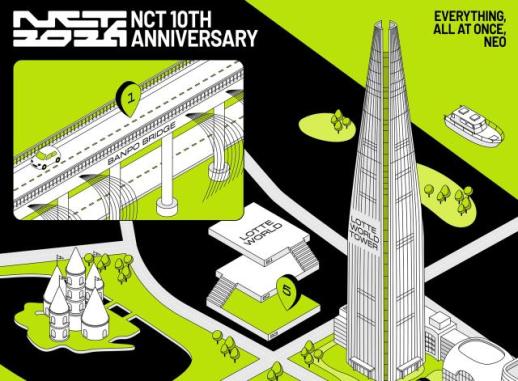 NCT to bring 10th anniversary events across Seoul SEOUL, August 31 (AJP) - NCT will hold a series of public events across Seoul in September to mark the 10th anniversary of its brand launch, SM Entertainment said Monday. The events will be held in collaboration with Seoul Fashion Week and will include fountain shows, costume displays, a runway program, installations and an anniversary exhibition. From Sept. 1 to 5, Banpo Hangang Park's Moonlight Rainbow Fountain will present nightly shows set to songs by NCT 127, NCT DREAM, WayV, NCT WISH and NCT U. The shows will combine NCT's music with lights and water displays along the Han River. In Jamsil, NCT stage costumes will be displayed near Lotte World Tower from Sept. 4 to 6 as part of the 2027 S/S Seoul Fashion Week. On Sept. 6, Seoul Fashion Week will host a curated runway program combining NCT's music and stage outfits. An NCT flea market will also be held the same day, offering costumes, activity-related items and personal belongings from members. In cooperation with Songpa District Office, a large art balloon marking the NCT and Seoul Fashion Week collaboration will be installed at Seokchon Lake from Sept. 3 to 27. A nighttime lighting event using NCT's official color, pearl neo champagne, will run around Seokchon Lake's East Lake and waterside stage from Sept. 7 to 25. The anniversary exhibition, "EXHIBITION: NEO DIMENSION," will open at Deep, a venue on the third basement level of Lotte World Adventure, from Sept. 18 to Oct. 18. Further details will be released through NCT's official social media channels. The Seoul events are part of "NCT 10TH ANNIVERSARY ," a broader project marking a decade since the brand's launch. AJP Takeaways · NCT will hold citywide offline events in Seoul in September for its 10th anniversary. · The project is being held in collaboration with Seoul Fashion Week. · Events include Han River fountain shows, costume displays, a runway program and a flea market. 2026-08-31 14:55:54
 -
 South Korea tops travel destination for Japanese SEOUL, August 31 (AJP) - More than one in four Japanese traveling abroad this year chose South Korea, drawn by its proximity and the relative affordability of won-priced travel as rising costs and a weak yen weigh on longer-haul trips. Korea welcomed 12.8 million foreign visitors from January to July, up 21.3 percent from a year earlier, according to the Ministry of Culture, Sports and Tourism. Japanese visitors accounted for 2.28 million, up 18.8 percent from 1.92 million over the same period last year. The increase outpaced Japan's broader outbound recovery. A total of 8.14 million Japanese people traveled overseas in the first seven months, up just 4.1 percent from a year earlier. Korea's share in Japan's outbound travelers reached 28 percent, the highest on record, ahead of other major destinations such as the United States, Taiwan, Thailand and Viet Nam. The trend is also showing up outside Seoul. Gimhae International Airport, the main gateway to Busan and southeastern Korea, recorded 269,752 Japanese arrivals from January to July, up 52 percent from a year earlier. Jeju International Airport saw 22,048 Japanese arrivals, up 60 percent, while Cheongju International Airport recorded 20,548, up 93 percent. Japanese travel agencies have also pointed to Korea's popularity. JTB Corp., one of Japan's largest travel agencies, ranked Korea first in overseas travel bookings by country during Japan's Golden Week holiday. HIS Co., another major Japanese travel agency, ranked Seoul first among overseas cities, with Jeju and Busan placing fifth and sixth. Weekly seats on Korea-Japan routes reached 349,000 in July, up 2.4 percent from the end of last year. The ministry said Korean pop culture, expanded air links and currency conditions have helped sustain demand from Japan. The government is working with the Korea Tourism Organization to develop regional tourism packages tied to local airports, along with airfare discounts and charter flight incentives. Foreign tourist spending in Korea has also grown faster than visitor arrivals. Foreign card spending reached 12.09 trillion won ($8.7 billion) from January to July, up 48.3 percent from 8.15 trillion won a year earlier. That was more than double the 21.3 percent increase in foreign arrivals over the same period. Kang Jung-won, the ministry's tourism policy director, said the government would respond to market conditions to keep the recovery going. AJP Takeaways · Japanese visitors to Korea rose 18.8 percent to 2.28 million from January to July. · Korea accounted for 28 percent of Japan's outbound travel market, a record high. · Gimhae Airport, the main gateway to Busan, saw Japanese arrivals rise 52 percent. 2026-08-31 14:42:03
 -
 Kazakhstan feels familiar. Family duty runs in reverse SEOUL, August 28 (AJP) - Kazakhstan can feel unexpectedly familiar to a Korean visitor. Across Astana, there are faces that at first glance would not look out of place in Seoul. Dark hair, familiar facial contours and gestures of deference toward older people can create fleeting moments of recognition in a country separated from the Korean Peninsula by thousands of kilometers of mountains, desert and steppe. The sense of familiarity runs deeper around the family table. Younger people wait for elders to eat. Ancestry matters. Family identity stretches backward through generations. Parents retain a powerful place in the lives of their adult children. Yet one of the strongest parallels contains an almost perfect reversal. In the traditional Korean family, responsibility for carrying the household forward fell disproportionately on the eldest son. Among Kazakhs, it was traditionally the youngest son. "We have a tradition where the youngest son takes care of the parents," said Aruzan Alim, a 22-year-old office worker in Astana. Alim has an older sister and a younger brother. Her parents, she said, are noticeably more generous toward their youngest child, an indulgence she connects to the obligation that traditionally awaits him. Thousands of kilometers to the east, Korean families arrived at a strikingly similar arrangement from the opposite end of the birth order. For centuries, the eldest son increasingly became the keeper of the ancestral line, the principal performer of family rites and, in many households, the child expected to remain most responsible for aging parents. Different sons inherited the burden. The underlying idea was much the same: one child remained more firmly attached than the others to the house from which the family spread. Familiarity and the danger of easy history Physical and cultural resemblance between Koreans and Central Asians has long encouraged broader theories about common origins. Some Korean scholars and writers have looked toward the Eurasian steppe for traces of ancient Korea. Among the most intriguing is the word Tengri, the ancient Turkic term associated with the sky and the supreme sky deity of Central Asian nomadic peoples. Khan Tengri, the great peak on the Kazakhstan-Kyrgyzstan-China frontier, preserves the name today. The historical existence and meaning of Tengri are well established in studies of ancient Turkic culture. Korean intellectual Choi Nam-sun was among those who proposed a connection between Tengri and Dangun, the legendary founder of Korea's first kingdom. The theory remains an interpretation rather than an established linguistic genealogy. The resemblance between Astana and Asadal, the legendary capital associated with Dangun, has inspired similar speculation. But Astana means "capital" in Kazakh, while the etymology and location of ancient Asadal remain uncertain. A similarity in sound is not evidence that the two places share an origin. The attraction of such theories is understandable. A Korean traveling through Kazakhstan can encounter enough visual and cultural familiarity to make distant historical connections seem almost intuitive. Family life offers firmer ground for comparison. The youngest son keeps the house In traditional Kazakh society, the parental home carried a special status embodied in the idea of qara shanyraq, the ancestral household. Older sons traditionally received their share of family property and established households of their own. The youngest son, or kenzhe, generally remained with his parents longest. He eventually became custodian of the parental home and assumed a particular responsibility for caring for his mother and father as they aged. The house did not simply become his. It remained the family's house — a place to which older siblings and relatives could return and which retained symbolic importance across the extended family. Kazakh accounts of the tradition continue to describe caring for elderly parents as a particular duty of the youngest son, without absolving other children of responsibility. "As the sons grew up and got married, they would gradually move out," Alim said. "The youngest son stayed in the parental home the longest and eventually inherited it, along with the responsibility of caring for the parents." The custom remains recognizable well beyond historical memory. A 2023 study by the Kazakhstan Institute of Public Development involving 2,400 respondents found strong support among ethnic Kazakhs for the idea that one son, usually the youngest, should live with his parents. Among 1,721 ethnic Kazakh respondents asked the tradition-related questions, 77.3 percent expressed support. Generational differences were visible but hardly overwhelming. Among ethnic Kazakhs aged 18 to 28, 73.6 percent viewed the practice positively or somewhat positively, compared with 84.4 percent among respondents aged 61 and older. Support in Astana stood at 68.8 percent. Korea constructed its family hierarchy differently. Korea chose the eldest The Korean eldest son's position can appear ancient and immutable. It was neither. Earlier in the Joseon Dynasty, inheritance could be distributed relatively evenly among sons and daughters, and responsibility for ancestral rites could rotate among children. The increasingly rigid patrilineal order familiar to modern Koreans developed over centuries as Neo-Confucian family principles became more deeply embedded. By later Joseon, the eldest son occupied a privileged position in the paternal line. He was increasingly entrusted with ancestral rites and often favored in inheritance, particularly property associated with the ancestral household. Historical research shows that primogeniture strengthened gradually rather than appearing fully formed at the beginning of the dynasty. For Kang Myung-jo, a 35-year-old office worker in western Seoul, traces of the old arrangement remain. "In Korea, traditionally it is the eldest son who takes care of the parents," Kang said. The expectation can still create "an unspoken pressure," he said, although he no longer interprets caring for his parents primarily as a duty assigned by birth. "They are my parents and they raised me well," he said. "When I think of it as giving something back to them, I feel taking care of them is the right thing to do." Kang gives his parents a regular allowance, lives nearby and tries to visit often. The contrast with Kazakhstan is revealing. The Korean eldest son inherited greater authority precisely because he remained at the head of the senior family line. The Kazakh youngest son inherited the parental household partly because his older brothers had already left to create households of their own. One system privileged seniority. The other made the last son at home the keeper of the original house. Both placed continuity above individual choice. The table knows your age The similarities become more visible at meals. When Kang's family eats with his grandfather, he said, nobody needs to announce the order. "We basically wait until my grandfather picks up his spoon," he said. "Then the rest of us start eating." The practice remains familiar to Koreans even in households where many other Confucian rituals have disappeared. Alim immediately recognized it. "When we eat traditional food, we follow the rule," she said. "We won't eat it unless the elder eats first." Kazakh dining customs are different in form but equally capable of making hierarchy visible. At ceremonial meals, a boiled sheep's head may traditionally be presented to the eldest or most honored guest. Particular cuts of meat can be assigned according to age, kinship and status. In Korea, hierarchy historically determined who began eating. At a Kazakh feast, it could determine who received which part of the animal. Seven generations behind you Kazakh family identity also reaches unusually far backward. Alim can recite her zheti ata — seven generations of paternal ancestors. "I do. I can memorize them all," she said. The knowledge can have consequences far beyond remembering family names. Kazakh tradition prohibited marriage among relatives within seven generations of the paternal line. The system helped organize kinship across nomadic communities while also creating a clear boundary around permissible marriage. Scholars describe zheti ata as an important mechanism of both genealogy and exogamy in traditional Kazakh society. Alim said the rule would still matter to her. If she discovered that a romantic partner fell within the traditionally prohibited ancestral boundary, she said, the relationship would end. "We would part ways and live on with our lives." Korea once imposed its own powerful connection between paternal ancestry and marriage. Under the former dongseong dongbon system, a man and woman sharing both a surname and the same ancestral origin, or bon-gwan, could not legally marry. Korea's Constitutional Court ruled the blanket restriction unconstitutional in 1997, and it disappeared from the Civil Act in 2005. Current Korean restrictions instead apply according to legally defined degrees of kinship. When obligation becomes choice The more consequential parallel today may be how both systems are loosening. "When we are taking part in a traditional event, we tend to follow it," Alim said. "But during more casual outings or get-togethers, we are more liberal." Kang described much the same negotiation in Korea. "The culture of taking care of one's parents is still there, but things are changing," he said. "There are many families that no longer hold ancestral rites, and I think people are placing more importance on living their own lives." In Korea, the statistical change has been dramatic. The share of people saying the family should bear responsibility for supporting elderly parents fell to 18.2 percent in Statistics Korea's 2024 Social Survey from 70.7 percent in 2002. The eldest son's special burden had eroded even faster. The share identifying the eldest son as responsible for parental support dropped to just 1.3 percent in 2018 from 15.1 percent in 2002. Households themselves are giving the old system less room to operate. One-person households made up 36.1 percent of Korean households in 2024 and 39.9 percent in Seoul. Kazakhstan is urbanizing from a different family structure. Its 2021 census counted about 1.56 million extended households, representing 27.8 percent of all households and containing more than 7 million people. The share had declined from 29.9 percent in 2009, while nuclear families edged higher. Astana remained unusually family-dense for a rapidly expanding capital, with extended families accounting for 32.6 percent of its households. A national study of 2,000 people aged 14 to 34 found 80.1 percent regarded family as their most important value, a result researchers said had remained broadly stable for several years. Family remains important in both societies. What is weakening is the old certainty over who owes what to whom. Kazakhstan traditionally looked toward the youngest son and the qara shanyraq. Korea looked toward the eldest son and the ancestral line. For younger Kazakhs and Koreans, those obligations have not vanished. They are increasingly being renegotiated — transformed from rules inherited at birth into choices made within the family. AJP Takeaways • Korean and Kazakh family traditions show striking parallels despite reversing birth order: Korea historically placed greater filial and ritual responsibility on the eldest son, while Kazakh tradition centers the youngest son as keeper of the parental household. • Kazakhstan's qara shanyraq and Korea's ancestral household both tied property to responsibility, preserving a family center even after other children established households of their own. • Respect for elders and paternal ancestry remain visible in both cultures, from dining hierarchy to traditions governing ancestral knowledge and marriage. • Urbanization and smaller households are weakening fixed family roles in both countries, although surveys show family itself remains a powerful value, particularly among young Kazakhs. 2026-08-28 17:47:14
 -
 Korea widens anti-scalping rules SEOUL, August 28 (AJP) - South Korea began enforcing tougher anti-scalping rules for concert and sports tickets Friday, rolling out the detailed penalties and procedures behind a law that expanded the definition of illegal ticket buying and resale. The enforcement decrees under the Performance Act and the National Sports Promotion Act took effect Friday, the Ministry of Culture, Sports and Tourism said. The underlying laws, amended in February, newly banned illegal ticket buying and expanded the ban on illegal resale regardless of whether a macro program was used, moving beyond the previous rule that only targeted resale of tickets bought through automated programs. Friday's decrees fill in the details, including penalty schedules, reporting-body requirements and reward payments. Under the law, illegal ticket buying covers purchases made for resale by bypassing or disrupting the fair purchasing process set by the original seller. Illegal resale covers the repeated or business-like sale or brokering of tickets above the purchase price without the consent of the original or authorized ticket seller. Violators face up to one year in prison or a criminal fine of up to 10 million won ($7,200), and profits from such transactions can be confiscated. The ministry can also impose administrative penalties on illegal resellers of up to 50 times the sales amount, with the multiplier set according to the number of tickets and total resale value. A new reward system will pay up to 50 million won ($36,000) to those who report illegal ticket buying, and up to half of the administrative penalty imposed on an offender to those who report illegal resale. Ticket sellers and online platforms will be required to verify users' identities, offer reporting functions, warn users of possible penalties, and block posts linked to illegal transactions when notified by designated reporting bodies or investigators. Those bodies can request seller information, transaction records and access logs from sellers and platforms. Companies that refuse without valid reason, or submit false data, face administrative fines of up to 5 million won. Culture Minister Choi Hwi-young chaired a joint inspection meeting Friday with 19 agencies and companies, including the Fair Trade Commission, the National Police Agency, ticketing platforms such as NOL Ticket and Yes24, and resale marketplaces including Naver and Danggeun Market. Choi said the revised rules would help the government crack down on scalping and protect fair access to tickets for concertgoers and sports fans. The ministry also said it would move to revise the Motion Picture and Video Products Promotion Act to close a regulatory gap around movie ticket scalping, especially for premium and special-format screenings. AJP Takeaways · Korea’s tougher anti-scalping rules for concert and sports tickets took effect Friday. · The rules expand enforcement beyond macro-based ticket buying and resale. · Illegal resellers may face fines of up to 50 times the sales amount. 2026-08-28 13:18:36
 -
 Korea picks SKT, Kakao, KT for nationwide AI service project SEOUL, August 28 (AJP) - South Korea has selected SK Telecom, Kakao and KT to build AI services for the public under a government project aimed at widening access to artificial intelligence, the Ministry of Science said Friday. The three consortiums were chosen from six applicants following written and presentation evaluations that assessed their AI model competitiveness, GPU and infrastructure plans, user convenience, service quality and safety, and contribution to Korea's AI ecosystem, the ministry said. Evaluation scores and rankings were not disclosed at the companies' request. The proposals centered on general-purpose AI chatbot services meant to compete with foreign AI services, along with public AI agents that help users find and apply for government benefits without navigating complex procedures, according to the ministry. Each consortium also plans to expand its services through partnerships with domestic startups. The ministry plans to sign agreements with the operators in September and launch the service nationwide by the end of the year after beta testing. The government will provide the three operators with a combined 512 Nvidia B200 GPUs this year and fund the cost of running the service nationwide from 2027. SK Telecom's consortium is building an "action-based" AI service that can plan, carry out and confirm tasks from a single request. The service will work through phone calls and text messages as well as apps and the web, making it accessible to older users and others less familiar with smartphone apps. It will also include an agent function that searches for contact information for stores or government offices without official APIs and places calls on the user's behalf. Partners in the SKT consortium include Hana Card, Shinhan Card, Tmap Mobility and SK Broadband. Kakao's consortium will use its messenger app as the main gateway to a combined chatbot and AI agent service. It will roll out a lightweight version of a general-purpose AI calling service with LG Uplus by the end of the year before expanding it in stages. The service will also connect to an AI agent marketplace where developers can build, test and distribute specialized agents. Other partners include LG AI Research, LG CNS, LG Electronics, Seoul National University Hospital, Shinhan Bank and Kakao Enterprise. KT's consortium is designing a service that lets users search, compare and act on information, including public and specialized services, within a single conversation. AI access points will be built into the Daum portal and app, as well as partner platforms such as Danawa, Musinsa and Zigbang. KT's telecom and IPTV channels will also be linked to the service. The consortium includes Upstage, Rebellions, Saltlux, BC Card, EBS and NC AI, among other partners. The ministry plans to form a working-level task force with the three operators and consult with other government agencies on linking public data to the services. AJP Takeaways · South Korea selected SK Telecom, Kakao and KT for a government-backed public AI service project. · The project will offer general-purpose AI chatbots and public AI agents. · The three operators will receive access to a combined 512 Nvidia B200 GPUs this year. 2026-08-28 13:17:30