

Journalist

Joonha Yoo유준하
joonhayoo94@ajupress.com
ReporterCOEX Sejong Center for the Performing Arts & Music, Culture, Entertainment, Automotive
Joonha Yoo is a bilingual journalist at AJU Press (AJP), covering music, culture, entertainment and Korea’s automotive industry.
Raised in Fort Collins, Colorado, he often writes from the scene, bringing firsthand detail to stories ranging
from BTS comeback concerts to unique cultural events that catch the world's eye. "I write from the scene, not from the sidelines."
Raised in Fort Collins, Colorado, he often writes from the scene, bringing firsthand detail to stories ranging
from BTS comeback concerts to unique cultural events that catch the world's eye. "I write from the scene, not from the sidelines."
Latest by Joonha Yoo
-
 Stray Kids to open Japan tour at Tokyo National Stadium SEOUL, August 28 (AJP) - K-pop boy group Stray Kids will become the first foreign male artist to hold a solo concert at Tokyo National Stadium, the group's agency JYP Entertainment said Friday. The group will perform at the venue, also known as MUFG Stadium, on Aug. 29 and 30 as the first overseas stop of its new world tour, "RUN IT." The tour opened in Seoul in July with five sold-out shows at KSPO Dome. Stray Kids will continue the Japan leg with concerts at Vantelin Dome Nagoya on Sept. 5 and 6, Kyocera Dome Osaka on Sept. 19 and 20, and Mizuho PayPay Dome Fukuoka on Oct. 24. The seven Japan shows are expected to draw a combined 370,000 people, according to JYP. The group has also been setting records on the U.S. charts. Its mini album "THIS & THAT" debuted at No. 1 on the Billboard 200 dated Aug. 22 after selling 369,000 units in its first week in the United States. It was Stray Kids' ninth Billboard 200 chart-topper, the most by any group this century, JYP said. The album stayed near the top the following week, ranking No. 3 on the Billboard 200 and No. 1 on the World Albums chart dated Aug. 29. Stray Kids will release its fourth Japanese mini album, "SUIATSU," on Nov. 25, its first Japanese mini album in about 17 months since "Hollow" in June 2025. "Hollow" won Album of the Year and Best 3 Albums in the Asia category at the 40th Japan Gold Disc Awards. The group is also set to headline Rock in Rio in Brazil on Sept. 11, followed by headlining slots at "STRAYCITY," a new festival series led by the group, across three locations in Latin America that same month. AJP Takeaways · Stray Kids will perform at Tokyo National Stadium on Aug. 29 and 30. · JYP said they will be the first foreign male artist to hold a solo concert at the venue. · The shows open the overseas leg of the group's new world tour, "RUN IT." 2026-08-28 10:48:26
 -
 Red Velvet to release remix album SEOUL, August 28 (AJP) - K-pop girl group, Red Velvet will release a remix album for its latest single "Surfin' Boy" on Friday, SM Entertainment said. The album, "iScreaM Vol. 40: Surfin' Boy Remixes," will be released at 1 p.m (0400 GMT) on major music platforms. It marks the 40th installment of iScreaM, a remix series run by ScreaM Records. ScreaM Records is SM Entertainment's dance music label, which releases electronic and remix projects by SM artists. The release includes two reworked versions of "Surfin' Boy," one by future funk producer Flamingosis and another by R&B duo RAKUNELAMA. Flamingosis adds tropical brass and chorus harmonies to the song's bossa nova guitar line, while RAKUNELAMA turns the track into contemporary R&B built around bass and percussion. Two music videos will be released with the remix album. SM said the videos are designed as a connected story, adding a visual reinterpretation to the two remixes. "Surfin' Boy," released in August, blends bossa nova guitar, reggae rhythm and house groove. Red Velvet member Joy wrote the lyrics, which look back on memories of a summer spent with someone close. The original release topped the iTunes Top Albums chart in 17 regions and also won first place on a domestic music show, according to SM. ScreaM Records has used the iScreaM project to release remix versions of songs by SM artists. AJP Takeaways · Red Velvet will release "iScreaM Vol.40 : Surfin' Boy Remixes" at 1 p.m. Friday. · The album features remixes by Flamingosis and RAKUNELAMA. · It is the 40th release under SM's iScreaM remix project. 2026-08-28 10:17:57
 -
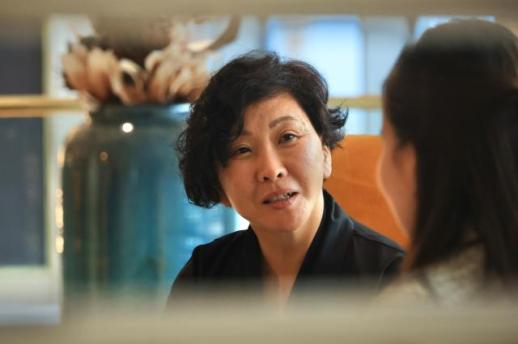 For Kazakhstan's Koryo-saram, exile became home ASTANA, Kazakhstan — Elena Ko has little difficulty answering a question that history made complicated for her family. "I'm Korean, but I think like Kazakh," she said through an interpreter. Ko, 55, is a third-generation Koryo-saram, a descendant of ethnic Koreans who settled across the former Soviet Union. She keeps Korean traditions, stays close to Kazakhstan's Korean community and travels to Seoul roughly once a year. But when she talks about home, there is little ambiguity. Kazakhstan is where she was born and went to school, where she built a business and raised a family. "I'm very proud that I was born in Kazakhstan," she said. Her ancestors had no such choice. In 1937, they were among the ethnic Koreans uprooted from the Soviet Far East under Stalin and loaded onto trains bound thousands of kilometers west. The story handed down in Ko's family is one of a punishing journey, hunger and arrival on an unfamiliar steppe with almost nothing waiting for them. Yet when Ko tells the story, the cruelty of how her family arrived is followed almost immediately by another memory. Kazakh residents took in women and children. They shared food with the newcomers even though local communities were themselves struggling with shortages. "We live today because our ancestors survived with the kindness of Kazakh people," Ko said. "We will never forget this." Nearly nine decades later, a country her ancestors were forced to enter is the country their granddaughter chooses to call home. And Ko's daughters are crossing borders again. Her eldest is pursuing a doctorate in the United States. Another is studying in Hong Kong. The difference between those journeys and the one that began the family's life in Central Asia could hardly be greater. Ko's ancestors crossed borders because the Soviet state ordered them to. Their descendants cross them for education, work and opportunity — and can decide whether to come back. Across three generations, forced displacement became survival, survival became settlement, and settlement eventually produced something the first arrivals could not have assumed: belonging. The trajectory complicates a familiar image of diaspora as a people forever suspended between a homeland they lost and the country where history deposited them. Kazakhstan's Koryo-saram did not simply preserve an unchanged Korean identity while awaiting reconnection with Korea. They learned other languages, adapted their food, married into new surroundings and lived through the collapse of one country and the birth of another. For generations born in Central Asia, ancestral homeland and home no longer necessarily mean the same place. A journey with no choice The Soviet government ordered Koreans removed from the Far East in August 1937, officially citing fears of Japanese espionage. By Oct. 25, Soviet records showed that 171,781 ethnic Koreans from 36,442 households had been transported aboard 124 trains. Of them, 95,256 were designated for Soviet Kazakhstan and 76,525 for Uzbekistan. Later records put the number actually settled in Kazakhstan at 95,427. The deportation established Kazakhstan and Uzbekistan as the two main centers of the Koryo-saram population in Central Asia. For Ko, the history is carried less in those numbers than in a phrase repeated through the family. "They came to the open steppe, to nowhere," she said. Two truths sit beside each other in her telling. The Soviet state determined where her ancestors would live. The people they found there helped them stay alive. The first was an act of coercion. The second became part of the family's understanding of Kazakhstan. Later generations did the rest. They built lives in the place where the trains had stopped. By Ko's generation, Kazakhstan was no longer simply where the family had been sent. It was home. Surviving by changing If displacement scattered the first generation, adaptation defined those that followed. Kazakhstan's 2021 census counted 118,450 ethnic Koreans, up 18 percent from 100,385 in 2009. They made up about 0.6 percent of the country's population. The numbers resist a simple story of a community fading away. But they also show just how much the community has changed. Some 102,804 ethnic Koreans lived in urban areas in 2021 — nearly 87 percent of the total. A population once closely associated with agricultural settlements and Soviet collective farms is now overwhelmingly urban. Language tells another part of the story. Of the 118,450 ethnic Koreans in the census, 49,222, or 41.6 percent, identified the language of their own ethnicity as their native language. The remaining 69,228 named the language of another ethnicity. The figure does not mean only 41.6 percent can speak Korean. The census asked about native-language identification, not proficiency. But the result captures a widening distance between ethnicity and language. Multilingualism has become ordinary. Among 111,549 Korean respondents included in another census table, 44,315 reported using two languages and 28,311 reported three. More than two-thirds used at least two. Ko needs no census table to recognize the transformation. "A Korean in Kazakhstan is really different from a Korean in Korea," she said. She does not say it with regret. Her family observes Korean traditions alongside Kazakhstan's national holidays. Korean associations organize festivals and cultural programs and maintain ties with South Korea. "We can always take care of our culture, of our traditions," Ko said. Even the food carries a record of adaptation. The first arrivals could not find many of the ingredients they had used in the Soviet Far East, Ko said. They cooked instead with what Kazakhstan offered. "They didn't have Korean food groceries to make their traditional food," she said. "They had to use the food that was already in Kazakhstan." Today, Korean groceries are easy enough to find. The dishes, however, had already changed. Koryo-saram culture survived not by being sealed off from its surroundings, but by absorbing them. It survived by changing. Korean roots, Kazakhstani belonging Ko's ease with her two identities reflects one strand of a broader generational shift. Research also warns against treating any single Koryo-saram experience as universal. A 2024 study by Korea University sociologist Yoon In-jin analyzed a 2022 survey of 2,679 adult overseas Koreans in 10 countries, including 186 respondents in Kazakhstan and 234 in Uzbekistan. Social integration differed significantly by country and generation. First-generation Koreans in Kazakhstan and Uzbekistan showed moderate integration into social institutions but greater difficulty with psychological integration. Later generations in Kazakhstan were well integrated across the dimensions examined. Ko's life looks familiar within that pattern. She does not describe herself as a Korean living temporarily in somebody else's country. She talks about the state that educated her, the society in which she established a business and the place where her children grew up. "I'm happy to be part of Kazakhstan," she said. Other research suggests the confidence with which Ko reconciles those identities is not shared equally across the community. A study published in Nationalities Papers in 2026 surveyed 4,000 people across Kazakhstan, including 160 ethnic Koreans, and conducted 250 semi-structured interviews. Among Korean respondents, 53 percent identified more often with a civic than an ethnic identity. Just 29 percent said they often felt a strong sense of ethnic belonging, the lowest share among the groups surveyed. Yet 80 percent said they were proud to be citizens of Kazakhstan. The researchers found that ethnic minorities broadly viewed Kazakhstan's nation-building positively, while ethnic and civic identities remained uneven and the effort to forge a single Kazakhstani nation remained incomplete. Ko does not resolve those contradictions for an entire community. Her story is revealing precisely because it does not need to. It shows how Korean ancestry and Kazakhstani belonging can occupy the same life without one cancelling the other. "We feel like one nation," Ko said of Kazakhstan's ethnic communities. For her, integration has not meant choosing between the two parts of herself. One deportation, different homes Kazakhstan is only one branch of a history that split at the railway tracks. The 1937 deportation sent the overwhelming majority of displaced Koreans to Kazakhstan and Uzbekistan. The two communities began with essentially the same trauma. Both then spent more than five decades inside the Soviet Union before Kazakhstan and Uzbekistan became independent states in 1991. After that, descendants of the same deported population found themselves citizens of different countries, living under different political institutions, language environments and ideas of national belonging. Yoon's research found that integration differed not only by generation but also by host country. That distinction moves the Koryo-saram story beyond a narrower question often asked of diasporas: How much Korean culture survived? A different question may be more revealing. What happened after they survived? One displaced population became part of several societies. Its descendants inherited a common history without necessarily inheriting the same language, nationality or understanding of home. For Ko, the Kazakhstan part of that question no longer feels complicated. She does not speak about the country as a temporary substitute for Korea. It is where her life happened. Toward Korea, but not necessarily home History has added one more turn. Some descendants of the people sent west in 1937 are now moving east, toward South Korea. South Korean Justice Ministry data show that Kazakhstan nationals classified as foreign-national overseas Koreans increased from 13,993 in 2021 to 21,790 in 2025. Among Uzbekistan nationals in the same category, the number rose from 32,216 to 41,144. The figures do not represent all Kazakhstan or Uzbekistan nationals living in South Korea. They refer specifically to foreign nationals whom South Korean authorities classify as overseas Koreans. Still, the direction of travel carries an unmistakable historical echo. In 1937, Koreans were sent away from the Soviet Far East with no say in the matter. Today, some of their descendants travel toward South Korea because they choose to — for jobs, study or opportunity. But going to Korea is not necessarily going home. For later-generation Koryo-saram, South Korea can be an ancestral homeland, a cultural reference point and a place to work or study without becoming the place to which they feel they ultimately belong. Ko herself visits Seoul about once a year. Then she returns to Kazakhstan. Her daughters may build lives even farther away. Their grandmother's generation was told where it could not remain. Their mother's generation grew up in the place where the trains had left the family. The daughters now have a privilege their ancestors were denied: they can decide for themselves where to go. Ko already knows what she calls the place she comes back to. "I'm Korean, but I think like Kazakh." For a family whose modern history began with being told where it had to live, there is something quietly consequential in being able to say where home is by choice. AJP Takeaways • Kazakhstan's Koryo-saram community traces its roots to Stalin's 1937 forced deportation of nearly 172,000 ethnic Koreans from the Soviet Far East, including more than 95,000 who were ultimately settled in Kazakhstan. • Nearly nine decades later, Korean ancestry and Kazakhstani belonging increasingly coexist, with Kazakhstan's 2021 census counting 118,450 ethnic Koreans and showing a highly urbanized, multilingual community. • Research suggests later-generation Koryo-saram in Kazakhstan are deeply integrated into the country, while identity remains varied and does not necessarily depend on retaining Korean as a native language. • Growing numbers of ethnic Koreans from Kazakhstan are now moving to South Korea voluntarily for work and study, reversing the direction of the original forced migration without necessarily redefining Korea as home. 2026-08-27 17:30:46
 -
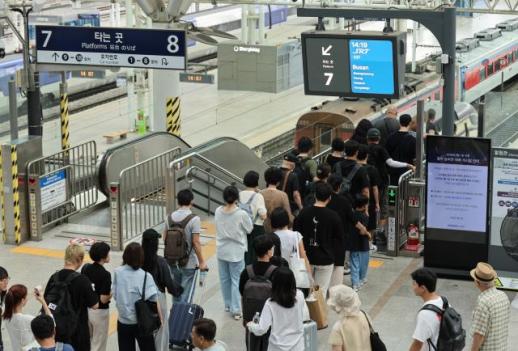 Korea expands half-price travel subsidy to 9 more rural areas SEOUL, August 27 (AJP) - South Korea will expand a half-price travel subsidy program to nine more rural areas this fall after a first-half rollout boosted local spending, the Ministry of Culture, Sports and Tourism said Thursday. The program, aimed at rural areas facing population decline, refunds half of a visitor's travel expenses through mobile local gift certificates, up to 100,000 won ($72) per person and 140,000 won for young travelers. It launched in April across 16 areas, including Pyeongchang, Yeongwol and Hoengseong in Gangwon Province, Jecheon in North Chungcheong Province, Gochang in North Jeolla Province and several counties in South Jeolla and South Gyeongsang provinces. An assessment commissioned by the ministry and the Korea Tourism Organization found that the program generated at least 16.2 billion won ($11.7 million) in local spending through June, compared with 5.2 billion won in refunds. That amounts to local spending of more than three times the refund amount. Food and beverage accounted for 45.5 percent of spending, followed by accommodation at 32.2 percent, shopping and local products at 10.2 percent and tourism activities at 6.3 percent. Roughly three-quarters of users, or 76.4 percent, said they spent more than planned because they expected a refund. The ministry said the subsidy also created new travel demand. Among users, 31.2 percent said they took a trip they had not originally planned, while 50 percent said they switched their destination to a participating area. More than half of users, or 56.3 percent, said it was their first visit to the area. Building on those results, the ministry and the tourism organization selected nine new areas to join the program from late August: Hwacheon in Gangwon Province, Goseong, Sancheong and Hamyang in South Gyeongsang Province; Andong and Yeongcheon in North Gyeongsang Province; Seocheon and Taean in South Chungcheong Province; and Jangheung in South Jeolla Province. Some of the original 16 areas, including Miryang, Geochang, Wando and Yeonggwang, secured additional funding to keep the program running in the second half. "The half-price travel program eases the cost burden on travelers and helps bring new visitors to areas facing population decline," Kang Jung-won, the ministry's tourism policy director, said in a statement. Details on the program are available on the Visit Korea website, and applications are handled through each participating local government's website. AJP Takeaways · Korea will add nine rural areas to its half-price travel subsidy program this fall. · The program refunds half of travel expenses through mobile local gift certificates. · Refunds are capped at 100,000 won per person and 140,000 won for young travelers. 2026-08-27 14:31:35
 -
 Netflix and Stella Artois to launch global campaign SEOUL, August 27 (AJP) - Netflix and Belgian beer brand Stella Artois will launch a global campaign tied to the second season of "The Gentlemen: The Series," Netflix said Thursday. The campaign, titled "The Gentlemen's Serve," will run in eight countries: South Korea, the United States, Britain, Canada, Brazil, Colombia, Mexico and South Africa. Netflix said it is the first brand partnership for "The Gentlemen: The Series." It is also the first campaign that Netflix and AB InBev, Stella Artois' parent company, are running together across multiple markets at the same time. The campaign features series star Theo James and Stella Artois ambassador David Beckham. The two appear in campaign content connecting the Netflix series with the beer brand. The rollout will include official social media content, experience-based events and limited-edition products in key markets. Netflix and AB InBev signed a global brand partnership last September. In South Korea, the companies previously worked together on a campaign tied to the second season of Netflix's cooking competition show "Culinary Class Wars" in December. Magno Herran, Netflix's vice president of global brand and marketing partnerships, said the campaign is aimed at letting fans experience the series beyond the screen. AB InBev global chief marketing officer Marcel Marcondes said the series fits Stella Artois' brand heritage and serving ritual. AJP Takeaways · Netflix and Stella Artois will launch a global campaign tied to "The Gentlemen: The Series." · The campaign, "The Gentlemen's Serve," will run in eight countries, including South Korea. · Netflix said it is the first brand partnership for the series. 2026-08-27 14:31:02
 -
 Seoul performing arts market to open in October SEOUL, August 27 (AJP) - South Korea's main performing arts market will return to Seoul in October with an expanded showcase lineup and new networking programs, its organizers said Thursday. The 2026 Performing Arts Market in Seoul, or PAMS, will run from Oct. 13 to 16 at the National Theater of Korea, Arko Arts Theater, Daehakro Arts Theater and other venues around the capital. The event is co-hosted by the Korea Arts Management Service and the National Theater of Korea, with support from the Ministry of Culture, Sports and Tourism and the Arts Council Korea. PAMS connects Korean performing arts groups with overseas presenters, festival programmers and producers through showcases, pitching sessions, business meetings and networking events. This year's program features nine works in the flagship PAMS Choice showcase, spanning pansori, contemporary dance, creative ballet, sound-based performance and audience-participatory pieces. Running alongside it for the first time is PAMS×SPAF Choice, a new section developed with the Seoul Performing Arts Festival. The section will stage five Korean productions in full length rather than the shorter excerpts typical of a market showcase, giving visiting presenters a fuller look at works that could later travel overseas. Networking programs are also expanding this year. PAMS Salon, a discussion series on performing arts trends and international exchange, will grow with new partner institutions from Canada, Japan and Belgium. A newly added program, PAMS Mingle, will offer smaller, informal sessions for participants to connect over shared interests. Business matchmaking continues through PAMS Pitching, PAMS Link, one-on-one Speed-Dating meetings and exhibition booths, which this year will include equipment and technical suppliers alongside performing arts groups and institutions. Works introduced through PAMS have gone on to overseas invitations, tours and co-productions in cities including Avignon, Paris and Sydney. Sound art group Liquid Sound and pansori singer Lee Jaram, both past PAMS Choice selections, were invited to this year's Avignon Festival. The pansori work "Giin Ginbam," introduced through PAMS in 2024, was later developed into a bilingual Korean-English production with the Sydney Opera House. "PAMS is an important platform where Korean performing arts meet the global stage and open up new opportunities in international distribution, co-production and localization," Kim Jang-ho, president of the Korea Arts Management Service, said in a statement. Early registration for PAMS runs through Sept. 15, with full passes available at a 50 percent discount. AJP Takeaways · The 2026 Performing Arts Market in Seoul will run from Oct. 13 to 16. · The event will feature nine PAMS Choice showcases and five full-length PAMS×SPAF Choice productions. · PAMS helps Korean performing arts groups connect with overseas presenters, festivals and producers. 2026-08-27 14:30:38
 -
 Zhou Mi of Super Junior M to lead China venture STE SEOUL, August 27 (AJP) - SM Entertainment has named Zhou Mi of Super Junior-M to lead its new Beijing joint venture with Tencent Music Entertainment Group, the company said Thursday. The joint venture, called STE, was established after SM and TME signed a memorandum of understanding in May to expand cooperation in the Chinese-speaking market. STE will work on a new Chinese idol group project that SM is preparing to debut within the next two to three years. The company will oversee auditions for new artists and handle local management in China after the group debuts. STE will also manage China-region activities for SM artists including NCT DREAM's Renjun and WayV members Yangyang and Xiaojun. SM said the venture will provide more localized promotion and entertainment activity support for the artists. Zhou has performed with Super Junior-M and as a solo artist for nearly two decades. He has also worked as a director at SM's China unit, giving him experience in both artist activity and local management, according to the company. Zhou said he hopes STE will combine SM's strengths in intellectual property and content production with the Chinese-speaking market. AJP Takeaways · SM Entertainment has established a Beijing joint venture with Tencent Music Entertainment Group. · The company, STE, will be led by Zhou Mi of Super Junior-M. · STE will work on a Chinese rookie idol group project targeted for debut within two to three years. 2026-08-27 13:03:47
 -
 Seoul tourist spending surges 70% as arrivals hit record SEOUL, Aug. 27 (AJP)-Foreign tourists are spending substantially more in Seoul even as visitor numbers hit records, with card spending surging nearly 70 percent in July — more than three times the pace of growth in arrivals, metropolitan government data showed Thursday. Seoul welcomed a record 1.61 million foreign visitors in July, up 20.8 percent from a year earlier, while their card spending jumped steeper 69.7 percent to 1.07 trillion won ($770 million). The figures imply average card spending of about 665,000 won per visitor, up roughly 40 percent from a year earlier, underscoring a shift toward higher-value tourism as visitors spend more on shopping, medical services and dining. July marked the fourth straight month that foreign tourist card spending in the capital exceeded 1 trillion won. From January through July, Seoul drew 9.83 million foreign visitors, up 21.3 percent from a year earlier. Tourist card spending over the same period rose 58.7 percent to 6.69 trillion won. China remained the largest source market in July with 600,000 visitors, followed by Japan with 250,000, Taiwan with 200,000 and the United States with 120,000. Shopping remained the biggest spending category from January through July, accounting for 46.4 percent of foreign tourist card spending. Medical and wellness services accounted for 24.4 percent, followed by dining at 13.1 percent. Spending on medical tourism rose 63.9 percent from a year earlier, while restaurant spending increased 56.4 percent. The figures suggest that Seoul's tourism recovery is being driven not only by rising visitor numbers but also by stronger spending per traveler, particularly in higher-value service sectors. The metropolitan government said it plans to expand medical, wellness, beauty and nighttime tourism programs to encourage visitors to stay longer and spend more. AJP Takeaways Foreign tourist card spending in Seoul jumped 69.7 percent in July, more than three times the 20.8 percent growth in visitor arrivals. Average card spending per visitor rose roughly 40 percent, pointing to stronger spending intensity as tourism volumes hit records. Shopping remained the largest spending category, while medical and wellness services accounted for nearly a quarter of foreign tourist spending. -- Foreign tourist spending in Seoul grew more than three times faster than visitor arrivals in July, metropolitan government data showed Thursday. Seoul welcomed a record 1.61 million foreign visitors in July, up 20.8 percent from a year earlier, while card spending by foreign tourists jumped 69.7 percent to 1.07 trillion won ($770 million). July marked the fourth straight month that foreign tourist card spending in the capital stayed above 1 trillion won. Seoul drew 9.83 million foreign visitors from January to July, up 21.3 percent from a year earlier. Tourist card spending over the same period rose 58.7 percent to 6.69 trillion won. China was the largest source market in July with 600,000 visitors, followed by Japan with 250,000, Taiwan with 200,000 and the United States with 120,000. Shopping remained the biggest spending category from January to July, accounting for 46.4 percent of foreign tourist card spending. Medical and wellness services accounted for 24.4 percent, followed by dining at 13.1 percent. Medical tourism spending rose 63.9 percent from a year earlier, while restaurant spending increased 56.4 percent. The city said it plans to expand medical, wellness, beauty and nighttime tourism programs to encourage visitors to stay longer and spend more. AJP Takeaways · Foreign tourist spending in Seoul grew more than three times faster than visitor arrivals in July. · Seoul welcomed a record 1.61 million foreign visitors, up 20.8 percent from a year earlier. · Tourist card spending jumped 69.7 percent to 1.07 trillion won. 2026-08-27 10:46:39
 -
 Hyundai ties up with Nvidia for self-driving push SEOUL, August 26 (AJP) -Hyundai Motor will work with Nvidia to put Level 2+ autonomous-driving technology into its first mass-produced software-defined vehicle in 2028, anchoring an ambitious AI push that also includes a 50,000-GPU data center, humanoid robots and expanded robotaxi production, the South Korean automaker said Wednesday. The tie-up was declared at the company's 2026 CEO Investor Day devoted to positioning artificial intelligence and software as central pillars of a growth strategy that targets 5.55 million global vehicle sales and a market share of 6 percent by 2030. Hyundai Motor Group plans to standardize the sensor architecture used by Hyundai Motor, Kia, 42dot and Motional around Nvidia's ecosystem, allowing driving data gathered across the group to be integrated under a common standard. Under the staged plan, Hyundai will begin gathering real-world driving data with its Atria AI autonomous-driving system in Gwangju, South Jeolla Province, this year. The company will then deploy Level 2+ autonomous-driving technology through a strategic collaboration with Nvidia in 2028 on its first mass-produced software-defined vehicle, or SDV. Hyundai intends to use the resulting driving data to continuously train and upgrade Atria AI before progressively extending autonomous-driving capabilities from Level 2+ toward Level 4 across its vehicle lineup. The scale of Hyundai Motor Group's vehicle fleet could become an important part of that strategy. The group sells more than 7 million vehicles annually, providing a potentially large pool of real-world driving data for AI development. Hyundai is also preparing infrastructure to process that data. From 2029, the company plans to bring online a 100-megawatt AI data center in Saemangeum capable of housing more than 50,000 graphics processing units. The facility will connect data generated by Hyundai's global vehicle fleet with its in-house AI systems and computing infrastructure. The push reflects Hyundai's effort to move beyond the traditional economics of selling vehicles and capture more value from software, autonomous driving and AI. Chief Executive José Muñoz said Hyundai intends to become a "physical AI company" capable of producing and deploying robots and robotaxis as well as vehicles. "Our fundamentals have never been stronger," Muñoz said. "We are leveraging partnerships to scale new technologies and opportunities and becoming a physical AI company which will produce and deploy robots and robotaxis." Robotics is another major leg of that transition. Hyundai Motor said it plans to deploy Boston Dynamics' Atlas humanoid robot at Hyundai Motor Group Metaplant America from 2028. The group's Robot Metaplant Application Center in the United States, which opened in June, is expected to expand tenfold by the end of this year. The center recreates factory environments to train manufacturing robots, collect real-world operating data and conduct testing before deployment on production lines. Hyundai is also exploring whether its dealership network could distribute robots and whether Hyundai Capital could finance their purchase, potentially extending the group's existing automotive sales infrastructure into robotics. Robotaxis are moving closer to commercial scale as well. The first IONIQ 5 robotaxis for Waymo are scheduled for delivery in the fourth quarter of this year. The vehicles will be assembled at Hyundai Motor Group Metaplant America in Georgia using a localized supply chain. Hyundai said those vehicles could support Waymo's international robotaxi expansion from as early as 2027. Motional will also use robotaxi-ready IONIQ 5 vehicles when its commercial driverless service launches later this year. The technology push forms part of a broader product offensive designed to lift sales while improving profitability. Hyundai reaffirmed its target of selling 5.55 million vehicles globally by 2030, with electrified vehicles expected to account for 60 percent of sales, up from 23 percent in 2025. The automaker plans more than 100 vehicle launches and refreshes worldwide through 2030, including at least 18 entries into new products and market segments. Seven new vehicles are scheduled to arrive within the next eight months. One of the most significant additions will be Hyundai's first extended-range electric vehicle, or EREV. The Santa Fe EREV is scheduled to launch in the first half of 2027 with more than 600 miles of total range. It will be built at Hyundai Motor Manufacturing Alabama as part of Hyundai's broader effort to localize more production in the United States. Hyundai plans to add 1.27 million units of global manufacturing capacity by 2030, including 500,000 units in North America, 320,000 in India, 250,000 across completely knocked-down production sites and 200,000 in South Korea. In North America, the company raised its local parts-sourcing target to more than 80 percent by 2030 from 60 percent previously. More than 10 hybrid models will be offered in the region, with hybrids targeted to account for half of sales. Hyundai is also stepping deeper into battery technology. The company said its independently developed battery cells deliver more than twice the output of the high-nickel cells it previously used while reducing charging time by 40 percent. The cells will be applied to its first EREV models, while new electric vehicles launching next year will use mid-nickel NCM batteries that Hyundai says can cut battery costs by about 30 percent. A new Thermal Runaway Protection system designed to prevent heat from spreading between battery cells will debut on the Genesis GV90. Genesis itself is entering its second decade with a broader electrified lineup, including its first hybrid and EREV, while targeting annual sales of 350,000 vehicles in more than 40 markets by 2030. Hyundai expects the combination of new products, localized production and technology investment to translate into stronger margins. The company raised its 2030 consolidated operating profit margin target to above 9 percent from the previous range of 8 percent to 9 percent. It aims to reduce its cost-of-sales ratio by 3 percentage points through lower material costs, production localization and efficiency gains across the vehicle lifecycle. Hyundai maintained its 2026 operating margin guidance of 6.3 percent to 7.3 percent after recording revenue of 95.2 trillion won and an operating margin of 5.6 percent in the first half. The strategy amounts to a broad bet that Hyundai's next phase of growth will depend increasingly on computing power, software and AI as much as vehicle production. AJP Takeaways Hyundai Motor will work with Nvidia to introduce Level 2+ autonomous driving on its first mass-produced software-defined vehicle in 2028, while standardizing group sensor architecture around the Nvidia ecosystem. Hyundai plans a 100-megawatt AI data center in Saemangeum from 2029 capable of housing more than 50,000 GPUs to process autonomous-driving and vehicle data. The automaker is expanding into physical AI through Boston Dynamics humanoid robots, Waymo robotaxis and AI-enabled manufacturing while targeting 5.55 million global vehicle sales by 2030. Hyundai raised its 2030 operating profit margin target to above 9 percent and plans more than 100 vehicle launches and refreshes, including its first extended-range EV in 2027. 2026-08-26 18:03:48
 -
 KATSEYE lands four songs on Billboard Hot 100 SEOUL, August 26 (AJP) - International girl group KATSEYE placed four songs simultaneously on the Billboard Hot 100 this week, extending its U.S. chart breakthrough after scoring its first No. 1 on the Billboard 200 with latest EP WILD. Pre-release single "Animal" climbed six places to No. 24 on the main U.S. singles chart dated Aug. 29, according to Billboard. Title track "Hootie Frutti" debuted at No. 31, giving KATSEYE another top-40 entry. "Pinky Up" ranked No. 81, while "ICONIC BY MISTAKE," a collaboration with HYBE girl groups LE SSERAFIM and ILLIT, came in at No. 94. The showing gives KATSEYE four simultaneous Hot 100 entries as the group builds on the strongest U.S. chart week of its career. WILD debuted at No. 1 on the Billboard 200 with 170,000 equivalent album units, marking KATSEYE's first chart-topper since its 2024 debut. Billboard said the total was the biggest single-week performance for an all-female group since the Billboard 200 began measuring albums under its current units-based methodology in 2015. The five-track EP also easily surpassed KATSEYE's previous career best. Its 2025 release Beautiful Chaos debuted at No. 4 with 44,000 units. "Hootie Frutti" became the third song from WILD to reach the Hot 100 top 40, following "Animal" and "Pinky Up," according to Billboard. KATSEYE also has three albums on this week's Billboard 200. Beautiful Chaos ranked No. 92, while SIS (Soft Is Strong) came in at No. 156 alongside the No. 1 debut of WILD. Other Korean and K-pop-linked acts remained active across Billboard's two flagship charts. BLACKPINK member Jennie's collaboration with Tame Impala, "Dracula," held at No. 8 on the Hot 100, extending its chart run to a 47th week. On the Billboard 200, Stray Kids' THIS & THAT, which topped the chart the previous week, slipped to No. 3. BTS' ARIRANG ranked No. 24, while the soundtrack to Netflix animated film KPop Demon Hunters placed No. 33. CORTIS' GREENGREEN came in at No. 155. AJP Takeaways • KATSEYE placed four songs simultaneously on the Billboard Hot 100, led by "Animal" at No. 24 and new entry "Hootie Frutti" at No. 31. • WILD debuted at No. 1 on the Billboard 200 with 170,000 equivalent album units, KATSEYE's first chart-topper and the biggest weekly total for an all-female group under Billboard's current units methodology. • KATSEYE also placed three albums on the Billboard 200, reinforcing its U.S. breakthrough as Stray Kids, BTS, Jennie and other Korean-linked acts remained on Billboard's major charts. 2026-08-26 11:02:32