

Journalist

Joonha Yoo유준하
joonhayoo94@ajupress.com
ReporterCOEX Sejong Center for the Performing Arts & Music, Culture, Entertainment, Automotive
Joonha Yoo is a bilingual journalist at AJU Press (AJP), covering music, culture, entertainment and Korea’s automotive industry.
Raised in Fort Collins, Colorado, he often writes from the scene, bringing firsthand detail to stories ranging
from BTS comeback concerts to unique cultural events that catch the world's eye. "I write from the scene, not from the sidelines."
Raised in Fort Collins, Colorado, he often writes from the scene, bringing firsthand detail to stories ranging
from BTS comeback concerts to unique cultural events that catch the world's eye. "I write from the scene, not from the sidelines."
Latest by Joonha Yoo
-
 K-pop girl group i-dle's Soyeon to release new solo album this fall SEOUL, August 19 (AJP) - Soyeon of K-pop girl group i-dle will return as a solo artist in September, Cube Entertainment said on Wednesday. The release will mark her first solo project in five years and two months since her debut mini album, "Windy," in July 2021. Soyeon is the leader of i-dle and has played a central role in the group's self-produced music. She has written and produced several of the group's major hits including "TOMBOY," "Nxde," "Queencard" and "Fate." In 2024, she was promoted to full membership in the Korea Music Copyright Association. This year, i-dle was named to Forbes Asia's "30 Under 30" list. Soyeon has also worked under the producer name icebluerabbit, including on i-dle's January digital single "Mono," featuring skaiwater. She previewed the solo track "ICE BLUE RABBIT" during i-dle's 2026 world tour, "Syncopation." Cube said Soyeon has collaborated with overseas artists including Odetari and Anderson .Paak. Ahead of the comeback, Soyeon performed on EBS music program "Space Gonggam" on Tuesday. She is scheduled to perform at Waterbomb Sokcho 2026 on Saturday. AJP Takeaways · Soyeon of i-dle will return as a solo artist in early September. · It will be her first solo project in five years and two months since "Windy" in July 2021. · Soyeon has written and produced i-dle hits including "TOMBOY," "Nxde," "Queencard" and "Fate." · She also works under the producer name icebluerabbit. 2026-08-19 18:00:25
 -
 BigBang's 20th anniversary comes as older K-pop acts find new life SEOUL, August 19 (AJP) - K-pop boy band BigBang marked their 20th anniversary on Wednesday with their first digital single in four years, hoping to continue attracting attention years after their heyday. Their return comes as older K-pop groups are gaining renewed attention, attracting both longtime fans and younger listeners discovering their music years after their debut. But another shift is unfolding at the same time. While veteran acts are finding ways to stay together, some younger idols are choosing to leave successful groups earlier in their careers. "BiiiG," their first digital single in four years, is the group's first release since reshaping into a trio consisting of G-Dragon, Taeyang and Daesung. Demand has hardly faded. When general sales opened for the group's third world tour, "BIGBANG 2026 2027 WORLD TOUR XX : COSMOS," over 210,000 users logged in simultaneously. The kicks for Goyang concert where all three shows sold out within 22 minutes. It marked the highest ticket demand among concerts and events sold through Coupang Play this year. Old groups, new demand BigBang are hardly alone. I.O.I returned for their 10th anniversary and sent "Suddenly" to No. 1 on Melon's TOP100 and HOT100 charts. SeeYa came back after 15 years, while Wanna One reunited after roughly seven. Other anniversary projects have brought back acts including Secret, Boyfriend and Click-B. What matters is not simply how many groups have returned. It is that audiences are still showing up when they do. The appetite for established acts also goes beyond reunions. BTS never disbanded, but resumed full-group activity after all seven members completed their military service. Their comeback album "ARIRANG" spent three straight weeks atop the Billboard 200. The demand is visible in the concert market. Popular-music ticket sales in South Korea reached about 452.7 billion won in the first half of 2026, up 9.6 percent from a year earlier and accounting for 55.9 percent of total performance ticket sales, according to Korea Performing Arts Box Office shortened as KOPIS. Part of the explanation is simple: the fans grew up. Listeners who once bought albums with their allowance are now adults with money for concert tickets, merchandise and travel. BigBang's current promotion reflects that shift. A world-tour pop-up that opened Aug. 14 offers 58 official merchandise items, including a redesigned version of the group's signature light stick. Nostalgia has become a market of its own. Two fans, twenty years apart But not everyone buying into BigBang is looking backward. Kwon Sun, 20, found the group through YouTube. A compilation video introduced her to Daesung, and from there she worked backward through G-Dragon and Taeyang before becoming a fan of the group. "I didn't even know until recently that BigBang used to have five members," she said. She now listens regularly to G-Dragon's solo music and says BigBang's appeal lies in their distinctive voices, lyrics and songs that do not wear out after repeated plays. She did not get the seats she wanted for the Goyang concerts. She is going anyway, alone, with a new light stick and merchandise from the group's pop-up. Park Min-seok, born in 1995, came from the opposite direction. He grew up with BigBang and still plays songs such as "Fantastic Baby" and "Blue" when he travels, feels down or needs comfort. He never joined the official fan club but owns nearly every BigBang album on CD. Work will keep him from the concerts this week, but he has been waiting for the new release for months. "It's been so long since a real comeback," he said. "That's exactly why I'm looking forward to it." One discovered the group through an algorithm two decades after its debut. The other never really stopped listening. That mix of old and new fans is what gives veteran K-pop something more durable than a brief nostalgia cycle. Most groups never get this far BigBang's 20-year run is still rare. A study published by Kim Jung-sup, a professor at Sungshin Women's University, examined 1,182 Korean idol groups that debuted between 1996 and 2025. Their average period of activity was 4.12 years. About 55 percent remained active three years after debut. That fell to 36.6 percent after five years and 17.9 percent after a decade. Only 19 groups, or about 1.6 percent of the total, ever sold more than 1 million copies of a single album. Part of that short lifespan is built into the industry. K-pop's so-called "seven-year curse" grew around the industry's contract cycle. In July 2009, the Fair Trade Commission introduced a standard exclusive contract that made seven years a key limit for entertainment agreements. Later that month, three members of TVXQ sought a court injunction against SM Entertainment over their 13-year contracts, turning the dispute into one of K-pop's defining battles over long-term artist agreements. Ownership of group names can create another obstacle. Shinhwa fought for years over its trademark rights. Beast left Cube Entertainment in 2016 and continued as Highlight before eventually regaining rights to the Beast name. That is where comparisons with Western rock bands begin to break down. Bands often form independently of their labels and can continue as business arrangements change. K-pop groups are usually assembled by agencies, with members tied to individual contracts and much of the group's identity controlled within that system. The industry became very good at creating idols. Keeping the same group together for 20 years was never its strongest feature. While veterans stay, younger idols leave Yet another trend is pushing in the opposite direction. Some younger idols are no longer waiting until a group declines before choosing a different path. Heeseung left ENHYPEN in March after discussions with BELIFT LAB over his future direction. The group continued with six members. A month later, Mark left NCT when his contract with SM Entertainment ended, concluding his activities with NCT 127 and NCT Dream after nearly a decade. Neither departure came because the group had stopped selling records or attracting fans. That distinction matters. Commercial success once seemed to provide a strong reason for members to stay. Increasingly, it may not be enough on its own. Creative control and individual career choices are entering the equation earlier. At the same time, new groups continue to break through. Fifth-generation act CORTIS reached No. 3 on the Billboard 200 with "GREENGREEN" this year. The issue, then, is not whether K-pop can still produce successful groups. It is whether success still means members will want to spend most of their careers inside one. Two directions K-pop is therefore moving along two tracks. Veteran acts with large catalogs and loyal fan bases increasingly have enough bargaining power to separate group activity from individual careers. BLACKPINK offers one version. Their members maintain their group relationship with YG Entertainment while pursuing solo careers separately. Girls' Generation offer another. SM Entertainment said Yuri's exclusive contract will end Aug. 31, while making clear she will remain a member of the group. For veteran acts, loosening the link between agency and group may actually help them stay together. For younger idols, the same flexibility can make leaving easier. The two trends are less contradictory than they first appear. Both weaken an older assumption of the K-pop system: that one agency, one contract and one group identity have to remain tied together for an idol career to work. At 6 p.m. Wednesday, a 20-year-old who discovered BigBang through YouTube and a longtime listener who grew up with the group will both be waiting for "BiiiG." Twenty years after BigBang's debut, K-pop has shown that an idol group can live long enough to become a legacy act. 2026-08-19 17:21:10
 -
 Hyundai Motor faces first full-day strike in a decade this week SEOUL, August 19 (AJP) - Unionized workers at Hyundai Motor are set to stage their first full-day strike in a decade later this week as South Korea's metalworkers' union expands labor action across the auto industry. Beginning with four-hour partial strikes on Wednesday and Thursday, the automaker's union has decided to launch an eight-hour full-day strike on Friday, followed by another four-hour walkout next Monday and Tuesday. Another round of strikes follows a series of walkouts last month and earlier this month after wage talks with management failed to reach an agreement. Friday's full-day strike would mark the automaker's first such strike since 2016. Meanwhile, the Korean Metal Workers' Union said it will stage a broader auto-sector strike later this week, with auto-parts and subcontracted workers stopping work on Thursday, followed by finished-vehicle workers on Friday. The union said the strikes are intended to pressure the automaker over supplier prices, direct talks with subcontracted workers and demands to raise the retirement age. It also accused the company of asking suppliers to cut costs by up to 20 percent by 2027, saying that this could put more pressure on smaller parts makers and their workers. It also urged the government to set up a joint body with labor and businesses to protect parts workers, ensure direct talks with parent companies and raise the retirement age without cutting workers' pay. Industry estimates put Hyundai Motor's accumulated production stoppage this year at 88 hours, following several rounds of partial strikes since mid-July. Based on the company's domestic production and sales last year, the strikes so far are estimated to have affected about 40,000 vehicles and 1.7 trillion won in revenue. If the additional strikes halt production for a combined 48 hours, the losses could rise to about 62,000 vehicles and 2.6 trillion won in revenue. Workers at affiliate Kia are expected to decide separately whether to join the joint strike. Similar moves are also spreading to the steel industry, where POSCO's union has secured the legal right to strike for the first time since the steelmaker was founded in 1968, though it plans to continue negotiations before taking any immediate action. AJP Takeaways • Hyundai Motor workers are set to hold their first full-day strike in 10 years on Friday. • The walkout is part of additional Hyundai union action scheduled across five days. • The Korean Metal Workers' Union will stage a two-day auto-sector strike involving parts, subcontracted and finished-vehicle workers. • Industry estimates put Hyundai's potential production loss at up to 62,000 vehicles if the latest stoppages proceed. 2026-08-19 16:20:52
 -
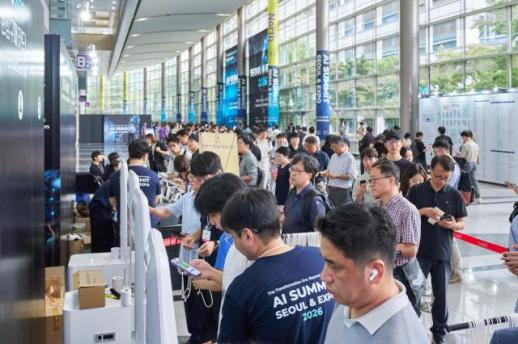 AI-themed expo brings business leaders together in southern Seoul SEOUL, August 19 (AJP) - An artificial intelligence (AI)-themed business expo is underway in Seoul, according to the Korea International Trade Association (KITA) Organized by KITA, COEX and DMK Global, the AI Summit Seoul & Expo (AISE), which kicked off its three-day run at COEX in southern Seoul on Wednesday, runs through Friday, bringing together some 118 companies from seven countries. The expo, which combines an AI conference with a business exhibition, has expanded from last year, when 71 companies participated with 197 booths, to 300 booths this year, with KITA expecting more than 25,000 visitors. Pre-registration was also about five times higher than a year ago. The expo is divided into four key areas such as industry AI, enterprise AI, generative AI and content innovation, and AI experience programs. Adobe, Genspark and Oracle are among the companies presenting AI solutions and business applications. KITA is also running a program connecting about 80 technology firms with large and midsized companies and investors. More than 200 one-on-one meetings are expected under the program. The expo also includes startup pitching sessions, AI workshops and a humanoid robot demonstration zone featuring companies including AgiBot and PUDU Robotics. Among the speakers are representatives from Google, Microsoft, NASA and Seagate KITA said the expo is aimed at helping AI firms find customers and investors while giving companies a place to explore technologies for business use. "South Korea needs more than good technology to become a key player in the global AI supply chain. It needs a market where tech firms and industry actually meet and do business together," said Jeong Hee-cheol, KITA's overseas marketing director. AJP Takeaways • AI Summit Seoul & Expo opened at COEX on Wednesday and runs through Friday. • The event brings together 118 companies from seven countries. • This year;s expo has 300 booths, up from 197 last year. • KITA expects more than 25,000 visitors. 2026-08-19 14:26:45
 -
 KOSPI remains down 4 percent as KOSDAQ edges higher SEOUL, August 19 (AJP) - South Korean stocks were split Wednesday morning, with the KOSPI down more than 4 percent while the KOSDAQ edged higher. The benchmark KOSPI stood at 6,575.02 as of 10:30 a.m., down 4.34 percent. It had fallen as low as 6,400.81 shortly after the open before recovering some ground, with a high of 6,614.39. A sell-side sidecar was triggered shortly after the opening bell as KOSPI 200 futures tumbled, following an overnight selloff in U.S. chip stocks and a surge in long-term global bond yields. Retail investors bought 2.184 trillion won worth of shares, while foreign investors cashed out 1.3102 trillion won as institutions followed with 975 billion won worth of sale. Samsung Electronics fell 5.77 percent to 253,000 won and SK hynix dropped 7.1 percent to 1.544 million won. Hyundai Motor was down 3.45 percent at 420,000 won. Hanwha Aerospace bucked the decline, jumping 7.59 percent to 1.233 million won after its U.S. defense unit was selected for a U.S. Army mobile artillery prototype program. Korea Electric Power Corp. fell 4.14 percent to 31,250 won. Meanwhile the KOSDAQ, rose 0.22 percent to 836.07 after swinging between 804.02 and 840.50. Foreign investors bought 91 billion won worth of shares, while retail investors sold 70.3 billion won as institutions shed 21.5 billion won. Robotis gained 5.56 percent to 294,500 won and Silicon2 rose 4.04 percent to 46,300 won, while HLB slipped 2.67 percent to 42,000 won. Ananti surged 14.22 percent to 5,140 won as inter-Korean cooperation stocks rallied on reports that U.S. President Donald Trump was seeking a meeting with North Korean leader Kim Jong Un as early as this fall. Whereas in Japan, Nikkei 225 fell 2.01 percent to 66,107.68 and China's Shanghai Composite lost 0.96 percent to 3,952.12. Brent crude rose 0.96 percent to $91.925 a barrel, while West Texas Intermediate gained 1.06 percent to $85.830. The won strengthened 0.52 percent to 1,406.1 per dollar. AJP Takeaways · The KOSPI remained down 4.34 percent at 10:30 a.m. after an early plunge triggered a sell-side sidecar. · Foreign and institutional investors sold a combined 2.285 trillion won, while retail investors bought 2.184 trillion won. · Samsung Electronics and SK hynix remained the biggest drags, while the KOSDAQ edged higher. 2026-08-19 11:18:59
 -
 KOSPI plunges 7% as sell sidecar triggered SEOUL, August 19 (AJP) - South Korean stocks plunged on Wednesday, triggering a sell-side trading curb as surging global bond yields battered chip shares. The Korea Exchange activated a sell-side sidecar at 9:06 a.m. after KOSPI 200 futures fell 6.02 percent from the previous session's reference price. The benchmark KOSPI was down 6.74 percent at 6,407.14 at the time. The sidecar temporarily halts program sell orders for five minutes when KOSPI 200 futures fall at least 5 percent and remain at that level for one minute. Samsung Electronics and SK hynix led the retreat. As of around 9:30 a.m., Samsung Electronics was down 7.45 percent at 248,500 won, while SK hynix sank 9.09 percent to 1.51 million won. The selloff spread to other large-cap stocks. Hyundai Motor dropped 6.09 percent to 408,500 won, while Samsung Electro-Mechanics fell 4.38 percent to 1.377 million won. The losses followed a sharp retreat in U.S. technology stocks overnight as rising oil prices and a global bond selloff pushed long-term borrowing costs higher. The Philadelphia Semiconductor Index tumbled 5 percent, while Micron Technology fell 7 percent and Nvidia lost 2.3 percent. The Nasdaq Composite closed 1.33 percent lower. The yield on the 30-year U.S. Treasury touched 5.33 percent, its highest level since 2007, while the benchmark 10-year yield climbed to around 4.74 percent. Concerns over inflation, fiscal spending and heavy debt issuance have added pressure to global bond markets. Borrowing by major technology companies to finance artificial intelligence infrastructure has also added to bond supply. Investors have pointed to competition for capital from AI hyperscalers as one factor keeping long-term Treasury yields elevated. Bond-market pressure has also intensified in Japan. The benchmark 10-year Japanese government bond yield touched 2.945 percent Tuesday, its highest level since September 1996, amid inflation concerns and expectations for further Bank of Japan tightening. Japanese equities followed Wall Street and Seoul lower Wednesday, with the Nikkei 225 down about 2.9 percent at 65,566.52. The won traded around 1,410 per dollar, up 0.25 percent against the U.S. currency. AJP Takeaways · The KOSPI fell 6.74% shortly after Wednesday's open, triggering a sell-side sidecar at 9:06 a.m. · Samsung Electronics dropped 7.45% and SK hynix sank 9.09% as of 9:25 a.m. · The rout followed a 5% plunge in U.S. semiconductor shares as long-term Treasury yields surged. · Japan joined the regional selloff, with the Nikkei 225 down about 2.9% in early trading. 2026-08-19 10:20:36
 -
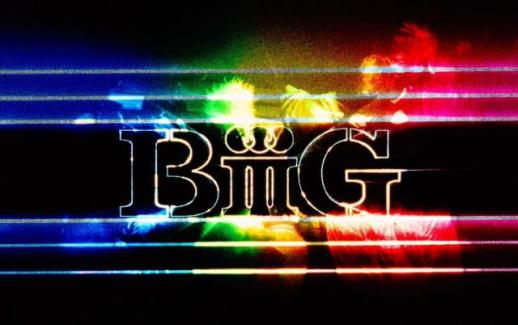 BIGBANG to celebrate 20th anniversary with new single SEOUL, August 18 (AJP) - K-pop boy group BIGBANG released a teaser video for their upcoming digital single on Tuesday, offering the first look at the song, their agency YG Entertainment said on Tuesday. The single, "BiiiG," will be released at 6 p.m. on Aug. 19, the day BIGBANG marks their 20th debut anniversary. It will be the group's first new song in about four years. The teaser shows G-Dragon, Taeyang and Daesung moving through a dark party scene, with sharp lighting and a vintage camcorder-style look. Teaser revealed part of the lyrics, including a line referencing "Bang Bong," the light stick associated with BIGBANG's fandom, V.I.P. YG described "BiiiG" as a high energy hip-hop track built on a heavy beat, layered sounds and a repeated hook. The teaser follows a series of other promotional materials released ahead of the single, marking the first time the song's sound, lyrics and performance have been revealed. With the release of the single, BIGBANG will also embark on their world tour with shows kicking off in Goyang, Gyeonggi Province from Aug. 21 to 23 before continuing across North America, Europe, Oceania and Asia, with 33 shows planned in 19 cities, according to YG Entertainment. The label also plans fan events and media exhibitions around the Han River and Jamsil areas as part of projects celebrating their anniversary. AJP Takeaways · BIGBANG released a music video teaser for their upcoming digital single Tuesday. · "BiiiG" will be released on Aug. 19 at 6 p.m., the group's 20th debut anniversary. · The single marks BIGBANG's first new song in about four years. · YG Entertainment described the song as a high-energy hip-hop track built on a heavy beat and repeated hook. 2026-08-18 17:53:34
 -
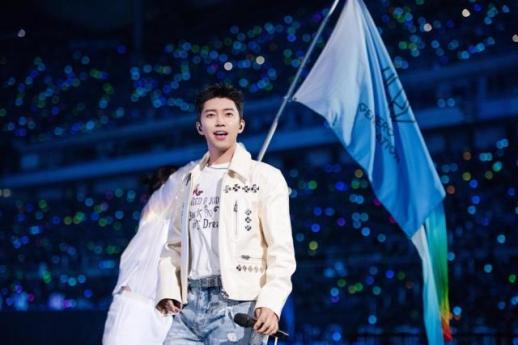 Lim Young-woong to release 10th anniversary album SEOUL, August 18 (AJP) - South Korean singer Lim Young-woong will release a special digital album next month to mark the 10th anniversary of his debut, his agency Mulgogi Music said on Tuesday. The album, "IM HERO 10," will be released on Sept. 8. Lim also unveiled the album's release date through a video posted on his social media accounts. The agency said the album is intended as a gift for his fans, known as "Hero Generation." The track list and other details have not yet been disclosed. Meanwhile, Lim is scheduled to hold his second stadium concert, "IM HERO - THE STADIUM 2," at Goyang Stadium in Gyeonggi Province from Sept. 4 to 6. AJP Takeaways · Lim Young-woong will release a special digital album on Sept. 8. · The album, "IM HERO 10," marks the 10th anniversary of his debut. · Lim announced the album through his official social media accounts Tuesday. 2026-08-18 17:45:48
 -
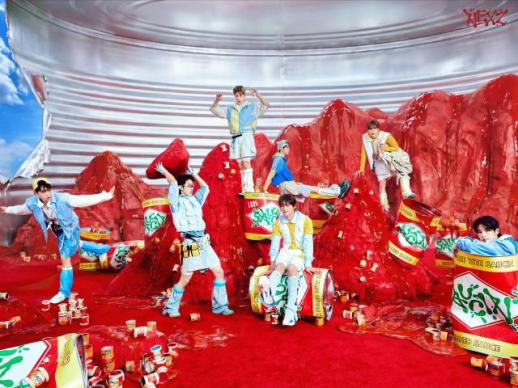 K-pop boy band NEXZ showcase new album in Los Angeles SEOUL, August 18 (AJP) - K-pop boy group NEXZ showcased a track from their upcoming fourth mini album at KCON LA 2026, a week before the album's release, their agency JYP Entertainment said on Tuesday. The seven-member group performed the title track of "SAUCIN" at the K-pop convention in Los Angeles ahead of the album's release, slated for Aug. 24. JYP described the track as a fast-paced Eurodance track with a festival-like mood and an addictive melody. The lyrics compare NEXZ to a sauce that can make any dish stand out, while the choreography includes gestures that mimic pouring and tasting the sauce. The group's members said that the song showcases NEXZ's strong performance style while adding a lighter summer mood. NEXZ also opened a performance challenge for the song on their social media channels Monday. They were formed through "Nizi Project Season 2," a joint audition program by JYP and Sony Music Japan, and consists of Tomoya, Yu, Haru, So Geon, Seita, Hyui and Yuki. AJP Takeaways · NEXZ performed a track from their upcoming fourth mini album for the first time at KCON LA 2026. · The group performed the title track, "SAUCIN'," on Aug. 16 in Los Angeles. · The mini album will be released on Aug. 24. 2026-08-18 17:13:13
 -
 LIGHTSUM to make Japanese debut with new album next month SEOUL, August 18 (AJP) - K-pop girl group LIGHTSUM will make their Japanese debut late next month with the release of their first full-group album in two years, their agency Cube Entertainment said on Tuesday. Set for release on Sept. 23, their Japanese mini album "Re:idol" includes five tracks such as "Doushite," "Fallin' World," "Stop and Go," "夜を歩く君へ" and "POSE! (Kawaii ver.)," a cuter version of the group's 2023 digital single "POSE!" Cube Entertainment is also promoting the release with a reality series, also titled "Re:idol," which has aired on the Japanese streaming platform ABEMA every Sunday at 10 p.m. since Aug. 9. The series offers a glimpse into the group's preparations for their Japan debut. Former 4Minute member Kwon So-hyun, a senior artist from Cube Entertainment, also appears in the series, offering advice and support to the group. AJP Takeaways · LIGHTSUM will make their official Japan debut on Sept. 23. · The debut Japanese mini album, "Re:idol," marks the group's first full-member release in about two years. · The album contains five tracks including four new songs and "POSE! (Kawaii ver.)." 2026-08-18 16:22:33