

Journalist
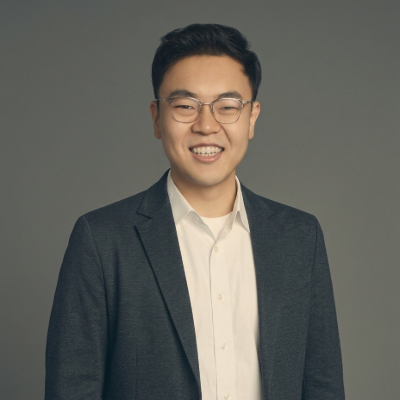
Joonha Yoo유준하
joonhayoo94@ajupress.com
ReporterCOEX Sejong Center for the Performing Arts & Music, Culture, Entertainment, Automotive
Joonha Yoo is a bilingual journalist at AJU Press (AJP), covering music, culture, entertainment and Korea’s automotive industry.
Raised in Fort Collins, Colorado, he often writes from the scene, bringing firsthand detail to stories ranging
from BTS comeback concerts to unique cultural events that catch the world's eye. "I write from the scene, not from the sidelines."
Raised in Fort Collins, Colorado, he often writes from the scene, bringing firsthand detail to stories ranging
from BTS comeback concerts to unique cultural events that catch the world's eye. "I write from the scene, not from the sidelines."
Latest by Joonha Yoo
-
 AI Summit Seoul & Expo 2026 returns this month SEOUL, August 05 (AJP) - South Korea's largest AI-focused exhibition and conference will return to Seoul later this month with a larger show floor and a sharper focus on how companies are putting artificial intelligence to work across industries, COEX said Wednesday. AI Summit Seoul & Expo 2026, or AISE 2026, will run from Aug. 19 to 21 at COEX in Samseong-dong, southern Seoul, jointly organized by COEX, DMK Global and the Korea International Trade Association (KITA). The exhibition will be held in COEX Hall B, while the accompanying conference will take place in the Grand Ballroom. This year's show floor will host 125 companies across 300 booths, a 150 percent increase from last year, according to the organizers. Exhibitors will present AI solutions spanning manufacturing, logistics, finance, health care, customer experience and workplace productivity, alongside infrastructure for developing and operating generative AI systems. The lineup reflects the industry's shift from generative AI to agentic AI and physical AI, or AI built into robots and other machines. Global participants include Seagate, Adobe, Oracle, HP and Genspark, alongside Korean AI companies. A hands-on "EX-Zone" will allow visitors to try AI technologies directly. Companies including shotAi and AI Taekwondo will offer demonstrations such as sports-motion analysis and AI-based taekwondo poomsae experiences. A separate humanoid robot zone will feature AgiBot, RealMan Robotics and Pudu Robotics. The conference will run alongside the expo on Aug. 19 and 20. KAIST professor Kim Dae-sik will speak on the shift "from AI to AGI" and how AI agents could reshape work and industry. Jack Chua, CEO of Valent Health and a former Meta executive, will discuss building startups in the AI era. Kim Jung-kyun, a director at Seagate Technology, will address the future of ultra-high-capacity storage beyond AI computing. On the final day, Korea Startup Forum will host a startup pitching session, while KITA will run an investor-relations pitching day. Other side programs include AI business-matching sessions and workshops on applying AI in the workplace. The expo will run from 10 a.m. to 6 p.m. from Aug. 19 to 20 and close at 4 p.m. (0700 GMT) on Aug. 21. AJP Takeaway: AI Summit Seoul & Expo 2026 will take place at COEX in southern Seoul from Aug. 19 to 21, bringing together 125 companies across 300 booths, a 150 percent increase from last year. The event will focus on industrial applications of generative AI, agentic AI and physical AI across manufacturing, logistics, finance, health care, customer service and workplace productivity. Global technology companies including Seagate, Adobe, Oracle, HP and Genspark will participate alongside Korean AI firms, while dedicated zones will feature humanoid robots and hands-on AI demonstrations. The accompanying conference on Aug. 19 and 20 will include sessions on artificial general intelligence, AI startups, workplace transformation and ultra-high-capacity data storage, with speakers from KAIST, Valent Health and Seagate Technology. Startup pitching, investor-relations sessions, business matching and workplace AI workshops will position AISE 2026 as both a technology showcase and a platform for commercial partnerships and investment. 2026-08-05 15:27:30
 -
 Korean scam ring shifts to Central Asia on SE Asia crackdown SEOUL, August 05 (AJP) -South Korean fraud rings are spreading from Southeast Asia into Central Asia to stay ahead of law enforcement, with authorities dismantling their first known Korean-run scam operation in Kazakhstan and bringing home 14 suspects. The arrests underscore what South Korean police called a "secondary balloon effect," in which criminal organizations relocate to increasingly distant countries as crackdowns close traditional operating bases across Southeast Asia. A government-wide task force on transnational crime said Wednesday that South Korean and Kazakh authorities raided a scam office and hideout in Almaty on July 23, arresting 14 South Korean members of the organization. Five additional members of the same network were arrested simultaneously in South Korea. The 14 suspects detained in Kazakhstan were repatriated through Incheon International Airport between July 28 and Aug. 5. Ten have been formally arrested, while the remaining four were transferred to the Busan Metropolitan Police Agency for further questioning. Of the five suspects arrested in South Korea, four have also been formally arrested, while one is awaiting a court hearing on an arrest warrant. Police believe the organization involved at least 40 members. The alleged Chinese ringleader and several managers fled to China after learning of the investigation, authorities said. Police are seeking Interpol Red Notices for the fugitives and are working with overseas counterparts to locate additional suspects. Investigators said the group originally operated in Cambodia before relocating to Ho Chi Minh City, Vietnam, last year as authorities intensified crackdowns on telecom fraud. From there, the organization shifted again to Kazakhstan in March and had fully established its new base by May. Authorities believe the group chose Kazakhstan for its relatively advanced communications infrastructure and its geographic position, which allows members to flee overland to neighboring countries, including China and Kyrgyzstan. The organization allegedly operated a call center from a house on the outskirts of Almaty, carrying out voice-phishing schemes designed to isolate victims before persuading them to transfer their own money. According to investigators, victims first received calls claiming court documents had been issued in their names and were instructed to access a fake judicial website. Members posing as prosecutors then falsely claimed the victims' bank accounts had been linked to criminal activity and ordered them to relocate to hotels or other temporary lodging. Once isolated from family and acquaintances, victims were instructed to obtain new mobile phones, install remote-access software and transfer money into accounts controlled by the criminal organization. Police have so far identified 16 victims and confirmed losses of about 600 million won ($420,000). Authorities cautioned that those figures reflect only the cases included in arrest warrant applications and said total losses could ultimately reach several billion won as investigators identify additional victims. The operation was coordinated by South Korea's National Police Agency, National Intelligence Service, Foreign Ministry and Justice Ministry. Police and the NIS established a joint response team after detecting the organization's relocation to Kazakhstan. South Korea's Foreign Ministry and its consulate in Almaty supported local operations and the suspects' repatriation, while the Justice Ministry handled international judicial cooperation. Kazakhstan's National Security Committee and Interior Ministry participated in surveillance, arrests, interrogations and the suspects' return to South Korea. A senior police official said authorities moved before the group could become firmly established in Kazakhstan and significantly expand its operations. Investigators are now analyzing mobile phones, laptops and other electronic devices seized during the raid to determine the full scale of the network, identify additional crimes and track remaining fugitives in cooperation with foreign law enforcement agencies. AJP Takeaway: South Korean and Kazakh authorities raided a Korean-run scam operation in Almaty on July 23, 2026, arresting 14 Korean nationals in Kazakhstan and five additional suspects in South Korea. The 14 suspects arrested in Kazakhstan were repatriated through Incheon International Airport between July 28 and Aug. 5; police have formally arrested 10 of them, while four others remain under questioning. Investigators believe the network involved at least 40 people and moved from Cambodia to Vietnam and then Kazakhstan as crackdowns on overseas fraud rings intensified across Southeast Asia. Police have confirmed 16 victims and losses of about 600 million won, but authorities said total damages could rise to several billion won as more cases are identified. The case marks what South Korean police called a “secondary balloon effect,” with scam networks relocating beyond Southeast Asia to more distant countries, while authorities now pursue the alleged Chinese leaders and analyze seized phones, laptops and other evidence. 2026-08-05 15:07:24
 -
 New association formed to tackle challenges amid growing AI use in filmmaking SEOUL, August 5 (AJP) - A new association has been launched to help establish standards for the growing use of generative artificial Intelligence (AI) in filmmaking including scriptwriting, image creation, video production, voice generation and post-production. At its inaugural meeting in Seoul last month, the non-profit Korea Association of AI Film Directors (KAIFD) said it was established to support directors and video creators using AI, as concerns over copyright, consent, credit and ethical use continue to grow. The association says it is not simply a group of software users, but a creative community of directors who use AI to develop their own stories and cinematic worlds. The association's launch on July 15 reflects a broader shift in the country's film industry, where AI filmmaking is increasingly being recognized as more than just a technical experiment. In 2024, the annual Bucheon International Fantastic Film Festival introduced an AI competition section, while the Korean Film Council partnered with MBC C&I, the Busan Film Commission and the Bucheon festival in March to foster AI talent in film and media. KAIFD's first chairman is Choi Min-cheol, who runs production company Choicine and AI film studio nomorefrog. He said cinema's essence lies not in technology but in human stories and a director's point of view, and that AI should serve as a creative tool rather than replace the director. The association plans to conduct research, provide education, hold screenings and festivals, and promote international exchange in AI filmmaking, while its immediate focus is on copyright issues and production standards. As AI becomes more widely used in filmmaking, creators face new questions over ownership of AI-generated images and footage, the use of digital actors and synthetic voices, and how profits should be shared on collaborative projects. KAIFD said it will encourage creators to establish copyright, revenue-sharing and secondary-use terms before production begins. It also plans to develop standards to ensure that the use of AI does not diminish the contributions of directors, writers, actors, editors and composers. The association also released an ethics code built on three principles: verification, consent and responsibility. Creators are expected to check the sourcing and licensing of any material they use, including images, video, music, voices, scripts, characters and reference footage, and review the commercial-use terms of the AI tools themselves. Generating or altering a real person's face, voice or identity requires clear consent, according to the code. Any use of a digital replica of an actor, model or voice actor should also be agreed on in advance, covering purpose, duration, distribution and compensation. On deepfakes and misinformation, KAIFD said AI-generated scenes should not be presented as real footage. In news, documentary or archival formats, AI-generated reenactments should be clearly separated from real material. It said final responsibility for released AI-generated content rests with the creator who selects and publishes it, while its long-term goal is to help South Korean filmmakers work internationally and build a production environment where technology, authorship and ethics can coexist. AJP Takeaways: - The Korea Association of AI Film Directors, or KAIFD, launched as a nonprofit in Seoul on July 15, 2026, to support filmmakers using generative AI and establish industry standards for authorship, rights and ethical production. - Led by chairman Choi Min-cheol, founder of production company Choicine and AI film studio nomorefrog, KAIFD defines AI as a creative tool under a director’s control rather than a replacement for human storytelling. - The association plans to develop guidelines covering copyright ownership, revenue sharing, secondary use, production credits, digital actors and synthetic voices, with terms to be agreed before filming begins. - KAIFD's ethics code is based on verification, consent and responsibility, requiring creators to check source licensing, obtain permission before reproducing a real person’s face or voice and clearly label AI-generated reenactments. - The launch reflects the growing institutionalization of AI filmmaking in South Korea, as festivals, broadcasters and film agencies expand AI competitions, training and production programs while confronting risks involving deepfakes, misinformation and creator rights. 2026-08-05 14:58:06
 -
 Boy band NEXZ's new album teased ahead of release later this month SEOUL, August 5 (AJP) - K-pop boy group NEXZ will release their fourth mini album later this month, returning four months after their single released last spring, their agency JYP Entertainment said on Wednesday. "SAUCIN'," set for release on Aug. 24, combines "sauce" with the suffix "-ing," reflecting the group's idea of bringing their own flavor and style wherever they go. The members then move through the arcade with their own sauce bottles before gathering around a hot dog topped with yellow, white and red sauces. The clip leans into a playful, offbeat energy that fits the group's reputation for throwing itself fully into everything it does. After the album release, NEXZ will perform at Rock in Rio in Brazil in September and appear at "STRAYCITY," a new festival set to take place across three Latin American locations. AJP Takeaways: - K-pop boy group NEXZ will release its fourth mini album, "SAUCIN'," at 6 p.m. on Aug. 24, 2026, marking its first release since the April single album "Mmchk." - JYP Entertainment said the album title combines "sauce" and "-ing," representing NEXZ's goal of bringing its own musical flavor and style wherever the group goes. - The second "SAUCIN'" trailer features all seven NEXZ members — Tomoya, Yu, Haru, So Geon, Seita, Hyui and Yuki — in a playful nighttime sequence centered on sauce bottles and a hot dog. - Following the album's release, NEXZ is scheduled to perform at Rock in Rio in Brazil in September and appear at "STRAYCITY," a new festival spanning three Latin American locations. 2026-08-05 14:36:31
 -
 Stray Kids to return with new EP 'THIS & THAT' SEOUL, August 05 (AJP) - K-pop boy group Stray Kids will release their new EP "THIS & THAT" on Aug. 7, an album meant to showcase the group's range, and the confidence that comes with it, JYP Entertainment said Wednesday. The eight-track EP, led by the title track "This & That," will be released at 1 p.m. KST, or midnight Eastern time in the United States. The release follows Stray Kids' SKZ IT TAPE "DO IT," which made the group the first act worldwide to debut eight consecutive releases at No. 1 on the Billboard 200, according to JYP. On Monday, JYP posted an intro video on the group's official social media channels in which all eight members discuss the new album. True to its title, "THIS & THAT" is meant to capture the group's ability to move between different sounds and styles, mixing lighter summer tracks with higher-energy songs. The title track "This & That" took the longest to complete among the album's eight songs, according to the members, who described it as combining a catchy, accessible sound with witty lyrics and choreography that still feel distinctly Stray Kids, while marking a departure from some of their previous title tracks. Changbin said the group spent time looking for words that could express the ideas of "this" and "that" in a sharper and more current way. Stray Kids' in-house production team 3RACHA — Bang Chan, Changbin and Han — contributed to all eight tracks. The members also discussed the title track's music video, which includes Korean visual elements, and choreography that went through multiple revisions before the final version was chosen. The track list includes the pre-release single "RUN IT," which the members described as one of the songs that best captures Stray Kids' identity, as well as "FARMING," inspired by the online phrase "aura farming"; the brighter "After You"; the 2000s pop-influenced "I Do"; "Way Out," which features lyrics in multiple languages; "The Day," which Han wrote after drawing inspiration from a television drama; and "This & That (Festival Version)," an upbeat version of the title track. Ahead of the album's release, Stray Kids opened their new world tour, "Stray Kids World Tour ," with five sold-out concerts at KSPO Dome in Seoul on July 25, 26 and 29 and Aug. 1 and 2. 2026-08-05 11:38:19
 -
 KISS OF LIFE teams up with I'm donut? for sweet collabo SEOUL, August 05 (AJP) - K-pop girl group KISS OF LIFE, known for the powerful music and performances that have taken past releases to No. 1 on Thailand's iTunes chart, has teamed up with doughnut brand I'm donut? for a limited collaboration tied to its new single album, "SWEAT." For the project, I'm donut? created four doughnuts and three merchandise items built around the album's desert-inspired concept, using images of blazing sun, sand, heat haze and hot air to match the single's summer mood. The doughnut lineup includes the "Sunset Yellow Cheese Doughnut," made with yellow and brown cheese; the "Sand Injeolmi Doughnut," topped with roasted soybean powder and cookie crumble; the "Heatwave Lemon Doughnut," finished with lemon chocolate and marbling; and the "Sunburn Peanut Butter Doughnut," made with white chocolate and peanut butter in a deep orange hue. The merchandise lineup includes a beach bag, a thermo bottle and a keycap, all featuring the "I'm KIOF?" logo and sun motif. The keycap will be sold exclusively on KREAM. KISS OF LIFE released "SWEAT," its third single album, under the slogan "Don't let them see you SWEAT." I'm donut? is a doughnut brand created by chef Ryota Hirako, who also runs the popular Fukuoka bakery Amam Dacotan. In South Korea, the brand is operated by Eight Ground. The brand has built a following in Seoul's dessert scene for doughnuts with a light, chewy texture achieved through a long fermentation process, often drawing lines before its stores open. The collaboration runs from Aug. 5 to 30 at I'm donut?'s Seongsu and Hongdae locations and its counter at Shinsegae Department Store's Gangnam branch, as well as on KREAM. 2026-08-05 11:38:08
 -
 Police raid Starbucks Korea, questioning internal audit on Tank Day SEOUL, August 05 (AJP) - Nearly three months after Starbucks Korea's "Tank Day" promotion ignited a national backlash, the controversy continues to haunt the coffee chain and its owner Shinsegae Group, as South Korean police on Wednesday raided the company's headquarters in an escalating criminal investigation. The search, at the Centerfield building in Seoul's Gangnam District, is the first compulsory investigative step since the Seoul Metropolitan Police Agency's Public Crimes Investigation Unit took over the case 76 days ago. Investigators from the unit began searching the headquarters Tuesday morning, seeking documents and digital evidence related to the planning and approval of the promotion. The move follows police concluding that Shinsegae Group's internal probe had failed to determine whether the campaign intentionally insulted victims of the country's pro-democracy movement. Police listed alleged insult charges in the warrant, accusing Starbucks Korea of mocking victims of the May 18 Democratization Movement through the campaign. Investigators are also examining whether the phrase "Tak! on the desk" could constitute defamation of the family of the late student activist Park Jong-chul, whose 1987 torture death became a defining moment in South Korea's democracy movement. The raid follows a review of materials Shinsegae Group submitted as part of its internal investigation. Police said they identified shortcomings in that audit and sought a new search warrant after an earlier request, filed June 8, was rejected by prosecutors. The Seoul Central District Prosecutors' Office had returned that initial request, instructing police to pursue voluntary investigation first on the grounds that Shinsegae was cooperating. In the interim, investigators questioned Yang Jong-hwan, head of Shinsegae Group's audit team, as a witness and concluded that the company's internal review had failed to fully examine the circumstances surrounding the campaign. When Shinsegae disclosed the results of its internal investigation in May, the company said it had found no evidence that employees deliberately coordinated politically sensitive messaging. Executives also acknowledged significant limitations to the probe. The audit covered company emails, work laptops and internal messenger records, along with interviews with employees, but only two of the five key staff members directly involved in the promotion voluntarily submitted their personal mobile phones for forensic examination. Three employees — including an executive — declined to provide their devices, with the company saying it had no legal authority to compel them. Shinsegae nevertheless concluded at the time that it had found no evidence of intentional political messaging or advance collusion, while acknowledging that internal review systems had failed and that historical awareness had been sacrificed for speed and sales performance. Police are now expected to use materials obtained in Tuesday's search to determine whether Starbucks executives intentionally planned or approved content mocking victims of the May 18 Democratization Movement — a key element in deciding whether criminal charges are warranted. The controversy erupted on May 18 after Starbucks Korea launched a promotion for tumblers branded "Tank" under the slogan "Tank Day," accompanied by the phrase "Tak! on the desk." Critics argued the campaign invoked two of South Korea's most painful chapters in modern history. The word "Tank," promoted on the anniversary of the 1980 Gwangju Democratization Movement, was seen as recalling the military crackdown on pro-democracy demonstrators. The phrase "Tak! on the desk" echoed the notorious explanation authorities initially offered to conceal the 1987 torture death of Seoul National University student activist Park Jong-chul — a cover story later exposed as false that helped fuel the nationwide June Democracy Movement. AJP Takeaway: Police searched Starbucks Korea's Seoul headquarters Tuesday, their first compulsory step since taking over the "Tank Day" case 76 days ago. The raid follows a rejected June 8 warrant bid and police concluding that Shinsegae Group's own internal audit — hampered by three staff refusing to hand over phones — fell short of resolving whether the campaign was intentional. At stake is whether Starbucks executives knowingly approved content referencing the 1980 Gwangju crackdown and the 1987 death of Park Jong-chul, which would determine if criminal charges follow. The case has already cost Starbucks Korea its CEO and drawn two public apologies from Shinsegae Chairman Chung Yong-jin amid consumer boycotts. 2026-08-05 10:52:21
 -
 Boy band WayV promote upcoming album with US debut performance in New York SEOUL, August 4 (AJP) - K-pop boy band WayV made their U.S. debut performance at SummerStage in New York's Central Park, using the outdoor set to preview choreography from their upcoming mini-album "Vision Wings" ahead of their release, their agency SM Entertainment said on Tuesday. The group performed at Central Park's Rumsey Playfield last Sunday as part of the free, annual SummerStage festival. The show also featured New York-based group THE EITHER and Chopstix as opening acts. WayV opened their set with "BIG BANDS," the English version of "Bad Alive" and the English version of "Phantom," before moving through tracks including "Nectar," "On My Youth," "Poppin' Love," "Give Me That" and "FREQUENCY." The group also leaned heavily on its English-language catalog, performing "Filthy Rich," "Love Talk," "Ice Tea" and "Low Low" for the New York audience. Members Kun and Xiaojun performed the English version of "Back To You," while Hendery and Yangyang took on the unit track "RODEO." The main preview came near the end of the show, when WayV revealed part of the choreography for "Vision Wings," the title track of its eighth mini-album. The performance incorporates martial arts-inspired movements, according to the agency. The seven-track album will include both Chinese- and English-language versions of the title song. It is scheduled for release through music platforms on Aug. 10. The release date is also listed by SMTOWN's official store. WayV members debuted in 2019 as the China-based unit of NCT and have built a multilingual catalog spanning Mandarin, Korean and English. SummerStage billed the show as a night of Chinese pop, highlighting the group's mix of hip-hop, dance and R&B. 2026-08-04 18:06:27
 -
 aespa set to kick off world tour after making Lollapalooza debut in Chicago SEOUL, August 4 (AJP) - K-pop girl band aespa made their Lollapalooza debut in Chicago on Tuesday, delivering a 14-song set that showed off the seven-year-old group's road-tested stage command, according to their agency SM Entertainment. The quartet took the Allianz Stage at Grant Park, opening with debut single "Black Mamba" and 2021 hit "Next Level" before moving through a run of fan favorites - "Armageddon," "Supernova" and "Whiplash" - backed by a live band that gave the set a festival-ready punch. American rapper Ty Dolla $ign, who features on "Switchblade," joined aespa onstage for a surprise performance of the track. The group also leaned on "LEMONADE," their second studio album, playing the title track alongside "WDA (Whole Different Animal)," "Can't Help Myself" and "SHAKIN'" for the U.S. crowd. Older cuts including "Rich Man," "Bubble," "To The Girls" and "Hold On Tight" rounded out the set. "It was an honor to stand on the Lollapalooza Chicago stage," aespa said afterward. "So many fans sang along and cheered us on, and that energy let us really enjoy the performance ourselves. We want to carry it straight into the world tour." Ty Dolla $ign called sharing the Lollapalooza stage with aespa again "meaningful," adding that watching how far the group has come was inspiring and that their command of a stage that size left an impression on him. The performance doubles as a lead-in to Wednesday's release: the music video for "Switchblade," featuring Ty Dolla $ign, drops at 1 p.m. on SMTOWN's YouTube channel, giving fans another look at the pairing right on the heels of the Lollapalooza set. Chicago marked aespa's last major stop before their "2026-27 aespa LIVE TOUR - SYNK: COMPLæXITY" begins. The tour opens with two nights at Gocheok Sky Dome in Seoul on Aug. 7-8, then travels to 25 cities across North America, South America and Europe. 2026-08-04 17:59:55
 -
 Young K tops Hanteo chart with second solo album 'YOUNGEST' SEOUL, August 04 (AJP) - DAY6’s Young K topped a weekly album chart with his second solo studio album, “YOUNGEST,” a 15-track record built around questions about his identity as a singer-songwriter. The album and its title track, “Shut The Door,” were released July 27, nearly two years and 10 months after his first full-length solo album, “Letters with notes.” “YOUNGEST” ranked first on Hanteo Chart’s weekly album chart for the July 27-Aug. 2 period, according to JYP Entertainment. Young K, whose real name is Kang Young-hyun, has written or co-written many of DAY6’s best-known songs since the band’s debut in 2015. In a behind-the-scenes video posted on DAY6’s official YouTube channel, he said the new album grew out of questions about his own tastes and identity. “I thought about what I like and what kind of person I am now,” he said. Young K said the title combines his stage name with the English superlative suffix “-est,” representing both the music that is most characteristic of him and who he is at the youngest point of his life. He also described the album’s unusually long track list as part of that identity. “A full-length album usually has 10 to 12 songs, but I think adding something extra is more like Young K,” he said. “I wanted it to contain different textures that might make people say, ‘He is changing again?’ or ‘He does this kind of music too?’” Young K also addressed recurring feedback that his music lacked a darker or more abrasive edge. “I’ve heard that I’m ‘nice’ or ‘good’ and that my music is missing some ‘badness,’” he said. “Rather than expressing bad as bad, I borrowed the concept of good and evil. Since evil is already clearly expressed, I thought it would be better to make good feel more clearly like good.” That approach is reflected in “Shut The Door,” which deals with exhaustion toward the world and the pain of being hurt by someone once trusted. Rather than expressing those emotions through outright anger, the song places them over an upbeat rhythm and incorporates Young K’s characteristic wit and humor. The 15 tracks run for about 44 minutes and move across a range of musical styles and emotional tones, reflecting what Young K described as an effort to include everything he wanted to explore musically. Young K will open his solo tour, “YOUNGEST,” with three sold-out concerts at INSPIRE Arena in Incheon from Aug. 14 to 16. The tour will continue in Bangkok, Taipei, Hong Kong, Singapore, Manila and Kuala Lumpur 2026-08-04 17:24:29