

Journalist
Han Jun-gu한준구
jungu141298@ajupress.com
PhotographerGeopolitics, Culture, History, People & Photo Journalist
Photojournalist, AJU PRESS (AJP)
Covering Asia's defining stories — from pressing issues and politics to culture and society — through a distinctly Asian lens. "I point the camera at what's there. That's the job."
Covering Asia's defining stories — from pressing issues and politics to culture and society — through a distinctly Asian lens. "I point the camera at what's there. That's the job."
Latest by Han Jun-gu
-
 AMCHAM Chair speaks on tariff SEOUL, July 24 (AJP) - James Kim, chairman and CEO of AMCHAM Korea, speaks with AJP at the AMCHAM office in Seoul on how South Korea and the United States can forge a mutually beneficial tariff agreement after Washington's latest Section 301 action effectively set a 12.5 percent tariff floor on Korean exports while exempting Seoul from the blanket tariff category under the Korea-U.S. free trade agreement. 2026-07-24 16:32:04
 -
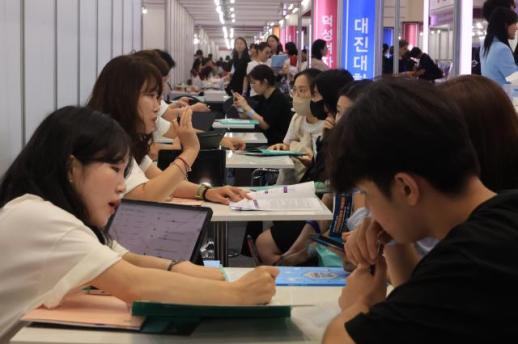 College admissions season kicks off for class 2027 SEOUL, July 23 (AJP)-South Korea's 2027 college admissions season officially got underway Wednesday as the country's largest university admissions counseling fair opened at COEX in southern Seoul, drawing nearly every four-year university ahead of this year's early application period. The three-day 2027 Early Admissions Fair opened at 10 a.m. at COEX Hall 1 in Gangnam-gu and runs through Friday, about six weeks before universities begin accepting early admission applications for the 2027 academic year. This year's early admissions application period is scheduled for Sept. 7-11, when current high school seniors will submit their applications. Anxiety is palpable among this year's applicants and their parents, as this marks the final college entrance exam under the current system. Starting with the 2028 academic year, a five-tier grading system for school records will be implemented, along with an integrated college entrance exam that no longer separates humanities and sciences tracks. According to KCUE, 16,764 people had pre-registered online as of July 20, with organizers expecting roughly 5,000 additional walk-in visitors. Booths for Seoul's top universities, which are especially popular among students, filled their daily counseling slots within 30 minutes of opening. Organized by the Korean Council for University Education (KCUE), which represents about 150 four-year universities nationwide, the fair features all 150 member institutions, including 32 national and public universities and 118 private universities. Admissions officers are providing one-on-one counseling on admission strategies, application procedures and university-specific selection criteria, making the event one of the largest annual gatherings for prospective students and their parents before the start of the admissions season. 2026-07-23 15:59:39
 -
 Samsung unveils new Galaxy foldable lineup SEOUL, July 23 (AJP) - Models pose with the Galaxy Z Flip8, Z Fold8, and Z Fold8 Ultra (from left) during a photo event at KT West Building in Gwanghwamun, Jung-gu, Seoul, marking the release day of the Galaxy Fold8 series, July 23, 2026. 2026-07-23 12:16:23
 -
 Samsung unveils new Galaxy foldable lineup SEOUL, July 23 (AJP) - Models pose with the Galaxy Z Flip8, Z Fold8, and Z Fold8 Ultra (from left) during a photo event at KT West Building in Gwanghwamun, Jung-gu, Seoul, marking the release day of the Galaxy Fold8 series, July 23, 2026. 2026-07-23 12:13:57
 -
 Samsung unveils new Galaxy foldable lineup SEOUL, July 23 (AJP) - The Galaxy Z Fold8 Ultra, Fold8, and Flip8 are unveiled at KT's Gwanghwamun building in Seoul, July 23, 2026. 2026-07-23 12:12:00
 -
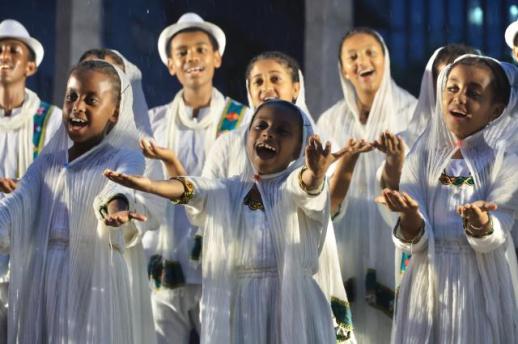 Skies weep as Ethiopia's Kagnew Choir offered heavenly songs of remembrance SEOUL, July 22 (AJP) -The heavenly voices of Ethiopian children drifted across Gwanghwamun Square on Wednesday afternoon, transforming Seoul's Garden of Gratitude into a place of remembrance as the Kagnew Choir sang Korean folk songs in tribute to the veterans who fought in the Korean War 75 years ago. The cultural exchange performance, titled "The Courage of That Day, Today's Song," commemorated the 75th anniversary of Ethiopia's participation in the Korean War. Hosted by the Seoul Metropolitan Government, it brought together the Kagnew Choir — founded in 2018 and made up of descendants of Ethiopian Korean War veterans — and Seoul city arts ensembles before an audience of about 300, including Seoul Mayor Oh Se-hoon, veterans' affairs officials and cultural figures. The choir performed beloved Korean songs, including Spring in My Hometown and Alone Arirang, in fluent Korean, drawing warm applause from the audience. Their youthful voices carried special significance, representing a new generation preserving the legacy of the Ethiopian soldiers who fought on the Korean Peninsula. Ethiopia was the only African nation to send ground troops to fight under the U.N. Command during the Korean War. Its Kagnew Battalion earned a distinguished reputation on the battlefield without suffering a single captured soldier. The name "Kagnew," derived from Amharic, is commonly understood to mean "bringing order out of chaos" or "defeating the enemy." As the final notes faded beneath the summer sky, the performance served not only as a cultural exchange but also as a living tribute, linking the sacrifices of the wartime generation with the voices of their descendants seven decades later. Among the delegation was Tesfaye Asmamaw, 95, a veteran of the famed Kagnew Battalion, who traveled to Seoul alongside 34 choir members aged 8 to 16. The group arrived on June 22 for a 36-day visit marking the anniversary of Ethiopia's deployment during the Korean War. 2026-07-22 23:12:46
 -
 Seoul elementary schools kick off summer vacation SEOUL, July 22 (AJP) - Students leave school after a summer vacation ceremony at Jungpyeong Elementary School in Nowon-gu, Seoul, on July 22, 2026. 2026-07-22 16:06:11
 -
 Seoul elementary schools kick off summer vacation SEOUL, July 22 (AJP) - 2026-07-22 16:04:58
 -
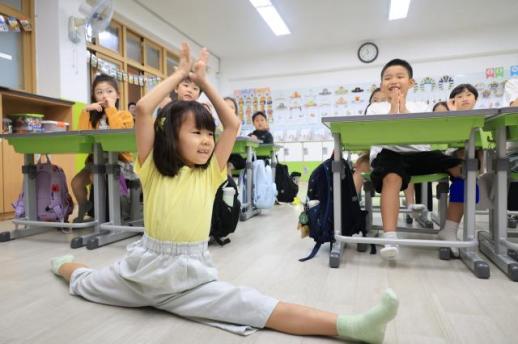 Seoul elementary schools kick off summer vacation SEOUL, July 22 (AJP) - 2026-07-22 16:04:06
 -
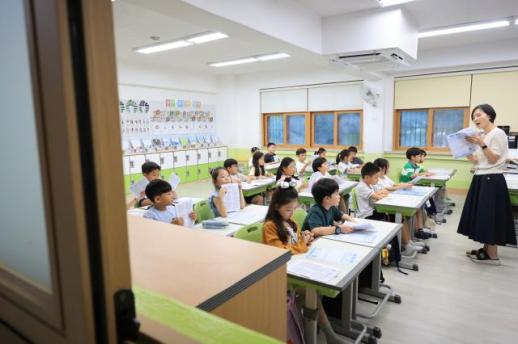 Seoul elementary schools kick off summer vacation SEOUL, July 22 (AJP) - 2026-07-22 16:03:05