
Journalist

Lee Hugh
=
-
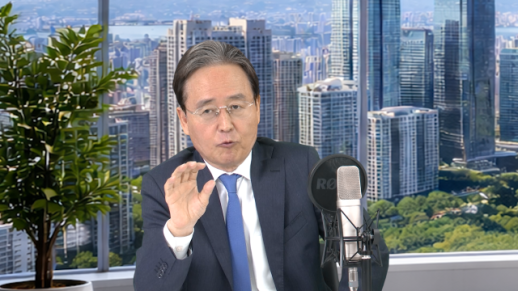 Shin Bong-gil: India Is Korea’s Manufacturing Base, Market and Strategic Partner South Korea’s diplomatic map is shifting. For decades, Seoul operated within a so-called “four-power diplomacy” centered on the United States, China, Japan and Russia — shaped by the peninsula’s division, the U.S.-South Korea alliance, economic dependence on China, historical disputes with Japan and outreach to Russia. But today’s international environment no longer fits that frame. U.S.-China strategic rivalry has become prolonged, supply chains are being recast in security terms, and the wars in Ukraine and the Middle East have pushed the world deeper into uncertainty. In that turbulence, India is emerging as a new diplomatic, economic and strategic axis. India is the world’s most populous country and a fast-growing economy. It is also a leading “Global South” power that maintains an independent foreign policy rather than aligning fully with either the United States or China. For South Korean companies, it is both a production base and a vast consumer market; for South Korean diplomacy, it can widen Seoul’s room to maneuver among major powers. Shin Bong-gil, a former South Korean ambassador to India, said South Korea should move “beyond four-power diplomacy to five-power diplomacy that includes India.” Shin, a veteran diplomat with nearly 40 years in the field, also served as the first secretary-general of the Trilateral Cooperation Secretariat for South Korea, China and Japan. He now heads the Korea-India Future Association and argues for expanding the relationship with India. Shin cautioned against viewing India simply as “post-China.” He called India a potential alternative manufacturing base, but said it operates with a distinct political, economic and diplomatic logic. “India is not an easy country,” he said, citing complex regulations, differing state administrations, and challenges in permits and labor. Still, he added: “Next is India,” arguing that difficulty is a reason to prepare more and enter earlier. “This is an age of major turmoil, and India’s presence is growing” Asked how he defines today’s international order, Shin said: “I’m not sure there is order. It’s an order of disorder — I want to call it an age of major turmoil.” He said the liberal international order that has underpinned global stability is in the process of collapsing, while a new order has not yet taken shape. He traced the high point of the U.S.- and Western-led order to the fall of the Berlin Wall and the collapse of the Soviet Union, when political scientist Francis Fukuyama spoke of the “end of history.” Shin said the order began to shake with the 2003 U.S. invasion of Iraq, the Arab Spring, refugee and migration pressures, and moves after the Trump administration that he said undermined the system the United States had built. “You could say it’s an international order that began with the U.S. and is ending with the U.S.,” he said. On India’s significance, Shin said he recently attended the Raisina Dialogue in New Delhi, where about 3,000 political scientists, diplomats and experts from 120 countries gathered. He said Finland’s President Alexander Stubb delivered a keynote arguing that as the Western-led order weakens, the Global South — led by India — will play a larger role. Shin linked the Global South to the Non-Aligned Movement led by figures such as India’s Prime Minister Jawaharlal Nehru, whose core idea was peaceful coexistence. He said the world may be moving toward a multipolar order in which different values and ideologies coexist. “South Korean diplomacy should move beyond four powers to five, including India” Shin said South Korea is sometimes assessed as around fifth or sixth in overall national power when GDP, military strength, population and culture are considered. “It’s not a superpower, but it has reached the position of a major power,” he said. But he said diplomacy has not fully caught up. He cited two reasons: South Korea’s limited room to maneuver because it is surrounded by the four powers, and a foreign policy that has been centered on the United States. “In a way, it has been diplomacy that can only be called dependent,” he said. That is why India matters, he said. A visit to India, he said, is “to do five-power diplomacy.” He also described it as “G3 diplomacy” economically, arguing India is rising fast and is becoming a key partner for economic and investment diplomacy. Shin said India is close to the United States but not a subordinate partner; it competes with China but does not fully sever ties; and it maintains an independent relationship with Russia. Building strong ties with such a country, he said, expands South Korea’s options and strengthens links to the Global South — which he estimated at about 120 countries — providing leverage in relations with the United States, China and Japan. “A presidential trip to India is a relaunch of South Korea-India ties” Shin said he served as ambassador to India during the Moon Jae-in government, when bilateral ties were strong under Seoul’s New Southern Policy and India also sought closer relations. He said later political issues made active diplomacy harder and relations cooled. In that context, he said, President Lee Jae-myung’s visit to India carries the meaning of restarting the relationship. “I want to call it a ‘relaunch,’” he said, likening it to restarting a car’s engine. Shin also pointed to historical symbolism. He said that when he was ambassador, South Korean history was barely mentioned in Indian middle and high school textbooks, while Japan and China each had six pages. He said South Korea later secured six pages, including the story of King Suro and Queen Heo Hwang-ok and an introduction to South Korea’s history and current standing. He said that when Prime Minister Narendra Modi visited South Korea, Modi remarked that 10% of South Koreans are “our relatives,” emphasizing the symbolic link through descendants of King Suro and Queen Heo. Shin said such symbolism matters in diplomacy and warned that India, with strong civilizational pride, should not be approached only through market size. “India is a production base, a market and a strategic partner” Shin said India’s role as a production base and market rests on its vast labor force and huge population, conditions he said few countries can match. He called India a strategic partner because it has the scale and capacity to be a new frontier for South Korea, adding that while China has long been viewed as a strategic partner, South Korea is now moving away from China. “Next is India,” he said. For South Korean companies, he cited Hyundai Motor’s initial public offering in India, saying it sold part of its shares to raise funds on the scale of several trillion won. He said LG is in a similar flow. He argued India is not only a place to manufacture for export, but a country where firms can produce locally, sell locally, use local capital markets and pursue technology cooperation with local companies. Comparing India with China and Vietnam, Shin said South Korean firms need to diversify investment destinations. He said geopolitical risks have grown in China, and Vietnam remains an important production base but has limits of scale. India, he said, is difficult but large, with significant potential and strategic meaning, requiring long-term understanding rather than a China-style approach. “‘Post-China’ is hard right now, but true in the medium to long term” Shin said calling India “post-China” makes sense in the medium to long term, citing its population, potential GDP and the possibility of 7% to 8% growth. But he said it is difficult to compare India with China immediately because India still lags in infrastructure such as highways, subways and ports, and in manufacturing competitiveness built by China over decades. He said India’s democratic federal system and diversity can slow decision-making and complicate regulation, but cited strengths including a huge domestic market, English-speaking talent, software capabilities, a young population and Global South leadership. He urged South Korean companies to analyze India by state, city and industry ecosystem rather than as a single market. “India is changing — you can see it at the airport and on the streets” Shin said he has noticed changes on repeated visits, including a cleaner Indira Gandhi International Airport and fewer visible trash piles on the way into New Delhi. He said the G20 summit helped lift India’s capacity, and he cited experts who say cows are disappearing from city roads — a visible sign, he said, that India is changing. He said such changes reflect more than aesthetics: they suggest stronger administrative capacity, rising middle-class expectations and improved ability to host international events. “India is not a country you can read through old images,” he said. “India is not easy — it takes real patience” Shin said India has high entry barriers, with complex and uncertain regulations and a difficult administrative system. He noted India’s federal structure, with central rules and separate regulations across 28 states, and said taxes, permits and labor rules vary by state, making it more complicated than South Korea or China. He said location choices matter because states differ in conditions and governance. “India looks like one market, but in reality it is closer to a country made up of many markets,” he said, adding that the choice of state, partner and relationship with local authorities can determine success. He said companies need a long-term view, arguing quick results in one or two years may be difficult. But he said firms that build trust and brands can be rewarded over time, citing Samsung, LG and Hyundai Motor. “After Samsung, LG and Hyundai, a second India investment boom is needed” Shin said he hopes for a second wave of large-scale South Korean investment in India. He said India’s environment in the 1990s was far tougher, yet Samsung Electronics, LG Electronics and Hyundai Motor entered early and are now “household names” in India. He said cooperation could expand in shipbuilding, AI data centers, electronics and infrastructure. He cited a flow in which Samsung Electronics is discussing cooperation on a large AI center with India’s Reliance Group, and said shipbuilding cooperation is also important. He urged South Korea to diversify beyond China and Vietnam and to invest decisively as India’s potential becomes clearer. Shin said summit diplomacy can help by opening doors when business leaders travel with the president and cooperation meetings are held. But he said it should not end as a one-off event, calling for sector-by-sector road maps in areas including shipbuilding, AI, semiconductors, autos, batteries, power grids, infrastructure, defense and cultural content. “Shipbuilding cooperation could create a second Ulsan in India” Shin said shipbuilding is likely to be a key topic in South Korea-India talks. He said companies such as HD Hyundai are working with Indian state governments, with cooperation being pursued with Tamil Nadu and Kerala. He said there is a vision of building a “second Ulsan” shipyard in Tamil Nadu — not simply exporting a factory, but planting a Korean-style shipbuilding ecosystem in India. Shin said the cooperation has strategic value because India needs shipbuilding capacity for maritime security, logistics, defense and energy transport, while South Korea has top-tier shipbuilding technology and production know-how. He said India is strengthening its maritime strategy in the Indian Ocean, including managing sea lanes linking the Middle East, Africa and Southeast Asia. “Getting closer to India means getting closer to the Global South” Shin said India is a representative Global South country, rooted in the Non-Aligned Movement and still pursuing an independent line rather than fully aligning with either the United States or China. He repeated his estimate that the Global South includes about 120 countries and said closer ties with India can broaden South Korea’s support base in international organizations and multilateral forums. “To be a bridge state, you need trust and strength” Shin said a “bridge state” must be trusted by the parties it seeks to connect and must have the strength to stand on its own. He said South Korea must maintain its alliance with the United States while managing economic ties with China, and cooperate with Japan without ignoring historical issues. In that context, he said, India can serve as an additional axis for diplomatic balance, and India’s approach offers lessons for South Korea. “If South Korea gets closer to India, it can slightly widen its diplomatic space when pressured to choose between the U.S. and China,” he said, adding that Global South ties can create new cooperation foundations in multilateral arenas. “The principle of diplomacy is national interest, and its core is peace” Asked what principles should guide South Korean diplomacy amid U.S.-China competition, supply-chain restructuring, AI-driven change and wars in the Middle East, Shin said: “The principle is national interest.” He said national interest includes sovereignty, territorial integrity, citizens’ growth and prosperity, peace and national dignity. He said peace should be the most important concept within national interest. “Diplomacy’s core is how to expand the space for peace,” he said, calling the wars in Ukraine and Iran the result of diplomatic failure. He criticized “armchair warriors” who, he said, promote hard-line positions without solutions and equate that with patriotism, while branding calls for dialogue as appeasement. “That’s extremely dangerous,” he said. “Be a diplomat with a story, not one guided by promotion” Shin said he spent nearly 40 years on the front lines and, after seeing many retired senior diplomats, would tell younger officials not to use career advancement as their compass. He urged them to become “diplomats with a story,” guided by skill and direction, unafraid to go against the mainstream, and able to say at the end of their careers what they did for South Korean diplomacy. Shin’s argument, he said, is not just market analysis but a proposal for South Korea’s next diplomatic direction: expand beyond a four-power framework to include India, treat India as a strategic partner, and approach the relationship as a sustained national strategy rather than a one-time summit event. Shin is a veteran diplomat with nearly 40 years of experience. He served as South Korea’s ambassador to India and as the first secretary-general of the Trilateral Cooperation Secretariat for South Korea, China and Japan. He now leads the Korea-India Future Association and argues that South Korea should expand beyond U.S.-China-Japan-Russia-centered “four-power diplomacy” to “five-power diplomacy” that includes India. He describes India as a production base, a vast consumer market and a strategic partner linking South Korea to the Global South. He says diplomacy should prioritize national interest, with peace at its core, and advises younger diplomats to pursue substance over promotion.* This article has been translated by AI. 2026-05-01 08:09:00
 -
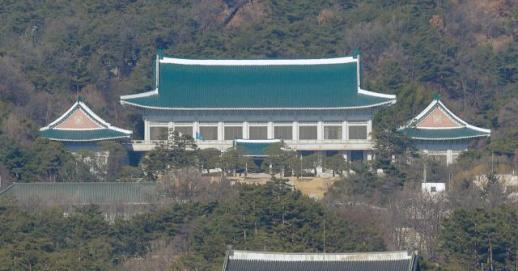 Attorney Na Seung-cheol tapped as civil affairs chief at prime minister’s office Attorney Na Seung-cheol, 49, a 35th class graduate of the Judicial Research and Training Institute, has been tapped to lead the civil affairs office at the Prime Minister’s Secretariat. Cheong Wa Dae said Friday that Na has been nominated for the post and is awaiting presidential approval. He is expected to begin work May 4. Na previously served as president of the Seoul Bar Association and worked as an advisory attorney to Gyeonggi Province. He also served on the defense team in President Lee Jae-myung’s case involving alleged violations of the Public Official Election Act during Lee’s tenure as Gyeonggi governor. Na also represented first lady Kim in connection with the so-called “Hye-gyeong-gung Kim” allegations. His predecessor, Shin Hyun-sung, submitted his resignation, citing support for the June 3 local elections, and was dismissed on April 10.* This article has been translated by AI. 2026-05-01 07:36:17
 -
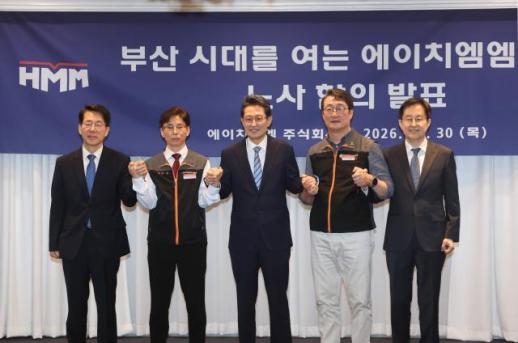 President Lee Thanks HMM Labor-Management Deal to Move Headquarters to Busan President Lee Jae-myung said the government would provide needed support after HMM’s management and labor agreed to relocate the company’s headquarters to Busan. Lee wrote on X on the afternoon of April 30 that “the government will not spare the necessary support so that HMM can establish itself as a global shipping company.” He thanked both sides for “continuing difficult negotiations,” adding, “Above all, I express my deep gratitude to HMM employees for making a decision for the greater good.” Lee said he hoped the agreement would help strengthen South Korea’s shipping competitiveness and contribute to balanced regional development. He also said he trusted the parties would continue “constructive discussions” and complete the relocation smoothly. HMM’s management and labor signed an agreement that day to move the headquarters to Busan. The relocation is part of Lee’s campaign pledge to foster a “southeastern maritime capital region.” HMM said the scale and timing will be finalized through further labor-management talks.* This article has been translated by AI. 2026-05-01 07:21:17
 -
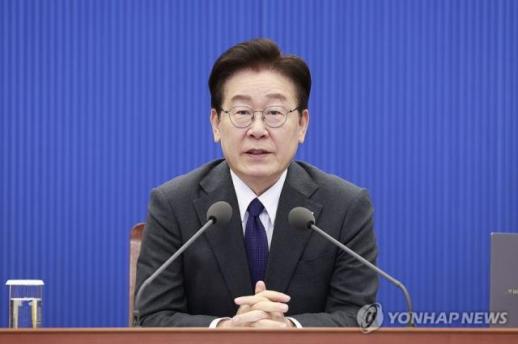 Calls Grow for Samsung Electronics, Union to Avert Strike as President Voices Concern Samsung Electronics’ labor dispute has escalated to the point that President Lee Jae-myung has voiced concern over the union’s move toward a general strike. It is unusual for a national leader to publicly address or be briefed on a private company’s labor-management conflict, underscoring worries that a walkout at Samsung could ripple beyond an internal dispute and hit the broader economy. Both sides should halt hard-line brinkmanship and move quickly toward a workable solution. Samsung is not an ordinary company. It is a flagship in semiconductors, smartphones and home appliances, with outsized influence on exports, investment, jobs and the stock market. Any production disruption could trigger knock-on damage to suppliers and local economies, parts and equipment makers, and logistics networks. If overseas customers cut orders over supply concerns or shift to competitors, the losses may not be short-lived. The timing adds to the risk. Global competition for semiconductor leadership is intensifying as the spread of artificial intelligence drives demand for advanced memory and foundry services. The United States, Taiwan, China and Japan are also backing their industries with government-level support. In that environment, internal conflict at South Korea’s leading chipmaker would amount to handing rivals an opening. The right to collective action is guaranteed by the Constitution, and the union can legitimately raise demands on wages, bonuses and working conditions. But a general strike should be a last resort. If pressure tactics come first, centered on production disruptions and losses, public support is likely to erode. The larger a company’s impact on the national economy, the heavier the union’s responsibility becomes, along with accountability for the consequences of its actions. Management also bears responsibility. If labor disputes keep recurring, the company should examine whether there has been a lack of trust in compensation systems, poor communication, or accumulated grievances on the shop floor. If performance has improved, it should share results under standards employees can accept and explain decisions in a way that also addresses future investment and job stability. Digging in without dialogue will only worsen the problem. The president’s concern should be read not as political interference but as a warning tied to economic security. Semiconductors are central to South Korea’s exports and a strategic industry. The government should not take sides, but strengthen its role in ensuring negotiations proceed under the law and established principles. It should respond firmly to illegal acts while actively supporting lawful bargaining. If the standoff drags on, the damage will ultimately fall on the broader economy. The union should move away from a power struggle built around the threat of a general strike. The company should present concrete steps to restore employee trust. With the issue now drawing presidential concern, the warning light is already on. What is needed is compromise and responsible decisions, not a showdown.* This article has been translated by AI. 2026-05-01 07:12:19
 -
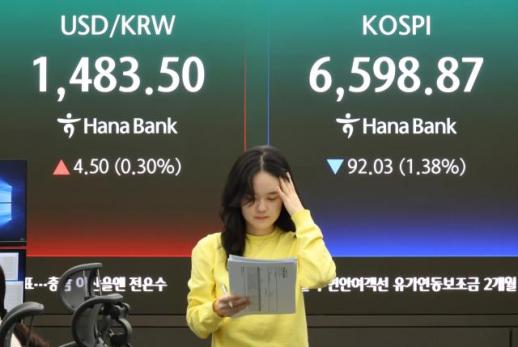 KOSPI Seen Pausing After Rally as Earnings Support, Event Risk Looms Next week’s South Korean stock market is expected to extend its upward trend on easing Middle East geopolitical concerns and stronger corporate earnings, though analysts warned that short-term volatility could rise as investors digest major events. After the KOSPI pushed past its previous peak, some see a near-term pause in the rally. According to the Korea Exchange on May 1, the KOSPI fell 92.03 points, or 1.38%, in the previous session to close at 6,598.87. Over the four trading days from April 27 to 30, the KOSPI rose 1.90% while the Kosdaq fell 0.95%. This week, expectations of easing geopolitical tensions combined with solid earnings to support gains. With hopes for U.S.-Iran talks intact, global markets largely took a breather, but South Korean shares stayed firm, led by IT and industrials, extending a record-high rally. Rising profit estimates, especially for semiconductors and other IT names, helped drive the benchmark higher. Continued foreign inflows lifted the KOSPI above 6,700, and South Korea’s stock market capitalization climbed to eighth in the world, surpassing the United Kingdom. The Kosdaq lagged amid the impact of some biotech-related events. Cho Chang-min, a researcher at Hyundai Motor Securities, said the KOSPI has “overcome war risk” and continued higher after breaking above its prior peak. He said the combination of rising prices and a falling price-to-earnings ratio suggests earnings forecasts are improving faster than prices are recovering. “As long as earnings continue to pull prices higher, there is room for further gains after the breakout,” he said. For next week, analysts said the market may face bigger swings even if the broader uptrend holds. With major events such as the U.S. Federal Open Market Committee meeting and earnings reports from big tech companies wrapping up, markets are expected to move into a phase of digesting new information. A rebound in oil prices and a hawkish monetary-policy stance could weigh on sentiment. Still, expanding investment in artificial intelligence infrastructure and improving earnings are expected to provide support. Analysts also said expectations for an end to the war could help sentiment ahead of the expiration of the U.S. War Powers Act deadline. At the same time, a cluster of global market holidays — May 4 (China, Japan and the U.K.), May 5 (South Korea, China and Japan) and May 6 (Japan) — could thin trading, while profit-taking may add to a short-term pause. Analysts said leadership could remain with semiconductors and industrials, while investors should also watch for possible rotation into consumer-related shares. Kang Jin-hyuk, a researcher at Shinhan Investment Corp., said inbound demand is expected as Japan’s Golden Week runs from April 29 to May 6 and China’s Labor Day holiday runs from May 1 to 5. He said investors should check whether strong earnings momentum continues in consumer sectors such as hotels and leisure, cosmetics, and retail. * This article has been translated by AI. 2026-05-01 06:33:18
 -
 California Tourism, Dairy Group Pitch Food-Focused Family Travel to Koreans "A perfect family trip isn’t completed at a flashy landmark, but at a simple table where you laugh and share a meal together." The California Tourism Board and the California Milk Advisory Board held a joint event April 30 at the Four Seasons Hotel in Seoul to promote California as a family destination. Using the catchphrase “the ultimate playground,” the organizers highlighted travel built around everyday moments and food experiences for both children and adults. ◆ California as “the ultimate playground,” with food at the center In welcoming remarks, Kim Eun-mi, head of the tourism board’s Korea office, said what lingers after a trip is not only famous attractions but small moments such as “a dinner table where the family laughed together” or “new foods discovered while walking in an unfamiliar place.” She said California’s beaches, major cities, cultural diversity and food scene help those moments accumulate naturally, adding that children broaden their horizons while parents get a break from routine in what she called “the ultimate playground.” Jeong Sin-hyeong, vice president of the California Milk Advisory Board, said California’s dairy industry accounts for about 20% of total U.S. milk production and produces high-quality cheese from milk of “happy cows” raised in mild weather with less stress. ◆ Chef Sam Kim’s “soul food”: beef tacos with California cheese Chef Sam Kim drew attention with a cooking demonstration, making beef tacos with Monterey Jack and Colby Jack cheeses and presenting them as an easy dish for families to share. He said tacos were his go-to “soul food” when he worked as a chef in the United States, often buying them from a truck after midnight. He added that he made the tacos for his son before school that morning and “he loved it.” Kim also cited a history of American cheese spreading with the establishment of Spanish monasteries in the 1700s, and said Colby Jack is well-suited for cooking because it is not too salty and has good melt and stretch. ◆ Practical tips for value-focused family travel The tourism board also shared travel tips aimed at families looking to balance cost and satisfaction. It encouraged travelers to make use of free attractions across California, citing Los Angeles’ Griffith Observatory and The Broad, and San Francisco’s Golden Gate Bridge and sea lion viewing, all of which can be enjoyed without admission fees. For theme parks, a major budget item, it advised choosing timing and booking methods carefully. Universal Studios and Disneyland use dynamic pricing, and visiting in the off-season — January to March and September to November before Thanksgiving — can cut ticket prices by as much as $70 even within the same month. Booking online in advance can save an additional $20 to $40 per person, and hotel-and-ticket packages can reduce costs while simplifying travel logistics. It highlighted Pasadena and Greater Palm Springs as notable family destinations. Pasadena, about 14.5 kilometers from downtown Los Angeles, offers education and cultural infrastructure including the Rose Bowl and the California Institute of Technology. Greater Palm Springs, made up of nine resort cities, draws 14.4 million visitors annually and features attractions such as the world’s largest rotating cable car, the Aerial Tramway, and the Living Desert zoo and gardens. ◆ 2026 events and new infrastructure California is also preparing for major events and new development in 2026. Los Angeles and San Francisco are set to host a total of 14 matches as key cities for the 2026 FIFA World Cup held across North America. The state also plans events along its roughly 507-kilometer stretch of Route 66, including Santa Monica, as the iconic highway marks its 100th anniversary. Highway 1, previously restricted in parts for geological reasons, has fully reopened, and additional entertainment and lodging projects are planned. In Palm Springs, the DSRT Surf resort — a 6,700-pyeong facility offering artificial waves — is scheduled to open this summer. Disney’s Storyliving project, Cotino, a 1,900-home residential and resort development, will be unveiled in phases. The tourism board also cited a new attraction at Universal Studios Hollywood, the opening of Legoland’s Galaxy Coaster, and dozens of new hotel projects nearing completion. The tourism board and the dairy group said they plan to use the event to further promote California travel to Korea’s family market, emphasizing a mix of attractions and food experiences.* This article has been translated by AI. 2026-05-01 06:03:50
 -
 LG H&H Returns to Operating Profit in Q1 as North America Sales Jump 35% LG Household & Health Care said it returned to an operating profit in the first quarter, reversing a loss in the previous quarter, as profitability improved after a restructuring of its domestic distribution channels. In a regulatory filing on Wednesday, the company reported first-quarter operating profit of 107.8 billion won ($107.8 billion won), down 24.3% from a year earlier. Revenue fell 7.1% to 1.5766 trillion won. Compared with the fourth quarter of last year, however, revenue rose 7%, and the operating margin swung to a profit, improving to 6.8% from minus 4.9%. Overseas sales edged up 0.9% as a 35% jump in North America offset declines in China and Japan of 14.4% and 13.0%, respectively. The beauty division posted revenue of 771.1 billion won and operating profit of 38.6 billion won, down 12.3% and 43.2% from a year earlier. The company said higher marketing spending for mid- to long-term growth and efforts to improve offline store efficiency weighed on profit. It said key brands including Dr. Groot, U Smile, Dominas and VDL performed well in global markets. The premium scalp care brand Dr. Groot established a presence on U.S. beauty retailer Sephora’s online platform in March and is set to enter Sephora’s offline stores across North America in August. The luxury cosmetics brand The Whoo won the industry-first IR52 Jang Young-sil Award for research on NAD, which it described as a key anti-aging factor. The Home Care & Daily Beauty division reported revenue of 397.9 billion won and operating profit of 25.4 billion won, down 0.9% and 7.4% from a year earlier. The company said sales were strong in growth channels such as health-and-beauty stores and online, but weaker demand in offline markets slightly reduced revenue and profit. The refreshment beverage division posted revenue of 407.6 billion won, down 2.2%, and operating profit of 43.8 billion won, down 6.8%. LG H&H said it plans to use this year’s FIFA World Cup to help lift sentiment, including an event displaying an authentic Coca-Cola trophy and the launch of special Powerade packaging. “Since last year, the intensive restructuring of domestic distribution channels, centered on duty-free, is gradually translating into results,” a company official said. “Based on differentiated product competitiveness built on R&D, we will accelerate brand innovation and continue strategic growth focused on global and digital markets.” * This article has been translated by AI. 2026-04-30 22:39:22
 -
 Blue House Monitors Samsung Electronics Strike Risk; Taiwan Growth, Iran Warning, LG Energy Deal, Nobel Field Blue House watches Samsung Electronics closely as strike deadline nears As a union-planned general strike at Samsung Electronics draws closer, the presidential office is closely tracking developments. Yonhap News reported on April 30 that the Blue House policy office recently prepared a report analyzing the potential impact on the South Korean economy if a strike materializes. Samsung Electronics has helped drive economic growth and a strong stock market during a semiconductor boom cycle, and officials are reviewing how a walkout could ripple across multiple sectors. A Blue House official called it a routine reporting process on social issues, saying the office regularly prepares reports on major public matters. Earlier, President Lee Jae-myung said at a meeting of senior aides that if some organized workers make excessive or unfair demands to protect only themselves and draw public criticism, it would harm not only that union but other workers as well. Senior presidential spokesperson Kang Yu-jeong said the remarks were not about any specific company. Taiwan posts 13.69% first-quarter growth, highest since 1987 Taiwan’s economy logged growth in the 13% range in the first quarter, boosted by surging demand for artificial intelligence semiconductors. Yonhap reported on April 30 that Taiwan’s statistics agency, the Directorate-General of Budget, Accounting and Statistics, said first-quarter gross domestic product rose 13.69% from a year earlier. It topped the previous quarter and marked the highest level since 1987, far exceeding market expectations in the 11% range. Semiconductors were the main driver as demand for AI, high-performance computing and cloud infrastructure lifted exports and investment. First-quarter exports jumped 51% from a year earlier. Results at Taiwan Semiconductor Manufacturing Co., the world’s largest foundry, also weighed heavily on the broader economy. TSMC posted a record performance, with net profit up 58% over the same period. Iran’s top leader calls U.S. attack a defeat, formalizes Hormuz control plan Iran’s top leader, Mojtaba Khamenei, described U.S. military involvement as a “defeat” and declared plans to build a new order around the Strait of Hormuz. Yonhap reported on April 30 that Khamenei, in a message marking “Persian Gulf Day,” said the U.S. attack ended in a “shameful failure” and that it was time to fully remove outside influence from the region. He said Iran would establish a new management system for the strait to block its use by hostile forces. Iran views the Strait of Hormuz as a strategic chokepoint tied directly to its security. Khamenei criticized the U.S. military presence, saying U.S. bases are vulnerable and do not guarantee regional stability. The remarks were seen as a hard-line message following U.S. and Israeli airstrikes in February. The strait is a key route for about 20% of global oil shipments, and analysts say rising tensions could affect international oil prices and maritime logistics. LG Energy Solution set to supply BMW batteries worth more than 10 trillion won LG Energy Solution posted a first-quarter loss despite expectations for large orders, but is seeking a rebound by expanding its electric-vehicle battery and energy storage system businesses. Yonhap reported on April 30 that LG Energy Solution is expected to supply BMW with cylindrical EV batteries worth more than 10 trillion won. The batteries are expected to be used in next-generation EVs, and the contract period is projected to run as long as 10 years. On a conference call, the company said it secured more than 100 gigawatt-hours in new orders for its 46-series cylindrical batteries and that its total order backlog exceeds 440 GWh. In the first quarter on a consolidated basis, LG Energy Solution posted an operating loss of 207.8 billion won, swinging to a loss from a year earlier. Revenue fell 2.5% to 6.555 trillion won. The company said it aims to lift the share of ESS sales to the mid-30% range by year’s end to improve profitability. Nobel Peace Prize field set at 287 nominees; South Korean citizens, Trump mentioned The Nobel Peace Prize field this year totals 287 nominees, reflecting a broad range as global conflicts expand. Yonhap and foreign media reported on April 30 that the Norwegian Nobel Committee designated 287 nominees for the 2026 Nobel Peace Prize: 208 individuals and 79 organizations. The list is kept confidential for 50 years, but some nominations become known through outside disclosures. South Korean civil society may be among the nominees, after it emerged that figures in South Korea’s political science community recommended “citizens as a whole,” citing a nonviolent overcoming of a martial law crisis. U.S. President Donald Trump was also mentioned as a possible nominee. The committee said the peace prize remains important even as international cooperation weakens. The winner will be announced on Oct. 9.* This article has been translated by AI. 2026-04-30 21:53:44
 -
 ECB, Bank of England Hold Rates as Middle East War Clouds Inflation Outlook The European Central Bank and the Bank of England kept their benchmark interest rates unchanged, as the Middle East war added uncertainty to energy prices and inflation while concerns about slowing growth also mounted. According to Yonhap on April 30, the ECB held its deposit rate at 2.00%, its main refinancing rate at 2.15% and its marginal lending facility rate at 2.40% after a policy meeting that day (local time). The ECB said recent information broadly matched its previous assessment of the inflation outlook, but that “upside risks to inflation and downside risks to economic growth have increased.” Eurozone consumer inflation in April rose to 3.0% from 2.6% a month earlier. In contrast, eurozone economic growth in the first quarter was just 0.1% from the previous quarter, heightening concerns about stagflation. The ECB said the war’s impact on inflation and economic activity would depend on the size and duration of the energy price shock, warning that a longer conflict and sustained high energy prices could weigh more heavily on both prices and growth. Reuters reported that some in the market expect the ECB could raise the deposit rate three times over the next 12 months, to 2.75%. Britain’s central bank also held rates steady the same day, keeping its benchmark rate at 3.75%. Eight of the Bank of England’s nine Monetary Policy Committee members backed no change, while one favored a 0.25 percentage-point increase to 4.00%. Britain’s consumer inflation rate stands at 3.3%, well above the central bank’s 2% target. The Bank of England said the Middle East conflict has made the outlook for global energy prices “highly uncertain,” and it is ready to take whatever steps are needed to meet its inflation goal. The bank outlined three scenarios depending on the severity of the energy price shock. In the worst case, inflation could rise to 6.2% in early next year, which could require strong monetary tightening. Gov. Andrew Bailey called the decision to hold rates “reasonable” given the unpredictability of economic conditions and the situation in the Middle East, and said the bank would watch developments closely.* This article has been translated by AI. 2026-04-30 21:52:31
 -
 Nobel Peace Prize Field Set at 287 Nominees; South Korean Citizens and Trump Mentioned The field for this year’s Nobel Peace Prize has been tallied at 287 nominees, reflecting a broad mix as global conflicts spread. According to Yonhap News Agency and foreign media reports on the 30th, the Norwegian Nobel Committee registered 287 nominees for the 2026 Nobel Peace Prize — 208 individuals and 79 organizations. The total reflects an increase in new nominees from a year earlier. The committee does not release the list, keeping nominations confidential for 50 years, though some names become known when nominators disclose their recommendations. In South Korea, there is speculation that the country’s civil society could be among the nominees after it became known that figures in the political science community recommended “all citizens,” citing what they described as a nonviolent overcoming of an emergency martial law situation. President Donald Trump is also being mentioned as a possible nominee after leaders in some countries, including Israel and Pakistan, said they intended to nominate him. The Nobel Committee has stressed that the peace prize remains important even as international cooperation weakens. Some foreign media have also suggested that, with the war in Gaza and the situation in Ukraine dragging on, this year’s award could be more likely to go to a humanitarian aid group or to an individual who played a mediating role. The Nobel Peace Prize winner will be announced Oct. 9, and the award ceremony will be held Dec. 10 in Oslo, Norway.* This article has been translated by AI. 2026-04-30 21:09:18