
Journalist

Lee Hugh
=
-
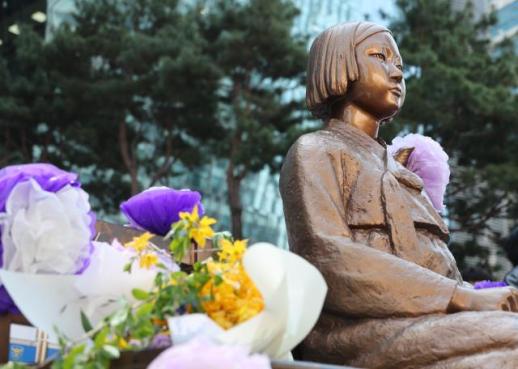 Police 'liberate ' iconic Statue of Peace for first time in six years SEOUL, May 06 (AJP) - The barricades surrounding the Statue of Peace were dismantled by police on Wednesday after six years of isolation and confinement. The bronze monument, which symbolizes victims of Japanese wartime sexual slavery, is now publicly accessible and free from the immediate threat of vandalism. The Statue of Peace depicts a teenage girl sitting on a chair, staring toward the former site of the Japanese embassy in central Seoul. Since its first installation in 2011, approximately 200 similar statues have been placed worldwide in cities such as Washington DC, Sydney, Toronto, and Shanghai. The barriers had been in place since June 2020 to shield the site from aggressive pro-Japan activists and historical revisionists. During a celebratory event on Wednesday, supporters described the removal as the liberation of the statue. The action coincided with the 1,751st weekly demonstration held near the former Japanese Embassy in central Seoul. Activists from the Justice Memory Solidarity prepared for the opening by cleaning the statue with wet wipes and placing a purple floral wreath on its head. Han Kyung-hee, the chairperson of the Justice Memory Solidarity, told the crowd that the statue has finally returned to the arms of the citizens after five years and 11 months. She said that while the public had been unable to sit in the empty chair beside the girl for years, they never stopped fighting for its protection. The barricades were originally requested by the activist group itself as a desperate measure to prevent the statue from being defaced by far-right protesters. Tensions at the site had escalated in 2019 as groups began demanding the removal of the monument while shouting historical denials. The legal path for the removal opened after Kim Byeong-heon, the leader of a prominent revisionist group, was arrested in March. He faces charges of defaming the deceased victims by publicly denying the forced nature of their ordeal. Investigations by South Korean prosecutors revealed that Kim's activities were supported by approximately 76 million won ($5,222) in funding from Japanese donors. The prosecution stated that this money was used as the primary engine for his long-term campaign to erase the history of the victims. According to historical records from the National Institute of Korean History, the Imperial Japanese Army systematically forced an estimated 200,000 women into sexual slavery during the Pacific War. These victims, many of whom were young South Korean girls, were transported to frontline brothels across the Pacific front where they were subjected to repeated forced sexual violence. The Statue of Peace incorporates specific details to reflect this history, including short, uneven hair that represents the girl being forcibly torn from her family. Her bare feet and lifted heels symbolize the restless spirits of victims who were unable to find peace or a sense of home after the war ended. The monument is officially registered as the first public artwork of the Jongno District and is managed by the local government. Police officials confirmed they will continue to deploy personnel to the area to ensure the safety of the site following the removal of the physical barriers. 2026-05-06 14:35:56
 -
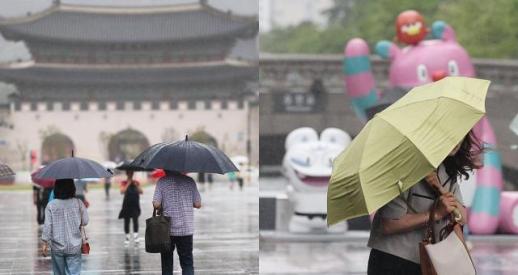 South Korea’s 2026 Monsoon Season: Expected Start and End Dates by Region South Korea’s 2026 monsoon season is expected to begin around the usual time and last about a month. Based on climate normals from 1991 to 2020, the rainy season typically starts on Jeju Island and moves north through the southern and central regions. Using that pattern, the monsoon is forecast to begin around June 19-21 on Jeju, June 23-25 in the south, and June 25-27 in central areas including the Seoul metropolitan region. The end of the season is also expected to follow the typical timeline: around July 20 on Jeju, around July 24-25 in the south, and from around July 26 through late July in central regions. The overall duration is projected at about 30-31 days, broadly in line with the commonly cited average of about 31-32 days. The outlook is based on past weather data, and actual start and end dates could differ by about one to three days depending on factors such as the expansion of the North Pacific high-pressure system, the position of the stationary front and shifts in atmospheric flow. With climate change increasingly affecting rainfall patterns, some experts have also stressed that preparedness should focus less on the length of the season and more on rainfall intensity. Experts say that even if the monsoon period is similar to normal, rainfall may come in a different form, with more “downpour-type” events that dump heavy rain in a short time rather than steady rain over many days. That can increase damage even when total rainfall is similar. Claims circulating on social media that it “rains nonstop for a month” are largely exaggerated, experts say. Breaks in rain and clear days are common during the monsoon, and continuous rainfall is not typical in meteorological terms. Still, repeated bursts of intense local rain can make it feel as if it is raining all the time. Weather statistics also show that atmospheric instability can bring “guerrilla downpours” into early August even after the monsoon ends. In recent years, stronger localized heavy rain has sometimes occurred after the rainy season, underscoring the need for summer disaster preparedness. Experts say people should be ready for summer hazards such as flooding, landslides and river overflows, since damage can rise sharply if rainfall concentrates in a short period even when the monsoon’s overall timing is near normal. The projection is a statistical estimate based on the past 30 years of weather data, and conditions may change as the season develops. The Korea Meteorological Administration’s short- and medium-range forecasts should be checked regularly.* This article has been translated by AI. 2026-05-06 14:35:15
 -
 Lotte Card Q1 Operating Profit Jumps 201% to 41.5 Billion Won Lotte Card said Tuesday it posted 41.5 billion won ($415억원) in operating profit for the first quarter, up 201.4% from 13.8 billion won a year earlier. The company also reported a rebound in membership after last year’s large-scale personal data leak. First-quarter membership totaled 9,566,000, up 10,000 from a year earlier. Asset quality indicators improved as well. As of the end of March, the delinquency transition rate — the share of performing loans that become loans overdue by at least two months — stood at 0.318%, close to the pre-Legoland incident level of 0.311%. Lotte Card kept a double-digit market share. Based on personal and corporate credit sales among eight dedicated card issuers tracked by the Credit Finance Association, its first-quarter share was 10.6%, following 11.0% in the previous quarter. Lotte Card attributed the results to a stable earnings structure built around a portfolio focused on high-quality customers. It also cited stronger risk management and lower bad-debt costs. CEO Jeong Sang-ho said, “It was an important time to show the company’s resilience after last year’s cyber incident, and employees worked together to achieve the valuable result of higher operating profit.” He added, “We will continue to respond to internal and external uncertainty as one team.” Separately, a Lotte Card official said that because a final decision by the Financial Services Commission is still pending, the company will “faithfully explain” its efforts to prevent damage from the incident in seeking reduced sanctions. On April 30, Lotte Card said a second meeting of the Financial Supervisory Service’s sanctions review committee confirmed heavy penalties, including a 4.5-month business suspension and an administrative fine of about 5 billion won. 2026-05-06 14:34:24
 -
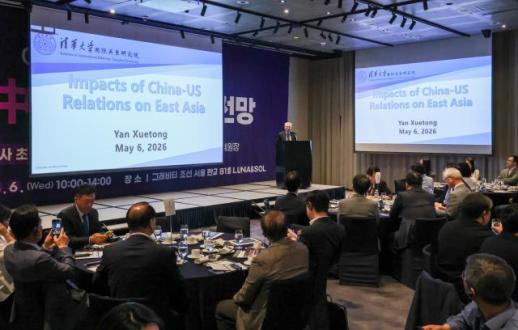 Prelude to U.S.-China summit, scholars discuss fault lines in Korea SEOUL, May 06 (AJP) -Scholars from South Korea and China gathered in Seongnam on Tuesday to dissect the shifting balance between Washington and Beijing ahead of a closely watched meeting between U.S. President Donald Trump and Chinese President Xi Jinping due next week. At Gravity Pangyo in Gyeonggi Province, academics and policy experts filled the conference hall for a special seminar examining how intensifying U.S.-China rivalry is reshaping diplomacy, technology and security across East Asia. Hosted by the Gyeonggi Research Institute under the theme “Changes and Prospects in U.S.-China Relations,” the event unfolded against the backdrop of prolonged tensions in the Middle East and growing uncertainty over global supply chains. Participants exchanged views on South Korea’s strategic options as geopolitical competition between the world’s two largest powers deepens. Among the keynote speakers was Yan Xuetong, honorary dean of the Institute of International Relations at Tsinghua University, who joined Korean scholars in discussing the evolving regional order and the diplomatic challenges facing Seoul. 2026-05-06 14:34:11
 -
 How a Rising Gen Z Democratic Operative Became a Pro-Iran Activist Abroad "They all died fighting for fascism, genocide, pedophilia and cannibalism." Carla Walsh, a 22-year-old American pro-Iran activist, posted that message on X about four U.S. troops who were killed in a drone attack during the Iran war in March. On May 5 (local time), she also posted on X a statement attributed to Iran’s military that warned the United Arab Emirates that the UAE, described as “Islamic land,” should not become a base for U.S. and “Zionist” (Israeli) forces and equipment, calling it a betrayal of the Islamic world and Muslims. The Boston Globe, in a story published May 5, traced Walsh’s path and said she did not always project a pro-Iran, anti-U.S. stance. As recently as six years ago, she was seen as a promising young figure in the Democratic Party. The Globe cited her work on Sen. Ed Markey’s 2020 reelection campaign, where she used online memes to help turn the senator, then in his 70s, into a Gen Z political icon. The paper said she could not vote at the time but “enjoyed talking to reporters more than doing (school) math homework.” After Markey’s victory, Walsh gained wider attention through interviews with The New York Times and NPR. The Times said at the time that “the Markeyverse (supporter group) used a powerful political strategy that cemented him as a symbol of the left.” In November 2023, Walsh began to diverge from other young Democrats, according to the report. She climbed onto the roof of an Elbit Systems facility in New Hampshire and vandalized the building by painting it; video circulated online. The New Hampshire Journal reported that after her arrest, her sentence was reduced to 60 days in jail in exchange for a guilty plea, with the remaining time suspended. At a sentencing hearing in November 2024, she cheered and showed no sign of embarrassment, the report said. It also said she voted in the U.S. presidential election before being jailed and wrote the name of a Hamas leader who had been killed, Yahya Sinwar, on her ballot. After the trial, Walsh left the United States. City Journal reported she traveled last year to Cuba and Iran and has recently been staying in Lebanon. While in Iran, it said, she attended the Sobh International Media Festival hosted by state broadcaster IRIB and visited Iran’s National Aerospace Park, where she praised Iranian drones and missiles. The Free Press reported that Walsh “is pledging loyalty to Iran, Hamas and Hezbollah,” and said the U.S. government placed her on a watch list based on what it described as extensive connections to the governments of Cuba and Iran. The outlet said her pro-Iran, pro-Cuba and pro-Lebanon propaganda activities could lead to prosecution under U.S. law. A U.S. counterterrorism official was quoted as saying, “I’ve never seen someone who’s been to prison be so openly connected to terrorism.” Walsh’s family said in an email to The Free Press, “We truly love Carla, but we have serious and fundamental political differences with her.”* This article has been translated by AI. 2026-05-06 14:31:11
 -
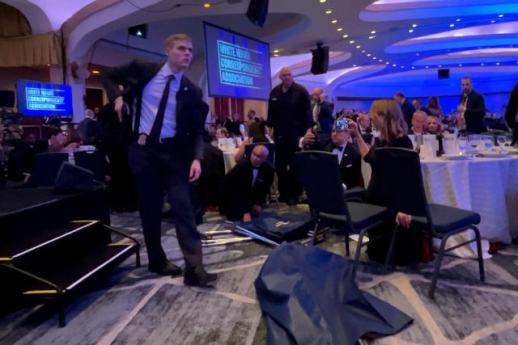 Trump’s Unity Message Loses Force as Actions Undercut Words "Right now, it is more important than ever that we come together and show the world what it means to be Americans." In July 2024, as the presidential campaign intensified in Pennsylvania, Trump’s words helped reshape the race. After surviving an assassination attempt, he delivered a message of unity with a markedly different tone, as if he had already secured the presidency. Paired with an image of him, blood on his face, raising a clenched fist beneath the U.S. flag, the moment became a political narrative. Trump went on to win an election that had been expected to be close. During his first term, Trump had taken steps far from national unity, including supporting the “Capitol riot.” Still, his call for unity after the shooting resonated in a society sliding toward extremes, and some voters backed him with the hope that “this time might be different.” The narrative was so complete that some even floated claims the shooting had been staged. In 2026, the reality of “Trump’s second term” looks different. Broad tariff hikes, fired without distinguishing friend from foe, have paralyzed the global economy, the article says. This year, the Iran war has reinforced that “Trump risk” remains an ongoing concern worldwide. The “peacemaker” and “unifier” promised in his inaugural address are nowhere to be found, replaced by what the article calls a “troublemaker” stoking division in the United States and beyond. Against that backdrop, two shootings occurred near the White House in less than 10 days. The April 25 shooting at the White House Correspondents’ Association dinner revived memories of the Pennsylvania assassination attempt two years earlier. After the latest incident, Trump again struck a unifying note, saying, "We need to resolve our differences." But the message carried less weight than it did two years ago, the article argues, because his actions over the past year have eroded its credibility. Unlike during the campaign, when the shooting boosted his approval ratings, the article says his ratings have remained at rock bottom despite the recent gunfire. The article says the “Trump paradox” offers a pointed lesson with local elections a month away. A public figure’s message is shaped not by words alone, it argues, but by the record behind them. As candidates soon fan out across the country promising local development and community unity, voters should look past election-season rhetoric and judge the paths candidates have taken in daily life. The article argues that politicians who routinely feed on hatred and conflict but call for “unity” only during campaigns are misleading voters. Promises offered without funding plans or a concrete roadmap, it says, can be as empty as Trump’s “peacemaker” pledge. It also warns that when a local government leader refuses to cooperate with councils and other levels of government and instead governs unilaterally, residents bear the cost. The article concludes that Trump’s unity message lost power because his record showed no trace of unity. It says the responsibility now lies with voters to seek leaders who prove themselves through their lives and conduct, not their slogans.* This article has been translated by AI. 2026-05-06 14:28:26
 -
 POSCO Future M, S-Oil Added to S&P Global DJBIC World Sustainability Index POSCO Future M and S-Oil have been included in the DJBIC (Dow Jones Best-in-Class) sustainability index, according to industry officials on Tuesday. DJBIC is published annually by S&P Global, one of the world's three major credit rating agencies. It evaluates 2,500 companies worldwide across governance, supply-chain management, environmental performance and human resources development, among other economic, social and environmental factors. The index is used by global investors as a benchmark for responsible investing. POSCO Future M was added to the top-tier DJBIC "World" index, the first company in South Korea's battery materials industry to be included. The company said it received strong marks for systematically carrying out efforts to cut carbon emissions, strengthen supply-chain management, and reinforce safety and health management under ESG criteria. It said it is pursuing expanded renewable energy use, a shift to lower-carbon fuels and process-efficiency improvements, with a goal of achieving decarbonization by 2050. It also said it uses responsible minerals recognized as free of human rights violations, including tungsten and cobalt. The company added that it has strengthened human rights management by establishing a system aligned with international standards, including nondiscrimination and industrial safety guarantees, since February 2025, and by checking and improving potential risks through human rights impact assessments. S-Oil was named a DJBIC World company for the 16th consecutive year, the only refiner in Asia to do so. A company official said S-Oil was selected again based on recognized performance in ESG risk management, stakeholder communication and advanced carbon management. The official said the company is pursuing key sustainability tasks including climate change response, safety and pollutant management, employee capability building and expanded social contributions. The official said the Shaheen project, being pursued with completion targeted this year, is expected to further strengthen the company's sustainability capabilities based on energy efficiency that is superior to that of competitors. The Shaheen project is underway with a target of mechanical completion in June 2026. S&P Global includes the top 10% of companies in its sustainability assessment among the world's 2,500 largest companies by market capitalization in the "World" index. It also includes the top 20% among 600 leading companies by market capitalization in Asia and Oceania in the "Asia Pacific" index, and the top 30% among South Korea's 200 largest companies in the "Korea" index.* This article has been translated by AI. 2026-05-06 14:27:36
 -
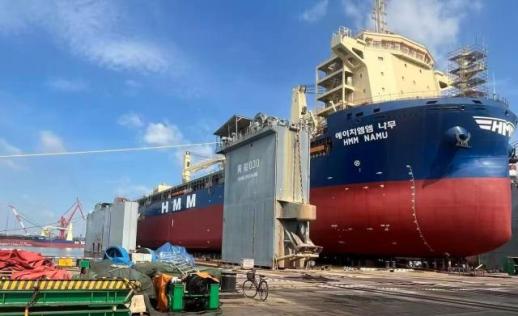 Iran Tightens Hormuz Strait Controls as Korean Ship Damaged, Dozens Still Stuck Iran has formally introduced a “prior transit permit” requirement for the Strait of Hormuz, tightening what amounts to sovereign control over a key international waterway, as the HMM-operated cargo ship Namuho — damaged by an explosion and fire in the strait — is being towed toward Dubai’s port. About 20% of the world’s seaborne crude oil shipments pass through the strategic chokepoint. A South Korean vessel has suffered actual damage, and 26 South Korean ships and 160 South Korean crew members remain stuck inside the strait. The Hormuz crisis is no longer a distant Middle East dispute, the column said, calling it a practical challenge now tied to South Korea’s energy security, public safety and national standing. Iran is requiring advance permission for all transiting ships and has warned of possible military action if vessels sail outside designated routes. The move effectively seeks to restrict the right of transit passage through international straits guaranteed under the U.N. Convention on the Law of the Sea, the column said. As the United States and Iran use the strait as leverage against each other, the area has moved beyond heightened tension into what the column described as a quasi-wartime situation. It said the United States has not presented a clear strategy. U.S. President Donald Trump has said through “Project Freedom” that he is willing to help civilian ships leave the strait, while also alternating between talk of halting operations and pursuing negotiations. The shifting message from Washington has added confusion for allies, the column said. It said South Korea’s caution is understandable, warning that hasty military involvement could endanger South Korean companies and citizens in the region and worsen diplomatic ties with Iran. But it argued that caution is not the same as inaction. With the blockade continuing for more than two months, some ships have raised concerns about shortages of food and drinking water. The column urged the government, separate from any multinational framework, to use all direct diplomatic channels with Iran to secure safe passage for South Korean ships and crews, saying the most urgent priority is protecting lives and safety. At the same time, it said South Korea should be ready to take part in international coordination. It noted that 44 countries, led by Britain and France, are discussing a defensive multinational mission to restore normal conditions in Hormuz, focused on protecting commercial vessels, clearing mines and ensuring safe navigation — not attacking Iran. The column said South Korea’s mine countermeasures capability is emerging as a practical option. Mine-clearing operations are defensive and rescue-oriented efforts aimed at civilian shipping safety, it said, adding that the South Korean Navy has world-class expertise in mine warfare and recently demonstrated high detection accuracy and rapid clearance in a combined U.S.-South Korea mine warfare exercise. It argued that South Korea’s mine-clearing capacity is not merely a military asset but a strategic tool that can serve as a public good by supporting international navigation order, and could also help demonstrate the competitiveness of South Korea’s defense and shipbuilding industries. Any contribution should be limited and guided by clear principles, the column said, arguing that South Korea should not be automatically folded into a U.S. pressure strategy against Iran but should act under the goals of protecting its citizens and ensuring maritime safety — an approach it said could be accepted internationally while preserving diplomatic space with Iran. The clashes unfolding in Hormuz are not simply a Middle East conflict, the column said, describing a geopolitical test where U.S. power, Iran’s survival strategy, international maritime order and resource security collide — with South Korea in the middle. It called for diplomatic precision and decisive execution, urging a balance of negotiating with Iran, coordinating with the international community and, if necessary, accepting limited security contributions to protect lives. * This article has been translated by AI. 2026-05-06 14:26:21
 -
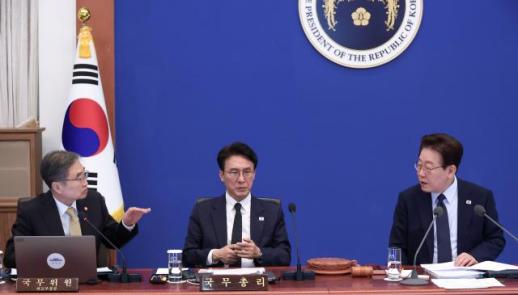 Lee Jae-myung stays cautious on Middle East war, focuses on constitution and farmland law President Lee Jae-myung maintained a cautious stance Tuesday, offering no substantive public comment on the fast-changing situation in the Middle East. At a Cabinet meeting and emergency economic review session at Cheong Wa Dae, Lee received a briefing from Foreign Minister Cho Hyun on a fire involving a South Korean ship in the Strait of Hormuz and on the course of the Middle East war. On the ship incident, Cho said a fire broke out at about 8:40 p.m. on May 4 but was quickly put out, and all crew members were confirmed safe. He said the vessel would be towed to a nearby port to assess damage. On the war, Cho said U.S. President Donald Trump had announced a temporary suspension of the “Freedom Project,” adding that the outlook would depend on developments including progress in U.S.-Iran negotiations. Lee did not elaborate, asking only whether Trump had officially said the war and attacks would be halted or ended. Cho replied that he had, but said it could be viewed in two ways: an attempt to avoid the 60-day limit under the U.S. War Powers Act by ending the war and then restarting it, or a genuine effort to find an exit strategy. Lee responded briefly: “I understand.” Lee instead focused his remarks on domestic issues. After receiving a report on a survey of farmland ownership and possible reforms, Lee called for stricter enforcement of the Farmland Act. “In an effective way, people who do not actually farm should not be able to own farmland,” he said, calling that “the clear intent of the Constitution and the Farmland Act.” He criticized the current system, saying, “If you make a law and then make it so people can break it, that is not a law.” He said the structure allows people to buy farmland and leave it idle, and if caught, avoid penalties by appearing to farm once every few years. Lee said that if someone is found subject to disposal and still does not farm the next season, the land should “immediately” be subject to disposal again. He said reforms should ensure that law-abiding citizens do not feel they are being penalized. On constitutional revision, Lee said South Korea has undergone major political, economic and social changes since the current Constitution was revised in 1987, but the Constitution has remained unchanged for more than 40 years. He said the current framework makes it difficult to fully reflect the level of democracy, people’s living conditions and the country’s future. “Your body has grown, but the clothes don’t fit,” he said. “Then don’t we need to alter the clothes?” Lee added that a full revision would be difficult because of the burden and conflicting political interests, but said it was not an option to delay everything and urged a practical approach: “Let’s do as much as we can.” With less than a month to go before the June 3 local elections, Lee warned that there must be no efforts to distort public opinion by spreading false information, obstructing decision-making, buying votes with money, intervening with power, or manipulating and rigging the process. 2026-05-06 14:20:29
 -
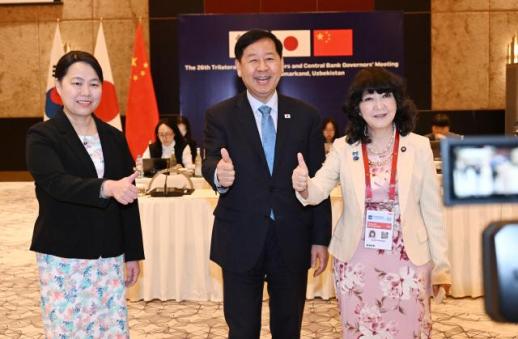 Koo Yoon-cheol Says Green Transition Can Cushion Energy Shocks, Urges Supply Chain Cooperation at ADB Koo Yoon-cheol, deputy prime minister and minister of finance and economy, told the Asian Development Bank’s annual meeting that a green transition and stable supply chains are increasingly critical, the ministry said Tuesday. Speaking as a governor at the ADB’s 59th annual meeting in Samarkand, Uzbekistan, Koo said, “The green transition does not stop at environmental protection; it also has the effect of easing recent volatility in energy prices.” He said South Korea would “actively support” ADB projects in green sectors, adding that “above all, stabilizing supply chains is urgent” given recent economic conditions. Koo also pointed to an artificial intelligence transition as a growth strategy for developing countries. “Adopting and using AI can be a growth opportunity for developing countries,” he said, adding that South Korea and the ADB would strengthen cooperation in the field. On the sidelines of the meeting, Koo met with Japanese Finance Minister Satsuki Katayama to exchange views on responses to energy supply chain disruptions since the Middle East conflict and on diversifying energy import sources. Katayama welcomed improved access for foreign investors following the inclusion of South Korean government bonds in the World Government Bond Index, and the two sides agreed to continue high-level economic dialogue between their finance authorities. Koo also met with IMF Deputy Managing Director Kenji Okamura and outlined South Korea’s response to the Middle East war, including the compilation of an additional budget. Okamura called it “an exemplary case of a balanced policy mix,” according to the ministry.* This article has been translated by AI. 2026-05-06 14:15:15