
Journalist

Lee Hugh
=
-
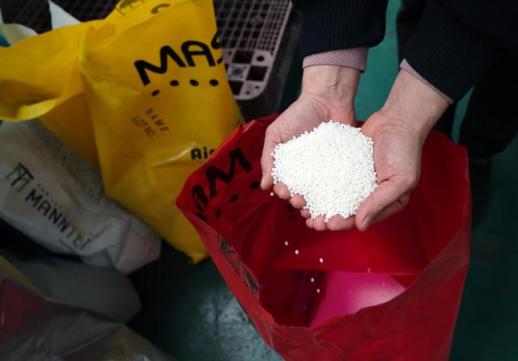 South Korea says U.S. is now top naphtha supplier; weighing extending oil swap into July Since the outbreak of the Middle East war, South Korea has been diversifying alternative sources of naphtha imports, with the United States emerging as the largest supplier. The government is extending its strategic oil swap program through June and is reviewing whether to extend it into July as well. Yang Gi-uk, director general for industrial resources security at the Ministry of Trade, Industry and Energy, said at a daily briefing of the Middle East war response task force on Wednesday that “the results of introducing support for the gap in import unit prices for basic feedstocks such as naphtha are becoming visible.” He said import sources have diversified from the Middle East to the United States, India, Algeria and Greece, and that “since the Middle East war, the United States has become the largest naphtha import country.” The government, through a supplementary budget, has been covering 50% of the import unit price for contracts for basic feedstocks signed starting April 1, the ministry said. The program covers naphtha, LPG, condensate and base oils, among others. For naphtha, the ministry said, contract volumes that took all of March to secure were finalized in just two weeks in April. The ministry expects supply conditions to improve next month. In May, it expects to secure naphtha at about 85% to 90% of prewar levels. Yang said naphtha imports had previously come from the United Arab Emirates, Algeria, Qatar, Kuwait and India, but diversification has pushed the United States to the top. He said the United States, which ranked seventh among naphtha suppliers last year, has become the largest supplier, adding that the longer lead time suggests shipments have been arriving since April. He cautioned it was too early to call the shift structural, saying the naphtha market has become segmented and traders are adjusting volumes. Yang said diversification is expected to lift petrochemical plant operating rates, which had fallen to 55%, to about 90% to 95%, and that in absolute terms it is expected to reach above 70%. On base oils, he said imports continue because many purchases come from China, adding that, taking those factors into account, supply conditions should improve in May. The government is also considering further extending its strategic oil swap program. Yang said the program, originally set to run through May, will be extended through June, and that an extension into July is under review. “It will likely continue as long as there is corporate demand,” he said. On any plan to release strategic reserves, Yang said companies are actively using the swap program and the government needs to confirm demand. He said officials will need to see how much companies want releases under the existing method, what inventory levels look like, and how alternative import volumes develop.* This article has been translated by AI. 2026-04-30 11:45:58
 -
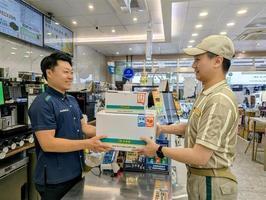 Taiwan FamilyMart Begins Accepting Yamato Transport Parcel Drop-Offs FamilyMart Taiwan operator FamilyMart Co. (全家便利商店) said on the 28th it began accepting Yamato Transport parcel shipments the same day. Customers can drop off Yamato Transport room-temperature and refrigerated parcels at more than 4,400 stores across Taiwan, including outlying islands. Shipping labels can be entered and printed at in-store “FamiPort” terminals, or customers can book online via the FamilyMart app, Yamato Transport’s LINE account or its official website and then scan a code in stores to print the label. Delivery fees within Taiwan’s main island are 130 Taiwan dollars (about 657 yen) for room-temperature shipments up to S60 size (total of length, width and height of 60 centimeters or less), and 160 Taiwan dollars for refrigerated shipments. The company said it plans to add a parcel pickup service later.* This article has been translated by AI. 2026-04-30 11:45:32
 -
 LG CNS Warns Data Center Supply Crunch Will Persist, Expands AI-Focused Business LG CNS said it is accelerating an AI-centered transformation across its businesses — including data centers, finance, manufacturing and digital assets — as it steps up efforts to expand in South Korea and overseas. On its first-quarter conference call on Wednesday, the company said the data center market will remain undersupplied as demand for AI and cloud services grows. It cited constraints on power supply and permitting, saying demand is likely to continue to outstrip supply. In finance, LG CNS said the cycle of rebuilding core systems is resuming and that customers increasingly view AI adoption as essential. It said it plans to strengthen its “AX” competitiveness by using AI technology as legacy systems are converted to Java-based platforms. For overseas growth, LG CNS said it is expanding around U.S. factory automation and the secondary battery sector, and will broaden its footprint through local partnerships and a global delivery system. According to South Korea’s Financial Supervisory Service electronic disclosure system, LG CNS posted first-quarter revenue of 1.315 trillion won and operating profit of 94.2 billion won. Revenue rose 8.6% from a year earlier and operating profit increased 19.4%. Q&A from the conference call What is the outlook for LG CNS’ data center business? -LG CNS said new investment is moving quickly in South Korea, mainly around sites with secured power infrastructure, but supply shortages persist as AI and cloud demand rises. It said power procurement and permitting limits are expected to keep the market in a demand-heavy structure for the time being. In overseas markets, especially Asia-Pacific, major cloud service providers are aggressively expanding data center investment to secure leadership in AI, it said. As GPU upgrade cycles shorten, the ability to rapidly build hyperscale data centers of more than 200 megawatts has emerged as a key competitive edge. It added that container-based modular data centers are spreading for high-density operations and AI optimization, with build times trending about 12 months shorter. What is the strategy for winning next-generation financial projects? -LG CNS said it is maintaining a leading market share by securing major references across finance, including commercial banks and internet-only banks, and has recently begun NH NongHyup Bank’s next-generation project. With core-system rebuilds resuming, it said customers are treating AI adoption as a must-have strategy, and the company is applying solutions co-developed with global advanced firms across project phases. It said it plans to use its AI technology to raise productivity and quality as C-language legacy systems are converted to Java, strengthening competitiveness in the AX market. What is the overseas market plan? -LG CNS said it expects to begin a food factory automation project in Texas in the second quarter and is expanding business with the group’s secondary battery manufacturers. It said it aims to secure price and quality competitiveness with its in-house “mobile shuttle” solution, build references among Korean companies expanding overseas, and then broaden to local customers. The company said it is hiring overseas staff and dispatching headquarters experts, while building cooperation with North American and Chinese systems integration firms. In finance, it said it is shifting from simple SI work to a solutions-centered model and is developing global delivery hubs such as Vietnam and Indonesia into centers of excellence. It also said it is expanding partnerships, including recruiting local experts in places such as Singapore and establishing a joint venture with Indonesia’s Sinar Mas Group. What is the outlook for manufacturing AX and data center profitability? -LG CNS said the manufacturing AX market is showing structural growth regardless of the business cycle, driven by global reshoring, an expansion of high-mix, low-volume production, and responses to ESG and carbon regulations. It said the market is evolving beyond basic automation toward AX·RX·VX models that combine AI, robotics and digital twins, with applications expanding to AI-based quality inspection, predictive maintenance and humanoids. For data center colocation, it said there is a “ramp-up” period between contract signing and customer equipment move-in, but surging AI demand has pushed utilization and ramp-up speed above initial expectations. What is the digital asset outlook and the Palantir cooperation plan? -LG CNS said a significant share of digital asset revenue in 2025–2026 is expected to come from bank-led CBDC projects. It added that starting in the second quarter, revenue tied to a national treasury subsidy project based on the “Project Hangang” platform will be reflected in earnest. It said stablecoins are still in a legal and institutional preparation phase, with consulting-focused work under way, and that it expects follow-on orders for build projects. It added that global research institutions forecast the related market will grow more than 30% annually on average. LG CNS said cooperation with Palantir is meaningful for expanding the domestic market and training talent. It said some LG Group affiliates have completed proofs of concept and moved to actual adoption, with further expansion under discussion. What is the strategy for physical AI and robotics? -LG CNS said it is pursuing physical AI-based robotics projects with group affiliates to drive innovation across the value chain, from production to R&D and logistics. It said North American plants are applying the mobile shuttle, and it is reviewing the use of humanoids for hazardous-material handling processes. It added that demonstrations are under way for logistics transport and dismantling work using autonomous mobile robots, as well as autonomous driving technology for tight spaces. The company said it is combining the group’s foundation model development capabilities with on-site operational know-how to build an industry-specific robot foundation model and advance robot-based automation.* This article has been translated by AI. 2026-04-30 11:43:56
 -
 Chabaekdo Launches TWS Collaboration Promotion With New Drinks, Gifts and SNS Event Chabaekdo, a tea beverage brand, is rolling out a collaboration promotion with TWS. Chabaekdo said it will run the “Chabaekdo with TWS” promotion from April 30 to May 15 to mark the release of TWS’ fifth mini album, “NO TRAGEDY.” The campaign includes set menus pairing new collaboration drinks with a popular brand item, limited-edition giveaways and an SNS photo-verification event. TWS released “NO TRAGEDY” on the 27th and began promotions with the title track “You, You” (“널 따라가”). Chabaekdo said it reflected the group’s bright, refreshing image and the new album’s concept across the drinks and the overall promotion. The three new menu items are Grape Jasmine Milk Tea, Apple Peach Snow and Coconut Pop Smoothie. They are sold as sets with Chabaekdo’s signature Mango Pomelo Sago, made with mango, pomelo, sago and coconut milk. “We carefully planned everything from taste and visuals to the concept to capture TWS’ bright, refreshing energy across the menu,” the company said, adding it aimed to deliver a clean, refreshing feel through a balance of fruity flavors and a light tea base. Customers who buy the collaboration set will receive one postcard set featuring images of individual TWS members and two collaboration cup sleeves. The postcard set includes six cards and is available in limited quantities; the giveaway may end early if supplies run out. An Instagram event will also be held during the promotion period. Customers who purchase the collaboration set, post a verification photo with required hashtags and submit a Google form will be entered in a drawing. Five winners will receive a TWS album signed by the members. The event will run in two rounds, from April 30 to May 6 and from May 7 to May 15, with winners notified by direct message. A Chabaekdo official said the collaboration was planned to offer fans and customers a different brand experience to celebrate TWS’ new release, adding it will allow people to enjoy both the brand and the artist through the drinks, giveaways and event. Chabaekdo sells fresh fruit drinks, milk tea and original tea, and has recently expanded its reach with younger consumers through promotions and collaborations.* This article has been translated by AI. 2026-04-30 11:37:15
 -
 Yulchon Holds Seminar on Shifting Fair Trade Rules and Corporate Response Law firm Yulchon said it held a seminar titled “Changes in the Fair Trade Regulatory Environment and Corporate Response Measures” on April 29 at its lecture hall on the 39th floor of Parnas Tower in Samsung-dong, Gangnam-gu. Yulchon said South Korea’s fair-trade regulatory environment is changing rapidly under a tougher enforcement posture, including a major staffing increase at the Korea Fair Trade Commission, expanded on-site inspections into alleged collusion in sectors closely tied to daily life, and efforts to raise penalty levels through revisions to the fine guidelines. The firm said it organized the event to share integrated risk-management strategies that address issues from the KFTC’s enforcement stages through related litigation, aiming to reduce uncertainty for corporate management. Speakers with experience across the KFTC, the courts and private practice offered analysis in three sessions. In the first session, Ahn Byung-hoon, a former director general for investigation management at the KFTC, spoke on “2026 KFTC policy and enforcement trends,” reviewing legal and institutional changes being pursued and points companies should watch. In the second session, Yulchon attorney Hwang Eui-dong, who previously served as presiding judge of the Seoul High Court’s fair-trade division, discussed “recent trends and issues in fair-trade litigation,” examining potential disputes in civil and administrative cases. “Recent regulatory trends are moving not only toward stronger after-the-fact regulation centered on administrative sanctions, but also toward faster, more proactive relief through civil judicial procedures, and legislation is supporting that direction,” Hwang said. “If a class-action system is later enacted, it could become a risk that threatens a company’s survival. Companies need to understand these changes and respond proactively, including by rechecking comprehensive risk-management systems.” In the third session, Yulchon attorney Jung Ji-young presented on “the latest trends in the KFTC’s cartel regulation and practical corporate response strategies,” outlining key developments and sharing approaches based on practical experience. After the presentations, a panel discussion moderated by Yulchon attorney Kim Gyu-hyun featured all speakers and a question-and-answer session on major fair-trade issues. Yulchon said registration closed soon after invitations were sent, and about 200 corporate representatives attended. Yoon Jung-geun, head of Yulchon’s fair-trade group, said companies are under greater pressure than ever due to the KFTC’s broad investigations and tougher sanctions. He said he hopes the seminar will serve as a practical guide for companies facing day-to-day compliance challenges.* This article has been translated by AI. 2026-04-30 11:35:59
 -
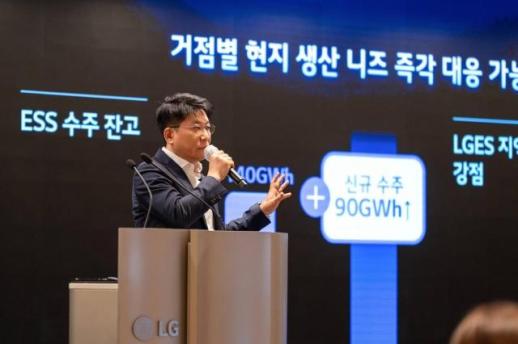 LG Energy Solution Targets ESS to Reach 35% of Revenue, Plans New LFP Product in 2028 LG Energy Solution said demand for cylindrical batteries used in energy storage systems helped lift first-quarter revenue despite weak electric vehicle demand. The company posted 6.555 trillion won ($?) in revenue for the quarter and said it aims to raise the share of ESS sales to 35% by year’s end, up from less than 10% last year and about 25% in the first half of this year. In a conference call on its 2026 first-quarter results on Wednesday, the company said it will use improved cost competitiveness to respond to customer demand for ESS and strengthen its mid- to long-term position. LG Energy Solution said it is preparing a new lithium iron phosphate, or LFP, product to be unveiled in 2028, with 10% higher energy density and 15% better price competitiveness than its existing LFP batteries. Chief Financial Officer Lee Chang-sil said the company had secured an ESS order backlog in North America of about 440 gigawatts as of late April. He said LG Energy Solution plans to secure more than 50 gigawatts of battery production capacity for ESS in North America by the end of this year. The company also expects benefits from the OBB (One Big Beautiful) law pursued by the Trump administration. It said maintaining a 50% to 55% share of U.S.-made batteries in ESS could allow tax credits of up to 40% of investment through 2030. Looking beyond the first quarter, Lee said North American ESS demand remains solid and demand in Europe for high-nickel batteries used in EVs and hybrid vehicles is holding up. He forecast second-quarter performance to grow about 10% from the first quarter and said revenue in the second half could rise 15% to 20% from the start of the year, supported by ESS demand. The company said it ultimately aims to return to profitability even excluding North American production subsidies under the Inflation Reduction Act, or IRA. Kim Min-su, who oversees ESS planning and management at LG Energy Solution, said ESS revenue growth became visible starting in the first quarter as U.S. battery production capacity expanded. He said the company has converted multiple EV production lines to ESS and will focus on stabilizing utilization and cutting costs to improve profitability. To meet North American ESS growth, LG Energy Solution said it will sequentially start ESS production lines not only at its Michigan and Ontario plants but also at its Lansing facility and at joint ventures with Honda and General Motors. The company said the plan would secure an additional 50 gigawatts of production capacity in North America. Kim said the North American ESS market, based on the power grid, is expected to grow about 30% annually through 2030. He added that forecasts of battery oversupply are premature given restrictions on Chinese companies entering the market and concerns about local supply shortages tied to the buildout of AI data centers. The company said sales of its cylindrical batteries, a core product, are expected to remain steady in the second through fourth quarters, supported by rising electric two-wheeler sales in China and India. It said it is also reviewing expanded cylindrical production at its plant in Poland to meet local demand. LG Energy Solution said its flagship 46-series products began shipping to customers from its Ochang plant late last year, and its Arizona plant could begin supplying products as early as this year. It said it has also won orders for volumes to be installed in premium products from European automakers including BMW, as it diversifies its portfolio. The company said it is also preparing next-generation prismatic and sodium batteries. It plans mass production of prismatic batteries for ESS in North America in late 2027. For EV prismatic batteries, it said it is preparing a joint response with customers through a pilot production line at the Ochang plant. LG Energy Solution said sodium batteries, which it described as having better performance than LFP, are expected to see demand mainly for ESS and as replacements for 12- and 24-volt lead-acid batteries. The company said it is working with multiple customers to test 12- and 24-volt sodium battery samples and plans to address the market. LG Energy Solution reported first-quarter 2026 revenue of 6.5550 trillion won and an operating loss of 207.8 billion won. North American production subsidies reflected in the quarter totaled 189.8 billion won. 2026-04-30 11:34:27
 -
 Samsung: No Supply Chain Disruptions Since Middle East War, Freight Cost Risks Rising Samsung Electronics said Thursday that its semiconductor production lines are operating normally and that it has seen no supply chain disruptions since the outbreak of the war in the Middle East. Speaking on a conference call for its 2026 first-quarter earnings release, the company addressed concerns about possible disruptions in supplies of semiconductor raw materials as the conflict drags on. Samsung said it imports process gases from parts of Israel and the Middle East, but has secured safety stock and is responding based on local logistics conditions. It added that risks remain low because it has alternative logistics routes and a diversified supplier base, including partners in the United States and Japan. On power supply, Samsung said it is closely monitoring utility cost trends tied to rising international oil prices and plans to maintain a stable power supply system through close cooperation with the government. The company cautioned, however, that higher oil prices linked to the war are pushing up global sea and air logistics costs, expanding the risk of freight rate increases. To limit the impact, Samsung said it is closely monitoring global inventory levels and optimizing supply chain operations to reduce the cost burden from international transport. It said it is also preparing multiple scenarios in case the war is prolonged, and plans to strengthen its ability to manage volatility while maintaining cost competitiveness and supply capacity through measures such as long-term contracts with logistics firms and fuel-linked freight rates. 2026-04-30 11:33:26
 -
 Actor Park Dong-bin, Known for ‘Juice Waterfall’ Meme, Dies at 56 Actor Park Dong-bin, widely known online for the so-called “juice waterfall” meme, died on the 29th, according to reports. He was 56. Park’s legal name was Park Jong-mun. MK Sports, in an exclusive report, said Park died on the 29th. He was known for strong, grounded performances across film and television. Park first became known to the public through the 1998 film “Shiri.” He later appeared in major Korean films including “Bichunmoo,” “Volcano High,” “Taegukgi: The Brotherhood of War” and “The Three Beauties of Joseon,” building a distinct presence. He worked in both historical and contemporary dramas and was recognized for steady, weighty acting. He married fellow actor Lee Sang-yi in 2020. The couple had one daughter, and Park had spoken in broadcasts and interviews about his affection for his family. Messages of condolence have continued for the bereaved. A wake was reported to be set up at Domin Funeral Hall in Anseong, Gyeonggi Province, VIP Room 5 (4th floor). The funeral procession is scheduled for 8:30 a.m. on May 1, with burial to follow at Wooseong Park Cemetery after a stop at Pyeongonui Sup in Yongin.* This article has been translated by AI. 2026-04-30 11:30:59
 -
 Exhibition Industry Group Urges Lawmaker to Rework COEX Hall Closure Plan The Joint Committee for Promoting Normalization of the Exhibition Industry, led by Chair Kang Ju-yong, met April 29 with Rep. Kim Won-i, the Democratic Party’s floor spokesperson on the National Assembly’s Trade, Industry, Energy, SMEs and Startups Committee, to urge changes to plans to close major COEX exhibition halls for remodeling and to ask for parliamentary mediation. Kang said that if the Korea International Trade Association’s plan leads to a shutdown from July 2027 for about 18 months, export-oriented small and midsize companies could see export losses of about 4.3 trillion won. He said the plan should be reviewed for consistency with policies to foster the MICE industry. Kang also said the association and COEX notified the industry in a blanket announcement in January without sufficient prior consultation, leaving limited time to prepare and increasing the burden on related businesses. The committee has proposed adjusting the construction schedule until the expected completion of KINTEX’s third exhibition hall in late 2028 and securing alternative venues such as Olympic Park. The trade association has not yet presented a detailed position, it said. Kang warned that a prolonged suspension at COEX could push major international exhibitions to Singapore, Shanghai, Tokyo and Dubai, and that winning them back could take considerable time. He said a closure plan without parallel alternatives should be reconsidered. Kim said he shared concerns about the industrial impact of a COEX shutdown and would continue discussions on alternatives so the government can adequately reflect views from the field. He added the issue is also being discussed within the National Assembly and could be reviewed at the party level. Earlier, the committee urged lawmakers to play a coordinating role, arguing the Ministry of Trade, Industry and Energy’s response has been insufficient. It called for an alternative plan by May, withdrawal of the 2027 exhibition space allocation announcement, and measures to keep exhibitions operating during construction through consultations with the government and the Seoul city government. The committee said it will continue its response while monitoring steps by the ministry and the trade association.* This article has been translated by AI. 2026-04-30 11:29:29
 -
 Samsung Electronics Says More 2nm Foundry Customers Coming Into View Samsung Electronics said Thursday on its conference call for first-quarter 2026 earnings that its foundry business is in active talks with multiple large artificial intelligence and high-performance computing customers on 2-nanometer cooperation, and that visible results with some customers are expected in the near term. The company also said HBM4 base dies built on its 4-nanometer process are being recognized for strong performance, helping drive demand for 4-nanometer production. It added that it is actively reviewing ways to expand supply to meet that demand. Samsung said it is also discussing adoption of 2- and 4-nanometer processes with multiple auto robotics customers in the Americas and Greater China. It said it is holding parallel commercialization talks with several major global customers related to silicon photonics, and plans to begin mass production of project assignments with a major optical communications module company starting in the second half of 2026.* This article has been translated by AI. 2026-04-30 11:28:44