
Journalist

Lee Hugh
=
-
 Subway to Raise Prices Starting May 7; 15 cm Sandwiches Up 210 Won on Average Subway will raise menu prices starting May 7, citing higher ingredient costs and rising operating burdens for franchisees. The sandwich chain said April 30 that the increases will apply to sandwiches, sides and drinks. For its best-selling 15 cm sandwiches sold a la carte, prices will rise by an average of 210 won, or about 2.8%. A la carte drinks and set menus will be adjusted by 100 won to 200 won. Among major 15 cm items, the Egg Mayo will increase to 6,200 won from 5,900 won, and the Italian BMT to 7,500 won from 7,200 won. The cookie side will rise 100 won to 1,600 won. A Subway official said the company made the changes because of “continued increases in ingredient costs and the operating burden on franchisees,” adding that it minimized the hikes through internal cost-cutting and will “provide consumers with more choices” through value-focused menu items.* This article has been translated by AI. 2026-04-30 11:12:16
 -
 China’s top financial regulator Li Yunze reportedly demoted amid discipline probe China’s top financial regulator, Li Yunze, has reportedly been demoted over discipline violations. Li’s information was removed on April 29 from the “leadership” section of the official website of the National Financial Regulatory Administration. His last public appearance was on April 22 at a meeting on an all-out campaign to prevent and crack down on illegal financial activity. Hong Kong’s Ming Pao and other outlets reported that Li was internally dismissed on April 28 and is likely to be reassigned to a midlevel post within the agency. Born in 1970, Li was appointed in 2023 as the inaugural head of the regulator, drawing attention as the first “post-70s” official to move into a minister-level central government post. He spent more than two decades at state-owned banks including China Construction Bank and Industrial and Commercial Bank of China, and later served as a vice governor of Sichuan province, where he worked on managing local government debt risks. The regulator oversees banking, insurance and trust businesses. It was created in March 2023 during a State Council restructuring aimed at tightening financial oversight under Chinese President Xi Jinping. The financial market under its jurisdiction is estimated at about $79 trillion. Multiple explanations have circulated for Li’s reported demotion. Ming Pao, citing sources, said he was dismissed over issues related to raising his children. A recent Weibo post by a prominent Chinese journalist said a child had driven under the influence of alcohol or drugs and that the father, described as a powerful figure, tried to use connections to cover it up and nearly became implicated himself — remarks widely seen as pointing to Li. Reuters noted the reported dismissal comes as financial risks grow amid a prolonged property downturn and slowing economic growth. Some analysts have linked the move to a broader tightening of scrutiny over the financial sector. Chinese authorities have in recent years expanded regulatory powers while also pursuing anti-corruption efforts in the industry; Zhou Liang, a deputy head of the regulator, was previously removed over corruption allegations. 2026-04-30 11:09:17
 -
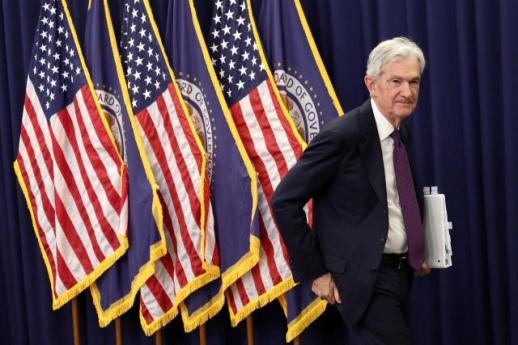 Fed Holds Rates as Dissent Rises, Complicating Bank of Korea’s Next Move The Federal Reserve again held its benchmark rate at 3.50% to 3.75%. While the decision signaled a pause, uncertainty over the policy path has deepened. At the latest Federal Open Market Committee meeting, four members dissented — the largest number in 34 years — underscoring a break in the Fed’s usual unity. That split is quickly reverberating in Seoul, adding to the Bank of Korea’s policy challenge. The most striking feature of the decision was not the outcome but the division behind it. Four dissenting votes among 12 members was the first such split since 1992. One dovish member argued for a rate cut, while three hawkish members called for removing an easing bias, highlighting how mixed the economic signals have become. With inflation picking up again amid the fallout from the war in the Middle East, neither growth nor prices has clearly taken priority. The article describes the moment as a transitional period as the Jerome Powell era ends and a Kevin Warsh chairmanship begins, leaving the Bank of Korea to design policy around a more unpredictable external backdrop. South Korea’s domestic picture is also complicated. First-quarter real GDP growth came in at 1.7%, an “earnings surprise” that nearly doubled the Bank of Korea’s 0.9% forecast. The result, driven by strong semiconductor exports, weakens the case for a rate cut aimed at supporting growth. Inflation indicators, however, remain a concern. March consumer inflation was 2.2%, appearing stable on the surface, but petroleum product prices jumped by nearly 10%, pushing up producer prices. Stronger growth can bolster the case for tightening, while elevated inflation makes easing harder. The government is also supporting the economy with a 26 trillion won supplementary budget, but that could add liquidity and complicate efforts to stabilize prices. Attention is now on the Bank of Korea’s Monetary Policy Board meeting on May 28, the first policy decision since Gov. Shin Hyun-song took office. At his confirmation hearing, Shin said he would put more weight on prices given South Korea’s sensitivity to oil shocks, a stance that points to a hawkish hold in May. With the Korea-U.S. rate gap holding at 1.25 percentage points at the upper end, and the timing of Fed cuts unclear, South Korea has limited room to move first. A pre-emptive cut could trigger a weaker currency and capital outflows. The Bank of Korea is therefore likely to stick with a wait-and-see approach, watching April inflation data and geopolitical risks in the Middle East. The economy is at an inflection point, with a semiconductor boom colliding with the risk of supply-chain shocks tied to the Middle East. As the Fed’s internal split suggests, the era of a single, predictable monetary-policy answer is fading. The Shin-led central bank will need to do more than hold rates; it must deliver clear and precise guidance to markets. With even the possibility of rate hikes in the second half being discussed, any wobble in policy consistency could fuel market volatility. The article calls for flexible, data-driven decisions paired with strategic communication focused on the central bank’s core mission of price stability. * This article has been translated by AI. 2026-04-30 11:07:20
 -
 South Korea Says No Talks With U.S. on Cutting American Troops in Korea South Korea's Ministry of National Defense said Wednesday there have been no discussions with the United States about reducing U.S. troops stationed in South Korea, after President Donald Trump said Washington is considering cutting forces in Germany. Asked about the issue at a regular briefing, ministry spokesperson Jeong Bitna said, "There have been no discussions at all between South Korea and the United States regarding a reduction of U.S. Forces Korea." She said the main mission of U.S. Forces Korea is to maintain a strong combined defense posture with South Korean forces to deter and respond to North Korean invasion and provocations. Jeong said the allies will continue close consultations to ensure the stable stationing of U.S. forces in South Korea and to strengthen the combined defense posture. Trump wrote on social media Truth Social on April 29 (local time) that the United States is looking at the possibility of reducing troops in Germany and that a decision would be made soon. The remarks prompted speculation the move could be retaliation for Germany's lack of active cooperation in the Iran war. Meanwhile, the fiscal 2026 National Defense Authorization Act, which took effect last December, includes provisions barring the use of funds to reduce U.S. Forces Korea below 28,500 troops. * This article has been translated by AI. 2026-04-30 11:06:15
 -
 South Korea to Recruit Trainees for Digital Twin-Based Semiconductor Process Design Academy The Ministry of Trade, Industry and Energy said Wednesday it will recruit trainees for the Korea Semiconductor Academy to provide semiconductor process design training using digital twin technology. The program, supported by the ministry and run by the Korea Semiconductor Industry Association, targets company employees and people seeking jobs in the semiconductor sector. It plans to train about 100 process design specialists through four sessions a year, each lasting two weeks. The ministry said the initiative reflects growing complexity in manufacturing processes for 3D-stacked AI semiconductors such as HBM and 3D NAND. It said demand is rising for specialists who understand entire process flows — not just individual steps — and can solve technical problems that occur during production. It noted that manufacturing sequences and equipment layouts vary by chip type, while changing and rearranging expensive equipment to match each process is not feasible due to cost and space constraints. The academy said it worked with global semiconductor equipment companies to develop a curriculum that uses specialized software already used at major Korean companies and universities, allowing trainees to learn without dedicated equipment. In a virtual environment that replicates a semiconductor fab, trainees will study overall manufacturing processes and how to design optimized process flows. Industry experts will also serve as instructors to share on-the-job know-how. Applications open May 4 on the academy’s website, with trainees to be selected through screening based on selection criteria. Training is set to begin in late May. Choi Woo-hyuk, the ministry’s director general for advanced industry policy, called it “a new paradigm of training that lets people learn semiconductor processes at a glance without expensive equipment.” He said it is expected to produce talent tailored to industry needs in the short term and significantly reduce the costs required to build hands-on training equipment over the long term.* This article has been translated by AI. 2026-04-30 11:04:19
 -
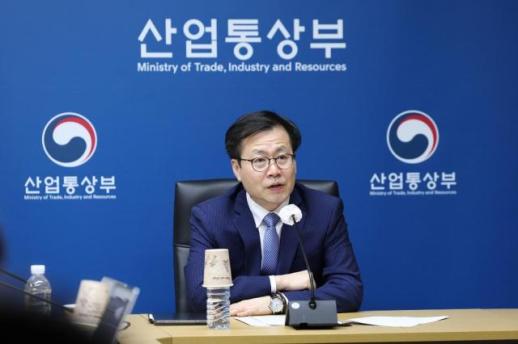 South Korea, Mexico to Hold High-Level Talks on Restarting FTA Negotiations The South Korean government will begin high-level consultations aimed at resuming free trade agreement talks with Mexico. The Ministry of Trade, Industry and Energy said trade minister Yeo Han-koo met Thursday with Carlos Penafiel Soto, Mexico’s ambassador to South Korea, to discuss ways to expand bilateral economic and trade cooperation. The meeting came as uncertainty in the global trade environment deepens amid the spread of protectionism, and was arranged to explore broader cooperation with Mexico, South Korea’s largest trading partner in Latin America. The two sides agreed a Korea-Mexico FTA could serve as a catalyst to boost trade and investment. They decided to continue high-level talks so negotiations, suspended since 2022, can restart as soon as possible. Yeo also raised concerns from South Korean industry over key trade issues, including Mexico’s tariff increases that took effect in January and the planned July review of the U.S.-Mexico-Canada Agreement. He asked for special attention so South Korean companies operating in Mexico can continue business under stable conditions. “Mexico is a key bridgehead for entering the Latin American market and integrating into USMCA supply chains,” Yeo said. “We will work closely to produce results that provide real help in expanding our companies’ exports and stabilizing their local operations.”* This article has been translated by AI. 2026-04-30 11:03:55
 -
 March National Tax Revenue Up 5.5 Trillion Won on Income, Stock Transaction and Corporate Taxes National tax revenue in March rose 5.5 trillion won from a year earlier, led by gains in income tax, stock transaction tax and corporate tax. The Ministry of Economy and Finance said Thursday that March national tax revenue totaled 37.8 trillion won, according to its report on March 2026 collections. By category, income tax posted the largest increase, up 2.2 trillion won. The ministry cited higher wage income tax as performance bonuses expanded, and higher capital gains tax as home transactions increased. Stock transaction tax rose 800 billion won on higher trading value and a tax rate increase. The rural special tax increased 1 trillion won, helped by larger KOSPI trading value, the ministry said. Corporate tax increased 900 billion won on improved corporate results. Value-added tax rose 300 billion won, reflecting increased payments tied to extended filing deadlines. Inheritance and gift tax and the transportation, energy and environment tax each increased 100 billion won, while individual consumption tax and tariffs were roughly unchanged from a year earlier. Cumulative national tax revenue through March totaled 108.8 trillion won, up 15.5 trillion won from the same period last year. The collection progress rate was 26.2%. On a cumulative basis, increases were led by income tax (up 4.7 trillion won), value-added tax (up 4.5 trillion won) and stock transaction tax (up 2 trillion won). Corporate tax was up 900 billion won. * This article has been translated by AI. 2026-04-30 11:03:29
 -
 LG Energy Solution Sees Sodium Battery Demand in ESS, Lead-Acid Replacement Tests Planned ·* This article has been translated by AI. 2026-04-30 11:00:50
 -
LG Energy Solution: North America to Mass-Produce Prismatic ESS Batteries by Late 2027 * This article has been translated by AI. 2026-04-30 11:00:17
-
 Trump, Putin Hold 90-Minute Call on Ukraine Ceasefire Idea and Iran U.S. President Donald Trump and Russian President Vladimir Putin. (Reuters/Yonhap) U.S. President Donald Trump and Russian President Vladimir Putin spoke by phone and discussed the war in Ukraine and the Iran issue. Putin said he was prepared to declare a ceasefire during the May 9 Victory Day period, and Trump said the call went well. Reuters reported that Trump said after the call that they discussed “a bit of a ceasefire” in Ukraine. Kremlin aide Yuri Ushakov said the conversation lasted more than 90 minutes. The Kremlin said Putin told Trump he was ready to announce a ceasefire during the Victory Day period, and Trump responded positively. The proposal appeared limited to a specific time frame rather than a full ceasefire or a broader agreement to end the war. Trump described the tone of the call as “good,” but said he told Putin that ending the war in Ukraine should come first. Iran was also discussed. Reuters said Putin offered ideas related to Iran’s enriched uranium issue. Trump said Putin wanted to be involved, but that he wanted to end the Ukraine war first.* This article has been translated by AI. 2026-04-30 10:56:07