
Journalist

Lee Hugh
=
-
 Samsung Expects Lower Smartphone Shipments in H2, Higher Revenue on Premium Mix Samsung Electronics said Thursday on its conference call for 2026 first-quarter results that it expects the smartphone market to see lower shipments in the second half as component prices rise, but revenue to increase as sales shift toward higher-end premium models. For tablets, the company forecast declines in both unit volume and revenue, citing cost pressures and reduced promotions. For notebooks and PCs, it said revenue is expected to grow on higher average selling prices, while shipments are likely to fall. Samsung said it will pursue flagship-led growth by strengthening AI features and advancing form-factor innovation. For foldables, it said it will further refine product development to meet a wider range of user needs. * This article has been translated by AI. 2026-04-30 10:42:41
 -
 Hanwha Systems Installs Homegrown Ship Engine Control System on ROK Navy Destroyer Yang Manchun A domestically developed integrated engine control system, or ECS, has been installed for the first time on an operational naval ship in South Korea, replacing a key component that had largely relied on foreign suppliers. Hanwha Systems said it held a ceremony on the 30th at Jinhae Port in Changwon, South Gyeongsang Province, with the Navy and the Defense Rapid Acquisition Technology Research Institute to mark completion of a performance upgrade for the Yang Manchun (DDH-I) integrated engine control system. The Yang Manchun is a 3,200-ton helicopter-capable destroyer built under the KDX-I program along with the Gwanggaeto the Great and Eulji Mundeok. Under the project, the ship’s system was replaced with Hanwha Systems’ domestically produced integrated engine control system. The ship previously used equipment from overseas suppliers. Often described as a ship’s “heart,” the integrated engine control system manages propulsion, power, auxiliary equipment and damage-control systems through a single network. Hanwha Systems said the ECS is considered a core system for future ships aimed at unmanned operation, advanced intelligence and automation, alongside the combat management system, or CMS — described as the ship’s “brain” — that the company installed on the Yang Manchun in 2020. The company said the ECS effort was developed through civil-government-military cooperation. Hanwha Systems has worked since 2014 to secure key technologies in stages, collaborating with the Navy, the Defense Rapid Acquisition Technology Research Institute, the Korea Institute of Defense Technology Promotion and Research, and the Korea Institute of Machinery and Materials on defense core-technology projects. Hanwha Systems said it is currently the only company in South Korea with both domestically developed CMS and ECS technologies, and that full compatibility between the two has also enabled it to secure cockpit-style integrated bridge system, or IBS, technology. “K-ship unmanned operation and advanced capabilities will be brought forward through continued technology development, and we will work to have our unique competitiveness recognized in the global naval defense market,” said Yoo Moon-ki, head of Hanwha Systems’ naval business division. 2026-04-30 10:41:31
 -
 Korea Names Lee Jae-yu, Kim Sa-guk and Kang Ju-ryong as May Independence Activists The Ministry of Patriots and Veterans Affairs, led by Minister Kwon O-eul, said April 30 it selected Lee Jae-yu (Order of Independence, 2006), Kim Sa-guk (Patriotic Medal, 2002) and Kang Ju-ryong (Patriotic Medal, 2007) as the “May 2026 Independence Activists” for their efforts to improve harsh working conditions for Korean laborers amid Japanese colonial-era discrimination. The government posthumously awarded Lee the Order of Independence under the Order of Merit for National Foundation, and awarded Kim and Kang the Patriotic Medal under the same order, to honor their contributions. Lee (1905-1944) joined the labor movement while studying in Tokyo, working to organize Korean workers’ groups and pursue national independence and labor rights. In Seoul, he formed the “Gyeongseong Troika,” organizing worker and farmer groups and guiding student activism through reading circles as part of broader anti-Japanese efforts to build a foundation for independence. Despite repeated arrests and imprisonment, Lee refused to recant and died in 1944 at the Cheongju Protective Prison. Kim (1895-1926) was arrested and served time in 1919 while preparing the Joseon National Assembly to establish the Hansung Government. After his release, he took part actively in youth movements, traveled between Korea and Japan to organize labor groups, and stressed national unity. Kim also devoted himself to national education, establishing the Dongyang Academy affiliated with Daeseong Middle School in Gando, then fleeing Japanese repression and founding the Daedong Academy in Ningguta, Manchuria. His health deteriorated in 1924, and he returned to Korea and died at age 31. Kang (1901-1932), a worker at the Pyeongwon Rubber Factory in Pyongyang, drew public attention during a 1931 strike protesting wage cuts for Korean workers by staging what became known as the “Eulmildae rooftop protest,” calling for workers’ rights and rallying solidarity and public support. Kang was later arrested on suspicion of involvement in a Pyongyang labor union case. Her health worsened while she continued to resist in prison; she was released on medical bail but died at age 31. The ministry said Korean workers at the time faced low pay and long hours, along with colonial oppression, exploitation and ethnic discrimination, and that labor activism evolved beyond a fight for survival into resistance aimed at national independence. It said the anti-Japanese labor movement helped drive broader social change and laid the groundwork for the modern labor movement. * This article has been translated by AI. 2026-04-30 10:40:25
 -
 LG Energy Solution Says North America ESS Backlog at 140 GW; Early Fixed Costs in EV-to-ESS Line Shift * This article has been translated by AI. 2026-04-30 10:35:42
 -
 Samsung Electronics expects 2026 capex to rise sharply on sustained AI demand Samsung Electronics said Thursday it expects capital spending this year to rise “significantly” from a year earlier as demand for artificial intelligence remains strong. On a conference call for its 2026 first-quarter earnings, the company said it will expand investment in advanced research and development — including next-generation processes and core technologies — to secure technology leadership. It also said it plans to strengthen strategic hubs and secure additional infrastructure to respond to future demand, while closely monitoring fast-changing market conditions and executing investment flexibly. First-quarter facility investment totaled 11.2 trillion won, down 9.2 trillion won from the previous quarter. By division, the Device Solutions (DS) unit accounted for 10.2 trillion won and the display business 600 billion won. Samsung said memory spending fell from the prior quarter because investment was brought forward late last year, including the introduction of new clean rooms at its Pyeongtaek site. It said equipment investment using that space will expand this year, lifting overall capex “significantly.” For foundry operations, Samsung said spending declined from the previous quarter due to a base effect after major infrastructure investment at its Taylor, Texas, fab in the fourth quarter of last year. It said investment to start up Taylor will keep increasing this year beginning in the second quarter. Samsung previously announced plans to invest 110 trillion won this year, including research and development and capital expenditures. Of that total, it is expected to allocate 40 trillion won to R&D and 70 trillion won to capex. * This article has been translated by AI. 2026-04-30 10:34:39
 -
 Korea’s Q1 Card Spending Rises 7.2% to 322.1 Trillion Won Despite concerns about weakening consumer sentiment, card approvals in the first quarter posted solid growth, supported by stronger income conditions tied to robust domestic corporate earnings. Inflation, continued expansion in online spending and a rebound in travel demand also contributed. According to the Credit Finance Association of Korea on Wednesday, total card approvals in the first quarter came to 322.1 trillion won, up 7.2% from a year earlier. The number of approved transactions rose 5.1% to 7.2 billion. The growth rate more than doubled from 3.3% in the first quarter of last year, and the transaction-count increase was up 3.9 percentage points from a year earlier. By card type, both personal and corporate cards increased. Personal card approvals totaled 264.4 trillion won, up 6.8%, while transactions rose 5.3% to 6.82 billion. Corporate card approvals increased 8.7% to 57.8 trillion won, and transactions rose 1.9% to 380 million. Strong growth in online commerce continued. Online shopping transactions in January and February rose 8.5% from a year earlier to 46.698 trillion won. Within online shopping, food delivery and travel and transportation services increased 11.0% and 12.8%, respectively. A recovery in travel and tourism demand also lifted card use. First-quarter air passenger traffic rose 12.6%, and spending by foreign tourists surged 37.1%. The association said higher oil prices in March likely also pushed up card-approved spending on vehicle fuel. The association said uncertainty has increased and consumer sentiment could weaken due to the Middle East war that broke out in late February. Still, it said improved income and asset conditions stemming from strong domestic corporate earnings, including from expanding global semiconductor demand, along with base effects, helped drive the rise in card approvals.* This article has been translated by AI. 2026-04-30 10:33:33
 -
 Democratic Party’s Cheon Jun-ho vows special counsel bill over alleged fabricated prosecutions Cheon Jun-ho, acting floor leader of the Democratic Party, said April 30 that he will move to introduce a special counsel bill into alleged “fabricated prosecutions,” vowing that those responsible “will pay the price.” Speaking at a party policy coordination meeting at the National Assembly, Cheon said a parliamentary special committee on a state investigation into the alleged fabricated prosecutions would adopt its final report later that day and wrap up its work. Cheon alleged that Yoon Suk Yeol “mobilized all power agencies” to pursue fabricated prosecutions, saying that when Yoon “picked a target,” what he called a political prosecution service and the Board of Audit and Inspection moved in tandem. He said the alleged conduct included tampering with recorded audio, creating false official documents and “human rights abuses,” calling it a state-violence crime that must be punished strictly. Cheon also criticized appellate sentences in cases involving Yoon and first lady Kim Keon Hee, saying it was hard to accept that the punishments, while higher than at trial, were still below what prosecutors had sought despite what he called a clear violation of the constitutional order. Yoon was sentenced Tuesday to seven years in prison on appeal on charges including obstructing an arrest, and Kim was sentenced April 28 to four years in prison on charges including stock manipulation. Prosecutors had asked the court to impose 10 years for Yoon and 15 years for Kim. In the first trial, Yoon and Kim were sentenced to five years and one year and eight months, respectively. “Only by engraving this in history will no one dare dream of doing such a thing,” Cheon said, adding that the Democratic Party would focus on restoring constitutional order and strengthening the rule of law.* This article has been translated by AI. 2026-04-30 10:32:24
 -
 KTX and SRT Begin Joint Test Runs Ahead of Planned September Integration South Korea’s KTX and SRT high-speed rail services began test runs on regular commercial routes starting on the 30th, as the operators prepare for integrated operations planned for September. The Ministry of Land, Infrastructure and Transport, Korail and SR said the tests will support a pilot coupled operation that links KTX and SRT trainsets to run as a single train. The test program will be conducted four times through May 14 to make final checks on safety and passenger convenience. Pilot coupled trains that passengers can ride are scheduled to begin service May 15. Test runs are planned as one round trip each on these routes: Gwangju Songjeong Station↔Suseo Station on the 30th; Seoul Station↔Busan Station on May 6; Seoul Station↔Gwangju Songjeong Station on May 12; and Gwangju Songjeong Station↔Seoul Station on May 14. Since the integrated high-speed rail roadmap was announced last December, Korail and SR have checked compatibility of trains, tracks and ticketing and other operating facilities. Since Feb. 25, they have also been running a pilot cross-service operation, with KTX trains serving Suseo Station and SRT trains serving Seoul Station. The coupled operation goes a step beyond cross-service by physically linking KTX and SRT into one train. The two operators have conducted coupling and driving tests at depots and completed software updates and verification reflecting the results, they said. During the test runs, staff from the ministry, Korail and SR will ride the trains to closely check whether key systems — including communications, braking and emergency controls — operate properly when integrated in real operating conditions. Based on the results, the operators plan to refine the integrated operating system, proceed with the pilot coupled operation and finalize an optimal integrated service plan by September before launching operations. Korail President Kim Tae-seung said the company is making thorough preparations for the pilot coupled operation so passengers can experience the safety and convenience of integrated high-speed rail service. He said the remaining steps will be carried out without setbacks to achieve a faster and safer integration.* This article has been translated by AI. 2026-04-30 10:31:03
 -
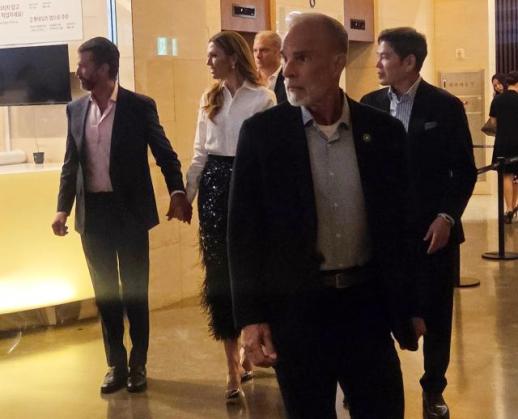 Shinsegae Chairman Chung Yong-jin’s Trump Ties Raise Opportunity, Risk Questions A striking scene unfolded at a concert hall in Seoul: Donald Trump Jr., the son of U.S. President Donald Trump, arrived and was greeted by Chung Yong-jin, chairman of South Korea’s Shinsegae Group. The two smiled and exchanged greetings, and red hats bearing the words “MAGA” appeared in the crowd. What looked like a simple night at a performance was widely read as something more — business. Corporate competition has changed. In the past, making a good product at the right price could be enough. Now, with tougher rivals and faster technological shifts, who a company knows can also become a competitive asset. Globally, companies have long used political connections to expand. The article cites Elon Musk as an example of benefiting from government support policies and regulatory easing in the electric-vehicle business, and Walmart as a company that worked with local politicians to broaden its market. But there is a key difference: those cases involved ties within a company’s own country. Shinsegae is a Korean company, yet it is seeking links to U.S. political networks. That could create opportunity, but it can also be unstable because another country’s political environment can shift quickly. Shinsegae’s business direction is also drawing attention. The group is best known for retail — department stores and big-box marts — but it has recently been linked to talk of advanced industries such as AI and data centers, prompting questions about why a retailer is moving in that direction. Retail, however, has changed. Success increasingly depends on collecting and using customer data — what people buy, when they buy it and which brands they prefer. AI can analyze that data to recommend products and help run logistics more efficiently. From that perspective, expanding from retail into AI can be a natural step. The issue is speed and method. A company can build capabilities gradually in-house, or enter quickly by leaning on outside networks. The article says Shinsegae’s approach appears closer to the latter, a faster strategy that also increases risk. The most controversial element of the concert scene was the “MAGA” hat. The article notes it is not just a fashion item but a strong symbol of a specific political camp in U.S. politics, something companies typically handle cautiously. Businesses often try to remain politically neutral to appeal to a broad customer base. In this case, the optics appeared to stray from that neutrality. Even if that was not the intent, the market may interpret it as a signal of alignment rather than mere personal familiarity. The article argues the approach is not automatically wrong. It can speed access to investment or partnership opportunities through key contacts and raise a company’s profile in global markets. But the risks are also significant. If political conditions change, the value of those ties can fade. A political image can trigger consumer backlash. And if a new venture is weakly connected to the core business, it can lose direction. What matters, the article says, is not simply using connections but designing a strategy: clearly link AI investment to stronger retail competitiveness; avoid relying on a single side by building diverse relationships; manage corporate image by separating political ties from the brand; and build a business structure that can withstand shifting conditions. Chung’s move, the article concludes, signals a push by Korean companies to seek opportunities through global networks rather than staying focused only on the domestic market. Connections may open doors, but lasting success still depends on performance. Whether this becomes a one-off event or a new growth strategy for Shinsegae remains unclear, and the outcome will depend on execution. In the end, the article says, a company may start with relationships, but it must prove itself with results — not just publicity, but what comes next. * This article has been translated by AI. 2026-04-30 10:26:19
 -
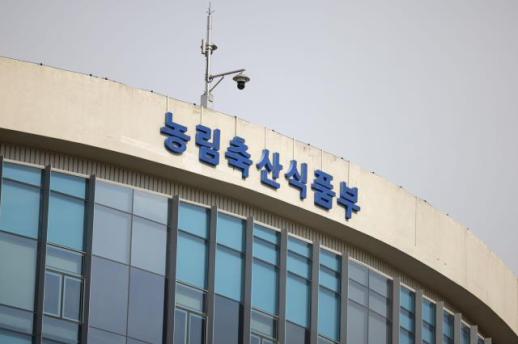 South Korea to Offer Up to 58% Discounts on Processed Foods for Family Month The Ministry of Agriculture, Food and Rural Affairs said Wednesday it will offer discounts of up to 58% on processed foods in May, designated as Family Month, to help ease pressure on household grocery bills. The ministry said it will run the promotion with 16 major food companies, covering 4,373 processed-food items. The move comes as consumer sentiment has weakened and grocery costs have risen amid external uncertainty, including instability in the Middle East, the ministry said. It added that the discounts are intended to deliver price-stabilization effects consumers can feel, particularly in May when family spending typically increases. Discounts by category include Nongshim instant noodles at 6% to 36%, Paldo instant noodles at 6.4% to 33%, Samlip bread products at 8% to 37%, and CJ CheilJedang cooking oils and fats and dumplings at 33% to 50%. Jeong Gyeong-seok, director general for food industry policy, said the event reflects active cooperation between the government and the food industry to stabilize grocery prices despite difficult external conditions. He said the ministry will continue efforts to curb living costs by expanding cooperation with the industry. * This article has been translated by AI. 2026-04-30 10:24:53