
Journalist

Lee Hugh
=
-
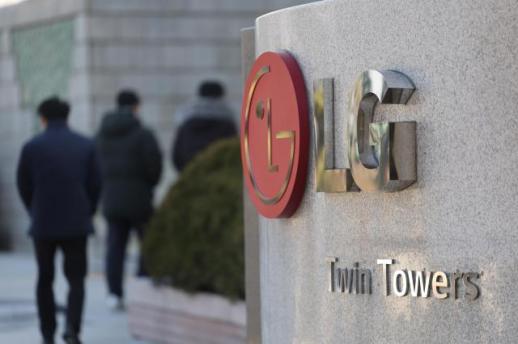 LG Electronics pivots to subscriptions, auto as profit engine strengthens SEOUL, April 29 (AJP) - LG Electronics is weathering a global spending slowdown by rapidly expanding subscription-based rentals for premium home appliances and scaling its vehicle solutions business, as demand grows for smarter mobility and recurring revenue models, its quarterly breakdown showed Wednesday. The first-quarter results underscored a structural shift in earnings quality, with high-margin recurring income from appliance subscriptions and a solid order backlog in the vehicle component solutions (VS) unit helping buffer the company against macro headwinds and rising raw material costs. Headline figures were unchanged from earlier guidance, with record quarterly revenue of 23.73 trillion won and operating profit of 1.67 trillion won. Beneath the surface, however, the VS division emerged as a key driver, with operating margin climbing above 6 percent — reinforcing its role as a core profit pillar alongside the home appliance business. The shift, analysts say, reduces LG’s traditional exposure to cyclical swings in consumer electronics. Business-to-business operations are gaining weight, now accounting for 36 percent of total revenue. B2B sales rose 19 percent on-quarter to 6.5 trillion won, supported by expansion into industrial cooling systems for AI data centers and electric vehicle components. The Home Appliance & Air Solution (HS) unit also showed resilience, maintaining an 8.2 percent operating margin despite U.S. tariff pressure and a weaker Korean won. Growth was driven by subscription-based sales, which rose 15 percent on-year and 8 percent on-quarter, as LG accelerates the model across emerging markets to secure steadier cash flow. Looking ahead, the company is positioning for the AI infrastructure cycle by expanding its Eco Solution (ES) portfolio, particularly advanced liquid cooling systems for global data centers. “The first-quarter results have effectively confirmed a recovery in profitability across core businesses,” said Jeong Min-gyu, an analyst at Sangsangin Investment & Securities. “Expectations are rising as commercialization of robot actuators and chiller orders for AI data centers gains visibility.” 2026-04-29 16:31:33
 -
 Iran War Nears 60-Day War Powers Deadline as Congress Weighs Role The U.S.-Israeli war against Iran is nearing a 60-day deadline, raising uncertainty over whether Congress will step in and how President Donald Trump may proceed. CNN and Al Jazeera reported that the conflict will reach its 60th day on May 1, counted from when Trump formally notified the start of the war. Under the 1973 War Powers Act, a president must obtain congressional approval to continue military operations beyond 60 days. How Congress responds is expected to be pivotal. Analysts have also pointed to past cases — including the Clinton administration’s Kosovo air campaign and the Obama administration’s Libya strikes — in which administrations continued operations without approval by narrowly interpreting what qualifies as “hostilities.” So far, Congress has shown little momentum. Republicans, who hold narrow control of both chambers, have repeatedly blocked resolutions aimed at limiting Trump’s military authority, and open opposition to the war has remained limited. Political risks are growing ahead of November’s midterm elections, with concerns that the war and its economic costs could hurt Republicans. U.S. public opinion has also soured. In a Reuters-Ipsos poll, 26% said the operation was worth its cost, and 25% said it made the United States safer. Some observers say a Republican-led Congress may avoid forcing the issue and allow the war to drag on. Henry Olsen, a senior fellow at the Ethics and Public Policy Center in Washington, told Al Jazeera, “They (Republican lawmakers) will want to avoid this vote by any means possible.” White House spokesperson Anna Kelly rejected that criticism, telling Military.com that Trump had briefed Congress transparently even before “Operation Epic Fury” began and that administration officials have provided more than 30 bipartisan briefings for lawmakers. Trump’s next steps remain unclear. Reuters, citing U.S. government officials, reported that intelligence agencies are analyzing how Iran might respond if Trump unilaterally declares victory after about two months of war. The report said the work is meant to gauge the fallout if Trump pulls back, as some officials and advisers worry the conflict could lead to a major Republican defeat in the midterms. No specific decision has been announced, but Trump could still resume or expand military operations if he deems it necessary. A rapid easing of tensions could reduce political pressure, while critics warn it could allow Iran to rebuild nuclear and missile capabilities and expand regional influence. Maintaining a maritime blockade is also being discussed as a pressure tool. The Wall Street Journal, citing sources, reported that Trump has instructed aides to prepare to extend the blockade, describing it as a lower-risk option than restarting airstrikes or declaring an early end to the war. The prolonged conflict is also battering Iran’s economy. The U.N. Development Programme projected that up to 4.1 million more people could fall into poverty. Hadi Kahalzadeh of the Quincy Institute said “50% of all jobs in Iran are at risk,” and that an additional 5% of the population could fall into poverty. Trump wrote on his social media platform Truth Social that Iran had just told the United States it was in a “State of Collapse,” adding that Iran wanted the Strait of Hormuz opened “as soon as possible” as it tried to resolve leadership issues. As U.S.-Iran talks on ending the war struggle to gain traction, CNN reported that Pakistani mediators expect to receive Iran’s revised negotiating proposal within days. 2026-04-29 16:28:29
 -
 Doosan to Invest 180 Billion Won to Build CCL Production Base in Thailand for AI Demand Doosan Corp. is setting up a new production base in Thailand to get ahead of rising demand for copper-clad laminate, or CCL, driven by the expansion of artificial intelligence data centers. The company said Tuesday it will establish a new local entity and build a CCL plant at the Araya Industrial Park in the Bang Bo area of Samut Prakan province. Total investment will be about 180 billion won. The site will cover about 73,000 square meters. Doosan plans to break ground within this year and aims to begin mass production in the second half of 2028. It said it will consider phased capacity expansions in line with demand to improve investment efficiency. The Thailand plant will mainly produce high-performance CCL for AI infrastructure and network equipment, the company said, adding it expects strong growth as global demand expands. Doosan cited logistics and operational stability as key reasons for choosing the site. The industrial park is about a 30-minute drive from Suvarnabhumi International Airport and about an hour from Laem Chabang port. The company also said the newer complex has operating infrastructure and disaster-response systems that support stable production. CCL is a sheet made by laminating copper foil onto both sides of an insulating material and is a core base material for printed circuit boards, or PCBs. Doosan said AI accelerators, which must process massive amounts of data at very high speeds, require high-performance CCL that minimizes signal loss and resists deformation in high-temperature operating environments. As investment in AI data centers grows worldwide, demand for high-performance CCL is rising rapidly, it said. Doosan said it has built competitiveness in CCL on materials technology accumulated over the past 50 years, including an edge in designing the “optimal composition ratio” among materials that determines CCL quality. “We decided to expand production capacity to respond in a timely way to growing CCL demand,” a Doosan official said. “We will monitor market conditions and flexibly review whether additional investment is needed.”* This article has been translated by AI. 2026-04-29 16:23:20
 -
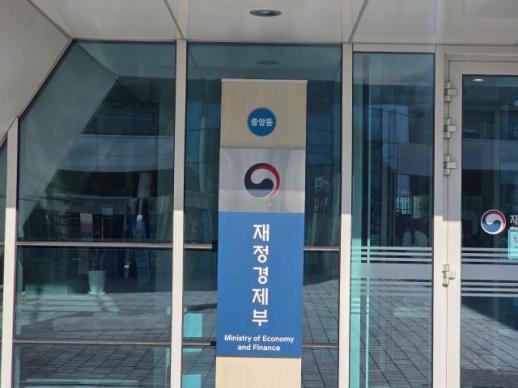 Finance Ministry Holds 4th Strategic Economy Advisory Panel Meeting on AI Shift The Ministry of Finance and Economy said it held the fourth meeting of the Strategic Economy Advisory Panel’s steering committee on the 28th at the Government Complex Seoul, chaired by Park Young-sun, head of the panel. Launched on the 13th, the panel has been identifying field-focused policy tasks tied to strategic industries. Over about two weeks, it convened both the steering committee and subcommittees to continue work on selecting key assignments. At the meeting, members discussed priority projects to respond to what the ministry called a major shift driven by artificial intelligence. Advisers said that amid changes in the external environment and a technology paradigm shift, the government should expand cross-ministry coordination and broaden private-sector participation to strengthen the competitiveness of domestic industries. Earlier, the panel added a new “AI agent commerce” subcommittee to its existing six, citing the growing importance of commerce applications using AI agents. Min Kyung-seol, head of the Office for Innovative Growth, asked advisers to “propose specific tasks so that strategic industries can grow into industries that will drive growth for the next 50 years.” The ministry said it will consult with relevant ministries on projects proposed by the panel and continue holding meetings to identify policy tasks.* This article has been translated by AI. 2026-04-29 16:22:39
 -
 South Korea launches new homegrown frigate with delivery slated for next year SEOUL, April 29 (AJP) - A launch ceremony for a new homegrown frigate with enhanced anti-air and anti-submarine capabilities was held in Goseong, South Gyeongsang Province on Wednesday. The ceremony for the Jeju, named after the country's southern resort island, was held at SK Oceanplant's shipyard, about a year ahead of its planned delivery to the Navy slated for June next year, according to the Defense Acquisition Program Administration (DAPA). The 3,600-ton frigate is intended to replace aging frigates and patrol combat corvettes (PCC) currently in service and will be deployed combat-ready after completing trial operations. Measuring about 129 meters in length, 14.8 meters in width, and 38.9 meters in height, the Jeju is equipped with a 5-inch gun, anti-ship and missile defense guided missiles, ship-to-ship guided missiles, tactical ship-to-surface guided missiles, and long-range anti-submarine torpedoes. The frigate's integrated sensor mast is fitted with infrared search-and-track systems and a locally developed multifunction phased-array radar. The radar provides 360-degree coverage, enabling it to detect and track both air and surface targets while responding to multiple threats simultaneously. "This is a decisive moment to strengthen our resolve to self-reliant defense and military readiness," said Joint Chiefs of Staff chairman Jin Young-seung, who attended the event. He added that the military is pushing to modernize its capabilities by embracing new technologies such as artificial intelligence (AI), drones and unmanned vessels. He also vowed to protect lives and property and preserve peace on the Korean Peninsula by building a "military trusted by the people." Wednesday's event was attended by about 150 high-ranking military officials and other guests including Navy Chief of Staff Kim Kyung-ryul and SK Oceanplant CEO Kang Young-gyu. 2026-04-29 16:22:01
 -
 China Halts New Level 4 Self-Driving Permits After Baidu Robotaxi Disruption China has reportedly suspended new permits for Level 4 (highly automated) self-driving vehicles, including robotaxis, after a major service disruption involving Baidu’s Apollo Go in Wuhan. The move is expected to slow the rollout of new vehicles, new pilot programs and expansion into additional cities. Bloomberg reported on the 29th that three government agencies, including the Ministry of Industry and Information Technology, held a meeting earlier this month with local officials running robotaxi or autonomous-driving pilot programs. The agencies called for comprehensive self-inspections and stronger safety monitoring, the report said, in an effort to prevent similar incidents after the Wuhan disruption. Reuters previously reported on the 14th that Chinese authorities ordered self-inspections and tighter supervision of road tests and pilot operations for intelligent connected vehicles. The measures restrict autonomous-driving companies from adding new robotaxis to their fleets, launching new pilot programs or expanding services to other cities. It is not yet clear how long the suspension will last. The immediate trigger was a disruption on March 31 in Wuhan involving Apollo Go. Citing Chinese media, Bloomberg said more than 100 Apollo Go robotaxis stopped on city roads. Reuters reported that local police attributed the incident to a system malfunction. Baidu has not publicly disclosed the exact cause. Apollo Go is China’s largest robotaxi operator, running hundreds of vehicles in more than 12 cities. Bloomberg said this is at least the second time Chinese authorities have paused new permits tied to a Baidu-related issue. In late 2024, approvals were frozen for several months after Wuhan residents pushed back against the spread of robotaxis, and the process resumed only in early 2025, the report said. Concerns about taxi-driver job losses were cited as a factor behind the opposition. Bloomberg also reported that Baidu’s robotaxi operations in Wuhan were halted during the authorities’ investigation. MIIT, the Ministry of Public Security and the Ministry of Transport did not respond to requests for comment, and Baidu did not immediately respond, Bloomberg said. Separately from the permit suspension, existing services are continuing. Pony.ai said its services in Beijing, Shanghai, Guangzhou and Shenzhen are operating normally, and preparations to enter Changsha and Hangzhou are proceeding as planned. WeRide said it supports efforts to strengthen safety standards and that its services in China are operating normally.* This article has been translated by AI. 2026-04-29 16:21:20
 -
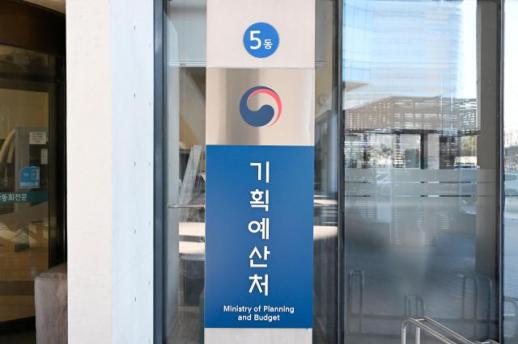 Budget Office Seeks Strategic Fiscal Investment to Boost Key Industries South Korea’s Planning and Budget Office said it will prepare fiscal investment measures to strengthen the competitiveness of key industries. The office made the announcement at a meeting held on the 29th at the Seoul Regional Procurement Service to discuss “strategic fiscal investment measures to strengthen industrial competitiveness.” The meeting was convened as global technology competition intensifies around advanced industries such as semiconductors and artificial intelligence, and as supply-chain instability grows amid the war in the Middle East. The government said it plans to reflect views from industry as it specifies future budget planning and fiscal support priorities. Participants agreed that, with global competition escalating, the government needs to make proactive and active fiscal investments to help companies maintain competitiveness. Hong Seong-uk, head of the Industrial Data Analysis Office at the Korea Institute for Industrial Economics and Trade, said growth has continued on the back of strong exports in semiconductors and defense. But he warned that risks remain, citing stronger protectionism, external uncertainty including the Middle East war, and expanded investment in advanced industries centered on the G2. He said it is “a time when a cooperative response between the government and companies is needed.” Industry representatives also called for tailored responses by sector. Kim Kyung-hee, a vice president at Samsung Heavy Industries, said shipbuilding faces both crisis factors from China’s catch-up and opportunities such as South Korea-U.S. cooperation in shipbuilding. She emphasized that active government support is needed to secure future technology competitiveness, including in eco-friendly ships. Cho Yong-beom, director general of the Budget Office at the Planning and Budget Office, said the world is at a turning point where countries are being asked to play a more active role as investors. He said the office will use feedback from the field to address corporate difficulties in advance and prepare fiscal investment measures to strengthen key industries’ competitiveness. The Planning and Budget Office said it will consult with relevant ministries, based on the meeting’s results, to draw up specific fiscal support measures.* This article has been translated by AI. 2026-04-29 16:19:12
 -
 PPP Floor Leader Says Calling North Korea 'Joseon' Is Unconstitutional, Urges Unification Minister’s Dismissal Song Eon-seok, floor leader of the People Power Party, said on the 29th that Unification Minister Jeong Dong-young’s suggestion of calling North Korea “Joseon” is “clearly unconstitutional.” In a Facebook post that afternoon, Song wrote, “That’s one more reason Jeong should be dismissed.” Song said Jeong had previously used the North’s official name, the “Democratic People’s Republic of Korea,” and that a Unification Ministry official has now issued an official position on whether to refer to North Korea as “Joseon,” saying it would be decided “after public discussion through various channels.” Song argued that calling North Korea “Joseon” would mean recognizing it as a separate, equal state under the North’s “two states” theory. He said that would violate Article 3 of the Constitution, which defines the nation’s territory, and Article 4, which states unification as a national goal. The People Power Party introduced a motion on April 24 urging Jeong’s dismissal and reported it to a plenary session the previous day. The motion was automatically discarded after it was not put to a vote before the deadline. In another Facebook post the previous day, Song criticized the ruling party, writing, “What is a 60-seat majority ruling party so afraid of that it can’t even vote on a dismissal motion?” He added, “If you want to reject it, then reject it—what are you worried about that you use this kind of trick to let it lapse?”* This article has been translated by AI. 2026-04-29 16:18:02
 -
 Energy Forum: Middle East shock puts energy security in focus; Korea urged to redesign grid and energy mix Energy supply-chain shocks triggered by war in the Middle East are rattling the global economy and elevating energy security as a key factor in national resilience. Disruptions in crude oil supply and sharp price increases have rippled through inflation, interest rates and exchange rates, quickly affecting household budgets and corporate operations. South Korea, which relies on imports for most of its energy, is among the countries most exposed to external shocks, analysts say. Experts warn the current turmoil is not a temporary price swing but a turning point in which supply-chain instability becomes structural, meaning similar shocks could recur whenever geopolitical tensions flare. That has renewed calls to treat energy security as a top-tier economic strategy and to diversify supply while reshaping the power-generation structure through an “energy mix” that balances renewables, nuclear power and other sources to spread risk and maintain stable supply during crises. At the “2026 Aju Economic Daily 2nd Energy Forum,” hosted by Aju Economic Daily on Tuesday at the Korea Press Center in central Seoul, Kim Hyeong-jun, a chair professor at KAIST’s Moon Soul Graduate School of Future Strategy and Department of AI Futures Studies, said climate change is “not simply an environmental issue but a complex system problem involving energy, water and the economy.” He added, “If we do not change the energy structure, the damage will grow.” Kim said the economic gap widens sharply between limiting temperature rise to within 1.5 degrees Celsius above preindustrial levels and allowing warming to intensify without action. If warming is left unchecked, he said, global damage could reach about $2,300 trillion (about 300 quadrillion won) by 2100, but managing warming at about 1.5 degrees could cut the damage roughly in half. “An era is coming when carbon emissions will be tracked beyond the national level to the corporate level,” Kim said, adding that “a structure is forming in which the cost burden grows if emissions are not reduced.” In the second keynote, Kwak Eun-seop, head of grid planning at Korea Electric Power Corp., said the spread of artificial intelligence is driving a surge in data-center electricity demand, making grid expansion an urgent task. Citing the International Energy Agency, Kwak said global electricity demand is projected to rise from 28,200 terawatt-hours last year to 33,600 TWh by 2030 as the AI industry grows. Over the same period, power consumption by AI data centers is expected to roughly triple. However, shortages in transmission lines, transformers and grid connections are emerging as major bottlenecks, he said. In Texas, he noted, applications waiting for data-center grid connections exceed 150 gigawatts — more than one-fifth of total U.S. peak load — underscoring the strain facing major economies. South Korea faces similar pressures, Kwak said. With the expansion of semiconductors and AI, peak power demand is projected to rise about 28% by 2038, requiring an estimated additional 2.2 gigawatts of supply each year. Demand is concentrated in the Seoul metropolitan area while generation facilities are spread across other regions, worsening regional imbalances. “Building transmission networks typically takes more than 10 years, while new demand such as data centers can surge within two to three years, making mismatches more likely,” Kwak said. He urged parallel mid- to long-term steps, including grid expansion, greater capacity to integrate renewable energy, adoption of virtual power lines (VPL), and development of a more distributed power system. 2026-04-29 16:16:36
 -
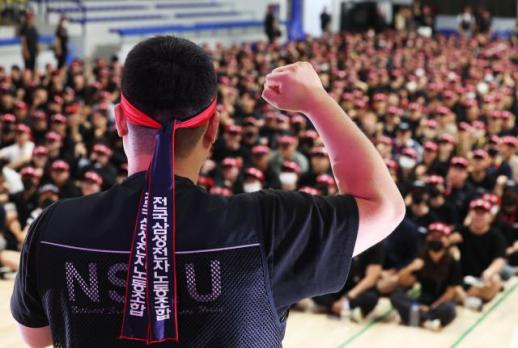 Samsung Electronics Union Cites Strike Losses as Leverage in Bonus Dispute Samsung Electronics’ union, which is in a dispute over performance bonuses, said production results in the foundry (contract manufacturing) business plunged 58.1% during nighttime hours on the day of a rally on the 23rd. It also said memory production results fell 18.4%. The union added an estimate that an 18-day general strike would cause more than 30 trillion won in damage to the company. In semiconductor fabs, a shutdown is not simply a delay in output; it can also reduce yield, the share of usable chips. If Samsung fails to deliver on time to major customers amid shortages of DRAM and NAND that have fueled the current boom, it could face large penalty payments. There is also a risk customers could shift orders away from Samsung. Samsung sits at the top of a vast semiconductor supply chain, and even a brief strike can ripple through that ecosystem. Ultimately, consumers can feel the impact. Using projected company losses as a bargaining weapon in a strike risks turning pressure into something closer to coercion. Capital and labor carry different risks, reflected in wages and bonuses. Investors accept the risk of losses in exchange for the right to pursue unlimited profit. Workers, in exchange for stable labor, receive wages rather than bearing the full downside. Even in today’s boom, Samsung’s semiconductor division posted large losses in 2023–2024, making future investment difficult to ignore. In a recent lunch with a source, the conversation turned to artificial intelligence. The takeaway was that AI now handles more than 90% of routine company work. A draft report is assigned to AI. After the draft is sent to other departments, feedback returns within an hour — also produced with AI. The expanded report is then consolidated again with AI. When an executive asks for additional items, AI is used to compile a final version. The entire process took less than half a day. AI produced both the draft and the final report, including collecting and analyzing data to extract meaning from the numbers. The CEO who received it then fed the full report into AI and issued a simple instruction: "Summarize only the key points and tell me again." About 10 people were involved along the way, but the question remains whether the report was written by those employees or by AI — and who actually understood it. As a practical matter, AI can end up knowing more than the people who touched the document. The story highlights AI’s productivity, but also how inefficient human workflows can be. It is not surprising that AI is evolving toward systems that operate with minimal human involvement. In semiconductor processes that handle hazardous chemicals, many robots are already at work. Factories where AI automatically runs production and management are no longer far-fetched, and such efforts are underway. Samsung is developing technology aimed at unmanned factories by 2030. AI would handle chip circuit design, while robots equipped with AI would manage toxic chemicals and move wafers among equipment. AI would also take over back-end steps such as inspection and fine assembly. If AI and robots replace workers, the idea of the “skilled worker” could fade. Companies may say robots are being considered to ease labor shortages, but over time the push for unmanned factories could be justified as a way to avoid friction with organized labor.* This article has been translated by AI. 2026-04-29 16:15:19