
Journalist

Lee Hugh
=
-
 Lee hosts lunch with minor-party, independent lawmakers, urges broader view in politics President Lee Jae-myung on April 29 invited lawmakers from minor parties and independents to the Blue House for a lunch meeting, including the Rebuilding Korea Party, the Progressive Party, the New Reform Party and the Social Democratic Party. Lee previously met leaders of both major parties at a Jan. 16 lunch that also included leaders of minor parties. On April 7, he held a meeting and lunch of a ruling-opposition-government consultative body on the people’s economy with Democratic Party leader Jung Cheong-rae and People Power Party leader Jang Dong-hyeok. It was the first time Lee invited all lawmakers from minor parties outside the negotiating blocs, along with independents, to a lunch meeting, the presidential office said, calling it a sign of his intent to communicate inclusively. Twelve lawmakers from the Rebuilding Korea Party attended, including floor leader Seo Wang-jin. The Progressive Party sent four lawmakers led by floor leader Yoon Jong-oh. The New Reform Party was represented by floor leader Cheon Ha-ram and lawmaker Lee Ju-young. Social Democratic Party leader and floor leader Han Chang-min attended, along with independent lawmakers Kim Jong-min and Choi Hyuk-jin, for a total of 21 lawmakers. New Reform Party leader Lee Jun-seok did not attend due to a scheduled visit to Busan and Ulsan. Basic Income Party leader Yong Hye-in also did not attend because of a standing committee review schedule for the Framework Act on Life Safety. From the presidential office, Chief of Staff Kang Hoon-sik and Senior Secretary for Political Affairs Hong Ik-pyo attended. Rep. Cho Jung-sik, a presidential special adviser for political affairs, also joined. ◆Minor-party floor leaders press for action on Pyeongtaek law, housing policy Regional issues including the Pyeongtaek Special Act and real estate policy were among the main topics. Seo said residents of Pyeongtaek have “endured major sacrifices for decades” for national security, citing the relocation of a U.S. military base and the hosting of the Navy’s 2nd Fleet. While a special support law exists, he said, “special support linked to the base relocation is still limited.” He said the law is operated as a temporary measure that has been repeatedly extended and called for converting it into a permanent law, asking for Lee’s attention and support. Yoon called for overhauling the long-term holding special deduction, saying it “undermines tax fairness” and causes a “lock-up” in property listings. He said the Progressive Party has already introduced a bill to revise the comprehensive real estate holding tax law after the president pointed to the need to better reflect holding-tax burdens on ultra-high-priced homes and address companies’ non-business land holdings. Yoon previously submitted, on April 8 with some Democratic Party lawmakers, an income tax bill to abolish the long-term holding special deduction and cut the lifetime cap on tax breaks available when selling a home to 200 million won. Cheon proposed budget support for the Jeonnam-Gwangju integration and a state responsibility system for lawsuits involving teachers. He said 57.3 billion won in funding essential to the integration was entirely cut during the review of the supplementary budget, comparing it to Lee having “arranged the marriage” of Jeonnam and Gwangju but then saying, “Pay for the wedding yourselves.” Cheon also said frontline teachers are left to handle malicious complaints and civil lawsuits without help, and urged a system so teachers would not have to go to police stations and courts when incidents occur. Han called for pushing an “online monopoly regulation law,” saying the Coupang issue involves not only the leak of personal information of tens of millions of people but also serious abuses against small merchants and violations of labor rights. He said it must be addressed responsibly at home, beyond being treated as a diplomatic matter. The presidential office took a cautious stance on the Fair Trade Commission’s decision to designate Coupang board chairman Kim Beom-seok as the head of a large business group in practice. In a briefing after the lunch, senior presidential spokesperson Kang Yu-jung, asked whether the designation could negatively affect South Korea-U.S. security and trade talks, said, “It was decided by the Fair Trade Commission based on its own laws and principles,” adding, “It is the commission’s decision.” ◆Lee urges unity on foreign, security issues; “Politics needs a broader view” In remarks after the floor leaders spoke, Lee said that even when countries fight over domestic issues, it is hard to find cases where they engage in “self-destructive acts” on external matters such as diplomacy and security. “Unfortunately, it seems some of those elements still remain within us,” he said. Lee added, “I am not saying that applies to anyone here,” but said the public would want politics to show the capacity to unite in times of crisis. Lee said the external environment is “very unfavorable,” adding that while domestic turmoil can be overcome with the country’s own strength, worsening external conditions are not easy to solve alone. He urged lawmakers to take a public-minded approach when viewing foreign relations. “Politics is, by nature, doing others’ work on their behalf,” Lee said. While pursuing political beliefs matters, he said what is truly important is a better life and future for the country and its people. “That is why politics needs a broader view,” he said. He said real politics is competing over what is better for the country and people and earning voters’ choices, despite differences and interests. “Of course, the biggest responsibility lies with me. I will also make efforts,” Lee said, asking for cooperation to “gather the nation’s strength” and overcome difficulties at home and abroad. To attendees, Lee said they likely had much to say and that he also had much he wanted to hear, promising to try to hold such meetings more often. The lunch menu included shrimp and radish rolls with garlic sauce, sweet pumpkin porridge, pan-fried sea bream and mung bean pancakes, braised short ribs topped with chestnuts and ginkgo nuts, mushroom pot rice and clam seaweed soup. The presidential office said the meeting was meant to convey solidarity and gratitude to lawmakers who have cooperated in efforts to overcome crises and stabilize state affairs, while stressing bipartisan cooperation on livelihood issues and legislation.* This article has been translated by AI. 2026-04-29 16:13:13
 -
 Insurers’ K-ICS Solvency Ratios Improve as Higher Rates Cut Liabilities Major insurers affiliated with financial holding groups posted broadly improved K-ICS solvency ratios in the first quarter, helped by rising interest rates that reduced insurance liabilities and by additional capital raising, the industry said. According to the insurance industry on Tuesday, Tongyang Life’s first-quarter K-ICS ratio rose to 185.8% from 127.2% a year earlier. KB Insurance’s ratio increased to 188%, while Shinhan Life and KB Life improved to about 200% and 277%, respectively. The K-ICS ratio measures whether an insurer can pay claims even after unexpected losses, serving as a gauge of financial strength. The main driver was higher interest rates. Insurers typically carry large long-term liabilities, and when rates rise, the present value of those liabilities falls, easing the balance-sheet burden and lifting solvency ratios. Company actions also contributed. KB Life increased sales of protection-type policies to build its contract service margin, or CSM, reflecting expected future profit from insurance contracts in present-value terms. Tongyang Life strengthened capital through steps including issuing subordinated debt. Looking ahead, the industry expects a shift from focusing on headline K-ICS ratios to managing solvency based on “core capital.” Starting next year, a system will separately assess the share of capital that can directly absorb losses, such as paid-in capital and retained earnings. An industry official said securing higher-quality capital will matter more than simply increasing capital.* This article has been translated by AI. 2026-04-29 16:12:17
 -
 Seoul Apartment Listings Diverge Ahead of Capital Gains Tax Surcharge Deadline With the deadline 10 days away for the end of a temporary suspension of heavier capital gains taxes on home sales, Seoul’s apartment market is showing a sharper split in how quickly listings are being cleared. In the Han River belt and outer districts, bargain-priced homes are being snapped up by end users, while transactions in the Gangnam area have largely stalled. According to the real estate big-data platform Asil, Seoul had 72,699 apartment listings as of the previous day. That is down for six straight weeks from a peak of 80,080 in the third week of March (March 16-22), meaning about 9.22% of total listings were sold or pulled from the market in roughly a month. The decline has been led by outer and midpriced areas. Listings fell by double digits in several districts, including Jungnang (-16.9%), Nowon and Gangbuk (each -13.4%), Guro (-12.9%), Dongjak (-11.5%) and Seongdong (-11.1%). The drop was attributed to newlyweds and first-time buyers, strained by the rental market, purchasing quick-sale homes mainly in the 600 million won to 1 billion won range. Gangnam has moved in the opposite direction. With land-transaction permit rules, tighter lending and owner-occupancy requirements combining to curb demand, the area remains in what the market calls a “transaction cliff,” where listings accumulate but deals do not follow. The gap is clearer in absorption rates. Using Ministry of Land, Infrastructure and Transport transaction data and Asil figures, the absorption rate in March for seven Han River belt districts — including Seongdong, Mapo, Yeongdeungpo, Dongjak and Yangcheon — was 36.9%, about 2.2 times the 16.6% recorded in four core districts: Gangnam, Seocho, Songpa and Yongsan. By district, Yangcheon saw 54.4% of new listings traded within the month, while Seocho recorded 7.3%. Yeongdeungpo (50.7%), Mapo (46.3%) and Dongjak (44.0%) also posted high absorption rates. Analysts attributed the polarization to differences in price levels and regulation. Major complexes in the Han River belt have median prices of 1 billion won to 1.3 billion won, limiting the impact of lending rules, while Gangnam’s 3 billion won to 4 billion won price range narrows the buyer pool. Owner-occupancy requirements have also raised barriers to entry. Inventory turnover showed the same pattern. In March, the Han River belt’s turnover rate was 7.22%, about 3.1 times the 2.31% rate in the four core districts, suggesting a faster “circulating” market outside Gangnam and a more stagnant one in the south. Even so, prices in Gangnam have not fallen much despite weak trading, and some complexes have shown signs of a slight rebound. Song Seung-hyeon, head of City and Economy, said, “For the government’s supply-inducing policies to work evenly across Seoul, a differentiated approach tailored to local supply and demand conditions is needed rather than uniform regulation.” He added, “The outer districts need expanded supply, while Gangnam needs measures to ease transaction bottlenecks.”* This article has been translated by AI. 2026-04-29 16:11:21
 -
 National Assembly Deputy Speaker Lee Hak-young Pledges Policy Support for Energy Shift National Assembly Deputy Speaker Lee Hak-young said on the 29th that he would do his best to reflect voices from the field in national policy so South Korea can move toward becoming a global leader in energy. Speaking at the '2026 Aju News Energy Forum' at the Press Center in Jung-gu, Seoul, Lee said the National Assembly would not spare legislative and institutional support needed for a successful energy transition and for building firm energy security. Lee called the reshaping of supply chains and a redesign of South Korea's energy strategy the country's most urgent and important national tasks. He said the international community is facing unprecedented instability in global energy supply chains and a rapid push toward carbon neutrality to address the climate crisis. "Energy is no longer simply an industrial driver; it is a core issue that determines the fate of national security and the economy," he said. For South Korea, with its manufacturing-centered industrial structure and heavy reliance on energy imports, he said a rapid reorganization of energy supply chains could be both a major crisis and an opportunity for a new leap forward. Lee said he was pleased that leading experts and industry leaders had gathered at a critical time, and he expressed hope that the forum would offer clear direction for South Korea amid global competition for energy leadership and spur active discussion of effective policy alternatives.* This article has been translated by AI. 2026-04-29 16:06:06
 -
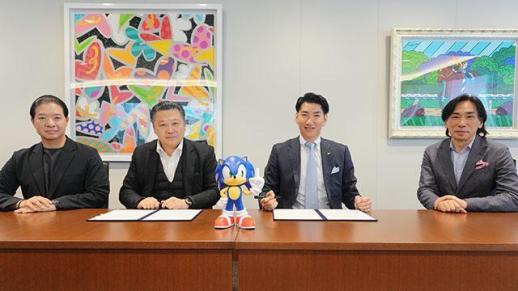 Sega Signs MOU With Thailand’s CP Group to Explore Entertainment Collaboration Japan’s game company Sega said it signed a memorandum of understanding on the 27th with Thailand’s CP Group (Charoen Pokphand Group) to explore entertainment collaboration in Thailand and nearby areas. The companies aim to combine Sega’s intellectual property and content-creation capabilities with CP Group’s broad business ecosystem to offer new, locally rooted entertainment in the region. The review will proceed in stages. In the initial phase, the companies will examine business development using Sega IP such as “Sonic” and “Angry Birds,” and consider a collaboration framework aimed at sustained growth. Later, they plan to pursue wider cooperation, including joint IP development targeting the Association of Southeast Asian Nations, business expansion using merchandise licensing and distribution networks, and potential expansion beyond Thailand. Sega President Haruki Satomi said in a statement, “Through this collaboration, we will further accelerate the global rollout of Sega IP and create new entertainment experiences for the ASEAN region and the world.” 2026-04-29 16:05:21
 -
 U.S. Blocks Chipmaking Equipment Exports to China’s Hua Hong, Tightening AI Chip Curbs U.S. authorities have moved to block equipment exports to Hua Hong, China’s No. 2 semiconductor foundry, raising pressure in the race over artificial intelligence chips. The step comes at a sensitive time ahead of President Donald Trump’s planned visit to China in May. U.S. blocks equipment exports over concerns about advanced processes Reuters reported on April 28 that the Commerce Department recently sent letters to U.S. equipment makers including Lam Research, Applied Materials and KLA, directing them to stop shipping certain tools to Hua Hong. The letters restrict exports of semiconductor equipment and other materials tied to two manufacturing facilities that U.S. officials believe could be used to produce China’s most sophisticated chips. Reuters described the move as the latest U.S. step to slow China’s advanced-chip development and an extension of policies aimed at protecting U.S. technological advantages in AI and other leading-edge chipmaking. The action follows reports of progress at Hua Hong. The company is China’s second-largest foundry after SMIC, and has been reported to be developing manufacturing technology for advanced chips, including AI semiconductors. Its affiliate, HLMC, has been reported to be preparing to introduce a 7-nanometer process at a Shanghai plant. SMIC is effectively the only company in China seen as capable of producing chips on a 7-nanometer process. Analysts say Washington is concerned that if Hua Hong also commercializes advanced production, China’s drive for semiconductor self-reliance could accelerate. There has also been speculation that Huawei is working with Hua Hong to shift some AI chip production that has been made through SMIC. Congress moves to tighten export-control laws, aiming to institutionalize China curbs The Hua Hong step fits into a broader U.S. effort to restrict technology flows to China on national security grounds, particularly in AI and advanced semiconductors. The House Foreign Affairs Committee recently approved a package of bills that includes the “Multilateral Alignment for China Technology Controls Act,” or MATCH Act, aimed at strengthening export controls in coordination with allies. The push has been viewed as Congress seeking to constrain the Trump administration after it signaled it could ease some China-related export restrictions ahead of an expected U.S.-China leaders’ meeting in May. Bloomberg called it “the most significant legislative attempt” to overhaul export-control policy since 2018, reflecting congressional dissatisfaction with what it described as a cautious approach by the administration. Pressure is not limited to semiconductors. The Wall Street Journal reported that dozens of Democratic House members recently urged Trump to ban Chinese automakers from producing and selling vehicles in the United States. They also called for maintaining existing tariffs and blocking Chinese companies from building U.S. production facilities. The request followed Trump’s recent comments that Chinese companies could be allowed to enter if they build factories in the United States and create jobs, as the possibility of Chinese electric-vehicle makers entering the U.S. market is being discussed ahead of the expected summit. Manus dispute adds to tech tensions ahead of expected summit With tensions rising across advanced industries including semiconductors and autos, observers say the expected May U.S.-China summit is likely to focus more on competition than cooperation. A recent dispute involving the Chinese AI startup Manus has underscored that trend. U.S. tech company Meta announced in December that it would acquire Manus for about $2 billion, but the Chinese government moved to block the deal, saying it would review whether the transaction fell under technology export controls. On April 27, it ultimately decided to ban the investment. The move was widely seen as part of China’s effort to prevent the overseas transfer of AI talent and technology assets. Some observers, however, say the two leaders may choose to emphasize more practical issues, such as purchases of Boeing aircraft or agricultural trade, rather than putting advanced-technology disputes at the center of the talks. * This article has been translated by AI. 2026-04-29 16:04:11
 -
 Korea Construction Groups Clash Over Expiring Small-Project Protections South Korea’s construction industry is heading toward a direct clash as a sunset clause approaches for a “protected segment” in the cross-entry market system. Specialty contractors are calling for permanent safeguards for their right to perform work directly, while general contractors argue the current framework should remain to promote fair competition. According to the Korea Research Institute for Construction Policy on Tuesday, Japan has maintained an “exclusive right” structure in which civil engineering and building contractors hold only oversight authority over specialty contractors, while construction rights require specific experience and qualifications. In the United States, California has also maintained exclusive rights for about 40 specialty building trades when general contractors take on single-trade projects. The institute said that in major overseas markets, specialty contractors — the main actors in direct construction — play a central role, while in South Korea, even after cross-entry was allowed, an unfair registration system has kept specialty firms in a vertical prime-subcontractor relationship. It said a fundamental review of the current production system is urgent. South Korea’s cross-entry system gradually allows general and specialty contractors to enter each other’s markets. To protect small specialty firms, general contractors are barred from winning specialty projects worth less than 430 million won. That protected segment is set to expire in December, and bidding is expected to be allowed starting next year. Specialty contractors say the change could accelerate general contractors’ entry into the specialty market because barriers differ sharply. General contracting licenses cover five categories, while specialty contracting licenses cover 14. Holding a general civil engineering and building license allows a firm to perform 11 of the 14 specialty categories, while specialty licenses — such as for ground formation and paving — have narrower scopes. The institute said the average competition rate for public bids on specialty projects in 2022 rose 3.91 times from 2020. The Korea Specialty Contractors Association and the Korea Mechanical Facilities Construction Association held a news conference Monday outside the Government Complex Sejong and submitted 408,391 petitions from member companies to the Ministry of Land, Infrastructure and Transport. The specialty contractors association said that since the system took effect, general contractors have entered “indiscriminately” into a specialty market where 99% of projects are under 1 billion won, and that the specialty sector is being encroached upon. In the National Assembly, a proposed amendment to the Framework Act on the Construction Industry has been introduced that would raise the protected threshold from 430 million won to 1 billion won. The Korea Construction Association, representing general contractors, is gathering petitions in opposition. It argues the system was introduced to eliminate harmful market segmentation and encourage sound competition, and that the market should not be distorted solely to protect specialty firms. The ministry has been conducting an analysis of the effects of market opening for specialty and general contractors since October last year, commissioning the Korea Research Institute for Human Settlements to carry out the study. * This article has been translated by AI. 2026-04-29 16:01:33
 -
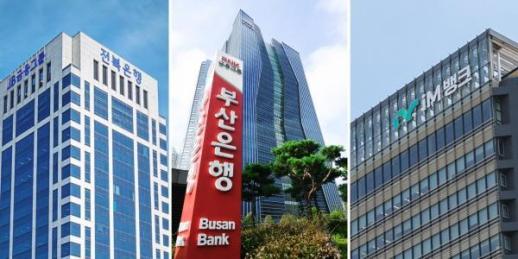 Regional Korean Banks Post Higher Profit as Delinquency Rates Surge Regional financial holding companies posted improved first-quarter results, but warning signs are flashing on asset quality as delinquency rates climbed to as much as four times the level at major commercial banks. According to the financial industry on April 29, BNK Financial Group is expected to report first-quarter net profit of 224.6 billion won, up 30.7% from a year earlier. JB Financial Group posted 166.1 billion won, up 2.1%, and iM Financial Group reported 154.5 billion won, up 0.1%. All three improved results on the back of noninterest businesses, but they are also facing rising delinquencies. JB Financial’s first-quarter delinquency rate rose to 1.63%, up 0.50 percentage points from the end of last year. iM Financial’s rate also increased to 0.86%. By bank, Jeonbuk Bank’s delinquency rate reached 1.65% and Gwangju Bank’s rose to 1.27%. BNK Financial has also been on an upward trend, posting a 1.14% delinquency rate in the fourth quarter of last year. That compares with an average 0.40% for five major commercial banks — KB Kookmin, Shinhan, Hana, Woori and NH NongHyup — meaning regional groups are running as high as four times that level. The strain is building in both household and corporate lending. At Jeonbuk Bank, the household-loan delinquency rate rose to 1.74%, while corporate-loan delinquencies jumped to 1.67%. Gwangju Bank’s corporate-loan delinquency rate climbed to 1.27%. Analysts link the trend to structural features of regional banks. Their small- and midsize-business lending accounts for about half of total loans, and their operations are concentrated outside the Seoul metropolitan area, making them more sensitive to local economic conditions. With weakness in real estate project financing and a manufacturing slowdown overlapping, the recovery in regional economies has been delayed, feeding into higher delinquencies. Rather than a new risk, the rise in delinquencies is being seen as a clearer expression of existing vulnerabilities during a regional slowdown. Delinquency rates have topped 1% across major industries including real estate and leasing, manufacturing and construction, with some sectors exceeding 2%. Financial industry officials expect conditions could worsen in the near term. If the slowdown persists and regional recoveries lag, delinquency rates may continue to rise. “Rising delinquency rates are unavoidable for the time being,” a financial industry official said. “There is a need to increase provisions to prepare for additional bad loans.”* This article has been translated by AI. 2026-04-29 15:56:12
 -
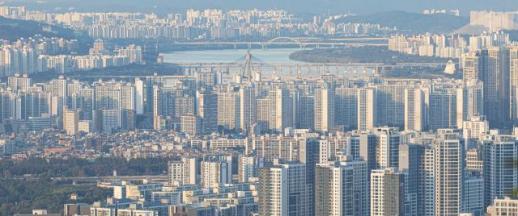 South Korea’s Capital Gains Tax Surcharge Returns, but Many Landlords Hold On With the end of South Korea’s temporary suspension of heavier capital gains taxes just 10 days away, analysts say the market is tilting toward holding rather than selling. With tax burdens expected to approach an effective top rate of 80%, many multiple-home owners are seen choosing gifts to family members or long-term holding instead of listing properties. Government officials have signaled additional steps, including changes to the long-term holding deduction and a broader overhaul of property taxes. But many in the market doubt those measures will be enough to reverse tightening supply. Attention is focused on whether the government will move to raise the cost of holding homes through further tax changes. Industry officials said that starting May 10, multiple-home owners selling homes in regulated areas will face surtaxes added to the basic capital gains tax rate of 6% to 45%: an extra 20 percentage points for owners of two homes and 30 percentage points for owners of three or more. With local income tax of 10% added, the effective top rate is expected to near 80%. The long-term holding deduction, up to 30% during the grace period, will also be excluded. Based on a 500 million won capital gain and a 10-year holding period, the tax burden is estimated to rise to about two to three times the level during the grace period. If a sales contract and down payment are completed by May 9, sellers can still receive a grace period through closing and registration: four months for Gangnam’s three districts and Yongsan, and an additional six months for newly designated regulated areas. Even so, market participants said options are narrowing for multiple-home owners, likely deepening the longer-term lockup of listings. Data from the real estate big-data platform Asil show that after President Lee Jae-myung suggested at a Cabinet meeting on April 6 that the grace period could be extended, the weekly decline in Seoul apartment listings briefly eased in the first week of April to minus 0.87% from minus 2.52% the prior week. The effect did not last more than two weeks. In the third week of April (April 20-26), the decline widened again to minus 2.55%. If a transaction freeze takes hold, the government’s next move is likely to be stronger property holding taxes, analysts said. In October last year, Deputy Prime Minister and Minister of Economy and Finance Koo Yun-cheol said, “Holding taxes are low and capital gains taxes are high, so the lockup of listings is large,” signaling a direction of higher holding taxes and lower transaction taxes. The government is also reviewing a tax package after the June local elections, centered on reducing the long-term holding deduction and strengthening differentiated holding taxes for nonresident-owned homes. Still, with official assessed values rising this year and holding taxes already expected to increase 30% to 50%, further hikes could trigger taxpayer backlash, critics said. They also said that as holding costs rise, more multiple-home owners may choose tax-minimizing alternatives such as gifting homes to children or switching to joint ownership rather than selling, limiting the policy’s impact. Court statistics show about 650 gift transactions in Gangnam’s three districts in the first quarter, indicating a continued shift toward gifting instead of selling despite tighter taxes. The trend is expected to deepen a split within Seoul’s housing market. In outer Seoul, fewer listings from multiple-home owners are appearing, while end-users squeezed by a tight rental market continue absorbing lower-priced homes. Experts are also watching whether demand spreads into nearby parts of Gyeonggi Province as monthly and long-term rental listings remain scarce. With limited alternatives due to a shortage of non-apartment supply, analysts said anxiety about being priced out of Seoul could spread across the greater capital region, fueling a “price matching” pattern in which outlying areas rise to catch up. Nam Hyuk-woo, a researcher at Woori Bank’s real estate research center, said homes that come to market due to government policy tend to be tenant-occupied, meaning that even if total listings rise, homes available for immediate move-in remain scarce, limiting any supply effect in mid- to lower-priced areas. He said the current price strength in Seoul’s mid- and lower-tier areas could extend to 600 million to 1 billion won apartments and to nearby parts of Gyeonggi Province where rental supply is tight, continuing the “price matching” trend. * This article has been translated by AI. 2026-04-29 15:54:54
 -
 Singapore Logistics Firm Eneco Energy to Buy Union Steel Unit Fastweld Singapore logistics company Eneco Energy said on April 27 it agreed to acquire Fastweld Engineering Construction Pte Ltd from Singapore-based Union Steel Holdings, which is involved in metal recycling and engineering. Fastweld, a unit of Union Engineering under Union Steel, provides procurement, maintenance and construction services. Through its investment holding company Eneco Singapore, Eneco Energy will buy all shares of Fastweld for S$4.3 million (about 536 million yen). Because Union Steel holds a 25% stake in Eneco Energy, the deal is considered a related-party transaction and requires approval at an extraordinary general meeting, Eneco Energy said. Union Steel said in February it had reached a basic agreement to sell Fastweld to Eneco Energy as part of a group restructuring and a shift of management resources to its core businesses. 2026-04-29 15:54:07