
Journalist

Lee Hugh
=
-
 S-Oil Jumps Nearly 12% as Crude Prices Surge on Stalled U.S.-Iran Talks International oil prices surged, lifting S-Oil shares by nearly 12%. According to the Korea Exchange, as of 2:22 p.m. on the 29th, S-Oil was trading at 132,900 won, up 14,200 won (11.96%) from the previous session. At the same time, SK Innovation was up 11,900 won (8.95%) at 144,900 won. Refining stocks were seen gaining as crude prices rose after U.S.-Iran ceasefire talks remained deadlocked, despite reports that the United Arab Emirates would leave the Organization of the Petroleum Exporting Countries, or OPEC. On April 28 (local time), ICE Futures Europe June Brent crude settled up 2.8% at $111.26 a barrel. On the New York Mercantile Exchange, June West Texas Intermediate rose 3.7% to $99.93. WTI briefly climbed back above $100 a barrel intraday for the first time since the 13th. Meanwhile, CNBC reported that the UAE’s decision to leave OPEC would weaken the group’s influence in the oil market and, over the longer term, could push international oil prices lower. The UAE is set to withdraw from OPEC and OPEC+ — OPEC and a broader alliance that includes Russia and 10 other major producers — effective next month on the 1st, a move expected to reduce OPEC’s pricing power.* This article has been translated by AI. 2026-04-29 14:41:26
 -
 Hanwha Aerospace Unveils Plan to Develop Korea’s ‘Meteor’-Class Missile Engine to Boost KF-21 Exports Hanwha Aerospace said it is laying groundwork to export Korean-made air-launched weapons by developing a homegrown counterpart to the propulsion technology used in Europe’s Meteor long-range air-to-air missile. The company said it aims to reduce heavy reliance on overseas suppliers in air-weapon technologies, strengthen South Korea’s self-reliant defense capabilities and improve export competitiveness for domestically developed fighters such as the KF-21. Hanwha Aerospace on April 29 held its “Hanwha Tech Academy 2026” event at Hanwha Building in Jung-gu, Seoul, and disclosed key capabilities tied to localizing air-launched weapons. The company highlighted development status and plans centered on a ducted-ramjet propulsion system, a core technology for advanced air weapons. A ducted ramjet generates thrust by burning solid fuel using air taken in during flight. Because it does not carry a separate oxidizer, it can load more fuel, extending range and enabling rapid acceleration and sustained high speed, the company said. The technology is widely reported to be used in MBDA’s Meteor missile. Meteor is described as flying at up to Mach 4 and intercepting aircraft beyond about 200 kilometers. Hanwha Aerospace said the importance of long-range air weapons has grown as integrated air defense networks have drawn greater attention in conflicts such as the Russia-Ukraine war and fighting in the Middle East, increasing demand for precision strikes from outside an adversary’s engagement range. Industry officials expect export competitiveness to improve if domestically developed air weapons are integrated on Korean fighters such as the KF-21 and sold as a package. Hanwha Aerospace said it has conducted research since 2005 with the Agency for Defense Development on key ducted-ramjet technologies, including propellants, gas generators and combustors. Based on that work, it plans to complete localization by 2033 under a government-led air-weapon program and begin mass production in 2036. Cho Jeong-tae, propulsion development team leader in Hanwha Aerospace’s PGM business division, said the company has built localization capabilities for key components including a nozzleless booster, gas generator and rocket propellants through 20 years of research with the defense research agency. “Especially, the oxidizer, which is core to missile propulsion, can be produced in Korea only by Hanwha,” Cho said. “As we also have the country’s largest propellant and propulsion-system manufacturing facilities, we will strengthen export competitiveness in the global fighter market through package technology development.” Hanwha Aerospace also introduced advanced artillery-shell technologies aimed at improving accuracy for 155mm rounds used by the K9 self-propelled howitzer. Precision-guided shells are described as intelligent munitions that can strike key enemy facilities accurately with fewer rounds. The company said the shells incorporate a combined navigation unit using GPS and an inertial navigation system, along with guidance and control equipment and tail fins. While conventional self-propelled artillery is optimized for area fire using large volumes of rounds, pairing it with precision-guided shells can enable point strikes similar to missiles, the company said. Hanwha Aerospace also presented a trajectory-correction fuze that uses GPS to adjust a shell’s flight path and improve accuracy. The company said the technology can address declining accuracy at longer ranges and can be used by replacing the fuze on existing ammunition. Both the precision-guided shell and the trajectory-correction fuze include advanced anti-jamming functions developed with domestic technology to counter enemy electronic interference, the company said. If localization of the advanced shell technologies succeeds, the company said it would allow rapid responses to changes in military requirements and could enable additional ammunition exports to countries that have adopted the K9. A Hanwha Aerospace official said the company will “actively participate in localizing advanced defense technologies based on cooperation with the government and partner companies,” contributing to self-reliant defense and expanded exports of South Korea’s defense industry.* This article has been translated by AI. 2026-04-29 14:37:37
 -
 LG Electronics posts record first-quarter revenue; home appliances and vehicle parts top 10 trillion won LG Electronics said improved performance in its core home appliance and vehicle components businesses pushed their combined quarterly revenue above 10 trillion won for the first time. In its finalized earnings released Tuesday, LG Electronics reported first-quarter operating profit of 1.6737 trillion won, up 32.9% from a year earlier. Revenue rose 4.3% to 23.7272 trillion won. It was the company’s highest first-quarter revenue on record and its third-highest first-quarter operating profit. Despite economic uncertainty, major businesses including home appliances and TVs supported the results, the company said. It added that steady growth continued in its vehicle components business, a key driver of business-to-business growth. LG Electronics said growth also continued in B2B, platform and direct-to-consumer experience (D2X) businesses aimed at improving profitability and the quality of growth. First-quarter B2B revenue was 6.5 trillion won, up 19% from the previous quarter and up 1% from a year earlier, accounting for 36% of total company revenue. First-quarter subscription revenue, including product and service sales, was 640 billion won, up 8% from the previous quarter and up 15% from a year earlier. The HS division, which handles home appliances such as washers and refrigerators, posted revenue of 6.9431 trillion won and operating profit of 569.7 billion won. Revenue was the division’s highest for any quarter. It posted an operating margin of 8.2% despite higher raw material prices and the impact of U.S. tariffs, the company said. LG Electronics said its strategy of targeting both premium and volume segments, while expanding online sales and appliance subscriptions, helped performance. For the second quarter, the company said it plans to sustain revenue growth by strengthening product lineups and expanding efforts in the Global South, while focusing on profitability through supply chain optimization and stronger cost competitiveness. It also said it will continue developing future growth engines including home robots and robot components. The MS division, which includes TVs, reported revenue of 5.1694 trillion won and operating profit of 371.8 billion won. Operating profit rose sharply from a year earlier and returned to the black from the previous quarter, the company said. LG Electronics cited strong premium sales and growth in its webOS platform business, along with more efficient marketing spending and reduced fixed costs. For the second quarter, it said it will prioritize responding to sports events and securing profitability, while expanding partnerships and continuing content investment for the webOS platform business. The Vehicle component Solutions (VS) division posted revenue of 3.0644 trillion won and operating profit of 211.6 billion won. Both were quarterly records for the division. The company said sales increased, led by European automakers, as premium in-vehicle infotainment solutions expanded to more vehicle models. LG Electronics said the division’s quarterly operating margin exceeded 6% for the first time since the unit was launched, calling it significant as the vehicle components business continues stable, order-based growth and becomes a steady cash-generating B2B business alongside home appliances. The Eco Solution (ES) division reported revenue of 2.8223 trillion won and operating profit of 248.5 billion won. The company said both fell from a year earlier due to weaker consumer sentiment tied to the Middle East war and higher labor costs from hiring for key businesses. LG Electronics said it plans to keep expanding region-tailored product sales, including unitary systems in North America and heat pumps in Europe, and to broaden non-hardware businesses such as installation, operation and maintenance. It also said it will expand its lineup of integrated solutions, including liquid cooling as a next-generation technology alongside air cooling, to improve energy efficiency and pursue opportunities in cooling solutions for AI data centers (AIDC). 2026-04-29 14:30:16
 -
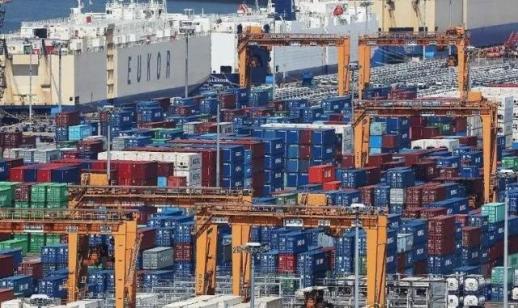 Korea’s SME Divide Widens as Exports Hold Up but Domestic Sectors Struggle Exports led by semiconductors, autos and shipbuilding have continued to recover, but domestic-facing industries such as real estate leasing, construction and wholesale and retail are seeing worsening cash conditions amid high interest rates and weak consumption. According to the financial sector on the 29th, the Industrial Bank of Korea said its delinquency rate for small and medium-sized enterprises in real estate and leasing stood at 1.28% at the end of the first quarter, based on principal and interest overdue by at least one month. That was up 0.74 percentage points from a year earlier and the highest level in 13 years since the first quarter of 2013 (1.36%). The rise is attributed to a combination of growing vacancies in commercial properties, stagnant rents and heavier interest burdens. Borrowers who once relied on rising collateral values are now facing shrinking rental income and mounting financing costs, eroding repayment capacity. Major commercial banks reported similar increases. Shinhan Bank’s delinquency rate in the sector was 0.35% at the end of the first quarter, the highest since it began compiling related data in 2021. Hana Bank’s was 0.57%, the highest in about 10 years since the second quarter of 2016, and Woori Bank’s was 0.41%, the highest since its data series began in 2019. The figures point to growing repayment pressure across domestic-demand sectors. An IBK official said, “The prolonged uncertainty in the domestic and global economy and worsening business conditions have weighed on overall domestic demand, which has also hurt the real estate leasing market.” Delinquency rates were also elevated in other sectors tied to domestic demand. IBK’s SME construction delinquency rate was 1.64% at the end of the first quarter, up 0.30 percentage points from 1.34% a year earlier. Wholesale and retail (1.07%) and food and lodging (1.40%) were also above 1%. Manufacturing, however, remained relatively stable. IBK’s delinquency rate for SME manufacturers fell to 0.86% in the first quarter from 0.92% a year earlier. The improvement in export-driven industries appears to have eased funding conditions for smaller suppliers, and some analysts said the weaker won has benefited certain exporters. A financial industry official said, “Even among small businesses, the on-the-ground economy feels completely different between manufacturing and domestic-demand sectors,” adding that polarization is deepening as the export rebound has not spread to local commercial districts, self-employed businesses and real estate leasing. 2026-04-29 14:29:21
 -
 DL E&C Stake in X-energy Jumps After Nasdaq IPO, Nearly Sixfold in Three Years DL E&C said its stake in U.S. small modular reactor developer X-energy has surged in value after the company’s successful Nasdaq listing, rising nearly sixfold in about three years. DL E&C said Tuesday that the value of its holdings increased to about 172 billion won after X-energy’s initial public offering. The stake was worth $20 million (about 30 billion won) when DL E&C joined X-energy’s Series C round in January 2023, meaning the value has grown about 5.7 times. The gain followed a sharp rise in X-energy’s share price after listing. X-energy began trading on Nasdaq on April 24 local time. Its IPO price was set at $23, above the top of the indicated range of $19. The stock closed at $29.20 on its first day and rose about 50% over the next three sessions, reaching $34.11 as of April 28. The IPO also set a record for fundraising by a nuclear power company, DL E&C said. X-energy raised more than $1 billion (about 1.475 trillion won) in the offering. The industry has attributed stronger SMR investment demand to rising electricity needs tied to the spread of artificial intelligence, the company said. X-energy, backed by the U.S. Department of Energy, is developing a fourth-generation SMR and holds high-temperature gas-cooled reactor technology that uses high-temperature helium gas for cooling. DL E&C said X-energy is working with Amazon, Dow and Centrica and has secured an 11-gigawatt pipeline. DL E&C said it has built a strategic partnership with X-energy as an early-stage investor, aiming to make SMRs a next growth engine and create synergies with its plant business. The company recently began deeper cooperation by taking on X-energy’s standardized SMR design work. The contract signed last month is worth $10 million (about 15 billion won) and is the first case in which a South Korean construction company is paid directly by an SMR developer to perform design work, DL E&C said. DL E&C said it plans to strengthen competitiveness across both large-scale nuclear plants and SMRs, building on its experience in projects including Hanbit units 5 and 6 and Shin Kori units 1 and 2. SMRs are small reactors with electric output of 300 megawatts or less and are viewed as a way to support carbon neutrality while providing stable power. The U.K. National Nuclear Laboratory has projected the global SMR market could reach about $500 billion (about 740 trillion won) by 2035. Yoo Jae-ho, head of DL E&C’s plant business division, said, “As X-energy is being valued highly by the market, we expect a virtuous cycle that leads to an increase in the value of our stake.” He added, “We will expand SMR-related investment to strengthen our global competitiveness.” 2026-04-29 14:28:25
 -
 Naver upgrades AI Cleanbot 3.0 to better block hateful, abusive comments Naver is tightening controls on hateful comments tied to suicide, death and accidents, saying the move is aimed at fostering a healthier comment environment. The company said April 29 it has completed an upgrade to its abusive-comment detection system, AI Cleanbot 3.0. Under the upgrade, Naver said it will focus on blocking comments that encourage disregard for life, including references to suicide, death and bodily harm, as well as comments that mock, demean or express hatred toward victims of incidents and accidents and their bereaved families. Naver said AI Cleanbot 3.0 has also strengthened detection by factoring in the context of news articles. It analyzes not only user comments but also article headlines and body text to more precisely identify malicious expressions in context. First introduced in 2019, AI Cleanbot has been updated through technical and policy changes to keep pace with new slang and evolving hate expressions. It initially focused on detecting profanity and vulgar language based on abusive keywords, but from 2020 it expanded to identify insulting expressions even without explicit profanity by using sentence context. Naver said it has continued to enhance the system to block sexually offensive expressions, hateful, demeaning or discriminatory remarks, and attempts to evade filters using symbols and characters. The company also said it has worked with related organizations, including reflecting the Korea Internet Self-Governance Organization’s hate-speech self-regulatory policy guidelines introduced in 2023. Kim Su-hyang, a Naver leader, said the company is continuously improving Cleanbot so it can detect not only profanity and vulgar language but also newly emerging hateful, demeaning and discriminatory expressions. She said Naver will intensively block malicious comments that encourage disregard for life or mock victims and bereaved families, while continuing to upgrade the technology by reflecting a range of opinions. * This article has been translated by AI. 2026-04-29 14:25:11
 -
 Loa&Co Holdings to Buy Aloys Stake, Take Control and Expand AI Media Platform Plans Loa&Co Holdings said it has agreed to acquire control of KOSDAQ-listed Aloys, a company focused on media platforms, as the Loa&Co group seeks new growth engines. The company said April 29 that it signed a share purchase agreement to buy a combined 6,994,990 common shares, or 20.20%, held by Aloys CEO Shin Jeong-gwan, the company’s largest shareholder, and research director Lee Si-young. The total purchase price is 11.2 billion won, or 1,600 won per share. Once the deal is completed, Loa&Co Holdings will become Aloys’ largest shareholder, it said. Loa&Co Holdings said it will keep Shin’s management structure in place in recognition of the current leadership’s expertise and will retain all employees to ensure business continuity. It also said it plans to quickly resolve a recent control dispute involving Aloys and build a stable management environment by forming a capable board. The company said it will strengthen the global competitiveness of Aloys’ core business in OTT devices while expanding into next-generation media platform businesses that incorporate artificial intelligence. It said it plans to target global markets through AI-based content recommendations and platform upgrades. An Aloys official said the transaction will change the largest shareholder and remove uncertainty over control. “Based on a transparent and stable governance structure, we will be able to accelerate execution of our mid- to long-term growth strategy,” the official said. A Loa Holdings Company Group official called the investment a strategic decision to build a stable portfolio and said the group will actively support efforts to resolve Aloys’ control dispute and normalize management. “By combining the group’s content capabilities with Aloys’ technology, we will help it leap into a company that leads the AI-based media market,” the official said. 2026-04-29 14:24:21
 -
 OpenAI Pushes Back on Growth Slowdown Concerns, Citing Strong Consumer and Business Demand OpenAI rejected concerns about slowing growth, saying its business is progressing smoothly overall. Bloomberg reported that OpenAI said in a statement Monday that both its consumer and enterprise businesses are performing strongly and that “internal sentiment is very positive.” The Wall Street Journal reported Sunday, citing unnamed sources, that OpenAI had fallen short of targets for new users and revenue, and that concerns had been raised internally about whether it can sustain the heavy costs of investing in artificial intelligence. The Journal also said OpenAI Chief Financial Officer Sarah Friar recently told executives that if revenue does not rise fast enough, the company could struggle to cover future AI data center costs. After the report, worries about the AI boom weighed on shares of OpenAI investor and partner companies including SoftBank, Oracle and CoreWeave during Monday’s session. OpenAI dismissed the Journal report as a “typical clickbait story.” In its statement, the company reaffirmed its stance on securing more computing capacity, calling it “what makes everything possible.” Earlier this month, OpenAI told investors in a memo that it is expanding compute capacity quickly and steadily and gaining an edge over Anthropic. It said the gap matters because compute resources have become a bottleneck for products, underscoring the need to keep investing in infrastructure. Still, Bloomberg reported that even before the Journal article, OpenAI had begun taking a more cautious approach to infrastructure spending. OpenAI has said it plans to pause a project underway in the United Kingdom, and Microsoft is set to lease a data center in Norway that had been planned for OpenAI. Bloomberg also reported last month that Oracle and OpenAI withdrew a key AI data center expansion plan for the “Stargate” project after fundraising talks were delayed.* This article has been translated by AI. 2026-04-29 14:22:45
 -
 Will Banks, Hospitals, Delivery and the Stock Market Close for May 1 Labor Day? Interest is growing over whether workplaces and essential services will close for May 1 Labor Day. Starting this year, Labor Day is a statutory public holiday, extending the day off to public-sector workers such as civil servants and teachers. That has prompted more people to confirm operating schedules for banks, schools, hospitals, parcel delivery and the stock market. The Ministry of Personnel Management said April 28 that the Cabinet approved a partial revision to the regulation on public holidays for government offices, designating Labor Day and Constitution Day as official holidays. The move follows earlier legal revisions, meaning May 1 Labor Day and July 17 Constitution Day will be treated as statutory public holidays starting this year. Labor Day was set in 1963 as “Workers’ Day” and has been observed as a paid holiday for private-sector employees. Civil servants and teachers, who are not covered by the Labor Standards Act, were excluded, fueling fairness concerns. The name was changed to “Labor Day” in November, and this year’s public-holiday designation further expands coverage. This year, Labor Day falls on a Friday. With the weekend of May 2-3 and Children’s Day on May 5, workers who take one day of leave on May 4 can take five consecutive days off, increasing interest in how to use the early May break. Not all businesses and facilities will close. Government offices and schools will observe the holiday, but hospitals, pharmacies, big-box retailers and restaurants may operate depending on their policies. For medical services, operating hours can vary by facility, except for emergency rooms, on-duty pharmacies and designated holiday clinics, so visitors are advised to check in advance. Bank branches typically close on public holidays, though some services may remain available through mobile and online banking and ATMs. The securities market also generally closes on public holidays, so investors with trading or withdrawal plans are advised to confirm trading availability and settlement schedules ahead of time. Parcel delivery requires extra attention. Although Labor Day is now a statutory holiday, pickup and delivery schedules can differ by courier, logistics center and online retailer. Some companies are separately announcing cutoff dates and staggered delivery plans to reflect the Labor Day and Children’s Day period, and customers are advised to check schedules before ordering fresh food or urgent items. Holiday work pay is also drawing attention. Article 56 of the Labor Standards Act requires employers to pay at least an additional 50% of ordinary wages for up to eight hours of work on a holiday, and at least an additional 100% for hours beyond eight. For example, an employee who works eight hours on Labor Day, a paid holiday, is entitled to paid-holiday wages, wages for the hours worked and the holiday premium. For salaried workers, paid-holiday pay is often already included in monthly wages, so the method for calculating additional pay may differ from hourly or daily wage systems. Because calculations vary by work arrangement and pay structure, employees should review workplace rules and their employment contracts. Another point of confusion is the difference between a “substitute public holiday” and “holiday substitution.” Labor Day and Constitution Day are included in the substitute-holiday system when they fall on a weekend or overlap with another public holiday. However, the Ministry of Employment and Labor says employers are not allowed to have employees work on Labor Day and then unilaterally designate another day off in its place, because Labor Day is specified as a paid holiday on May 1 under the Labor Standards Act. In other words, if Labor Day falls on a weekend, an additional substitute holiday may be created, but an individual workplace cannot replace the May 1 holiday by assigning a different day off at its discretion. Experts advise workers to confirm in advance whether they are scheduled to work, how holiday pay will be calculated, and whether key institutions will close. Medical visits, financial transactions, parcel deliveries and stock trading may be affected depending on how the public holiday is observed.* This article has been translated by AI. 2026-04-29 14:21:40
 -
 Reform Party floor leader urges budget support for Jeonnam-Gwangju integration, state-backed legal aid for teachers Cheon Ha-ram, floor leader of the Reform Party, on the 29th proposed central government budget support for the Jeonnam-Gwangju integration and a state-backed system to handle lawsuits involving teachers. Speaking at a luncheon meeting at Cheong Wa Dae that morning hosted by President Lee Jae-myung for lawmakers from non-negotiating parties and independents, Cheon said that during the review of a supplementary budget, 57.3 billion won in “essential” funding for the Jeonnam-Gwangju integration was cut in full. He said the money was needed for steps such as integrating administrative networks and updating building registers. “President Lee Jae-myung arranged the marriage between Jeonnam and Gwangju, but it’s not right to tell them to cover the wedding costs on their own,” Cheon said, arguing that the central government should fund the procedures required for the integration. On a state responsibility system for teacher lawsuits, Cheon said the problem lies in the current setup. He said frontline teachers are expected to handle malicious complaints and then fend for themselves when those disputes escalate into criminal complaints, accusations or civil suits. Calling it a system that leaves teachers to shoulder the burden alone, Cheon urged the government to pursue a policy so that, when incidents occur, teachers do not have to spend time going to police stations and courts.* This article has been translated by AI. 2026-04-29 14:20:46