
Journalist

Lee Hugh
=
-
 Samsung C&T Unveils 270-Degree Han River View Design for Apgujeong District 4 Rebuild Samsung C&T Corp.’s construction unit, which has entered the bidding for the Apgujeong District 4 reconstruction project, on Tuesday unveiled a design proposal developed with internationally known architects. The plan includes collaboration with high-tech architecture figure Norman Foster and landscape architect Peter Walker, the company said. According to Samsung C&T, the proposal uses Foster + Partners’ view-analysis solution, CYCLOPS, to optimize building placement on the site. To improve views even from lower floors, the company said it would introduce high pilotis up to 15 meters (49 feet) tall to reduce visual obstruction of the Han River. Inside units, Samsung C&T said it would remove living-room columns and install frameless “round-corner IMAX windows,” aiming to deliver an average 20.5 meters (67 feet) of 270-degree panoramic Han River views per household. Terraces that were planned for only seven units under an earlier design would be expanded to all member households, it said. The company also presented an “inside-out facade,” in which unit terraces become a defining exterior feature. Samsung C&T said it would use a cantilever structure with projections of up to 4.5 meters (15 feet), creating layered setbacks, and vary terrace designs in three-floor increments so the complex appears like a single large sculpture. Samsung C&T said it would install a signature dual structure with 25-meter (82-foot) spans and a height of 16.5 meters (54 feet), and build a community hub around it offering 105 programs, including fitness facilities and indoor and outdoor swimming pools. The community space would total 18.5 square meters (199 square feet) per household, which the company said would be the largest among reconstruction complexes in South Korea. Separately, it said it would provide all member households with a dedicated storage space called a “Bespoke Studio Room,” sized at 10.9 square meters (117 square feet) per household. “This proposal goes beyond a flashy exterior and focuses on improving the quality of life for the members who will live here,” said Lim Cheol-jin, head of Samsung C&T’s housing sales division. He said the company would aim for the fastest move-in timeline in Apgujeong, citing its No. 1 ranking in construction capability for 12 consecutive years and what he called its ability to execute projects without work stoppages.* This article has been translated by AI. 2026-04-29 10:09:31
 -
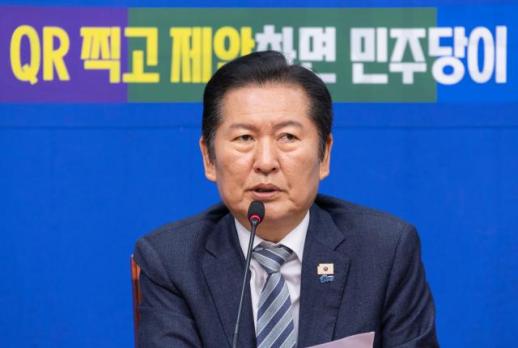 Jung Cheong-rae says Democrats will push special prosecutor after probe panel ends Jung Cheong-rae, leader of the Democratic Party, said a National Assembly fact-finding panel is exposing what he called prosecutors’ fabricated indictments tied to the Yoon Suk Yeol administration, and vowed to seek a special prosecutor as soon as the panel’s work ends. Speaking at a party leadership meeting at the Assembly on Tuesday, Jung said hearings by the special committee had “opened wide the door to the truth” that the Ssangbangwool North Korea remittance case was manipulated. He said the panel has issued three reports and held four hearings that revealed patterns of what he described as fabricated prosecutions. Jung said evidence including recordings, Excel files and alleged manipulation of statements has emerged, and that the committee confirmed “clear” signs of direction or involvement at the administration level across the cases it reviewed. He said he was “shaking with anger” at what he called state violence aimed at a single person and actions that trampled democracy, the rule of law and the constitutional order. Saying the committee’s work has brought the public closer to the truth, Jung said the full scope of the allegations must be uncovered and those responsible punished. He said the party would, as promised, move quickly to launch a special prosecutor immediately after the committee wraps up to “reveal all the truth” and bring those responsible before the courts. Jung also criticized the outcome of an appeals court ruling involving first lady Kim Keon Hee, who on April 28 was sentenced to four years in prison and fined 50 million won. He said the long-running Deutsche Motors case had resulted in a guilty verdict, but called the decision “far removed” from public sentiment. He said allegations that Kim improperly intervened in the People Power Party’s nomination process were not recognized as any offense. He also said he could not accept the appeals court’s decision to consider sentencing factors such as a first offense, age and health. Jung noted that a second-instance verdict was scheduled Tuesday in Yoon’s case on charges of obstructing the execution of official duties. Calling it the first ruling since a special court division focused on insurrection cases was formed, he said he hoped for a decision that would restore the rule of law. He added that he would seek to fully uncover what he called the truth about “insurrection, foreign collusion and state-affairs meddling” by Yoon and Kim and ensure accountability in court.* This article has been translated by AI. 2026-04-29 10:08:41
 -
 Dong-A Pharmaceutical Promotes Orthomol’s Targeted Nutrition for Seasonal Transitions As spring brings wider day-to-night temperature swings, more people report weakened immunity and accumulated fatigue. With outdoor activity increasing, attention is also growing on “precision targeted nutrition” tailored to an individual’s physical condition. German premium vitamin brand Orthomol is positioning its products around molecular orthomolecular medicine, emphasizing not just replacing missing nutrients but supplying them at concentrations designed to match what the body needs. According to Dong-A Pharmaceutical on the 29th, Orthomol Immun contains B vitamins at levels of up to 1,533% to support nutrients needed for energy metabolism during periods of heavy physical exertion. The company said it considered that while excess water-soluble B vitamins are excreted, higher activity periods may require maintaining a certain blood concentration. The formula is not built as a blanket high-dose mix of all nutrients, the company said. Instead, it is designed around levels considered appropriate for each nutrient’s function, combining vitamin C, vitamin E, selenium and zinc to address both energy metabolism and immune function. Fatigue after spring outdoor activity can be linked not only to muscle strain but also to reduced immune function from rapid energy use. As participation rises in outdoor sports such as golf, marathons and tennis, interest is also increasing in stamina management and recovery, the company said. A Dong-A Pharmaceutical official said nutrient amounts are calculated based on recommended intake levels, but “in reality, additional needs can arise when immunity drops or the body’s balance changes.” The official added that precise nutrition management tailored to physical condition is important beyond simple supplementation.* This article has been translated by AI. 2026-04-29 10:07:55
 -
 U.S. Treasury chief touts Iran sanctions, says tens of billions in revenue blocked U.S. Treasury Secretary Scott Bessent highlighted what he called the results of sanctions targeting Iran’s finance, energy and logistics networks, reaffirming a policy of “maximum pressure.” With U.S.-Iran ceasefire talks stalled, Bessent has repeatedly pointed to economic sanctions in a public push. In a post Monday on X, Bessent said the Treasury Department, through an operation he called “Economic Fury,” targeted Iran’s international shadow financial infrastructure, access routes to cryptocurrency, the so-called “shadow fleet,” weapons procurement networks, funding channels for regional proxy forces, and independent Chinese “teapot” refineries that support Iran’s oil trade. He said the measures blocked “tens of billions of dollars” in revenue that could be used to finance terrorism. Bessent added that under the president’s “maximum pressure” policy, prices in Tehran have doubled and the currency has sharply weakened. Bessent also said Iran’s main crude export terminal, Kharg Island, is expected to near its storage limits, forcing the Iranian government to cut oil production. He said that could mean additional revenue losses of about $170 million a day and could cause permanent damage to Iran’s oil infrastructure. He said Treasury will continue the maximum-pressure campaign and warned that individuals, ships and institutions that help illegal flows of money to Tehran risk U.S. sanctions. A day earlier, Bessent warned that individuals or companies doing business with sanctioned Iranian airlines could also face sanctions. “Transactions with sanctioned Iranian airlines carry the risk of U.S. sanctions,” he wrote, urging governments to take steps to ensure their companies do not provide services — including jet fuel, catering, landing fees or maintenance. He said Treasury will maintain maximum pressure and would act against third parties that help or carry out Iran-related transactions, adding that individuals, ships and institutions supporting illegal funding flows to Tehran could be sanctioned. With ceasefire talks between the United States and Iran at an impasse, the United States appears to be increasing economic pressure on Iran in an effort to gain leverage in any future negotiations.* This article has been translated by AI. 2026-04-29 10:07:06
 -
 Samsung Display, LG Display win SID Display of the Year awards Samsung Display and LG Display said Tuesday they have each won the Society for Information Display’s “Display of the Year” award. SID is a leading global display industry conference that draws about 7,000 experts, researchers and professors. “Display of the Year” is the top honor among SID’s annual Display Industry Awards. Samsung Display was recognized for its tri-fold smartphone display, first unveiled last year, which the company said demonstrated both high performance and improved portability. SID announced the award Monday (local time), praising the tri-fold’s “immersive 10-inch large screen,” saying it opened new possibilities for productivity, creativity and entertainment. SID also said advanced materials helped maintain thickness while strengthening durability in the dual-folding structure. Samsung Display said the tri-fold module is 0.44 millimeters thick, the thinnest among its foldable panels, while offering strong durability. In internal folding tests, the company said the panel showed no screen issues after 500,000 folds at room temperature. The company also cited work to address “sliding,” a persistent issue in foldable panels that is known to worsen by up to 1.6 times in a tri-fold structure. Samsung Display said it developed a next-generation adhesive and applied an optimized stress-distribution design to improve durability. Lee Ho-jung, vice president and head of product planning for the small and medium display business, said the award again recognized Samsung Display’s technology leadership in the foldable market. He said the company was the first in the world to commercialize a multi in-folding display that folds inward twice, reaffirming the potential to expand the foldable market through new form factors. LG Display’s gaming OLED panel was also honored, with SID citing it as a shift in the gaming display paradigm, the company said. LG Display said its 27-inch 540/720Hz (DFR) OLED gaming monitor applies its proprietary “DFR” technology, allowing users to choose modes as needed. The high-refresh-rate mode is aimed at genres that require rapid screen changes, such as first-person shooters and racing games. LG Display said it delivers QHD resolution and a 540Hz refresh rate at the same time, providing a viewing experience optimized for graphics-intensive games. The panel also received VESA’s top-tier “ClearMR 21000” certification, LG Display said. Choi Young-seok, LG Display’s chief technology officer, said the company will continue to research and develop innovative OLED technology for gaming displays, building on its differentiated technical capabilities. The awards ceremony is scheduled to be held at Display Week 2026, the world’s largest display-focused exhibition, which opens May 3 in Los Angeles.* This article has been translated by AI. 2026-04-29 10:04:09
 -
 South Korea FTC to Revise Consumer-Centered Management Designation Rules South Korea’s Fair Trade Commission will revise terminology and procedures in its Consumer-Centered Management (CCM) business designation system, including renaming the certification review body as a designation review body and replacing “certificate” with “designation confirmation.” The FTC said April 29 it will accept public comments through June 8 on a proposed revision to the enforcement decree of the Framework Act on Consumers. The proposal follows amendments to the law promulgated in March. Under the plan, related terms will be aligned with the revised law: “certification review institution” will become “designation review institution,” “certificate” will be replaced by “designation confirmation,” and “certification work” will be changed to “designation review work.” The FTC will also elevate to the enforcement decree an existing notice requiring businesses to pay review fees directly to the Korea Consumer Agency. The designation review institution would be required to submit to the FTC each year a plan for how the fees will be used and a report on actual spending. The proposal also changes how members of the Consumer Policy Committee’s expert panel are selected. The current enforcement decree provides that government members must be senior officials or equivalent, and that private-sector members are appointed by the prime minister. The FTC said the process has been criticized as too rigid, making it difficult to run the panel quickly and flexibly. Under the revision, the requirement for nominating government members would be removed, and private-sector members would be appointed by the FTC chair rather than the prime minister. * This article has been translated by AI. 2026-04-29 10:03:19
 -
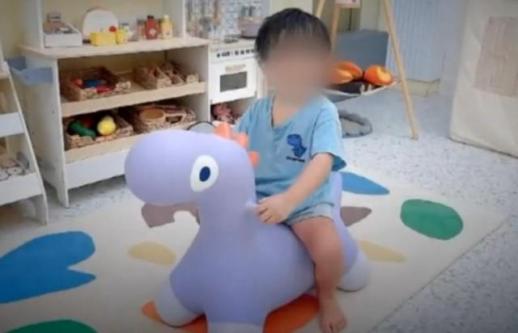 Autopsy: 3-year-old in Yangju died from head injury caused by external force A 3-year-old child who died in a suspected abuse case in Yangju, south of Seoul, was killed by a head injury caused by an external impact, police said. Police said April 29 that the National Forensic Service concluded the boy, identified only as A, died of head trauma and that the injury appeared to have been caused by nonaccidental external force. The agency had earlier said in an initial verbal assessment that it was difficult to definitively determine whether the head injury was caused by abuse. The autopsy findings later clarified that the death resulted from an external impact. Investigators also found signs of bleeding in the child’s abdomen that appeared to have occurred in the past. Police said they will continue investigating the possibility the child was abused over an extended period. The child suffered a severe head injury at a home in Okjeong-dong, Yangju, at about 6:44 p.m. on April 9 and was taken to a nearby hospital. He underwent surgery for a brain hemorrhage but died five days later at about 11:33 p.m. on April 14. Gyeonggi Bukbu Provincial Police Agency said it arrested and forwarded the case on April 17, sending the child’s father, identified only as B, to prosecutors on suspicion of child abuse resulting in death. Police also searched the couple’s home and vehicle. During the investigation, police found messages exchanged by the couple over the past two years that they believe describe abuse of their son under the pretext of “discipline,” and are treating them as evidence of long-term abuse. B’s wife is being investigated without detention, with police citing that the family has multiple children. 2026-04-29 10:01:26
 -
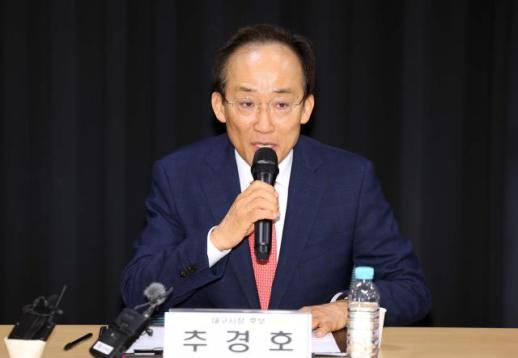 Choo Kyung-ho Resigns as Lawmaker to Run for Daegu Mayor, Vows to Rebuild Conservatives Choo Kyung-ho, the People Power Party’s candidate for Daegu mayor, said April 29 he submitted his resignation as a National Assembly member to run in the local election, pledging to restore political balance starting in Daegu. In a statement, Choo, a three-term lawmaker from Dalseong County in Daegu, said, “Korea needs a counterweight to protect the country. I will try to reestablish that balance starting from Daegu.” He called the local election “an important turning point for Korea’s democracy,” adding that “with power tilted to one side,” the country needs a counterweight. “I will try to reestablish that balance starting from Daegu,” he said, adding that he wants to prove “the conservative camp’s economic competence” through results and to “be the start of rebuilding conservatism.” Choo also reflected on his decade in parliament, citing “fierce committee meetings” and late nights in the lawmakers’ office building. He said his party and Dalseong County were always “side by side” before his name and that it was a source of pride. He said that while the lawmaker’s badge weighed “only 6 grams,” the responsibility was hard to measure, and that “even today, 10 years later, that weight has not become any lighter.” He thanked fellow lawmakers for sharing the burden. Choo said he felt heavy and apologetic about stepping away, recalling efforts to protect livelihoods and plan for the future under what he described as a difficult National Assembly in which the Democratic Party holds a majority. “Even if I’m physically farther away, I believe the path we walk is ultimately one,” he said, adding he would keep working to improve people’s lives “in the National Assembly and in the field.” The deadline for lawmakers running in the local election to resign is May 4. If an incumbent resigns by April 30, a by-election in the district will be held alongside the June 3 local elections. If the resignation comes May 1 or later, the by-election will be held in April next year.* This article has been translated by AI. 2026-04-29 10:00:38
 -
 Hyundai Rotem Shares Jump 8% on Poland K2 Tank Local Production Deal Hyundai Rotem shares surged more than 8% for a second straight session after the company said it signed a cooperation agreement tied to local production of K2 tanks in Poland. As of 9:43 a.m., Hyundai Rotem was trading at 265,500 won, up 21,000 won (8.59%) from the previous session, according to the Korea Exchange. The stock rose 5.84% a day earlier. Hyundai Rotem said Tuesday it signed a local production and maintenance cooperation agreement with Bumar-Labedy, a defense company under Poland’s state-run defense group PGZ, covering the Polish-version K2 tank (K2PL) and an armored recovery vehicle. The company said the agreement sets out specific execution measures for a core project under the second implementation contract for Poland’s K2 tanks signed in August last year, and is expected to support efforts to expand defense orders in Europe by building a local production base. With major European countries increasingly seeking local production in defense procurement, Hyundai Rotem plans to use Poland as a production hub for K2 tanks to pursue additional orders. The company said local production of related equipment, including a combat engineering vehicle and an armored bridge-layer, will be discussed in stages. Lee Jaekwang, an analyst at LS Securities, said he expects the stock to rise on increased new defense-export orders rather than further gains in profitability. He said the company appears to be aiming to boost K2 exports by using production hubs in Europe-Poland, Latin America-Peru and the Middle East-Iraq. * This article has been translated by AI. 2026-04-29 09:57:07
 -
 South Korea to Revamp Fintech Support, Add Incentives and One-Stop Help Desk The Financial Services Commission said it will overhaul its fintech support programs, naming the sector a key growth priority as the financial industry undergoes major change. The FSC said it held an event titled “Fintech, a Place for Connection” on Tuesday, chaired by FSC Chairman Lee Eok-won. The gathering brought together fintech firms and aspiring founders, financial companies, investors and policy finance institutions to share examples of successful cooperation. “Over the past decade, fintech companies have brought innovation to our financial industry,” Lee said. He added that advances in artificial intelligence are not only accelerating change but also “fundamentally reshaping how finance works,” putting the industry at another turning point. To spur growth, the FSC said it will revamp its support projects and designate regional and youth entrepreneurship, along with AI transformation (AX), as priority areas. It plans to offer incentives such as extra points in selecting recipients, dedicated budget allocations and additional support for companies with strong results. The FSC also said it will form public-private consultative groups by region, centered on existing local financial infrastructure such as financial firms, local governments and startup support organizations. The goal is to develop fintech models linked to key local industries and to back the launch and growth of differentiated fintech startups. In addition, the FSC said it will set up a fintech support help desk. It is expected to connect FSC programs, partner searches through financial firms’ fintech labs, funding support from policy finance institutions and startup assistance offered by local governments. “Innovation often begins by connecting different ideas and people,” Lee said, pledging continued support so financial companies and investors can help sustain fintech firms’ ongoing challenges. * This article has been translated by AI. 2026-04-29 09:56:19