
Journalist

Lee Hugh
=
-
 South Korea’s Kospi Hits Record Close After Briefly Topping 7,400 The Kospi extended its rally after the once-unthinkable “7,000” level became reality, briefly topping 7,400 during the session and setting another record. Gains eased late in the day as profit-taking emerged. According to the Korea Exchange on May 6, the Kospi closed up 447.57 points, or 6.45%, at 7,384.56. It opened at 7,093.01, up 156.02 points, or 2.25%, from the previous session, touched the 7,400 level, then gave back part of its advance to finish in the 7,300 range. Foreign investors drove the move, posting net purchases of 3.1346 trillion won, the largest on record. Retail investors and institutions were net sellers, unloading 572.4 billion won and 2.3126 trillion won, respectively, as they took profits. Most heavyweight stocks rose. Samsung Electronics gained 15.27%, SK hynix 11.61%, SK Square 11.81%, Hyundai Motor 2.23%, LG Energy Solution 2.01%, Doosan Enerbility 0.24% and Samsung Electro-Mechanics 0.44%. Hanwha Aerospace fell 1.57%. Lee Kyung-min, a researcher at Daishin Securities, said the surge in the top three stocks by market capitalization — Samsung Electronics, SK hynix and SK Square — led the index higher. But he noted the rally was concentrated in large caps: 195 issues rose, nine were unchanged and 691 fell, even as the Kospi jumped on a gap-up open. The Kosdaq ended lower. It fell 3.57 points, or 0.29%, to 1,210.17 after opening up 7.16 points, or 0.59%, at 1,220.90. The index later turned negative and at one point slipped below 1,200. On the Kosdaq, retail investors were net buyers of 610 billion won, while foreigners and institutions sold 63.3 billion won and 543.8 billion won, respectively. Moves among Kosdaq heavyweights were mixed. EcoPro BM rose 6.73%, EcoPro 4.30%, Rainbow Robotics 3.07% and HLB 1.64%. Alteogen fell 2.41%, Samchundang Pharm 1.59%, Lino Industrial 3.89%, Kolon TissueGene 1.15%, ABL Bio 3.92% and LigaChem Bio 2.37%.* This article has been translated by AI. 2026-05-06 18:07:15
 -
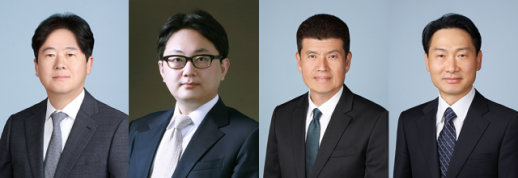 Yulchon Expands Audit Board Pre-Consulting and Audit Review Team 법무법인(유) 율촌은 감사원과 중앙부처·지방자치단체·공공기관의 사전컨설팅 제도가 기업과 이해관계자까지 확대·활성화되는 흐름에 맞춰 기업의 행정 리스크를 종합 지원하기 위해 조직을 ‘감사원 사전컨설팅&감사 진단팀’으로 확대 개편하고 고도화된 서비스를 본격화한다고 6일 밝혔다. 사전컨설팅은 관공서가 행정업무를 집행하는 과정에서 처분이나 조치 이전 단계에 감사원에 의견을 구하는 제도다. 법령이나 규정이 불명확하거나 현실과 맞지 않고 선례가 없어 이견이나 다툼이 생겼지만 감사 부담으로 판단이 어려운 경우, 사전에 의견을 받아 처리하면 면책을 받을 수 있고 기업은 사전에 권리 구제를 받을 수 있다고 율촌은 설명했다. 율촌은 이 제도가 개발사업, 공공조달, 투자유치, 민투사업, 공장 신·증설, 산업단지 조성, 도시개발, 환경·에너지·전력, 국세, 지방세 등 행정 전 분야에서 활용될 수 있다고 밝혔다. 입찰, 계약 및 설계변경, 사업승인 등 인허가, 개발행위, 각종 건설공사, 도시개발계획, 부담금, 조세 등을 둘러싼 이견이 있을 때 유용하다고 덧붙였다. 감사원은 사전컨설팅 신청권을 관공서의 장 중심에서 기업과 이해관계자도 사실상 소속 단체나 협회를 통해 신청할 수 있도록 감사원 사전컨설팅 제도 운영규정(감사원 훈령)을 5. 4.자로 개정·시행했다(감사원 홈페이지 게재). 율촌은 이에 따라 민간기업의 감사원 사전컨설팅을 비롯해 중앙부처·자치단체·공기업 등 공공기관 사전컨설팅 수요가 늘 것으로 예상했다. 사전컨설팅과 감사·조사 리스크, 내부통제 등 기업활동 전반에서 체계적인 진단과 대응 필요성도 커지고 있다고 했다. 율촌은 원스톱 전문 서비스를 제공할 준비를 마쳤다며 주요 서비스로 △감사원·중앙부처·지자체·공공기관 사전컨설팅 및 감사·조사 진단 △적극행정·내부통제 자문 △기업 행정리스크 사전진단 등을 제시했다. 팀은 부동산건설그룹 대표 김남호 변호사, 조세그룹 대표 김근재 변호사, 최성호 전 감사원 사무총장, 감사원 지방행정감사국·공공기관감사국·재정경제감사국·특별조사국 등에서 수석 감사관으로 근무하며 행정 전반 경험을 쌓은 김실근 고문·세무사를 중심으로 운영된다고 율촌은 밝혔다. 국방 및 공공계약·조달 분야의 정원 변호사, 민간투자사업 및 건설행정 분야의 김태건 변호사, 건설클레임 분야의 정유철·송민경 변호사, 도시정비·개발 분야의 이강만 변호사, 국세 사전진단 및 세무조사 대응 분야의 임정훈 세무사도 핵심 멤버로 참여한다. 또 공공조달·방산, 부동산 개발·금융, 건설 분쟁·제재, 도시계획·인허가, 국세·지방세·관세, 금융규제, 환경에너지, 의료제약, 지적재산권, 공정거래 등 행정업무 전반의 실무 경험이 풍부한 전문가들과 고문단이 함께 업무를 수행한다고 했다. 율촌 관계자는 “율촌 감사원 사전컨설팅&감사진단팀은 감사원·행정기관·공공기관의 정책 및 감사기준, 감사 방향을 정밀하게 분석한다”며 “이를 기반으로 종합적이고 체계적인 사전컨설팅과 감사·조사 리스크 진단 및 대응 역량을 갖춘 것이 강점이며, 기업과 공공기관이 안심할 수 있는 최적의 대응 시스템을 구축했다”고 말했다.* This article has been translated by AI. 2026-05-06 18:06:14
 -
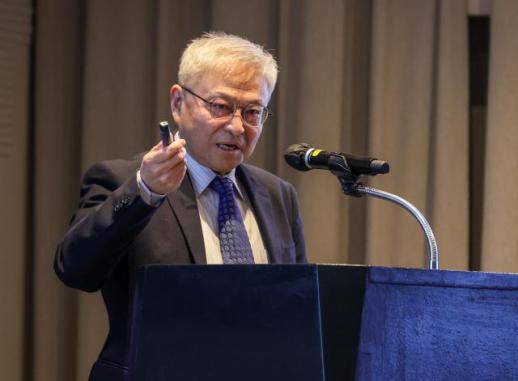 Trump-Xi summit likely sideline Iran and security issues: Yan Xuetong SEOUL, May 06 (AJP) - Iran will likely dominate the backdrop of next week’s summit between U.S. President Donald Trump and Chinese President Xi Jinping, but the two leaders are unlikely to produce any coordinated strategy on the Strait of Hormuz crisis as the world drifts deeper into a fragmented “G0 order,” according to prominent Chinese international relations scholar Yan Xuetong. Yan, speaking Wednesday at a seminar titled “Changes and Prospects in U.S.-China Relations” hosted by the Gyeonggi Research Institute in Seongnam, argued that Trump and Xi are more likely to focus on trade and economic tensions than on resolving security flashpoints in the Middle East. “As the Trump administration abandons global leadership, the world is entering a G0 order in which no country is willing or able to exercise clear global leadership,” Yan said. The scholar said the center of global rivalry has fundamentally shifted away from ideology and territorial disputes toward technology, data and artificial intelligence. Rather than a revival of the Cold War, he described current U.S.-China tensions as a strategic competition over semiconductors, AI infrastructure, cloud computing and digital ecosystems. “Cyberspace is becoming more important than natural space in both economic and security terms,” Yan said, pointing to the war in Ukraine as evidence that digital infrastructure and technological superiority can outweigh traditional geopolitical advantages. He said the escalating Hormuz crisis reflects how military power, energy security, satellite navigation systems and digital targeting technologies have become increasingly intertwined. According to Yan, many of the technologies used by Iran in recent military operations are linked more closely to Chinese systems than to U.S. infrastructure. Yan argued that AI is rapidly becoming a core strategic asset tied to economic productivity, industrial policy, military operations and national security. Both Washington and Beijing, he said, are increasingly moving toward self-contained technology ecosystems and domestic data governance structures, deepening fragmentation across global supply chains. He identified electricity, rare earth minerals and skilled engineers as the three critical foundations for AI competitiveness. Europe, he said, has struggled to keep pace partly because of insufficient power generation capacity, while the United States is already facing rising electricity demand and localized supply pressures linked to AI data centers. China, by contrast, is preparing 33 nuclear power plants to support future AI-driven electricity demand. For South Korea, Yan warned that the geopolitical balancing act will become increasingly difficult. While Seoul’s security structure remains anchored to the United States, its economy remains deeply intertwined with China. As semiconductors, batteries, AI and strategic technologies become more politicized, he said, South Korea will face growing pressure to make choices that blur the traditional divide between security and economics. Yan also suggested that Trump’s “America First” approach could accelerate strategic uncertainty across East Asia if U.S. allies begin questioning Washington’s long-term reliability. At the same time, he argued that the region is unlikely to split cleanly into rival blocs, as many countries continue pursuing a hedging strategy that combines U.S. security ties, Chinese economic links and flexible diplomacy. Taiwan is expected to remain another sensitive issue at the summit. Yan said both Washington and Beijing understand that destabilization across the Taiwan Strait or the broader Indo-Pacific would sharply raise risks for both sides, even as tensions continue to rise following recent U.S. arms sales to Taiwan. Yan concluded that the coming decade will likely be defined by uncertainty, fragmented markets and increasingly politicized technology systems. Supply chains, technology standards and cross-border data flows, he said, will be shaped less by economic efficiency and more by national security calculations. He also warned that while AI will intensify competition between the United States and China, it will simultaneously create shared global risks involving unemployment, overproduction, trade disputes, military misuse of AI and the absence of internationally coordinated governance standards. 2026-05-06 18:05:32
 -
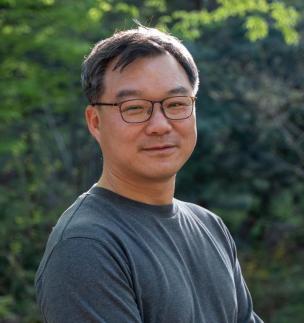 Opinion: Self-Approved Executive Pay Raises and Self-Directed Dropping of Charges Allowing a controlling shareholder who also serves as a director to vote on a shareholders meeting resolution setting directors’ compensation is a classic conflict of interest. Courts and prevailing views long allowed a shareholders meeting — even with the controlling shareholder participating — to set an overall cap on total directors’ pay, with the board later deciding each director’s amount. That structure, however, left room for a board formed by the controlling shareholder to set that shareholder’s director pay at a high level. After the Namyang Dairy case, courts began taking a stricter approach to shareholder votes involving conflicts. At a 2023 shareholders meeting, then-largest shareholder and director Hong Won-sik participated in and passed an agenda item setting the directors’ compensation cap at 5 billion won. The Seoul High Court canceled the resolution, finding it illegal because he exercised voting rights as a “special interested party” on a matter directly tied to his own pay. In April 2025, the Supreme Court dismissed the appeal, upholding that judgment. The Supreme Court went further in a ruling issued April 2 that the article describes as a milestone in Korean corporate governance history (2025Da219931). The court held it illegal for a CEO who is also a shareholder to raise his own compensation by increasing the total annual salary pool for directors. The court said the CEO, who held a 76% stake, had a special interest and therefore could not exercise voting rights, and that his participation amounted to a conflict of interest barred by Article 368(3) of the Commercial Act. The court also made clear that shares held by a shareholder whose voting rights are restricted must be excluded from the “total number of issued shares,” the base used to calculate quorum. Under the Commercial Act, a shareholders resolution requires approval by at least one-quarter of the total issued shares (Article 368(1)). If a conflicted controlling shareholder is excluded from the calculation, minority shareholders can become decisive. In effect, the ruling creates a “majority of the minority” outcome in conflict-of-interest cases involving large shareholders. Because the case concerned a regular shareholders meeting in March 2024, before amendments to the Commercial Act on shareholders’ duty of loyalty, the ruling did not reflect those changes. Taking the amended law into account, the article says the reasoning could be extended beyond executive pay to other conflict situations such as mergers and business transfers, limiting controlling shareholders from making decisions for their own benefit in conflicted matters. Separately, a bill introduced April 30 by the Democratic Party, titled the “Special Prosecutor Bill to Uncover the Truth Behind Allegations Including Manipulated Indictments by the Yoon Suk Yeol administration,” has sparked controversy. The bill specifies as targets for investigation several cases where allegations of illegal prosecutorial investigations have been raised, including the Daejang-dong development project, the Seongnam FC case and the Ssangbangwool remittances to North Korea case. Many of those cases involve Lee Jae-myung, described in the article as the president, as a defendant. Because first trials are still underway, some cases could be subject to withdrawal of indictment under the Criminal Procedure Act. The article says the bill’s stated purpose — correcting past wrongdoing by “political prosecutors,” in light of aggressive investigations and indictments revealed through parliamentary probes and media reporting — is not hard to understand. But it argues that, considering how a special prosecutor would be appointed and the power to withdraw indictments, the bill is difficult to justify from a conflict-of-interest perspective. Under the bill, the Democratic Party, the People Power Party and the Rebuilding Korea Party would each recommend one candidate, and the president would appoint one of them as special prosecutor. Article 8(7) would grant authority to decide whether to maintain prosecutions, including the power to withdraw indictments in already-indicted cases. The result, the article says, is a structure in which a law proposed by the ruling party and promulgated by the president enables the president to appoint a special prosecutor, and that special prosecutor could then withdraw indictments involving the president. Critics argue that withdrawing an indictment would prevent a verdict, effectively allowing the president to choose the judge in his own case, the article says. The directors’ pay issue and the special prosecutor bill are separate matters, and they differ in level — legal interpretation versus legislation. But the article says they share a core question: who should make decisions, and how, when conflicts of interest are involved. The article says law must be a general and abstract norm applied fairly and reasonably to everyone — a core principle of modern rule of law — so that all members of the community can accept outcomes and trust in the legal system is maintained. It says the Supreme Court ruling reaffirmed a broadly accepted principle: in conflict situations, a person should not exercise decision-making power for personal gain. By contrast, it says the current special prosecutor bill’s legitimacy is being questioned, to the point that opposition voices have emerged even within the ruling party. A “self-approved” executive pay raise harms shareholders of the company, the article says, but a president’s “self-directed” withdrawal of indictments could shake the rule of law for the entire community. The public, after witnessing what the article calls improper actions by the Yoon Suk Yeol government, has only begun to regain trust in the rule of law, it says, and the bill could undermine that trust again. * This article has been translated by AI. 2026-05-06 18:05:17
 -
 Trump Weighs 25% Tariff on EU Cars, Opening U.S. Market Fight for Korean and Japanese Brands The U.S. auto market is on edge as Washington signals it may impose a 25% tariff on passenger and commercial vehicles from Europe. With European car prices likely to rise in the United States, industry watchers say Korean and Japanese automakers could try to capture any opening. Industry officials said Tuesday that President Donald Trump is reviewing a 25% tariff on European-made passenger cars. Last year, the United States and the European Union agreed to cut tariffs on some items, including autos, from 25% to about 15%. Trump, however, warned on May 1 that tariffs could be raised, citing issues such as the EU’s implementation of the trade agreement. The industry expects Korean and Japanese brands to benefit because they face a relatively lower tariff burden. In the U.S. market, a tariff structure of about 15% remains in place for Korean and Japanese brands, according to the report. German automakers such as BMW operate plants in the United States, but some models, including sedans, are still exported from Europe. European brands in the U.S. market are generally seen as concentrated in luxury sedans and SUVs aimed at middle-income buyers, along with Volkswagen’s midpriced and lower-priced models. If higher tariffs are reflected in sticker prices, price resistance is expected to grow, especially for lower-priced models. Korean and Japanese brands are expected to target that segment. According to market research firm Wards Intelligence, Hyundai Motor Co. and Kia sold a combined 1,836,172 vehicles in the United States last year, taking an 11.3% share to rank fourth. They trailed General Motors with 2,841,328 vehicles (17.5%), Toyota with 2,518,071 (15.5%) and Ford with 2,133,892 (13.1%). Among European brands, BMW sold 388,897 vehicles, placing it in the top 10. Analysts said a tariff increase on European cars could lead to Korean and Japanese brands splitting some of the market share previously held by European automakers. Korea and Japan both have strengths in hybrids. According to the Korea Automobile & Mobility Association’s U.S. electrified-vehicle sales data, Hyundai and Kia sold a combined 64,742 hybrids in the U.S. market in the first quarter, up 63.7% from a year earlier. That ranked third behind Toyota (281,699) and Honda (95,612). Their electrification strategies differ, however. Hyundai Motor Group is rapidly expanding its electric-vehicle lineup alongside hybrids, while Japanese EVs have struggled to gain broad popularity in global markets, the report said. Recent U.S. sales trends have been mixed for the two. Last month, Hyundai and Kia sold 159,216 vehicles in the United States, down 2.1% from a year earlier. Toyota sold 222,378, down 4.6%. Hyundai is offering incentives of up to $10,000 (14.55 million won) on the Ioniq 9 in the U.S. market. Kia has also moved aggressively, including cutting prices on the EV6. Moon Hak-hoon, a professor in the Department of Future Automobiles at Osan University, said, “The U.S. market has a strong preference for premium brands, so the impact on European brands could be limited.” He added, “But if there is some opening in the midpriced and lower-priced market, Korean and Japanese brands have plenty of room to target it.”* This article has been translated by AI. 2026-05-06 18:04:16
 -
 Hyundai Motor Group wage talks begin as unions seek 30% profit bonus, AI job protections Hyundai Motor and Kia are moving into full-scale 2026 wage and collective bargaining talks, with both unions pressing for a performance bonus equal to 30% of last year’s earnings and measures to protect jobs as artificial intelligence is introduced. The talks come as automakers face pressure from the Middle East war and U.S.-driven tariff impacts, and as global rivals intensify productivity competition. Industry officials have warned that conceding to union demands could weaken Hyundai’s competitiveness. According to the business community on Tuesday, Hyundai Motor management and labor held an opening meeting at 10 a.m. at the company’s Ulsan plant to set bargaining direction and a schedule. About 60 people attended, including Hyundai Motor representative Choi Young-il, Korean Metal Workers’ Union Chairman Park Sang-man and Hyundai Motor union branch chief Lee Jong-cheol. A central issue is the size of the performance bonus. The Hyundai Motor union is seeking 30% of last year’s net profit, while the Kia union is seeking 30% of operating profit. That is higher than demands by unions at Samsung Electronics and SK hynix, which have called for bonuses equal to 15% and 10% of operating profit, respectively. Hyundai Motor’s net profit last year was 10.3648 trillion won. A simple estimate puts a 30% bonus at more than 3 trillion won. If the union proposal were fully reflected, employees could receive about 60 million won each, exceeding last year’s 40 million to 50 million won level (a 450% bonus plus a one-time payment of 15.8 million won). The company is also grappling with falling productivity at domestic plants. Last year, Hyundai Motor’s Ulsan plant recorded an HPV — hours per vehicle — of 28 hours, about 60% of the U.S. plant’s 18 hours. HPV measures labor time needed to build one vehicle and is a key productivity indicator. Rivals including Toyota Group at 16 hours, GM at 20 hours and Tesla at 10 hours all posted better HPV figures than Hyundai Motor. Other union demands could further complicate negotiations, including a full monthly salary system, raising bonuses from 750% to 800%, shorter working hours without increased work intensity, and extending the retirement age linked to the start of National Pension benefits, up to 65. The Hyundai Motor union’s conditions tied to rebuilding Plant 1 are also seen as a potential flash point. The union is seeking job guarantees and what it calls fair transfers across all plants. Kia’s union, which is expected to hold its own opening meeting soon, is also calling for mandatory consultation with the union when introducing new technologies such as AI and robots. With the union seeking to discuss wages, working hours, retirement age, employment, new technology, and facility investment as a broad “package deal,” concerns are growing that this year’s talks could be more difficult.* This article has been translated by AI. 2026-05-06 18:03:16
 -
 Iran Denies Military Role in Fire on South Korean Ship in Strait of Hormuz Iran’s government has flatly denied allegations that its military was involved in a fire on a South Korean vessel in the Strait of Hormuz. In a statement issued Tuesday, the Iranian Embassy in Seoul said it “firmly rejects and completely denies all allegations” that the armed forces of the Islamic Republic of Iran were involved in the incident involving damage to a South Korean ship in the strait. The statement came as speculation grew over a possible Iranian attack after a fire broke out on the South Korean cargo ship HMM Namu while it was anchored in the Strait of Hormuz on May 4. Earlier, President Donald Trump said on May 4 local time on the social media platform Truth Social that Iran had attacked ships from several countries, including a South Korean vessel, and urged South Korea to join a Strait of Hormuz navigation-support operation called the “Liberation Project (Project Freedom).” The Iranian Embassy in Seoul, however, said that after U.S. and Israeli military actions against Iran, the Strait of Hormuz had become a key part of what it called a defensive geography against “invaders and their supporting forces,” and that navigation conditions in the waterway were being affected by heightened security. It said safe passage requires full compliance with relevant rules, close attention to Iranian warnings, use of designated routes and prior coordination with Iranian authorities. The embassy warned that ignoring stated requirements and operational realities in an environment affected by military and security tensions could lead to unintended accidents. “Those who insist on transiting or operating in the area without fully taking these considerations into account bear responsibility for the consequences,” it said. The embassy added that Iran has continued efforts to ensure the safety and security of maritime navigation in the region in line with international law and relevant regulations, and said it would keep doing so.* This article has been translated by AI. 2026-05-06 18:01:21
 -
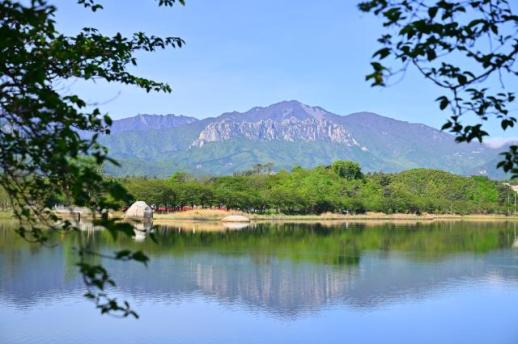 South Korea Forecast: Mostly Cloudy Thursday With Scattered Rain, Big Temperature Swings Thursday the 7th is expected to be mostly cloudy nationwide, with rain developing in scattered areas from the afternoon, mainly in central regions. According to the Korea Meteorological Administration on the 6th, morning lows will range from 9 to 18 degrees Celsius, with daytime highs of 18 to 27 degrees. From afternoon into the night, about 5 millimeters of rain is forecast for the Seoul metropolitan area, inland and mountainous parts of Gangwon, northern South Chungcheong Province and central to northern North Chungcheong Province. From night, parts of the Chungcheong and Jeolla regions and western and northeastern inland and mountainous areas of North Gyeongsang Province may see trace drizzle of less than 0.1 millimeter. Expected rainfall totals are: about 5 millimeters for Seoul, Incheon and Gyeonggi Province; the five West Sea islands; and inland and mountainous Gangwon; and less than 5 millimeters for northern South Chungcheong, the southern South Chungcheong west coast, central to northern North Chungcheong and western North Jeolla. Ulleungdo and Dokdo are forecast to receive less than 5 millimeters between the 7th and 8th. Elsewhere in the Chungcheong and Jeolla regions and along the mid-to-northern Gangwon east coast, some areas may get brief nighttime drizzle of less than 0.1 millimeter. Gusts of around 55 kilometers per hour are also possible, mainly in central regions and the Jeolla area. Fine dust levels are expected to range from “good” to “moderate” nationwide.* This article has been translated by AI. 2026-05-06 18:00:21
 -
 KOSPI’s Record Run Raises Red Flags as Margin Debt and Inverse Bets Surge A booming stock market often carries a fear of a sharp pullback, and that risk grows when prices rise as fast as they have recently. Even without Warren Buffett’s remark that it can feel closer to a casino, warnings about overheating are growing. Analysts say investors should watch for “hidden bombs” in the rally, starting with debt-fueled trading. The Korea Financial Investment Association said margin-loan balances stood at 35.7131 trillion won as of April 30. After topping 35 trillion won for the first time on April 23, the figure jumped to a record 36.0681 trillion won on April 29. That is up more than 20% from the start of the year. Investor deposits totaled 124.7591 trillion won as of April 30. They had exceeded a record 132 trillion won as of March 4, shortly after the outbreak of war in the Middle East, then fell to 107 trillion won. Deposits climbed back above 120 trillion won in mid-April and have been rising again. Market watchers say deposits and margin balances rising together suggest more money is betting on further gains. In a market that has surged in a short period, even a small correction can trigger forced selling, accelerating declines. Heavy concentration in semiconductors is another concern. The market’s rise on May 6 was driven in large part by Samsung Electronics and SK hynix, which both jumped more than 10%. On the same day the KOSPI touched 7,500, decliners (679) outnumbered advancers (202) by more than three to one among listed issues, underscoring the narrowness of the rally. Some investors are already taking losses as the rally continues, particularly those making “contrarian” bets through leveraged inverse products. The Korea Exchange said the most net-bought ETF by individual investors over the past month was KODEX 200 Futures Inverse 2X, a major double-leveraged inverse product. Its return was -43.91%, and other inverse ETFs also posted losses of more than 40%. A securities industry official said risk management becomes more important when markets keep setting records, and warned against excessive leverage, derivatives trading and chasing prices higher.* This article has been translated by AI. 2026-05-06 17:58:15
 -
 KOSPI Surges Past 7,000 as Semiconductor Rally Lifts Samsung, SK Hynix South Korea’s benchmark KOSPI has pushed above the 7,000 mark, about two months after breaking through 6,000. Compared with a year earlier, the index has nearly tripled in an unprecedented rally, prompting talk that the market has entered a new normal. Brokerage research chiefs said the momentum could carry the index to 9,000. According to the Korea Exchange, the KOSPI on the 6th closed at 7,384.56, up 447.57 points, or 6.45%, from the previous session. It extended record highs and at one point neared 7,500. The index stood at 2,573.80 on May 7 last year, meaning it has risen about 187% in a year. Semiconductors led the surge. Expectations for improved earnings at major chipmakers and upward revisions to profit forecasts boosted sentiment and spread gains across the supply chain. Samsung Electronics closed at 266,000 won, up 33,500 won (14.41%). Its market capitalization reached about 1,555 trillion won, entering the so-called $1 trillion club for the first time. It is the second in Asia after Taiwan’s TSMC and ranks 12th globally by market value, according to Bloomberg data. SK Hynix rose 10.64% to 1,601,000 won, with a market cap of 1,141 trillion won. The Korea Exchange said total KOSPI market capitalization stood at 6,058 trillion won at the close, up about 3,951 trillion won from 2,107 trillion won a year earlier. The combined market cap of Samsung Electronics (including preferred shares) and SK Hynix was about 2,848 trillion won, or roughly 47% of the total, nearly double the 23.7% share a year earlier. Other gainers included SK Square, SK Hynix’s holding company and the market’s fourth-largest by capitalization, as well as KOSPI-listed members of the KRX Semiconductor Index such as Hanmi Semiconductor, DB HiTek, HD Hyundai Energy Solutions, KC Tech and LX Semicon. Nearly half of the KOSPI’s total market value is effectively tied to the semiconductor cycle. Market participants said the rally reflects more than liquidity-driven gains, describing it as a structural re-rating as chip-led profit dynamics reshape the index’s baseline. Some analysts said there is room for further upside. Research chiefs at seven major brokerages forecast the KOSPI could reach as high as 9,000 in the second half of the year. Lee Jae-won, an analyst at Yuanta Securities, said, “With the KOSPI PER at about 7.18 times, valuation pressure is not heavy even now that the index is above 7,300,” adding that it “acts as a factor supporting the downside.” * This article has been translated by AI. 2026-05-06 17:57:15