
Journalist

Lee Hugh
=
-
 LG Innotek, Samsung Electro-Mechanics defy seasonal slump on AI-driven demand LG Innotek and Samsung Electro-Mechanics are posting unusually strong results despite what is typically a seasonal lull for electronics parts makers, helped by an artificial intelligence-driven boost in demand. Steady smartphone camera-module sales and rising shipments of high-value semiconductor substrates used in AI data centers and servers are supporting growth. LG Innotek said in a regulatory filing on 27 that its first-quarter consolidated revenue rose 11.1% from a year earlier to 5.5348 trillion won, the highest ever for a first quarter. Operating profit jumped 136% to 295.3 billion won, beating market expectations. The first quarter is usually considered an off-season because the impact of new smartphone launches fades. This year, the company said demand stayed firm as popularity of the iPhone 17 series, released in September, carried into early 2026, lifting its core camera-module business. The optical solutions division, which accounts for about 80% of revenue, posted 4.6106 trillion won in sales, up 11.4% and a first-quarter record. Growth was not limited to cameras. The package solutions division, which handles semiconductor substrates, reported revenue of 437.1 billion won, up 16% from a year earlier. The company cited surging demand for high-performance substrates such as flip chip ball grid array, or FC-BGA, as global big tech companies expanded AI investment. It said higher-value communications substrates, including RF-SiP, performed strongly, and profitability improved as supplies of advanced substrates used in AI servers and accelerators increased. Samsung Electro-Mechanics, which is set to report earnings on 30, is also expected to benefit from AI-related demand. According to a securities-industry consensus, the company’s first-quarter revenue is estimated at 3.2027 trillion won and operating profit at 295.0 billion won, up 16.7% and 47.1%, respectively, from a year earlier. A key driver is multilayer ceramic capacitors, or MLCCs. The article said an AI server uses 10 to 15 times more MLCCs than a general-purpose server, and unit prices are several times higher, pushing MLCC production lines close to full utilization. FC-BGA, which Samsung Electro-Mechanics has identified as a future growth area, is also expected to contribute more meaningfully as the AI accelerator market expands, accelerating a shift toward higher-value products. Industry watchers said the company could be on track to return to the “1 trillion won club” in annual operating profit starting from this first quarter. An industry official said, “As the AI era takes hold, the seasonal swings in the electronic components industry are being offset,” adding that Korean parts makers, having secured mass-production capacity through early investment, are likely to maintain solid growth for the time being as key partners in the global AI supply chain.* This article has been translated by AI. 2026-04-27 18:37:30
 -
 Korean Shipbuilders Ramp Up Offshore Wind Bets, but Grid and Port Infrastructure Lags Domestic shipbuilders are accelerating into offshore wind as a new growth engine, but the infrastructure needed to support the industry is not keeping pace. While corporate investment is rising quickly, structural constraints that could slow broader expansion remain, industry officials say. According to the shipbuilding industry on the 27th, Hanwha Ocean has been among the most aggressive. The company said it held a board meeting that day and disclosed plans to participate in a paid-in capital increase at its wholly owned unit, Ocean E&I, by subscribing to 25,439,900 common shares. Ocean E&I is a Hanwha Ocean subsidiary set up for businesses related to operating a wind turbine installation vessel, or WTIV. A WTIV is a specialized ship used to install offshore wind turbines and is considered essential equipment for placing large turbines at sea. By funding the WTIV operating unit, Hanwha Ocean plans to expand beyond ship construction into installation and operations. Since December 2024, it has broadened its footprint by taking over wind power operations from Hanwha Corp. and carrying out work from project development to engineering and construction for onshore and offshore wind projects. In a 400-megawatt offshore wind project, the company said it directly handled site identification, power-generation permits and related approvals to build development capabilities. Last year, it also signed an EPC contract for the Shinan Ui offshore wind project to build a 390-megawatt offshore wind complex in waters southeast of Uido, Ui Island, in Sinan County, South Jeolla Province. HD Hyundai is focusing on producing floating platforms, or substructures, and offshore substations, and supplying power equipment. It has obtained certification for 15- and 18-megawatt floating platforms and developed a 500-megawatt large-scale offshore substation model, aiming to secure an early lead in Korea’s floating offshore wind market and take an active role in large complex development through 2030. Samsung Heavy Industries is concentrating on floating offshore wind, centered on semi-submersible substructure technology. The company said it obtained approvals in principle last year for a 15-megawatt large model, positioning it to compete in the sector. It is also strengthening exclusive supply cooperation on large floating wind complexes, including the Ulsan Firefly project, with global energy companies such as Equinor, as it seeks to bolster competitiveness in renewable energy. Shipbuilders say offshore wind is attractive because it closely aligns with their core capabilities. Shipyards already have design and manufacturing expertise for large structures, giving them an edge in producing offshore wind components. Strong cash flow from a boom in orders for liquefied natural gas carriers and ultra-large container ships has also supported investment in new businesses. The offshore wind market is widely seen as having strong growth potential as decarbonization drives large project orders, particularly in the United States and Europe. The International Energy Agency projects the global offshore wind market will grow about 13% annually to roughly 1,335 trillion won by 2040. South Korea’s offshore wind market is also expected to expand to as much as 200 trillion won by 2035. But industry participants say investment and policy updates are not keeping up with project timelines. A key constraint is a lack of grid capacity. Even after securing generation permits, projects often face delays connecting to the grid because of limited transmission capacity. Port infrastructure is another bottleneck. Wind towers, blades and substructures are oversized and extremely heavy, requiring dedicated berths and nearby space for storage and assembly. Many major domestic ports are still geared toward container and bulk cargo, leaving limited offshore wind-specific capability. Industry officials warn that if multiple large projects move forward at once, logistics bottlenecks could become a real risk. As a result, calls are growing to draw lessons from leading offshore wind countries such as Taiwan and the United Kingdom. Those countries have improved investment predictability by laying out long-term auction road maps and sharply streamlining permitting procedures. By contrast, uncertainty over policy direction and project schedules remains in South Korea. Developers say they need clear auction volumes and timelines, as well as grid-connection plans, to justify equipment investments that can run into the hundreds of billions of won, but predictability is still low. “Domestic shipbuilders have extensive experience in offshore plants and manufacturing large structures, so they are highly competitive in offshore wind as well,” an industry official said. “But the industry will not grow automatically just because companies invest first. A predictable policy environment must be put in place for the market to expand in earnest.”* This article has been translated by AI. 2026-04-27 18:33:02
 -
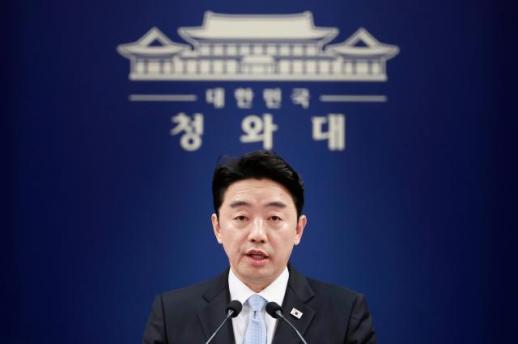 Chief of Staff Kang Hoon-sik Bars Any Election-Influencing Acts Ahead of June 3 Local Vote Kang Hoon-sik, the presidential chief of staff, on Sunday stressed that public officials must remain politically neutral ahead of the June 3 local elections. In a written briefing on a senior aides meeting chaired by Kang, Cheong Wa Dae Deputy Spokesperson Ahn Gwi-ryeong said Kang emphasized that officials must strictly refrain from any act that could influence the election. Kang said election-related involvement by public officials could undermine the fairness of the vote and public trust. He urged thorough oversight and inspections by relevant agencies, including the senior civil affairs office and police, to prevent violations of election law by public officials. Kang also addressed market-disrupting conduct such as hoarding as the Middle East war entered its 59th day. He said the government is securing alternative supply lines for crude oil and naphtha and has imposed anti-hoarding measures on closely related daily necessities, including petroleum products, urea solution and syringes. Kang said overall order has been maintained, but some cases of “antisocial behavior” aimed at making money have been found. He warned that the government will further strengthen inspections of unfair practices that exploit the crisis and respond forcefully to violations through swift investigations, strict punishment and the maximum level of administrative sanctions. Earlier, the Ministry of Food and Drug Safety found 32 distributors of syringes and needles suspected of hoarding, and the Industry Ministry’s nationwide inspections of gas stations confirmed 99 violations, including stockpiling and sales of counterfeit oil. Kang also said applications for high oil price relief payments for basic livelihood recipients, near-poverty households and single-parent families began Sunday. He called for cooperation between relevant ministries and local governments to ensure the payments are carried out without disruption.* This article has been translated by AI. 2026-04-27 18:32:16
 -
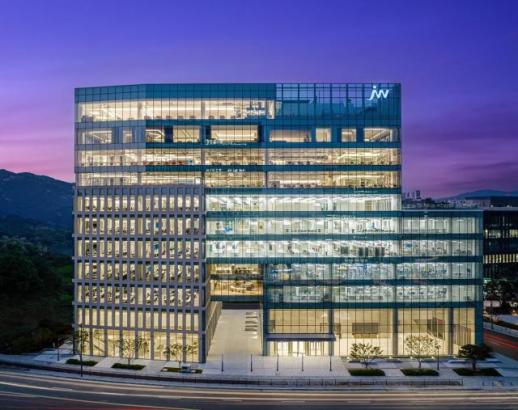 JW Pharmaceutical Expands License-In Drug Strategy With VC Acquisition JW Pharmaceutical is doubling down on a “license-in” strategy—bringing in drug candidates developed elsewhere and handling development and regulatory approval in South Korea—while widening its reach by adding venture investment, industry officials said. According to the industry on the 27th, JW Holdings, the group’s holding company, recently acquired venture capital firm Solidus Investment and made it a subsidiary. The deal was valued at 30.6 billion won. Solidus Investment is a biotech-focused VC with investments that include Alteogen, Orum Therapeutics and OliX. Venture capital firms review a wide range of biotech companies and assess the commercial potential of their technologies. By bringing a VC in-house, the group aims to secure promising pipelines early and then use its research and development capabilities to move them into clinical trials and commercialization. A JW Pharmaceutical official said the company concluded it would be more efficient to identify partners for joint research through a VC than to invest directly in biotech firms, calling it part of an effort to expand open innovation. The company has continued to sign license-in deals structured to secure direct marketing rights rather than co-promotion. The approach requires higher upfront costs but allows stable sales without paying commissions. JW Pharmaceutical said it has used the strategy to establish high-revenue products including the cholesterol drug “Livalo family,” the hemophilia treatment “Hemlibra” and the arthritis drug “Actemra.” More recently, JW Pharmaceutical signed an exclusive South Korea license agreement with China’s Gan & Lee Pharmaceuticals for the glucagon-like peptide-1 (GLP-1) receptor agonist “bofanglutide.” The total contract value is $81.10 million (about 119.8 billion won). Bofanglutide is being developed as a subcutaneous injection given once every two weeks, with dosing convenience positioned as a differentiator. The company plans to begin a domestic Phase 3 trial in the second half of this year for obesity and Type 2 diabetes. The strategy is to respond early to the metabolic disease treatment market by licensing in a candidate that is already well advanced in development. License-in deals are difficult to turn into results without strong in-house R&D. On the 23rd, JW Pharmaceutical completed dosing the last patient in a multinational Phase 3 trial of its gout candidate “epaminurad.” Epaminurad is an oral new drug candidate being developed for hyperuricemia and gout, conditions marked by abnormally high uric acid levels in the blood. Trials were conducted in five Asian countries including South Korea, and the company expects to produce a results report within the year after the final dosing in Malaysia. The company said it aims to develop the drug as a “best-in-class” therapy. JW Pharmaceutical’s R&D spending ratio last year was 14%, the biggest increase among major drugmakers. It exceeded the average for the top 10 pharmaceutical companies as of 2024 (11.3%), and R&D spending reached 107.9 billion won, topping 100 billion won for the first time in the company’s history. An industry official said JW Pharmaceutical is placing more weight on building a medium- to long-term growth base than on short-term results, adding that it is likely to continue building a stable profit structure on the license-in strategy it has pursued for years.* This article has been translated by AI. 2026-04-27 18:31:25
 -
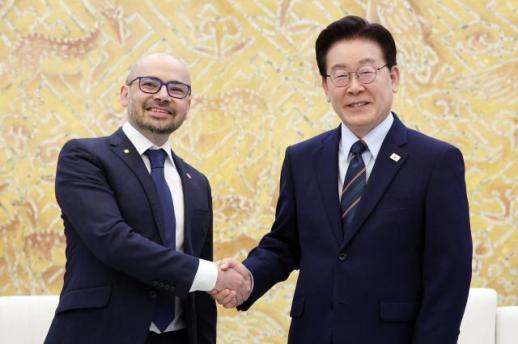 South Korea says Google to open AI Campus in Seoul; Lee discusses AI safety with DeepMind CEO Google will open a Google AI campus in Seoul within this year to expand cooperation with researchers and startups, South Korea’s presidential office said Sunday. Google DeepMind and the government also agreed to build a cooperation framework for “K-Moonshot,” a government project aimed at AI-driven innovation in science and technology. Cheong Wa Dae said President Lee Jae-myung met Demis Hassabis, Google DeepMind’s co-founder and CEO, to discuss ways to cooperate in artificial intelligence. The meeting was arranged as part of the government’s push to broaden global AI cooperation. Since taking office, Lee has met with OpenAI CEO Sam Altman, Nvidia CEO Jensen Huang and SoftBank Group Chairman Son Jeong-ui to discuss AI partnerships, the office said. The government also said it helped lead adoption of an “AI initiative” at last year’s APEC meeting in Gyeongju and is working with international organizations including the World Health Organization, the U.N. Development Programme and the International Telecommunication Union to establish a “global AI hub” in South Korea. During the meeting at Cheong Wa Dae, Lee said he has strong interest in AI and that the country is investing heavily, but questioned whether AI will be used “only in a direction that helps improve human welfare” or could move toward “attacks on humans” or harming peace. Hassabis said Lee had raised an important issue and said AI should be actively used to advance science and in medical fields. If used properly, he said, it could bring major benefits to people worldwide. Hassabis led DeepMind’s work on the 2016 Go match between Lee Sedol and the AI program AlphaGo. He also developed AlphaFold, an AI model for predicting protein structures, and won the Nobel Prize in Chemistry two years ago. Hassabis said AlphaGo helped validate the technology and became a starting point for tackling harder problems. He said the lessons were expanded into science and medicine, citing AlphaFold as a key example that helped researchers understand diseases in greater detail. Lee, referring to Google’s generative AI service Gemini, said he uses it often but that it sometimes does things he did not ask for, and asked whether it was a kind of bug. Hassabis said foundation models can veer in a different direction if guidance is not precise, and said “guardrails” must be built in when using and developing AI. He said as AI becomes more powerful, it will gain autonomy as “agent AI,” and that strong safety controls will be essential if the era of artificial general intelligence, or AGI, arrives. After the meeting, Policy Office Chief Kim Yong-beom told a briefing that the two held an in-depth discussion on rapid advances in AI, where the technology is headed and ways to strengthen global cooperation on responsible AI. Kim said Hassabis predicted that within five years — as early as 2030 — AGI capable of exercising all human cognitive abilities could become visible. Lee and Hassabis also exchanged views on job changes and distribution issues driven by AI, Kim said. Lee raised the need to prepare for unemployment and job disruption, while Hassabis said the impact is hard to predict and argued for a new economic model that rethinks the definition of work and redistribution of wealth. Kim said Lee asked whether now is the time for a basic income, noting he had discussed it for more than 20 years, and that Hassabis responded in a way that indicated agreement on the need. Kim said Hassabis also mentioned ideas such as the state providing housing, education, transportation and health services while incorporating capital-market principles, and linking gains from robot-driven productivity to support for workers. Kim said the government will pursue practical cooperation with DeepMind. He said Lee asked DeepMind to join as a key partner in efforts to establish a global AI hub through cooperation among the government, international organizations and companies so that everyone can share the benefits of AI advances. Kim said Google will also actively consider sending researchers to South Korea along with the AI campus. He said the government requested at least about 10 researchers and that Google agreed on the spot. Kim described the Seoul AI campus as a space where South Korea’s top scientists can freely use Google’s latest models for joint research, and where Korean researchers and Google researchers can conduct reciprocal work, including internships and hiring. Kim said the meeting was “completely unrelated” to issues involving Google Maps. Ahead of the meeting, Hassabis prepared a gift commemorating the AlphaGo match with Lee Sedol, presenting Lee with a Go board signed by both Hassabis and Lee Sedol. At the end of the meeting, Lee said he hoped that just as the AlphaGo match 10 years ago opened the AI era together with South Korea, they would work together over the next 10 to 20 years to build “AI for everyone” and a brighter future. Google attendees included Wilson White, vice president for global government affairs and public policy, and Yoon Koo, head of Google Korea. South Korean officials present included Science and ICT Minister Bae Kyung-hoon, Chief of Staff Kang Hoon-sik, Policy Office Chief Kim Yong-beom, Senior Secretary for AI Future Planning Ha Jung-woo, Protocol Secretary Kwon Hyuk-ki, National AI Policy Secretary Kim Woo-chang and spokesperson Jeon Eun-su. Hassabis is also scheduled to attend the “Google for Korea 2026” event in Seoul on April 29. He is set to hold a discussion with Lee Sedol and author Cho Seung-yeon on “10 years of AlphaGo, a vision of AI for everyone.”* This article has been translated by AI. 2026-04-27 18:27:08
 -
 AI Rally Lifts South Korea, Japan and Taiwan Stocks to Record Highs as South Asia Lags Asian stock markets moved in different directions as expectations for artificial intelligence helped lift Northeast Asia to fresh records despite the fallout from the Iran war, while South and Southeast Asia stayed under pressure from higher oil prices. Northeast Asian benchmarks have risen since the war began on Feb. 28, Bloomberg News reported. Taiwan’s Taiex gained 9.9% through April 24. Over the same period, South Korea’s Kospi rose 3.7%, Japan’s Nikkei 225 added 1.5% and China’s CSI 300 climbed 1.25%. The CSI 300 tracks the 300 largest stocks by market value listed in Shanghai and Shenzhen. By contrast, India’s Nifty 50 fell 5.8%, Indonesia’s Jakarta Composite Index dropped 10.4% and the Philippines’ PSEi slid 9.5%. The MSCI ASEAN Index was down 7.5%. Bloomberg Intelligence strategist Marvin Chen said the key difference was AI. “In terms of oil, Korea, Taiwan and Japan are all highly dependent,” he said, “but what ultimately made the difference was AI.” Bloomberg said the global semiconductor supply chain — including Taiwan Semiconductor Manufacturing Co., Samsung Electronics and SK hynix — has benefited from the AI boom, and demand tied to AI appears relatively insulated from geopolitical risks. The split was evident in Monday’s trading. South Korea’s Kospi jumped 139.40 points, or 2.15%, to 6,615.03, closing above 6,600 for the first time. Japan’s Nikkei 225 rose 1.38% to 60,537.36, ending above 60,000 for the first time. Taiwan’s Taiex gained 1.76% to 39,616.63 for a second straight record close; it also hit an intraday high of 40,194.92, topping 40,000 for the first time. The gains were attributed to renewed AI investment optimism ahead of earnings from U.S. big tech companies, along with expectations that tensions in the Middle East could ease. Semiconductor shares led: SK hynix touched 1,317,000 won intraday for a new 52-week high, Samsung Electronics rose 1.82%, and TSMC surged 3.66% to a record. In India and Southeast Asia, rising crude prices have weighed broadly on economies, stoking inflation, worsening current accounts and weakening currencies, while also limiting policymakers’ room to respond. South Korea, despite the stock rally, showed relative weakness in currency moves. Since the war began, the Chinese yuan has risen 0.5% against the dollar, while the Korean won has fallen 2.7%, one of the larger declines among major Asian currencies. Gary Tan, a portfolio manager at Allspring Global Investments, said the divergence reflects “a collision between long-term, technology-driven structural change and short-term, war-driven macroeconomic shocks,” adding that Asia has become the central stage where the opposing forces meet.* This article has been translated by AI. 2026-04-27 18:25:55
 -
 Dongin Elects Attorney Won Chang-yeon as Fourth Managing Partner Law Firm Dongin has elected attorney Won Chang-yeon, a member of the Judicial Research and Training Institute’s 28th class, as its fourth managing partner. Dongin said it chose Won at a general meeting of its members held on the 27th at its headquarters in Seocho-dong, Seoul. Won graduated from Yonsei University with a degree in political science and diplomacy, earned a master’s in law from Yonsei University’s Graduate School of Legal Studies, and completed an M&A practice program at Seoul National University’s specialized legal studies course. He is known for corporate legal work including mergers and acquisitions, management control disputes, securities and capital markets, and corporate restructuring, and has handled numerous M&A and control-dispute cases. In a statement, Won said he would "develop a rational system" and recruit talent across fields, adding that he would pursue M&A between law firms and strengthen competitiveness through artificial intelligence-based innovation. Founded in 2004, Dongin has expanded through mergers with firms including Human and Dain. It now has about 230 attorneys. Dongin said it plans to use the leadership change to strengthen internal operations and improve external competitiveness.* This article has been translated by AI. 2026-04-27 18:24:51
 -
 PM Kim Min-seok: Nation Must Honor Sacrifice With Lasting Support for Veterans Prime Minister Kim Min-seok said April 27 that the government’s consistent goal is to build a country where honoring those who served becomes “common sense” and a source of pride. In opening remarks at the first National Patriots and Veterans Committee meeting of the new government, held at the Government Complex Seoul, Kim said veterans affairs is not simply about paying compensation for past sacrifice. “Through the memory of dedication, it binds the hearts of the people into one, and with that united strength opens the future of the Republic of Korea,” he said. Kim said it is a key government duty to ensure the state takes responsibility “to the end” for “special sacrifice” for the country and repays it in a special way, so the value of honoring service is remembered with the public and passed on to the next generation. Agenda items included the sixth basic plan for national veterans affairs development; a proposal to develop the National Hyochang Park as a major site of remembrance; a plan to bid to host the 2029 Invictus Games; and a plan to promote projects marking the 150th anniversary of the birth of independence leader Kim Gu. Ahead of the meeting, the committee also held an appointment ceremony for new members. Kim said their expertise and on-the-ground perspectives would help raise veterans policy to the next level, and urged them to pool their wisdom to elevate the honor of those who served the country and strengthen support for bereaved families.* This article has been translated by AI. 2026-04-27 18:24:06
 -
 Dining Industry Eyes Short-Term Boost as High Fuel Price Relief Payments Roll Out High fuel price relief payments have begun rolling out, and expectations are rising across South Korea’s dining industry. Because the payments can be used only at neighborhood businesses and small-merchant franchise outlets, the industry expects spending to flow to everyday dining such as fried chicken and snack foods. According to the industry on the 27th, dining franchises allow the relief payments to be used at franchisee-run stores, but not at company-owned outlets. Franchise operators have moved quickly, posting signs at entrances saying the payments are accepted. Headquarters are also supporting stores by distributing promotional materials, aiming to capture customers as the funds enter the market. The optimism reflects last year’s experience with government-issued consumer coupons. The Ministry of the Interior and Safety said that during last year’s livelihood recovery coupon program, restaurants accounted for 40.3% of total spending, or 3.6419 trillion won, making dining out a leading beneficiary. Major brands also reported measurable gains. Kyochon Chicken posted operating profit of 11.3 billion won in the third quarter of last year, up 47.2% from a year earlier, during the period when coupons were issued. BBQ and bhc said weekly sales rose by 18% and more than 25%, respectively, right after the payouts. Industry officials expect a similar pattern this time, noting that time-limited payments tend to be spent quickly on services such as dining out and delivery. “When payments are issued, the pattern has been that people first spend them on dining they can buy immediately near home,” one industry official said. “This time, too, we expect a noticeable improvement in sales, especially at franchise outlets.” The timing is also seen as favorable, with the spring and summer peak season for outdoor activity approaching and the professional baseball season underway, which could lift delivery and takeout demand, particularly for chicken, the industry said. Still, some analysts cautioned against overly rosy expectations. The payments are expected to be about 100,000 to 150,000 won per person for most people, excluding basic livelihood recipients and near-poverty households — about 40% of last year’s minimum consumer coupon amount of 250,000 won — raising doubts that the boost will match last year’s. With ingredient costs rising over the past year and labor costs still high, some also say the net benefit to franchise owners may be limited. “A temporary rebound is possible from the policy effect, but in a high-inflation environment, it remains to be seen whether it will lead to a real recovery in consumption,” another industry official said.* This article has been translated by AI. 2026-04-27 18:23:10
 -
 SSM Stores Say They’re Unfairly Excluded From South Korea’s High Fuel Price Relief Vouchers “In terms of being neighborhood shops where self-employed owners stake their livelihoods, we’re no different from regular supermarkets. It feels unfair that the vouchers can’t be used here.” A franchise owner in his 50s who runs a corporate supermarket, known as an SSM, in Seoul said he was disappointed by news of the government’s high fuel price relief vouchers. Unlike convenience stores and other franchise outlets, SSMs were excluded from eligible places to spend the support, prompting calls to revisit the criteria because many SSM locations are individually operated franchises. According to the retail industry on the 27th, the government began accepting first-round applications that day for high fuel price relief vouchers worth up to 600,000 won per person. The vouchers are designed for use at small businesses with annual sales of 3 billion won or less. Traditional markets and neighborhood marts, along with convenience stores, are anticipating a bump in sales. The four major convenience store chains — GS25, CU, Seven Eleven and Emart24 — launched broad discounts timed to the payout period, targeting everyday items such as ramen, instant rice, toilet paper and detergent. SSMs, big-box retailers and small merchants selling through e-commerce platforms said they were left out again, as they were during last year’s distribution of consumer coupons for livelihood recovery. Of the 1,457 nationwide stores operated by the four SSM chains — GS The Fresh, Lotte Super, Homeplus Express and Emart Everyday — nearly half, or 721, are run as franchise outlets. GS The Fresh has 471 franchise stores, or 81% of its 581 locations. One SSM owner said, “The franchise bakery or convenience store across the street can take the vouchers, so why can’t we, when we pay franchise fees and run the same kind of business?” Big-box retailers also expressed concern, saying spending is likely to shift toward convenience stores and neighborhood marts where the vouchers can be used. The Ministry of Trade, Industry and Energy said that in last year’s third quarter, when consumer coupons were issued, SSM sales fell 1.6% from a year earlier and big-box store sales dropped 10.2%. Seo Yong-gu, a professor of business administration at Sookmyung Women’s University, said limiting vouchers to selected retail channels inevitably creates blind spots and raises fairness concerns. He said the government should restrict only places that clearly should be excluded, such as department stores and large online shopping malls, and allow the vouchers to be used across other everyday retail channels.* This article has been translated by AI. 2026-04-27 18:22:00