
Journalist

Lee Hugh
=
-
 Bond Markets Watch for Hawkish Signals as G7 Central Banks Set Rate Decisions Major central banks are set to decide policy rates this week, and while markets broadly expect them to hold steady, bond investors are watching closely for any hawkish signals. Oil prices have surged amid the U.S.-Iran war, raising concerns that inflation pressures could build again. According to Bloomberg on the 27th, the U.S. Federal Reserve, the European Central Bank, the Bank of Japan, the Bank of England and the Bank of Canada will all hold policy meetings this week. It is unusual for Group of Seven central banks to make rate decisions in the same week. Together, they influence about half of the global economy. Markets expect the major central banks to keep benchmark rates unchanged. The focus, however, is less on the decision itself than on the message. How Fed Chair Jerome Powell and ECB President Christine Lagarde assess the war-driven oil shock could shape the direction of bond markets. Bloomberg said the U.S.-Iran conflict has raised the risk of what it described as the largest-ever potential disruption to crude supply, heightening central banks’ inflation vigilance. If policymakers emphasize the oil shock as a serious price risk, selling pressure in government bonds could intensify. Stocks and credit markets have rebounded as investors looked past the initial shock, but government bonds have lagged. Investors are already positioning defensively. Amy Xie Patrick of Pendal Group said she has closed out all bond positions vulnerable to rising rates this month. “What do central banks have to lose by sounding hawkish right now?” she said. “There’s an oil shock, and the inflation outlook is uncertain.” In the U.K., the oil shock is already showing up in inflation data. The March consumer price index rose 3.3% from a year earlier, up from 3.0% the previous month, with higher motor fuel prices a key driver. Bloomberg reported that U.K. money markets have begun to price in at least two possible rate hikes this year, up from just one last week. The U.S. has seen a similar shift. Fed officials have warned the war could further stoke inflation and that rate hikes may need to be considered depending on conditions, while also stressing uncertainty over how long higher oil prices will last. Molly Brooks, a U.S. rates strategist at TD Securities, said she expects Powell to take a “neutral stance” given uncertainty about the Middle East shock’s longer-term effects. The Bank of Japan is also in focus. BOJ Gov. Kazuo Ueda has said policymakers need to assess both upside and downside risks to underlying inflation. Evercore ISI said the BOJ could hold rates at this meeting but opt for a “hawkish hold” that keeps the door open to possible hikes in June and December. The ECB, too, is unlikely to ease its inflation guard. Lagarde has stressed in a recent speech that uncertainty has increased. Bloomberg reported that swap markets are pricing in a June ECB rate hike as nearly certain and are also factoring in the possibility of an additional increase in September. Inflation is not the only variable. If high oil prices and geopolitical tensions curb consumer spending and business activity, market attention could shift back to slowing growth. In that case, both central bank rates and market yields could face downward pressure. Wee-Khoon Chong, senior Asia-Pacific market strategist at BNY, said markets will look for hawkish signals that would justify the rate-hike expectations already priced in for the eurozone, the U.K., Canada and Japan. “Geopolitical uncertainty and high oil and petrochemical prices raise both upside inflation risks and downside growth risks,” he said. He added that central banks are likely to maintain a cautious hawkish tone while avoiding firm commitments on the future rate path. 2026-04-27 17:42:26
 -
 South Korea to Expand Export Vouchers to Ease Middle East-Driven Shipping Costs The government said it will sharply expand export voucher support to help companies cope with Middle East-related shipping disruptions and rising costs. Up to 10,900 small and midsize exporters are expected to be covered by year’s end. Lim Ki-geun, vice minister of the Office of Planning and Budget, visited construction equipment maker Daemo Engineering in Siheung, Gyeonggi Province, on Monday to review the program’s progress and hear business concerns. The visit was arranged to assess how higher logistics costs and supply-chain uncertainty tied to the prolonged Middle East war are affecting companies. South Korea operates export vouchers that provide bundled support for overseas expansion, from design development to logistics and marketing, to strengthen the competitiveness of smaller firms. As geopolitical instability in the Middle East has persisted and uncertainty has grown due to higher oil prices and shipping disruptions, the government has focused on easing on-the-ground difficulties, including by creating a “Middle East-specialized emergency logistics voucher.” The export support infrastructure utilization program reviewed during the visit totals 250.2 billion won, including a supplementary budget. Demand has been strong, with about 7,050 companies applying immediately after the first recruitment notice. The government said it had executed about 80% of the 150.2 billion won in the main budget as of the end of April and plans to support up to 10,900 companies by year’s end, including 100 billion won secured through the supplementary budget. “We will swiftly execute the existing export voucher program so the effects of fiscal support reach the field quickly,” Lim said. He said the “Middle East-specialized emergency logistics voucher” was strengthened by adding support items that reflect business needs, including costs for rerouted shipments via the Middle East, return shipping, and demurrage charges. Lim added that, with the budget significantly expanded through the supplementary budget, the government will introduce a fast-track review system to complete beneficiary selection within one month of application to speed up support.* This article has been translated by AI. 2026-04-27 17:39:27
 -
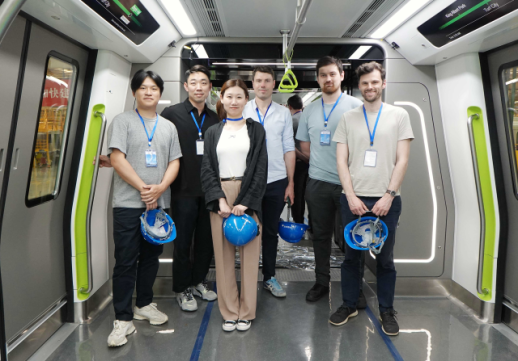 Kookmin University partners with PriestmanGoode for urban mobility design project SEOUL, April 27 (AJP) - The Department of Automotive and Transportation Design at Kookmin University (KMU) is launching a joint industry-academic project with PriestmanGoode (PG), a British design consultancy, to develop mobility solutions for urban environments. The initiative aims to address traffic congestion and urban sprawl in South Korea's capital through design-led research, Kookmin University said Monday. The year-long project focuses on the Seoul 2050 Grand Plan, examining how user-centered mobility ecosystems can alleviate the logistical pressures of a growing megacity. Students and researchers will analyze shifts in transportation environments to propose new infrastructure and devices centered on public transit and shared mobility services. While the primary research focuses on the specific urban layout of Seoul, the university plans to develop these findings into flexible models that can be adapted for other global cities such as London, Shanghai, and New York. The partnership is designed to provide students with practical experience in tackling global urban challenges while enhancing the international competitiveness of the department. Upon completion of the project, high-performing students will be eligible for design internships at the PG headquarters in London. This exchange is intended to provide South Korean students with international professional experience and expand the university's global network for industrial collaboration. "We are very pleased to start this collaborative project with Kookmin University," said Lee Harding, Associate Director at PG. "We look forward to working with students on future-oriented mobility design projects that respond to the major challenges faced by expanding cities. We are paying close attention to how students research Seoul's urban spaces and implement that into user-experience-centered designs." Professor Roe Jae-seung of the KMU Department of Automotive and Transportation Design noted that the collaboration will provide a platform for students to propose practical solutions based on a deep understanding of metropolitan traffic environments. "This project will serve as an opportunity to propose new mobility designs based on a practical understanding of the transportation environment in Seoul and other large cities," Professor Roe said. "Through collaboration with a global company, we expect to enhance students' practical capabilities and contribute to strengthening the international competitiveness of the department." 2026-04-27 17:35:52
 -
 Hanssem Showcases Remodeling Expertise on tvN’s ‘Unpredictable’ Hanssem’s remodeling design capabilities have drawn attention after they were featured on the tvN reality entertainment program “Unpredictable,” which follows cast members as they renovate an abandoned house on Jeju Island and deal with unexpected challenges. Hanssem said viewers responded to the company’s detailed consultations and professional design work. The company said the program showed its approach goes beyond arranging furniture to planning a living space around a customer’s overall lifestyle. According to Hanssem on 27일, the April 3 broadcast showed cast members visiting “Hanssem Flagship Nonhyeon,” located in Seoul’s Nonhyeon-dong furniture district, to seek help with interior design decisions. In the episode, a Hanssem remodeling specialist proposed interior references that reflected a cast member’s preference for a nature-friendly style. The Nonhyeon flagship store is positioned as a “total living solution” space that brings together Hanssem’s 56-year brand philosophy, offering services from furniture to remodeling in one place. Its remodeling section is a library-style showroom where visitors can view a range of kitchens, storage solutions, bathrooms and building materials, and combine materials and run simulations to plan customized interiors. The store also includes a dedicated “Kitchenbach” area showcasing Hanssem’s premium kitchen line. The April 17 broadcast showed cast members reviewing design proposals at a Jeju Rehouse store. Hanssem said remodeling older homes on Jeju can require advanced expertise because of variables such as the island’s humid climate and aging structures. A Hanssem remodeling specialist with extensive local project experience analyzed the environment and the home’s structure and presented a plan reflecting the cast member’s wish list. Hanssem said it is also pushing digital changes aimed at making customer communication smoother and more transparent. As part of that effort, the company said it partnered with Salesforce, described as the world’s No. 1 CRM company, to introduce a new sales management system that digitizes the process from interior consultations through construction. Hanssem said the system integrates customer consultation histories and on-site data that had previously been managed separately, allowing the full process — consultation, measurement, estimates and construction — to be visualized in real time. A Hanssem official said the company’s offline stores are designed so customers can experience its housing values “with all five senses.” The official added that, as shown in the program’s renovation transformation, Hanssem hopes more customers nationwide will be able to realize their own dream homes through its consultation and design services.* This article has been translated by AI. 2026-04-27 17:31:08
 -
 South Korea Foreign Ministry Sets Up Korea-India Cooperation Task Force After Summit South Korea’s Foreign Ministry said Sunday it has set up a “Korea-India Practical Cooperation Task Force” to carry out follow-up steps from the leaders’ summit. The ministry said the new team will move quickly and systematically to implement the summit agreements across areas including the economy, culture, people-to-people exchanges and cooperation with local governments. It said it will coordinate closely with relevant domestic ministries and agencies, and will actively use local networks in India, including South Korean diplomatic missions and honorary consuls. The task force is led by the ministry’s Asia-Pacific director-general and launched with eight working-level officials from the Asia-Pacific Affairs Bureau, the Bilateral Economic Diplomacy Bureau and the International Legal Affairs Bureau. The ministry said it also plans to add staff. The ministry said it held a video meeting Sunday with the South Korean Embassy in India and the consulates general in Chennai and Mumbai to discuss cooperation between headquarters and overseas missions. * This article has been translated by AI. 2026-04-27 17:30:18
 -
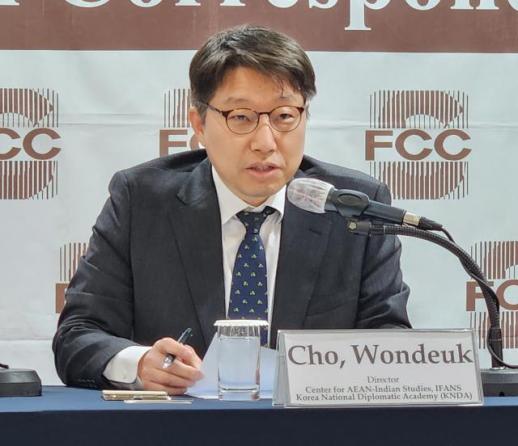 ASEAN specialist defines Presidnt Lee's South Asian tour as move for strategic survival SEOUL, April 27 (AJP) - South Korea has locked in energy and industrial partnerships in India and Viet Nam this month to guard against a global "era of un-order." The agreements signed during the mid-April visits aim to double trade with India to 50 billion dollars and reach 150 billion dollars with Viet Nam by 2030 to counter intensifying supply chain volatility. Cho Won-deuk, director of the Center for ASEAN-Indian Studies at the Korea National Diplomatic Academy, told reporters during a briefing at the Seoul Foreign Correspondents Club on Monday that the tour was a "choice of survival" as major power competition spills over into energy and minerals. The director noted that the Lee Jae Myung administration is pursuing "pragmatic diplomacy centered on national interest" to protect domestic industry from "trade fragmentation" and "energy insecurity." In New Delhi, the focus centered on institutionalizing a roadmap to secure a dominant position in the regional industrial landscape. South Korea and India are committed to a total overhaul of the Comprehensive Economic Partnership Agreement to modernize a framework that has remained largely stagnant for fifteen years. The scholar noted that moves into shipbuilding and defense are "no longer the choice of economy, but the choice of survival." As part of this effort, HD Hyundai signed agreements with Cochin Shipyard to support India's goal of becoming a top-five global shipbuilder by 2047. The mission in Hanoi focused on securing access to energy and raw materials, where Lee Jae Myung declared that the "future of Viet Nam is the future of Korea." The visit resulted in two memorandums of understanding for the construction of new nuclear power plants, which the director characterized as a "big opportunity for Korean companies" seeking to expand in Southeast Asia. South Korea also established a partnership to exploit the rare earth reserves of Viet Nam, which rank sixth in the world with approximately 3.5 million tons. The scholar described the mineral collaboration as "very meaningful" for securing an "alternative supply" of materials required for semiconductors and batteries. South Korea remains heavily dependent on external sources for energy and minerals, according to data from the Korea International Trade Association. The director concluded that in an environment where no country can survive in isolation, it is the "most rational choice for middle powers to bind themselves together." 2026-04-27 17:30:14
 -
 Science Minister Bae Says DeepMind Partnership to Focus on AI Hub, Science Center, Safety The Ministry of Science and ICT said its cooperation with Google DeepMind will move forward on three tracks: building a global AI hub, linking with the National Science AI Research Center, and conducting research on artificial intelligence safety. The ministry said Monday it signed a memorandum of understanding with DeepMind outlining the cooperation. Deputy Prime Minister and Science and ICT Minister Bae Kyung-hoon said a closed-door meeting also covered how the two sides would divide roles going forward. Bae said the government and industry plan to prepare follow-up discussions with DeepMind focused on the bio and medical sector, including securing data, improving model performance and setting strategies for broader adoption. The following is a Q&A with Bae. - What were the key areas discussed in the closed-door meeting? "Discussions centered on three tracks: cooperation on a global AI hub, linkage with the National Science AI Research Center, and AI safety research. Since DeepMind has strong interest in 'solving scientific problems' and 'AI safety,' we agreed to strengthen cooperation in those areas. We are still at an early stage after signing the MOU, and the specific division of roles will be finalized through further talks. The government and industry will prepare plans focused on the bio and medical sector — including securing data, advancing model performance and strategies for wider use — and continue discussions with DeepMind." - What did you mean by mentioning 'Mythos' in your remarks? "It was to stress the importance of an independent foundation model. Without our own model, it is difficult to secure competitiveness in security and cyber safety. There are areas where we can cooperate with DeepMind, but there are also areas we clearly need to build ourselves." - Is there potential for cooperation between domestic companies' models and DeepMind? "Rather than cooperation between individual models, we focused on the broader direction of 'AI-based scientific research' and 'AI safety.' We also shared that independent model development is underway in Korea." - Have the participating universities been decided for Google's AI campus? "Google has only announced an investment in an AI campus in Korea, and the participating universities have not been decided. However, we agreed on the need to expand people-to-people exchanges and discussed steps such as forming a working group." - What was discussed about building AI guardrails? "We agreed on the need for guardrails, in the sense that humans must be able to control AI even as it develops on its own. We also shared the view that guidelines and a regulatory framework are needed so all users — not just certain groups — can use AI safely."* This article has been translated by AI. 2026-04-27 17:28:25
 -
 Socar Offers Tesla FSD Subscription Service in Seoul, Starting at 1.49 Million Won a Week Socar has unveiled a vehicle subscription service offering Tesla cars equipped with the company’s Full Self-Driving (FSD) feature and showcased it through a city driving demonstration. Socar on the 27th held an FSD test-ride event for reporters around the Seongsu and Seoul Forest D Tower area in Seoul. After a destination was set, the vehicle drove itself for parts of the route. The course covered about 4 kilometers round trip and took roughly 25 minutes. The FSD function activated only after the driver fastened a seat belt. During the drive, basic assistance functions such as lane keeping, traffic-signal recognition and intersection handling operated steadily, but sudden situations required immediate driver intervention. The demonstration took place amid Seongsu’s mix of narrow streets and major roads, though the run was conducted mainly on larger roads with fewer variables. The vehicle maintained lanes, recognized signals and passed through intersections while keeping the overall flow of traffic. Differences by driving mode were also noted. FSD offers styles ranging from “Sloth” to “Mad Max,” and the two extremes were compared during the event. Overall patterns were not sharply different, but “Mad Max” accelerated more quickly when pulling away after stops. A Socar subscription business team manager riding in the car described the adjustment process based on personal use. “During the rollout, I tried the FSD function for about 200 kilometers, and it took a few days to get fully used to it,” the manager said. “Depending on a person’s understanding and tendencies, the speed of building trust varies widely.” “At first, you think a lot about when to intervene,” the manager added. “But once you have enough experience, you start to distinguish what the system can handle and when the driver needs to step in.” Socar recently introduced Tesla Model X and Tesla Model S vehicles equipped with supervised FSD and is operating them through its weekly and monthly subscription service, “Socar Subscription.” Three Tesla models are included in the lineup. Pricing is 1.49 million won per week and 3.99 million won per month. Socar said the service avoids upfront costs such as acquisition tax that come with purchasing a vehicle, and it is targeting young professionals who feel burdened by one-time purchases of high-priced cars. Socar said its decision to offer Tesla FSD through a subscription model is tied to its longer-term vision for autonomous driving services. It described “edge case” data — unexpected situations such as sudden pedestrian entry or vehicles cutting in — as central to improving autonomous-driving AI, with the breadth of such learning shaping technical maturity. Jang Hyeok, head of Socar’s Future Mobility TF, said, “The only companies in the world that have secured edge-case data at this scale are Tesla and Socar.” Socar said it secures more than 40,000 cases of accident and driving data annually, totaling about 220,000 cases cumulatively. To obtain more advanced data, Socar said it is testing one full sensor-kit vehicle equipped with LiDAR, seven cameras, and GPS·IMU. It plans to expand that fleet step by step to as many as 1,000 vehicles to improve the quality of autonomous-driving training data. 2026-04-27 17:22:20
 -
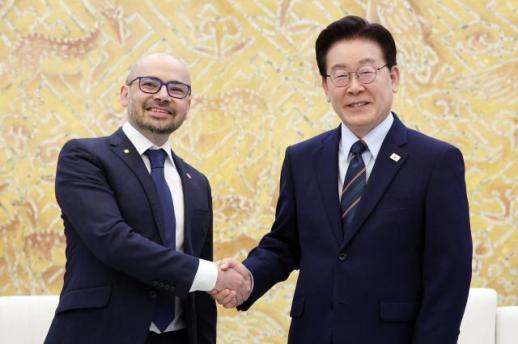 Google to Open AI Campus in Seoul This Year; Lee Says He Often Uses Gemini Google will open a Google AI campus in Seoul within this year to expand cooperation with researchers and startups. Google DeepMind and the government also agreed to build a cooperation framework for K-Moonshot, a government project aimed at AI-based innovation in science and technology. Cheong Wa Dae said on the 27th that President Lee Jae-myung met with Demis Hassabis, Google DeepMind co-founder and CEO, often called the “father of AlphaGo,” and discussed ways to cooperate in the AI field. The meeting was arranged as part of the government’s push to broaden global AI cooperation and work with top AI companies. Since taking office, Lee has met with OpenAI CEO Sam Altman, Nvidia CEO Jensen Huang and SoftBank Group Chairman Son Jeong-ui to continue AI-related cooperation, Cheong Wa Dae said. The government also led the adoption of an “AI initiative” at last year’s APEC meeting in Gyeongju and is working with international organizations including the World Health Organization, the U.N. Development Programme and the International Telecommunication Union to establish a “global AI hub” in South Korea. During the meeting at Cheong Wa Dae, Lee said, “I’m very interested in AI, and the country is investing a lot, but it’s hard to know whether it will go only in a direction that truly helps improve human welfare, or whether it could move toward attacking humans or harming world peace.” Hassabis replied, “You raised a really important topic,” adding, “I think AI should be actively used to advance science and in the medical field. If it is used properly, it looks like it could bring major benefits to people around the world.” Hassabis oversaw the 2016 match between Go champion Lee Sedol and the AI program AlphaGo. He also developed AlphaFold, an AI model for predicting protein structures, and won the Nobel Prize in Chemistry the year before last. He said AlphaGo showed that his team could validate the technology and that it became a starting point for tackling harder problems. He said the goal was to expand those lessons into science and medicine, citing AlphaFold as a leading example that helps researchers better understand diseases. Lee mentioned Google’s generative AI service Gemini, saying, “I use Gemini often, and sometimes it does things I didn’t ask it to do,” and asked whether that was “a kind of bug.” Hassabis said foundation models can veer in a different direction if the guidance provided is not precise, and said safety measures known as “guardrails” must be built in when using and developing AI. He added that as AI becomes more powerful, it will be given greater autonomy, sometimes called agent AI, and said safety controls will be essential if the world enters an era of artificial general intelligence, or AGI. 2026-04-27 17:21:18
 -
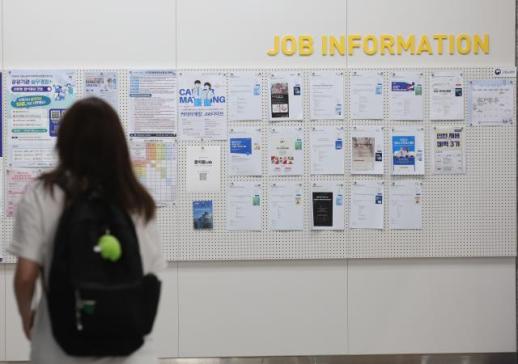 South Korea's 1.7% growth may mark its ceiling as structural limits bite SEOUL, April 27 (AJP)- South Korea’s 1.7% first-quarter growth didn’t just beat expectations; it likely hit the ceiling. According to OECD estimates, the surprise performance suggests the economy is already running at full capacity, signaling that the nation’s structural growth potential has effectively reached its limit. Gross domestic product rose 1.7 percent in the January–March period from the previous quarter, nearly double the Bank of Korea’s earlier forecast of 0.9 percent. Yet the OECD now sees Korea’s potential growth rate falling to 1.71 percent this year and further to 1.57 percent next year, down sharply from 2.50 percent in 2021. It is projected to stagnate at around 1.52 percent by late 2027. While most advanced economies face a slowdown this year due to elevated oil prices and supply disruptions linked to Middle East tensions, Korea’s decline has been notably steeper. From 3.6 percent in 2012, the country’s potential growth rate has dropped by nearly 1.9 percentage points over the past 14 years — implying that more than half of its growth capacity has eroded. By comparison, U.S. potential growth has held relatively stable at around 2 percent, while China’s has slowed from about 8 percent to roughly 4.5 percent. Japan has seen a more gradual decline, from 0.8 percent in 2012 to around 0.2 percent this year. A weakening currency is emerging as a key pressure point. A softer won raises import costs, compresses corporate margins and public finances, and adds inflationary pressure that can constrain sustainable growth. The Korean won has depreciated by more than 30 percent against the U.S. dollar, weakening from around 1,130 per dollar in 2012 to below 1,480 this month. Over the same period, the Chinese yuan declined by about 14 percent, while the Japanese yen fell more sharply. In real effective terms, the weakness is more pronounced. According to the Bank for International Settlements, Korea’s real effective exchange rate stood at 85.44 (2020=100) at end-March — its lowest level in 17 years and among the weakest globally. Economists point to sustained capital outflows and excess liquidity as key drivers. In January alone, residents’ overseas securities investment rose by $13.46 billion, the highest monthly figure on record. For 2025 as a whole, outbound investment exceeded $110 billion, nearly triple the previous year’s level. At the same time, money supply growth has remained elevated. Bank of Korea data show M2 rose 8.75 percent year-on-year in February. Even excluding exchange-traded funds, liquidity expanded 4.9 percent — still outpacing U.S. growth. “One of the main reasons for the won’s depreciation is that Korea’s liquidity supply is expanding faster than that of the U.S.,” said Kim Kwang-seok, head of economic research at the Institute for Korean Economic & Industry. Policymakers have also flagged inflation risks tied to the currency. At his final Monetary Policy Committee meeting on April 10, outgoing BOK Governor Rhee Chang-yong warned that “inflationary uncertainties linked to the weak won remain high” amid geopolitical tensions in the Middle East. Demographics add a deeper structural drag. South Korea’s fertility rate fell to 0.8 in 2025, the lowest in the world, while the share of the population aged 65 or older has risen from below 12 percent in 2012 to more than 20 percent today. The working-age population has declined from 73 percent to about 69 percent over the same period, while manufacturing employment fell from a peak of 4.6 million in 2018 to 4.2 million in 2025. The Korea Employment Information Service expects job growth to slow sharply, with total employment projected to increase by only about 65,000 over the next decade. Experts say structural reform is now unavoidable. “The economy is showing a K-shaped growth pattern heavily reliant on semiconductors,” Kim said, calling for broader industrial diversification. “To sustain growth, labor must be reallocated to sectors with rising demand,” said Lee Chang-soo, head of KEIS. “As demand for low-skilled jobs declines and the need for high-skilled workers increases, comprehensive retraining programs will be necessary.” The won closed at 1,472.5 per dollar on Monday, up 12 won on the day. Despite a third consecutive session of gains, it remains about 2 percent weaker than the 1,442.5 level at the start of the year. 2026-04-27 17:20:56