
Journalist

Lee Hugh
=
-
 GenosisAI Healthcare, Personal AI to Build AI Precision Medicine Platform GenosisAI Healthcare is partnering with Personal AI in a strategic technology collaboration to build an AI-based precision medicine platform. GenosisAI Healthcare Co., led by CEO Lee Hee-won, said it signed the partnership agreement with Personal AI on the 23rd. The deal centers on combining Genosis’ third-generation Human Digital Twin (HDT)-based medical data and platform technology with Personal AI’s on-device AI, federated learning and its personal data-sovereignty platform, my:D. The companies said they will jointly develop a platform that lets patients manage their own medical data while using AI-driven precision medicine services. Genosis said it holds clinical data on 200,000 people, including data related to NK cells, stem cells, genomes and cancer immunotherapy. It is developing disease prediction and personalized health management services by applying HDT technology that analyzes individual genomic information and multi-omics data. Personal AI said its on-device AI stores personal data on users’ devices rather than a central server, and its federated learning trains AI models without directly transferring data outside. It has also developed my:D, designed to let individuals control and use their own data. The companies said the collaboration aims to secure both data security and usability. They said they plan to build a platform that can respond to global privacy and medical data regulations, including GDPR and HIPAA, by combining Genosis’ medical and clinical data with Personal AI’s data-protection technology. As a first step, they plan to build an integrated architecture linking Personal AI’s my:D with Genosis’ Genosis OS. Under the approach, original medical data would not be directly moved off users’ devices; instead, encrypted queries and results would be used. Genosis said it plans to apply its “federated learning and differential privacy-based distributed medical data learning system” technology to the platform. The companies also plan to connect health “my data,” collecting and linking health checkups, prescriptions and medical records to analyze individual health histories, then connecting genomic data with the HDT layer. They said they plan to build a data pipeline that can also link to Genosis’ health supplement recommendation service. In federated learning, they plan to combine Personal AI’s SNP FL-STUDIO with Genosis’ HDT technology. They said they will verify a method that uses data from MSO-affiliated hospitals and overseas partner hospitals for AI training while keeping the data inside each institution. They also said they will consider a data-economy model in which, if a patient agrees to data transactions, part of the related revenue would go to the patient. The companies said they aim to establish a system for using high-quality medical data by combining Genosis’ clinical data with Personal AI’s data distribution pipeline. Customized health supplement commerce is another area of cooperation. The companies said they plan to build a service within the my:D app that runs from product recommendations and purchases to tracking effects, based on Genosis’ gene-based customized health supplement and nutritional supplement manufacturing technology. They said they will also consider analyzing changes in health indicators on the HDT platform to improve recommendation accuracy. They said they also plan to build a global medical AI federated network. The companies said they will gradually expand a federated learning cluster that uses data from overseas partner hospitals — including in Japan, Dubai, Africa and Mongolia — for AI training without transferring the data outside each region. They said they aim to build a global clinical data federation covering 1 million people in 2027. The companies outlined a timeline: starting in the second quarter of 2026, they plan to begin pilot hospital linkage verification, then pursue expansion across the full MSO in the third and fourth quarters of 2026. From 2027, they plan to expand the global federated learning cluster centered on overseas partner hospitals, including in Japan, Dubai and Africa. Lee said, “GenosisAI Healthcare’s 200,000-person clinical dataset accumulated over five years and its third-generation HDT technology are completed as a true global precision medicine service only when they meet Personal AI’s data sovereignty platform.” He added, “Patients owning their data while receiving the best medical care — that is the future of medicine we will build together.” Personal AI said, “Personal AI’s on-device AI and federated learning technologies were designed to solve the issue of medical data sovereignty.” It added, “Combined with Genosis’ world-class clinical capabilities, this will be a turning point for the my:D platform, introduced at CES 2026, to establish itself as a core part of global AI precision medicine infrastructure.”* This article has been translated by AI. 2026-04-27 17:19:11
 -
 Global Military Spending Rises for 11th Year, Setting New Record Led by Europe and Asia Last year, global military spending rose for an 11th straight year, setting a new record. According to the Swedish think tank Stockholm International Peace Research Institute, or SIPRI, which released its “2025 Trends in World Military Expenditure” report on April 26 (local time), worldwide military spending totaled $2.887 trillion (about 4,250 trillion won) last year. Spending rose 2.9% from a year earlier, slowing from 2024’s 9.7% increase. Still, the share of global gross domestic product edged up to 2.5% from 2.4%. Per-capita military spending reached $352, the highest level since 1990. By region, Europe led the buildup. Total European military spending climbed 14% to $864 billion, the highest level in SIPRI’s records. SIPRI researcher Jade Giberto Ricard said the trend reflects Europe’s continued push for greater self-reliance as U.S. pressure grows to increase burden-sharing. The report noted that President Donald Trump has repeatedly urged North Atlantic Treaty Organization members to raise defense budgets, and analysts say European countries expanded spending in response. Military spending also rose sharply in Asia and Oceania. The region spent $681 billion, up 8.1% from a year earlier, the largest increase since 2009. South Korea’s defense spending totaled $47.8 billion, up 2.6% year over year on an exchange-rate basis. SIPRI attributed the increase to continued investment in the country’s “three-axis system,” including missile defense, preemptive strike and retaliation capabilities. Japan’s military spending rose 9.7% to $62.2 billion, and its share of GDP reached 1.4%, the highest since 1958. Taiwan increased spending 14% to $18.2 billion, its biggest rise since 1988; SIPRI said it reflected rising tensions in the Taiwan Strait. SIPRI researcher Diego Lopes da Silva said higher spending by U.S. allies in Asia and Oceania reflects growing doubts about whether the United States will maintain its previous level of security support. China’s military spending rose 7.4% to $336 billion, extending a 31-year run of increases. U.S. military spending, however, fell 7.5% to $954 billion. SIPRI pointed to the halt in new military aid to Ukraine after the launch of the second Trump administration as a key factor. SIPRI researcher Xiao Liang said, “Given the range of crises today and countries’ long-term military goals, this upward trend in military spending is likely to continue.” * This article has been translated by AI. 2026-04-27 17:18:18
 -
 KOSPI, Nikkei close at all-time highs on chip rally, strong institutional buying SEOUL, April 27 (AJP) - South Korea's benchmark KOSPI closed at a fresh record high on Monday, while Japan's Nikkei 225 also finished at an all-time high, as semiconductor-driven gains and strong institutional inflows outweighed concerns over rising oil prices amid the prolonged conflict in the Middle East. The KOSPI rose 2.2 percent to close at 6,615.03 points, after swinging between a low of 6,529.20 and a record intraday high of 6,657.22. Institutions bought 1.10 trillion won (US$747 million) worth of shares, while foreign investors added 888.5 billion Korean won. Retail investors, meanwhile, sold 1.97 trillion won, indicating a rally driven by institutional and offshore flows as risk appetite improved. Large-cap semiconductor stocks led the rally, buoyed by gains in U.S. tech equities and a sharp rise in the Philadelphia Semiconductor Index. Samsung Electronics climbed 2.3 percent to 224,500 won, while SK Hynix jumped 5.7 percent to 1,292,000 won, after hitting an intraday high of 1,317,000 won as investors bet on a sustained memory upcycle and accelerating AI-driven demand. Auto-related stocks also stayed firm, with Hyundai Motor rising 2.1 percent to 524,000 won on improving margin expectations, while others showed mixed trends. Doosan Enerbility gained 1.4 percent and HD Hyundai Heavy Industries edged up 0.3 percent, whereas Hanwha Aerospace slipped 0.6 percent amid profit-taking after recent gains. Battery makers underperformed, with LG Energy Solution falling 3.5 percent to 464,000 won and Samsung Biologics declining 1.2 percent to 1,509,000 won, as investors rotated into semiconductor and cyclical names. Among notable movers, Hyosung Heavy Industries jumped 11.8 percent to 3,971,000 won after brokerages raised target prices on strong North American order momentum, while Korea Zinc ended flat at 1,642,000 won despite progress in its U.S. smelter project. The junior KOSDAQ rose 1.9 percent to close at 1,226.20, after trading between 1,209.30 and 1,229.40. Institutional investors bought 79.9 billion won and retail investors added 139.9 billion won, while foreign investors sold 180.0 billion won. Gains on the junior bourse were led by biotech and robotics shares, reflecting continued retail driven momentum in high growth sectors. Alteogen rose 3 percent to 380,000 won, Rainbow Robotics jumped 9.8 percent to 672,000 won and Samchundang Pharm gained 8.6 percent to 447,000 won, while Ecopro edged up 0.1 percent. Japan's Nikkei 225 also closed at a record high, rising 1.4 percent to 60,537.4, supported by technology gains, ahead of the Bank of Japan's policy decision. Investors widely expect rates to remain unchanged but are watching for any signals on potential tightening as inflation pressures persist. Elsewhere in Asia, China's Shanghai Composite Index rose 0.2 percent to 4,086.34, while Hong Kong's Hang Seng Index slipped 0.2 percent to 25,922.6, reflecting cautious sentiment as investors balanced strong tech momentum against rising oil prices and geopolitical uncertainty. Earlier, U.S. markets closed mixed last Friday, with the Dow Jones Industrial Average falling 0.2 percent, while the S&P 500 rose 0.8 percent and the Nasdaq Composite gained 1.6 percent. The Philadelphia Semiconductor Index jumped 4.3 percent, boosting optimism around the global chip cycle and supporting gains in Asian semiconductor shares. Attention is now turning to a packed global calendar including earnings from major U.S. technology firms and a policy decision from the Bank of Japan, which is expected to provide signals on the future path of monetary policy. Meanwhile, oil prices extended gains as supply concerns intensified. Brent crude held above US$107 per barrel, up 2.5 percent, while WTI rose 2.2 percent to around $96.5, as stalled U.S.-Iran negotiations and continued disruption in the Strait of Hormuz fueled fears of a prolonged supply shock, raising concerns over inflation and global growth. The Korean won strengthened against the dollar, with the currency closing at 1,472.1 won, up 0.4 percent from the previous session, supported by renewed foreign inflows into local equities. 2026-04-27 17:16:16
 -
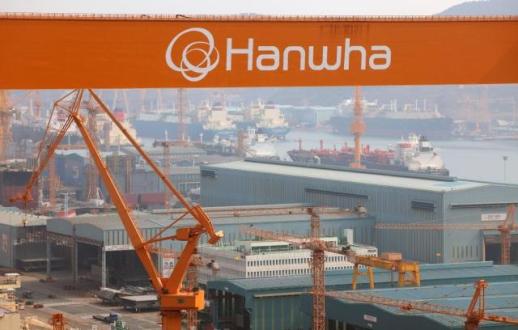 Hanwha Ocean posts 71% surge in Q1 operating profit on high-value ships, FX SEOUL, April 27 (AJP) - South Korean shipbuilder Hanwha Ocean reported better-than-expected earnings for the first quarter, driven by a higher share of high-value vessels and favorable exchange rates. The shipbuilder said in a regulatory filing on Monday that its consolidated operating profit rose 70.6 percent year-on-year to 441.1 billion won ($300 million) in the January–March period. The figure exceeded the market consensus of 375 billion won by 17.6 percent. Revenue came in at 3.21 trillion won, up 2.1 percent from a year earlier, but down 3.4 percent from the previous quarter due to fewer working days. Net profit surged 131.8 percent year-on-year to 500 billion won. As of the end of March, net borrowings stood at 5.07 trillion won, up 212.5 billion won from the end of last year. The strong performance was driven by a higher share of high-priced orders, along with cost cuts and improved productivity. The share of lower-priced LNG carriers ordered in 2022 declined, while more high-priced vessels ordered in 2024–2025 were delivered, helping boost margins. Improved productivity also allowed some vessels to be delivered earlier than planned, bringing forward profits. Since a large portion of payments is made upon delivery, this further supported earnings from high-value ships. Favorable foreign exchange rates also supported earnings. As most shipbuilding contracts are denominated in U.S. dollars, a weaker won increases revenue and profit when converted into local currency. The average exchange rate rose from around 1,330 won per dollar at the time of order to 1,464 won in the first quarter. Analysts estimated that FX effects alone added about 44 billion won in revenue and 15 billion won in operating profit. Hanwha Ocean expects earnings to continue improving as more high-value ship projects are delivered. Demand for LNG carriers and very large crude carriers (VLCCs) is also expected to remain strong. So far this year, the company has secured orders worth $2.45 billion, including four LNG carriers, seven VLCCs and one wind turbine installation vessel (WTIV). In the special ship segment, key projects include Canada’s submarine program (CPSP), a roughly $40 billion bid to replace its aging fleet, and South Korea’s next-generation destroyer project (KDDX), a project to build six advanced Aegis destroyers by 2036. “We aim to contribute to national security by leveraging our shipbuilding and engineering expertise,” the company said. “We will also keep seeking new orders in offshore and energy projects, including FPSOs and FLNGs.” Hanwha Ocean shares closed at 133,500 won on Monday, down 1.04 percent from a day earlier despite strong earnings, after trading between 131,700 won and 137,500 won. 2026-04-27 17:12:45
 -
 DeepMind CEO Demis Hassabis Visits South Korea, Meets Samsung, SK hynix and Hyundai on AI Demis Hassabis, CEO of Google DeepMind and a key architect of Google’s artificial intelligence strategy, has visited South Korea for the first time in 10 years. During the trip, he is set to meet executives from major South Korean companies including Samsung Electronics, SK hynix and Hyundai Motor, drawing industry attention a decade after the 2016 match between AlphaGo and Lee Sedol. Industry officials said Hassabis will hold closed-door meetings on the 28th with senior figures from Samsung Electronics, SK hynix and Hyundai. The talks are expected to focus on cooperation to strengthen a “global AI ecosystem” that links hardware and software, and to reinforce existing partnerships. Hassabis met at 3 p.m. with President Lee Jae-myung and Deputy Prime Minister and Minister of Science and ICT Bae Kyung-hoon at Cheong Wa Dae to discuss cooperation between the South Korean government and companies. On the 29th, he is scheduled to attend the “Google for Korea 2026” event and hold a dialogue with Lee Sedol on the future of AI. The most closely watched stop is his meeting with Samsung. Samsung and Google have long been allied through Android. After formalizing an AI partnership in 2024, Samsung began adding Google’s Gemini AI starting with the Galaxy S24 series. Hassabis is expected to discuss next-generation on-device AI and development of dedicated semiconductors with Samsung executives. Samsung and Google have also been pushing AI-driven form-factor innovation in areas such as mobile devices and smart glasses. In a video message for last year’s Galaxy S25 series launch, Hassabis said Google’s AI agent “Gemini Live” would be applied to the Galaxy S25 and integrated with Samsung apps to deliver new functions across Calendar, Notes, Reminder and Clock. He said the companies would expand to platforms better suited to AI assistants, including smart glasses and headsets. Cooperation with SK hynix is another focal point. SK hynix, a leading supplier of high-bandwidth memory, is viewed as one of the few indispensable partners in HBM, a key component for AI computing. Google’s in-house Tensor Processing Unit requires HBM, and the company is reported to be considering HBM4E for a next-generation TPU slated for release next year. The companies are expected to discuss issues including customized memory supplies optimized for Google TPUs. A meeting with Hyundai is also drawing interest as the companies look to future mobility. Google has been deepening cooperation by supplying about 50,000 Hyundai Ioniq 5 vehicles to its robotaxi unit Waymo. Hassabis is expected to discuss ways to apply AI to accelerate Hyundai’s shift to software-defined vehicles and to advance autonomous-driving algorithms. “His visit, as the ‘father of AlphaGo,’ shows that Korean companies’ AI hardware capabilities hold a key position in the global market,” an industry official said. The official added that the trip could further solidify a broad AI alliance between Google and South Korean companies spanning both hardware and software.* This article has been translated by AI. 2026-04-27 17:12:20
 -
 People Power Party Picks Kim Young-hwan as North Chungcheong Governor Candidate Kim Young-hwan, the North Chungcheong governor who was once cut from the People Power Party’s nomination race but returned after a court granted an injunction, was selected as the party’s final candidate for governor in the June 3 local elections. He will face Shin Yong-han, the Democratic Party’s candidate, in the general election. Park Deok-heum, chair of the party’s Nominations Management Committee, told reporters after a committee meeting at party headquarters in Yeongdeungpo-gu, Seoul, on Sunday that Kim was chosen based on the results of the primary held April 25-26. After his win was confirmed, Kim said, “Now we are one under the name of the People Power Party,” and urged unity “for North Chungcheong’s real development and for victory in the general election.” He said he would run “with policies and a vision to develop North Chungcheong and improve residents’ quality of life,” adding that he aims to “raise the level of politics in North Chungcheong” through a “clean and exemplary policy-focused campaign.” Kim had previously been cut from the race under the nomination committee led by then-chair Lee Jeong-hyeon. Kim filed for an injunction seeking to suspend the cut, and the court granted the request, allowing him to enter the party primary. He went on to win the final round and secure the nomination. With Kim’s selection, the People Power Party has decided its candidates for all metropolitan and provincial governor and mayor races except Gyeonggi Province. The party said its Gyeonggi governor candidate will be announced May 2. The party also said all 11 incumbent metropolitan and provincial heads affiliated with the People Power Party, including Kim, will run in the June 3 elections. That contrasts with the Democratic Party, where all five incumbent metropolitan and provincial heads elected in the local elections four years ago lost their party primaries, the party said. Separately, the party’s nominations committee said incumbent Gangneung Mayor Kim Hong-kyu won the primary for the party’s candidate in Gangneung, Gangwon Province.* This article has been translated by AI. 2026-04-27 17:09:07
 -
 South Korean Court Acquits Security Guard After CCTV Shows Self-Defense A security guard charged with assault for restraining a woman who kicked him in the groin has been acquitted after CCTV footage supported his account. According to legal officials on the 27th, the Changwon District Court’s Criminal Division 4, in a single-judge trial presided over by Judge Seok Dong-woo, found apartment security guard A, 30, not guilty of assault. Prosecutors said A assaulted B, 39, by knocking her to the ground after she kicked him in the groin at about 1:40 p.m. on Sept. 16 last year at the back gate of an apartment complex in Uichang-gu, Changwon, South Gyeongsang Province. The court heard that A had told B to remove all flyers she had posted and tried to stop her from leaving by holding her bag. B then punched A several times and kicked him in the groin, according to the account presented in court. The judge said it was confirmed that A had been handling complaints related to the flyers and that he was assaulted by B, including being kicked in the groin, even after he held her bag to prevent her from leaving the scene. The judge added that the CCTV video showed A supporting B as he brought her down so she would not be hurt by hitting the ground, then holding her down to calm her before releasing her. “Taken together, these circumstances show A’s actions amounted to self-defense to ward off B’s assault, or a justified act that does not violate generally accepted social norms,” the court said in explaining the verdict. 2026-04-27 17:08:24
 -
 Genosys AI Healthcare, JG Group Sign 5 Billion Won Strategic Investment, Partnership Deal Genosys AI Healthcare has signed a 5 billion won strategic investment and broad business partnership agreement with JG Group. Genosys AI Healthcare Co. (CEO Lee Hee-won, Genosys) said it signed the deal on April 24 with investment firm JG Group Co. (Chairman Lee Jae-gu, JG Group). Under the agreement, the companies will jointly pursue an AI healthcare platform based on a Human Digital Twin (HDT) and a business to produce and distribute genome-based personalized health supplements. The total investment is 5 billion won. Founded in 2022, Genosys is an AI healthcare company developing hyper-personalized health management services that integrate and analyze individual genomic information, multi-omics data and lifelog data. It aims to build a platform that links HDT-based disease risk prediction and health analysis to personalized supplement recommendations. JG Group has invested mainly in real assets, consumer goods, food distribution and international resource infrastructure. It operates 11 affiliates in and outside South Korea, including JG Trading, JG Financial, JG Nature, JG HOLDINGS USA and JG International PNG, and said its investment assets total about 90 billion won. The companies said they plan to combine Genosys’ AI healthcare technology with JG Group’s global distribution and infrastructure capabilities. Genosys said it will accelerate HDT platform development and expand infrastructure with the investment, while JG Group will participate in expanding healthcare and supplement businesses using Genosys’ technology. They identified three main areas of cooperation. First, they will jointly develop an HDT-based AI healthcare platform designed to analyze multi-omics data — including genomics, proteomics and metabolomics — to predict health status and disease risk and provide personalized health management solutions. Second, they will work on production and distribution of genome-tailored health supplements. Genosys said it will expand its lineup based on genomic analysis results, and JG Group said it will support market entry using its domestic and overseas distribution networks. Genosys’ supplement brand GenoBioFit is expected to be included in future cooperation. Third, they plan a medical consulting and clinic management support business, combining AI-based medical management solutions with operational support services to build a business-to-business model. “Genosys AI Healthcare will change the paradigm of disease prediction, prevention and personalized treatment through Human Digital Twin technology,” Lee said, calling the partnership with JG Group “a decisive turning point” to implement that vision. Lee Jae-gu, chairman of JG Group, said the group has added strategic value to promising growth companies based on real assets and a global network. He said Genosys’ AI healthcare technology and JG’s investment and distribution capabilities will work together to build a healthcare platform aimed at leading the Asia-Pacific market. The companies said they plan to complete payment of the full 5 billion won investment by Aug. 31. Of that, 2.5 billion won will be used as Genosys development and operating funds for advancing the HDT platform and expanding clinical applications. The remaining 2.5 billion won will be used to establish a new business entity jointly funded 50-50 by the two companies. Genosys said it plans to launch a beta version of the platform and expand its supplement line in the second half of 2026. It said it will then use JG Group’s distribution networks to target both consumer and business markets, and will also review entry into North America and Oceania through cooperation with JG HOLDINGS USA and JG International PNG.* This article has been translated by AI. 2026-04-27 17:07:27
 -
 Korail to Run One-Day Gyeonggi DMZ Train Trip Linking Security Tours and Local Markets Korail Tourism Development will run a special, one-day “Gyeonggi-do DMZ Train” on May 2, aiming to pair security-focused tourism in the northern Gyeonggi Province Demilitarized Zone with support for local businesses. The trip is marketed as a value rail package in the 30,000-won range that links local festivals and traditional markets. The product was jointly planned with the Gyeonggi Tourism Organization and the Gyeonggi Northern Regional Headquarters of the Small Enterprise and Market Service. It will operate as a temporary commuter train on the Gyeongui Line, departing from Seoul Station and stopping at Ilsan and Munsan before heading to border areas. The day trip includes round-trip rail fare, connecting vehicles and experience fees, allowing travelers to visit a festival, DMZ-related sites and a traditional market in a single itinerary. Four themed courses will be offered. “DMZ Healing Therapy” includes Camp Greaves, DMZ forest healing and Munsan Jayu Market. “DMZ and Paleolithic Festival” visits the Yeoncheon Paleolithic Festival and Jaein Falls. “Yeoncheon DMZ Close to Home” covers the Taepung Observatory, Jaein Falls and Jeongok Traditional Market. “Gimpo DMZ and a Relaxing Cup of Coffee” includes Gimpo Marine Park, Aegibong Peace Ecological Park, a millstone coffee experience and the Daemyeong Port seafood market. The promotion also targets spending in neighborhood commercial areas. All participants will receive either Onnuri gift certificates or Yeoncheon Love gift certificates to use during the trip for meals or local specialty purchases. Korail Tourism Development said it plans to maximize synergy with local merchants by operating on-site promotional booths timed to the government’s nationwide consumption campaign, the “2026 Companion Festival” (April 11-May 10), and the Yeoncheon Paleolithic Festival (May 2-5). “We wanted to offer a richer experience by combining signature local content such as the Yeoncheon Paleolithic Festival with rail travel,” said Lee Woo-hyeon, acting CEO of Korail Tourism Development. “We will continue to develop travel products that use the rail network to highlight hidden local attractions and bring vitality to neighborhood commercial districts.”* This article has been translated by AI. 2026-04-27 17:04:10
 -
 Korea moves to lock in tourism windfall as regional travel shifts boost arrivals SEOUL, April 27 (AJP) - South Korea is moving to lock in a tourism windfall as shifting regional travel patterns and stronger visitor spending drive a surge in foreign arrivals ahead of a holiday-packed May. The country welcomed a record 4.76 million foreign visitors in the first quarter, up 23 percent from a year earlier, with 2.06 million arriving in March alone, according to the Ministry of Culture, Sports and Tourism. The March spike was partly driven by the full-member comeback performance of BTS in Gwanghwamun, which drew global fans and boosted visits to nearby cultural sites such as Gyeongbokgung Palace. Beyond headline numbers, officials say the recovery is becoming more structural. Arrivals through regional airports rose nearly 50 percent in the first quarter, while 34.5 percent of visitors traveled outside Seoul — signaling a broader geographic spread in tourism demand. Visitors are also staying longer and spending more. Overnight stays in non-capital regions rose 36.2 percent, while foreign card spending increased 23 percent to 3.21 trillion won. Overall visitor satisfaction reached 90.8 points. Booking data reinforces the trend. Trip.com ranked Seoul as the world’s top destination for spring flight bookings, with reservations up 83 percent from a year earlier, outpacing Tokyo and Osaka. The spillover is increasingly visible beyond the capital. Cheongju, about 120 kilometers south of Seoul, recorded a 962 percent jump in visitors, followed by Busan with 131 percent and Jeju with 129 percent. Local governments are moving quickly to extend the momentum. Busan has launched a rail-linked tourism campaign with Korail, offering discounts of up to 50 percent on high-speed KTX fares through September. The promotion bundles transport with major events such as the Haeundae Sand Festival in May, the Busan Port Festival in June, and large-scale exhibitions including G-STAR 2026. Officials say the goal is to spread demand beyond peak seasons and encourage longer stays. Growth has been broad-based across major markets. China remained the largest source of visitors, with arrivals rising 29 percent to 1.45 million, followed by Japan at 940,915 visitors, up 20.2 percent. Taiwan posted the fastest growth at 37.7 percent, while arrivals from the Americas and Europe rose 17.1 percent. Cruise traffic also rebounded, with calls at ports including Jeju, Busan and Incheon reaching 338, up 52.9 percent from a year earlier. Momentum is expected to continue into the second quarter. Japan’s Golden Week and China’s May Day holiday are likely to bring another wave of visitors, with H.I.S. ranking Seoul as the top overseas destination for the period. Data from Airbnb showed South Korea ranked first in global destination searches for the May Day holiday, with interest rising fivefold from a year earlier. Part of the surge may reflect shifting regional travel dynamics. China’s Global Times reported that about 45 percent of scheduled flights from mainland China to Japan during the five-day holiday period had been canceled. Data from the Japan National Tourism Organization showed Chinese arrivals to Japan fell 55.9 percent in March, marking a fourth straight monthly decline. The shift is increasingly redirecting demand toward Korea, reinforcing its position as a key alternative destination in Northeast Asia. 2026-04-27 17:04:01