
Journalist

Lee Hugh
=
-
 Poland’s Tusk Questions Whether U.S. Would Honor NATO Defense Pledge if Russia Attacks Polish Prime Minister Donald Tusk has publicly questioned the United States’ commitment to NATO’s collective defense pledge, saying Europe’s security hinges on whether Washington would act if Russia attacked a member state. Reuters reported on 24일(현지시간), citing a Financial Times interview, that Tusk said, “Europe’s biggest and most important question is whether, if Russia attacks a NATO member, the United States is ready to act as a loyal ally, as the treaty states.” His remarks reflect concerns that U.S. policy toward Europe and pressure on allies under President Donald Trump have shaken confidence in Washington’s security guarantees. Tusk described the risk of a Russian attack as a near-term threat. “The key question for the entire eastern front and for my neighboring countries is whether NATO is ready — politically and also militarily and logistically — to respond to a situation like a Russian attack,” he said. Calling it “a really serious issue,” he added that he was speaking in “months, not years.” He said other NATO members should treat collective defense obligations as seriously as Poland does, and that allies need confidence they attach the same weight to those duties. Poland is a key NATO country on the alliance’s eastern flank, bordering Russia and Belarus. Tusk also urged a stronger role for the European Union. He said the EU must become a “real ally” in protecting the continent and called for clearer implementation of Article 42(7) of the EU treaty, the mutual defense clause requiring member states to assist a country that comes under armed attack. He said defense pledges must be backed by real capabilities. “To be a real alliance, not just one on paper, you need real tools and strength, including the ability to move defense assets and troops across countries,” Tusk said. He called it “a very practical issue today,” adding that his “obsession and mission” is to reunite Europe through “a joint effort for common defense and protection of the eastern border.”* This article has been translated by AI. 2026-04-24 19:09:18
 -
 Prosecutors Reject Police Request for Arrest Warrant for HYBE Chairman Bang Si-hyuk Prosecutors have rejected police requests for an arrest warrant for HYBE Chairman Bang Si-hyuk, who is accused of misleading investors during the company's listing process and reaping large illicit gains. Prosecutors said they did not see sufficient grounds at this stage to justify detention. The Seoul Southern District Prosecutors Office's Financial and Securities Crime Joint Investigation Division said Thursday it returned the warrant request to police and asked for additional investigation. Bang is suspected of fraudulent unfair trading under the Capital Markets Act. Prosecutors said there was "insufficient explanation" for why an arrest was necessary at this point. The Seoul Metropolitan Police Agency's Financial Crimes Investigation Division had sought the warrant on April 21, after about 16 months of investigation since launching an internal probe in December 2024. Police suspect that in 2019, ahead of HYBE's IPO, then known as Big Hit Entertainment, Bang told existing investors that there were no plans to go public or that the IPO would be delayed, inducing them to sell their stakes. Police believe the shares were steered to a special-purpose company set up by a private equity fund involving former HYBE executives. After HYBE listed on the Kospi in October 2020, the private equity fund sold the shares. Investigators say Bang received a portion of the profits under a prearranged shareholder agreement. Police estimate the alleged illicit gains at about 190 billion won, and as much as 260 billion won. Under the Capital Markets Act, using false information or improper schemes to gain from trading financial investment products is prohibited. If the illicit gain exceeds 5 billion won, the penalty can be life imprisonment or at least five years in prison. Police said they searched the Korea Exchange and HYBE headquarters, questioned Bang five times, imposed a travel ban and sought asset preservation measures for some shares. They also cited concerns about possible evidence destruction, including circumstances such as a phone replacement, according to reports. With prosecutors returning the warrant request, the case moves into a supplementary phase. Police are expected to decide whether to seek the warrant again after further legal review and additional evidence collection. Bang's side has denied all allegations, saying the IPO was not finalized at the time and that the share sales were made at investors' request. It also says the profit-sharing arrangement was proposed by the investor side. The case has drawn attention as an alleged capital markets crime tied to the listing of a major entertainment company. Investigators are expected to focus on whether fraudulent unfair trading can be established and on the scope of any illicit gains. * This article has been translated by AI. 2026-04-24 18:42:24
 -
 SME Ministry Holds Startup Forum at Sungkyunkwan University; K-Beauty Vietnam Push and More SME Ministry holds startup forum at Sungkyunkwan University, shares support plans The Ministry of SMEs and Startups said April 24 it held a roundtable at Sungkyunkwan University’s Natural Sciences Campus with student startup clubs, students interested in entrepreneurship and alumni founders. Participants shared startup ideas and discussed difficulties in preparing to launch businesses, along with areas they said need improvement. The ministry also heard views on campus startup-support programs, ways to link them with the “Startup for Everyone” initiative, and policy support needed in the early stages. First Vice Minister Noh Yong-seok said he hopes young people will use “Startup for Everyone” to become more comfortable with entrepreneurship and to develop their ideas. “The government will be a reliable helper so that young people’s creative ideas can lead to real startups,” he said. KOSME backs K-beauty expansion into Vietnam with 1-on-1 buyer meetings The ministry and the Korea SMEs and Startups Agency said they held a business matchmaking event April 24 (local time) at the Lotte Hotel Hanoi to support K-beauty companies entering Vietnam. The event paired Korean K-beauty small and midsize companies with local buyers for one-on-one export talks on site, and was designed to support market entry based on advance research into distribution channels. Fifteen K-beauty SMEs with strong potential for local expansion took part. Vietnamese beauty buyers visited booths to review products and technology and hold in-depth discussions. Park Jang-hyeok, KOSME’s director for global growth, said the program goes beyond consultations by linking companies to distribution placement and follow-up support. He said KOSME will continue expanding on-the-ground assistance for entry into promising overseas markets. Public Home Shopping wins culture minister’s top plain-language award for 2nd year Public Home Shopping said April 24 it received a Culture, Sports and Tourism Ministry minister’s commendation for a second straight year after being named the top institution in the “2025 Easy and Correct Public Language” evaluation at the “2026 Joint Training Session for Korean-Language Officers and Language-Culture Centers.” In a news release, the company said it ranked first among 331 public institutions for avoiding difficult words, Chinese characters and foreign scripts. Public Home Shopping said it was selected as one of 24 outstanding institutions in the 2023 evaluation, then was named a top public-language institution in 2024 and 2025. A company official said it has worked to use proper Korean in the distribution industry, where loanwords are common, and pledged continued efforts to communicate with consumers in easy, comfortable language. KD Navien installs dehumidifying ventilation air purifiers in Seoul smart shelters KD Navien said April 24 it installed its dehumidifying ventilation air purifier — with dehumidification, ventilation and air-cleaning functions — at 20 “smart shelter” bus stops in Seoul’s Jung-gu district, including stops near Samsung Main Building and the Sogong-dong community service center. Smart shelters are public waiting areas designed to help people wait for public transportation during heat waves, cold snaps and fine-dust conditions. They offer smart services such as heating and cooling, air purification and Wi-Fi. KD Navien said its unit uses a “dual dehumidification solution” to maintain a relative humidity of 40% to 60% and, unlike air conditioners or dehumidifiers, manages humidity efficiently without changing temperature. The company said it is also seen as helping reduce heating and cooling energy use. A company official said a humid summer heat is expected this year, and the device’s impact in green smart shelters is likely to be greater. 2026-04-24 18:10:43
 -
 Hyundai Motor Group to Build AI, Software R&D Hub in Wirye With 8 Trillion Won Investment Hyundai Motor Group is moving to create a new research hub after acquiring a site tied to a mixed-use development project near Bokjeong Station in Seoul’s Songpa district. The group is expected to relocate existing research staff from its Namyang Research Center to the new hub once it is built. Hyundai Motor, Kia, Hyundai Mobis, Hyundai Steel and Hyundai Rotem said in regulatory filings on Thursday that they will acquire equity securities in a new corporation tentatively named HMG Future Complex, which will operate a real estate leasing business. The filings said the affiliates will make new capital contributions to secure a combined research and office base for the group’s future businesses. The total contribution will be 7.3281 trillion won. By company, Hyundai Motor will invest 2.8886 trillion won for 2,888,550 shares; Kia 2.3635 trillion won for 2,363,450 shares; Hyundai Mobis 1.0988 trillion won for 1,098,800 shares; Hyundai Steel 516.4 billion won for 516,400 shares; and Hyundai Rotem 460.8 billion won for 460,800 shares. Hyundai Motor Group said total investment will reach 8 trillion won when additional affiliate stakes to be invested later are included. The facility will be used as a research hub focused on artificial intelligence and software. Construction is scheduled to begin in the first half of this year, with completion planned for the end of 2030. The group said it decided on the project after weighing rising demand for office space due to business expansion and organizational upgrades, aging and overcrowded existing research facilities, instability in leased offices for affiliates, and inefficiencies from having operations spread across multiple sites. * This article has been translated by AI. 2026-04-24 18:09:18
 -
 New Seoul Arts Center President Jang Han-na Vows to Broaden Access Jang Han-na, the newly appointed president of the Seoul Arts Center, said on the 24th that she would “faithfully and diligently” carry out her duties so the center becomes “a hub for culture and the arts that is open and closer to more people, embracing this era.” Jang made the remarks after receiving her letter of appointment from Culture, Sports and Tourism Minister Choi Hwi-young. Her term is three years. She added, “It is an honor to be able to contribute to the future of the Seoul Arts Center with the experience I have built as a musician on stages around the world, and I feel a heavy responsibility.” Opened in 1988, the Seoul Arts Center operates performance and exhibition venues including a concert hall, an opera house, the Seoul Calligraphy Art Museum and the Hangaram Art Museum. It is considered one of South Korea’s key cultural spaces, expanding public access to the arts and supporting foundational performing arts such as classical music, opera, ballet and dance. Choi said public and arts-sector interest in Jang’s appointment is high, and urged her to use her experience and leadership to present a vision for a “new leap forward” as the center approaches its 40th anniversary in 2028 and to energize overall management. * This article has been translated by AI. 2026-04-24 18:06:15
 -
 South Korea Forecast: Clear Skies, Highs Up to 31C With Wide Day-Night Swings Saturday the 25th is expected to be mostly clear nationwide, with inland areas heating up to around 30C, bringing early-summer-like warmth. Morning temperatures, however, will drop to around 10C in many places, creating sharp day-to-night swings. Forecast morning lows include 8C in Seoul, 7C in Chuncheon, 8C in Gangneung, 6C in Daejeon, 7C in Jeonju, 7C in Gwangju, 4C in Daegu, 10C in Busan and 11C on Jeju Island. Afternoon highs are expected to reach 27C in Seoul, 29C in Chuncheon, 25C in Gangneung, 30C in Daejeon, 30C in Jeonju, 31C in Gwangju, 27C in Daegu, 21C in Busan and 19C on Jeju. Seoul is forecast to rise from 8C in the morning to 27C in the afternoon, a 19C swing. Daejeon is expected to climb from 6C to 30C, and Gwangju from 7C to 31C, with inland areas seeing especially large gaps. Conditions will also be dry. A dry weather advisory has been issued for northwestern Seoul and for Chuncheon, Gangneung, Daejeon, Jeonju and Daegu, and authorities urged caution to prevent wildfires and other fires. The Korea Meteorological Administration said that even if temperatures rise sharply during the day, it may feel cool in the morning and at night, advising people to bring a light outer layer when going out.* This article has been translated by AI. 2026-04-24 18:03:26
 -
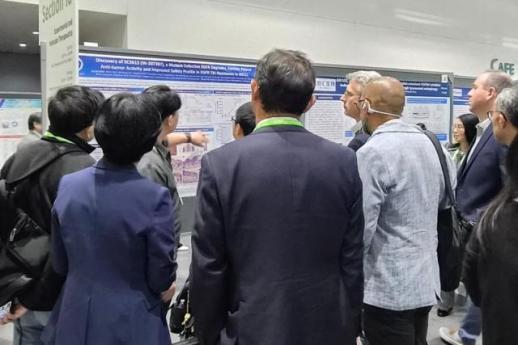 Dong-A ST, Aptis and Celltrion Pharm present next-generation cancer R&D at AACR 2026 Dong-A ST and Aptis present next-generation cancer pipeline at AACR Dong-A ST said April 24 that it and its subsidiary Aptis, an antibody-drug conjugate (ADC) specialist, presented 10 preclinical studies on next-generation cancer pipeline programs at the American Association for Cancer Research meeting (AACR 2026). The presentations included results on a PARP7 inhibitor, EGFR-targeted protein degraders and bispecific antibody ADCs. Dong-A ST’s PARP7 inhibitor candidate SC5024 showed a “dual anti-cancer mechanism” in preclinical testing, inducing both tumor-cell suppression and immune activation, the company said, suggesting potential for use alone or in combination. It also presented an anti-cancer strategy using EGFR-targeted protein degraders SC3613 and SC3499, co-developed with HK inno.N, designed to selectively eliminate mutant EGFR proteins. The companies also outlined a treatment strategy based on a bispecific ADC platform. Bispecific ADCs combining Dong-A ST’s bispecific antibody platform with Aptis’ linker technology — Nectin-4×PD-L1, HER2×AXL and Claudin18.2×HER2 — were analyzed using omics and AI based on patient-derived cancer cells, and were presented as having potential to address drug resistance and tumor heterogeneity. Oh Yun-seok, Dong-A ST vice president and chief scientific officer, and Choi Hyeong-seok, president of Aptis, introduced key pipeline programs and research strategy at the meeting and discussed possible collaboration with global drugmakers, the companies said. Celltrion Pharm presents results for two dual-payload ADC programs at AACR 2026 Celltrion Pharm said April 24 it presented research results at AACR 2026 in San Diego on two new pipeline candidates based on its dual-payload ADC platform. The company said it first unveiled the platform at AACR 2025 with its HER2-targeting candidate CTPH-02, which links two payloads with different mechanisms of action to a single antibody. The platform showed strong cytotoxicity not only in cell lines with high HER2 expression but also in those with low expression, it said. Celltrion Pharm also presented CTPH-08, a candidate targeting FRα, applying the platform to a new target. The company said the data supported the scalability of the dual-payload approach and suggested potential to address tumor heterogeneity and drug resistance. Hyundai Bioscience joins Vietnam economic delegation, signs MOU with local drugmaker Hyundai Bioscience said April 24 it signed a broad memorandum of understanding with Vietnamese pharmaceutical company Vepaco covering approval, importation, distribution and supply of an antiviral drug in Vietnam. The company said the signing took place during a forum attended by key figures from both countries to discuss economic cooperation, with South Korea’s minister of trade, industry and energy and Vietnam’s minister of finance present. Hyundai Bioscience said the agreement sets out basic directions and a roadmap for jointly pursuing regulatory approvals and supply projects. The companies plan to form an executive-level working group to hold regular meetings and to detail cooperation tasks, including patient linkage using local medical and pharmacy networks. Hyundai Bioscience said it aims to link dengue clinical work in Vietnam with approval and commercialization strategies.* This article has been translated by AI. 2026-04-24 17:59:24
 -
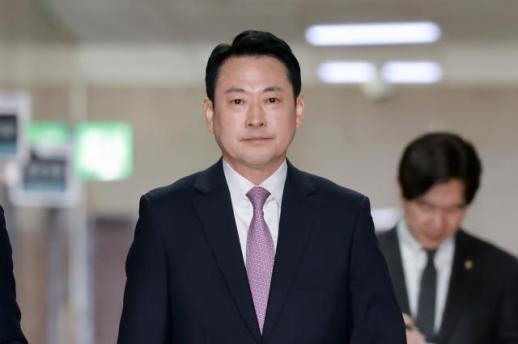 South Korea’s People Power Party Feuds Over Leader Jang Dong-hyeok With Local Vote Near 6·3 local elections and parliamentary by-elections are 40 days away, and infighting in the People Power Party is intensifying over calls for leader Jang Dong-hyeok to step down. Pressure has grown amid controversy over a U.S. trip and the party’s lowest support level since its founding, but Jang has signaled he will stay, suggesting the dispute will continue. Jang on April 24 rejected demands that he resign. In a Facebook post, he wrote, "Stepping down as party leader because the situation is not good is not what a responsible politician does." He added, "Since becoming party leader, I have run toward victory in the local elections," and said he would "finish the local elections to the best of my ability and be evaluated with confidence." He moved to tamp down speculation about his future about three hours after saying he would think about his position. Earlier that morning, Jang told reporters at the National Assembly that he would consider whether resigning 40 days before the local elections would truly fulfill his responsibility as leader and whether it would help the party win. He was responding after a poll released the previous day showed the party’s support at 15%. In the National Barometer Survey released April 23, the Democratic Party’s support stood at 48% and the People Power Party’s at 15%. The poll was conducted April 20-22 by Embrain Public, Kstat Research, Korea Research and Hankook Research through telephone interviews of 1,005 adults age 18 and older. The margin of error was plus or minus 3.1 percentage points at the 95% confidence level. (For details, see the National Election Survey Deliberation Commission website.) Calls for Jang to step aside continued within the party. Rep. Bae Hyun-jin, who chairs the party’s Seoul chapter, said Jang’s news conference was the first time he had shown a willingness to make a decision, whether by moving to a second-line role or resigning, for the sake of candidates and the party. She warned that May 14 was Jang’s final deadline, saying that after all main candidates are registered, "there will be no Jang Dong-hyeok left in the People Power Party." Seoul Mayor Oh Se-hoon, the party’s candidate for Seoul mayor, also urged Jang to pull back. In a media interview, Oh said, "The time has come when restraint or a decision is needed," adding that candidates "honestly" want Jang to be less visible because they believe that would help. Citing the party’s lowest support since its founding, Oh said the leader should feel responsible and reduce his public activities, effectively calling for Jang to move to the sidelines. Others defended Jang. Twenty-eight party committee chairs who are not lawmakers called for an end to efforts to shake him. Park Jong-jin, head of the party’s Incheon chapter, said at a National Assembly news conference that demanding the resignation of a legitimate leader elected by party members and guaranteed a term was an act that would ruin the election. He asked whether the party could win by excluding a leader who has the support of more than half of party members and running a separate campaign committee. Park said that with the local elections close, it was undesirable to undermine the leadership system regardless of who leads, and the party should unite. With the local elections nearing and Jang publicly refusing to resign, he appears unlikely to step down before voting ends. Still, some in the party say the leadership turmoil has become an election risk as the leader is distracted by questions about his future.* This article has been translated by AI. 2026-04-24 17:58:03
 -
 South Korea Finds 32 Syringe Sellers Violating Anti-Hoarding Rules, Launches Ongoing Checks The Ministry of Food and Drug Safety said April 24 it found 32 companies nationwide that violated a government notice banning syringe hoarding, following a special inspection aimed at stabilizing distribution. The ministry said it will file complaints and issue corrective orders against the companies and will continue to monitor compliance through follow-up inspections. The ministry disclosed the results at a briefing at its Seoul regional office in Yangcheon-gu. The first round of inspections, conducted from April 20 to 22, targeted sellers with low sales compared with incoming stock, unusually large inventories, supplies concentrated on specific buyers, or sales at high prices. Inspectors found four companies that stored syringes for at least five days in excess of 150% of their monthly average sales volume, and 30 companies that supplied excessive quantities to the same buyers. Two companies were found to have committed both types of violations. One company was caught holding about 130,000 syringes for more than five days as inventory far exceeded its sales volume. The ministry ordered the excess stock to be shipped within 24 hours to online shopping malls experiencing shortages. Another company was found to have supplied about 620,000 syringes — up to 59 times its monthly average sales volume — to 33 repeat buyers, including specific medical institutions and sellers. Kim Myeong-ho, director general of the ministry’s Medical Device Safety Bureau, said the ministry will file complaints and issue corrective orders, and will immediately pursue additional complaints if violations are confirmed again during re-inspections. The ministry said syringe production remains at normal levels compared with last year and that supply is not a problem. It said daily output averaged about 3.6 million units last year and has risen to more than 4.5 million this year. The ministry said it believes anxiety over recent supply instability led to hoarding at some points in the distribution chain. The ministry said it is collecting data from about 1,000 companies and analyzing distribution routes to check whether supplies are being concentrated at specific firms. It also said it is responding quickly to on-site enforcement through a reporting center where the public can report syringe hoarding. The ministry said it will strengthen monitoring across manufacturing and distribution and continue cracking down on actions that disrupt distribution order and risk supply disruptions.* This article has been translated by AI. 2026-04-24 17:57:10
 -
 TJ Media Meets With Dealers to Revive Sluggish Karaoke Market TJ Media convened talks with dealership representatives as it seeks to reinvigorate a sluggish karaoke market. TJ Media, the top seller by revenue in South Korea’s karaoke industry, said April 24 that it held a two-day regional council meeting with dealers on April 22 and 23 to discuss ways to boost the market. The company said the meeting was designed to explore cooperation for shared growth, gather broad feedback from the field on customer needs and market changes, and look for a path to a rebound for the industry. Regional dealer heads and TJ Media executives and staff attended, sharing recent market trends and reviewing operational difficulties karaoke venue owners face in day-to-day business, the company said. Participants also discussed how to attract new customers, what kinds of entertainment features could encourage repeat visits, and how to improve operating efficiency, it said. The meeting also checked market reaction to TJ Media’s recently introduced karaoke accompaniment systems, the A3 and P3. Attendees shared field feedback that customer satisfaction with sound improved after A3 installations, and said the “Room-to-Room Singing Battle” feature helped extend time spent on site and increase repeat visits. A TJ Media official said the company will reflect the views raised at the meeting and respond closely, working to revitalize the karaoke market by improving user satisfaction and strengthening venue competitiveness.* This article has been translated by AI. 2026-04-24 17:54:20