
Journalist

Lee Hugh
=
-
 People Power Party leader Jang Dong-hyeok meets acting U.S. ambassador in Seoul Jang Dong-hyeok, leader of South Korea’s People Power Party, met with James Heller, the acting U.S. ambassador in Seoul, to discuss the results of Jang’s recent trip to the United States and ways to strengthen the South Korea-U.S. alliance, political sources said. According to the sources, Jang held the meeting Thursday afternoon at the U.S. Embassy in Seoul. He also raised controversy over remarks by Unification Minister Jeong Dong-young about North Korean nuclear facilities, the sources said. Lawmakers Kim Dae-sik and Cho Jung-hoon, who traveled to the United States with Jang, attended the meeting as well. Separately, Kim posted on Facebook on Thursday to push back against criticism of Jang’s U.S. trip. Listing meetings Jang held with U.S. think tanks, members of the U.S. Senate and House, and key Republican Party figures, Kim wrote, “The delegation also took seriously the parts that did not meet the public’s expectations and has repeatedly apologized.” Referring to a photo of Jang and Supreme Council member Kim Min-su that drew criticism, he added that he hoped it would not “overshadow the nonstop meetings carried out for the national interest.”* This article has been translated by AI. 2026-04-23 20:48:19
 -
 South Korea Fines Duo and Two Others After Data Leaks Expose Hundreds of Thousands South Korea’s privacy watchdog said it imposed a combined 4.7882 billion won (about $47.9 billion won) in administrative fines and 17.4 million won in penalties on three businesses, including matchmaking firm Duo Information Co., for violating personal data protection rules. The Personal Information Protection Commission said it made the decision at its seventh plenary meeting on the 23rd, also ordering corrective measures and public disclosure. Key violations included large-scale data leaks and the collection and storage of resident registration numbers without a legal basis. The biggest breach involved Duo. Investigators said a hacker in January infected a Duo employee’s work PC with malware, obtained database server account credentials and accessed the member database, leaking personal information of 427,464 full members. The leaked data included basic details such as names, dates of birth and contact information, as well as sensitive profile information that could reveal personal characteristics, including education, workplace, religion and marital history. Because matchmaking services handle broad, life-related details, authorities said the risk of secondary harm is high. The commission said Duo lacked basic access controls, such as blocking access after repeated authentication failures, and used weak encryption methods for resident registration numbers and passwords. It also collected and stored resident registration numbers without legal grounds and failed to destroy about 290,000 records after retention periods expired. Authorities also faulted Duo for delaying its report of the breach for more than 72 hours after recognizing the leak and for not notifying users. The commission fined Duo 1.197 billion won and imposed 13.2 million won in penalties, ordering it to notify affected individuals and prepare measures to prevent a recurrence. Two other companies were cited for inadequate safeguards: call center outsourcing firm KS Korea Employment Information and Geumreung Park Cemetery. KS Korea Employment Information was fined in the 3.5 billion won range after an administrator account was stolen, leading to the leak of personal data on about 40,000 employees and applicants and 50,000 personnel documents. Geumreung Park Cemetery was fined 54.2 million won after a website vulnerability exposed personal data of about 5,000 people. “Resident registration numbers must be handled only in limited cases where there is a legal basis,” the commission said, urging businesses to collect only the minimum necessary data and thoroughly implement security measures such as encryption. * This article has been translated by AI. 2026-04-23 20:39:21
 -
 MBC’s “True Story Investigation” Probes Alleged Group Assault at Fitness Center MBC’s “True Story Investigation” is examining an alleged indiscriminate assault at a gym. The program airing on the 23rd focuses on a group assault that occurred in March at a large fitness center in the greater Seoul area. The victim, Minjun (alias), suffered serious injuries and was taken to an emergency room that day. His family said his face was so swollen it was hard to recognize, and he was bleeding heavily. CCTV footage obtained by the production team shows the assault in a small break room. The conflict began over how sales were credited: team leader Han (alias) challenged the decision by a new trainer, Junseong (alias), to transfer membership sales credit to Minjun. As Minjun protested, the situation escalated quickly. Han demanded a written pledge stating they would fight one-on-one and not report it. The beating began shortly after Minjun signed, according to the broadcast. Han, identified as a fourth-degree judo black belt, was suspected of using judo techniques during the assault. Witnesses said blood pooled on the floor to the point it stuck to shoes, and bloodstains extended into the hallway. The response afterward also drew criticism. The broadcast cited claims that people involved drove witnesses out and told staff to wipe blood from the hallway, raising allegations of an attempt to destroy evidence. Police received a report at 10:23 p.m., about two hours after the assault, it said. The gym is also accused of issuing work instructions to block refunds for the victim’s clients while he was hospitalized, instead of offering an apology or visiting him. “True Story Investigation” said it will review what happened inside the gym and questions surrounding the handling of the case. The episode airs at 9 p.m. on the 23rd.* This article has been translated by AI. 2026-04-23 20:33:43
 -
 Court Limits Parts of Samsung Biologics Strike; Union Says Walkout Still Set for Next Month A South Korean court has partially blocked a planned full-scale strike by the Samsung Biologics union, limiting walkouts only in certain final-stage processes tied to preventing drug spoilage. The union said it still plans to begin a strike next month. According to the legal community on April 23, the Incheon District Court’s Civil Division 21, led by Presiding Judge Yoo Aram, partially granted Samsung Biologics’ request for an injunction against the Samsung Biologics Sangsaeng branch of the Samsung Group Super-Enterprise Labor Union. In its decision, the court said the union must not instruct workers to halt, or distribute guidelines to halt, parts of “work to prevent deterioration or decay of thawed cell lines” during the labor action. It also said the union must not obstruct employees from performing that work “by using force or by threatening harm.” The court specified the restricted tasks as concentration and buffer exchange, filling of bulk drug substance, and buffer production and supply. The panel described them as “final-stage work that adjusts already-produced material into a form suitable for maintenance and storage,” and said failure to carry them out on time would make it highly likely products would have to be discarded. The Samsung Biologics union said it will proceed with its planned strike starting May 1, because walkouts in early production processes such as cell culture were effectively allowed. Samsung Biologics said it “immediately filed an appeal” over the parts not granted. However, because an injunction generally remains in effect even after an appeal is filed, the strike is still widely expected to go ahead as planned. Labor and management have held 13 rounds of talks through last month since their first meeting in December, but have not reached an agreement. The union is seeking an average 14% wage increase, a 30 million won incentive per person, a bonus distribution equal to 20% of operating profit, and an allocation of company shares over three years. It has also proposed requiring the union’s prior consent when the company exercises key management and personnel authority. Management has maintained a wage increase rate of 6.2%, among other terms. If no deal is reached, Samsung Biologics would face its first strike since the company was founded in 2011. Industry observers say a strike could lead to major losses from production disruptions. If production schedules are affected starting next month, they say penalties for contract violations with global clients and damage to trust would be difficult to avoid.* This article has been translated by AI. 2026-04-23 20:24:20
 -
 Iran Reports First Strait of Hormuz Transit Fee Deposit to Central Bank Local media reported on April 23 (local time) that a transit fee for passage through the Strait of Hormuz has been deposited with Iran’s central bank for the first time. Yonhap News Agency and local outlets cited Hamid Reza Haji Babaei, a deputy speaker of Iran’s parliament, as making the statement. No details were released on the amount or the timing of the deposit. Iran’s military sealed off the strait by force on Feb. 28, shortly after attacks by the United States and Israel, in what it described as a response. Since then, it has allowed only limited passage for some vessels not linked to what it called enemy states — the United States and Israel. Iran has not officially announced the fee, but reports have said it was provisionally set at $1 per barrel for oil tankers. Estimates have put the charge for very large crude carriers at $2 million (about 3 billion won). Iran’s parliament on April 21 passed a bill affirming Iran’s control over the Strait of Hormuz and authorizing the collection of transit fees. Under the bill, ships seeking to pass must submit documents to Iranian authorities for approval, and fees must be paid in Iranian rials.* This article has been translated by AI. 2026-04-23 19:51:17
 -
 People Power Party Leadership Reconsiders Seoul Jung-gu Mayor Nomination; Seoul Chapter Vows Reapproval The People Power Party's central leadership said April 23 it did not approve the Seoul chapter's nomination of incumbent Jung-gu Mayor Kim Gil-seong as the party's candidate for the June 3 local elections. The Seoul chapter, led by Rep. Bae Hyun-jin, said it would finalize the nomination through a revote. Choi Bo-yoon, the party's senior spokesperson, told reporters after a meeting of the party's top leadership that Kim's nomination was not approved and had been sent back to the Seoul chapter. Choi said a party-affiliation check from Kim's preliminary candidacy for the 8th local elections showed he appeared to have been registered with two or more parties, which could violate the Political Parties Act and the Public Official Election Act. Choi also cited concerns that Kim's explanation during an interview differed from the facts. Bae criticized the move in a Facebook post, saying candidates submitted by the 17 city and provincial chapters can still be approved through a chapter revote even if the top leadership rejects them. "Are they now trying to intimidate candidates?" she wrote. In a statement, the Seoul chapter said Kim confirmed when he first ran for office in 2022 that his Democratic Party membership from 2003 was still on record, and he immediately terminated it. The chapter said Kim was nominated as the People Power Party candidate for Jung-gu mayor and won in 2022, and it plans to confirm his recommendation through a revote of its nomination committee on April 24. The party's central nomination committee later issued its own explanation, repeating that Kim appeared to have been registered with two or more parties based on the preliminary-candidate affiliation check for the 8th local elections. It also said Kim omitted past party affiliation and entered false information during the application process, and that his interview explanation differed from the facts, warranting a review of the nomination. * This article has been translated by AI. 2026-04-23 19:36:18
 -
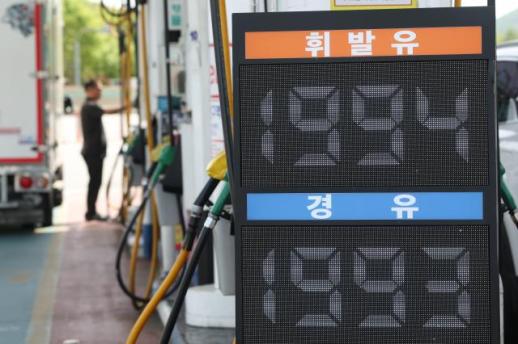 South Korea Freezes Fuel Price Caps for Fourth Round, Citing Inflation Risks The South Korean government has again frozen the maximum prices applied to petroleum products supplied to gas stations, citing lingering uncertainty from the prolonged war in the Middle East and concerns that any increase could add to inflation. The Ministry of Trade, Industry and Energy said Thursday that starting at midnight April 24, the fourth round of the price-cap system will apply for the next two weeks at the same levels as the second and third rounds: 1,934 won per liter for regular gasoline, 1,923 won for diesel and 1,530 won for kerosene. The ministry said international refined-product prices have fallen over the past two weeks, easing cost pressures, but the regional situation remains unstable and additional shocks cannot be ruled out. The ministry said that if only the recent two-week change in international prices were reflected in the formula, the fourth-round caps could have been lower than the third round by about 100 won per liter for gasoline and about 200 won for diesel. Instead, the government said it has already restrained price increases by not fully reflecting earlier international price gains in the cap, and decided to hold the levels steady after weighing Middle East uncertainty and the need to manage fuel consumption. Raising the caps was also seen as too risky for inflation. Nam Kyung-mo, policy adviser to the industry minister, said petroleum products account for 4.66% of the consumer price index and higher prices could feed broader inflation. He cited March producer prices rising at the fastest pace in more than four years due to high oil prices. The government said pump prices would be higher without the cap, estimating gasoline would be around 2,200 won per liter, diesel 2,700 to 2,800 won, and kerosene around 2,500 won. Compared with the current caps, that implies a restraining effect of about 260 won for gasoline, up to 870 won for diesel and about 970 won for kerosene. Nam said domestic pump prices are still edging up because increases in refiners’ supply prices are being reflected with a lag. He said refiners’ supply prices rose by 210 won per liter when the second-round cap was adjusted, and gas stations have been passing that on gradually. On settlement under the cap, the government reaffirmed it will reimburse refiners for losses under Article 23(3) of the Petroleum Business Act. Nam said the government has not yet produced its own estimate of losses. He said refiners will calculate losses from March 13 through the end of June, submit figures after review by an accounting firm, and the government will confirm the final reimbursement through a price-cap settlement committee. Asked about Prime Minister Kim Min-seok’s comments the previous day that the government would carefully review whether to implement a fourth round, Nam said it is not yet time to consider ending the system. He said the Middle East situation remains unstable and high oil prices persist, adding that a broader review could be possible if international prices stabilize, including through progress toward a ceasefire between the United States and Iran and the easing of disruptions tied to the Strait of Hormuz. On whether a fifth adjustment will be made, Nam said the government will operate the system flexibly after considering international oil prices, the public burden, efforts to reduce consumption, support for energy-vulnerable groups and overall inflation. * This article has been translated by AI. 2026-04-23 19:03:19
 -
 Seoul Mayor Oh Se-hoon to Register as Preliminary Candidate April 27, Opens Jongno Campaign Office Seoul Mayor Oh Se-hoon, the People Power Party’s candidate in the Seoul mayoral race, will register as a preliminary candidate on April 27 and move into full campaign mode for the June 3 nationwide local elections, his camp said. Oh’s side said the earlier-than-expected registration reflects his determination to “get into the community and run the ground campaign.” His campaign office will be set up in the Daewang Building in Gwancheol-dong, Jongno-gu, central Seoul. Oh’s camp said Jongno “symbolizes the urgency of old downtown redevelopment,” adding that the location is meant to show his commitment to “first principles,” balanced urban development and revitalizing older districts, including Jongno. Oh, seeking a third consecutive term and a fifth term overall, plans to stress Seoul residents’ health and quality of life in the campaign, while drawing contrasts with Jung Won-oh, the Democratic Party’s Seoul mayoral candidate. He also plans to put added focus on youth policies, with young people participating in and leading the campaign. Oh’s camp said the eighth popularly elected city administration has focused on “walking with the vulnerable” and strengthening the city’s competitiveness, and that the campaign will emphasize a “special city of better health and a warmer quality of life.” It added that the campaign team will be run with a focus on youth policy. 2026-04-23 18:57:16
 -
 South Korea’s parliament passes 103 bills, including tenant fraud relief and expanded infertility leave South Korea’s National Assembly on the 23rd passed a package of measures to strengthen protections for victims of rental fraud, including a legal basis to support tenants whose recovered deposits fall short of a minimum guaranteed amount. Lawmakers approved revisions to the Act on Support for Victims of Rental Fraud and Housing Stability by unanimous consent of the 182 members present. Under the changes, if the amount a tenant recovers by exercising opposability rights or priority repayment rights does not reach the minimum guaranteed level, the shortfall can be supported. The Assembly passed a total of 103 noncontroversial bills at the plenary session. Among them was the bill on the establishment and operation of a National Graduate Medical School, creating a legal basis to set up a national institution to train personnel for public health and medical services. The bill requires graduates to serve in the public medical sector for 15 years after obtaining a medical license. Ruling and opposition parties also revised the Equal Employment Opportunity and Work-Family Balance Assistance Act and the Employment Insurance Act to expand paid leave for infertility treatment to four days from the current two. To prevent consumers from being misled by unfair advertising using artificial intelligence, lawmakers revised the Cosmetics Act, the Act on Labeling and Advertising of Foods, and the Pharmaceutical Affairs Act. The plenary session also passed revisions to the Act on the Protection and Support of Small Business Owners to provide a basis for supporting closed small businesses, including management, legal and tax consulting. Another bill established a comprehensive management framework to foster the used-battery industry. Other measures approved included revisions to the Narcotics Control Act to allow undercover or identity-concealed investigations into drug crimes; revisions to the law on exercising sovereign rights over foreign fishing in the exclusive economic zone to sharply raise fines for foreign vessels caught fishing illegally; and a bill on guaranteeing the rights of people with disabilities that spells out dignity and equality rights. Lawmakers also passed revisions to the special act on establishing Sejong Special Self-Governing City, raising the share of proportional-representation seats in the city council to 14% from 10% relative to district seats. The Assembly also completed the lineup for the third Truth and Reconciliation Commission, which investigates past incidents. Lee Ho-jung, a professor at Sogang University Law School recommended by the Democratic Party, and Jang Young-soo, an emeritus professor at Korea University Law School recommended by the People Power Party, were appointed as standing commissioners. Nonstanding commissioners recommended by the Democratic Party were attorney Kim Young-joo of Law Firm Jihyang, activist Kim Jeong-ha of Disability and Human Rights Action Balbadak, and Jeong Won-ok, head of the Cultural and Social Research Institute. Those recommended by the People Power Party were attorney Kim Ung-gi of Sein Partners, Lee Dong-wook, a former member of the May 18 Democratization Movement Fact-Finding Commission, and attorney Choi Chang-ho of Jeongron. The Assembly also approved Lee Hyun-joo, head of the Park Jong-chul Center, recommended by National Assembly Speaker Woo Won-shik, and Park Rae-gun, a director at the Human Rights Foundation Saram, recommended by the Basic Income Party representing non-negotiating parties. Including the 10 members elected on the 23rd, the commission will have 13 members: Chair Song Sang-gyo, standing commissioner Kim Gwi-ok and nonstanding commissioner Park Gu-byeong, all designated by President Lee Jae-myung, along with the newly selected members.* This article has been translated by AI. 2026-04-23 18:55:13
 -
 Pension Lottery 720+ Draw 312 Numbers Draw Attention as Past Winner Shares Story "We married later in life and have a daughter born in 2019, and I think she has brought us good luck." With attention focused on the Pension Lottery 720+ Draw 312 winning numbers on the 23rd, a personal account from a Draw 294 winner has resurfaced online. The winner said they held one first-prize ticket and four second-prize tickets in Draw 294. In a post on Donghaeng Lottery’s winners’ bulletin board, the winner said they bought the Draw 294 ticket after feeling disappointed in the previous draw, when a similar number came up but they won only a seventh prize. The winner said they later checked the results at home using a QR code and first realized they had won second prize. "I was happy and grateful just for that," the winner wrote. Then, remembering that set purchases can result in simultaneous wins, they checked the remaining tickets and discovered they had won both first and second prizes. The winner said they shared the news with their spouse, and the couple comforted each other by saying, "You worked hard," adding they felt they could live more happily going forward. The winner also wrote that they married later in life and have a daughter born in 2019, saying they believe the child has brought them good fortune. The ticket was purchased at a lottery retailer in Yangpyeong-eup, Yangpyeong County, Gyeonggi Province. Asked what they usually buy, the winner said they purchase small amounts of Lotto and Pension Lottery tickets. For the winnings, the winner said they plan to repay loans and set aside money for their child and for retirement. The Pension Lottery 720+ Draw 312 winning numbers will be available after 7:05 p.m. today (23rd).* This article has been translated by AI. 2026-04-23 18:51:57