
Journalist

Lee Hugh
=
-
 OPINION: Paradox of the second shock - Why protectionism cannot solve productivity problem KARACHI, April 23 (AJP) - The global economic order is currently grappling with a phenomenon that many have termed China Shock 2.0. Unlike the first iteration at the turn of the millennium, which saw a surge of low cost textiles and plastic toys, this new wave is defined by high technology, precision engineering, and the critical components of the green transition. From electric vehicles to advanced semiconductors, Chinese manufacturing has moved up the value chain with a speed that has caught Western policymakers off guard. However, as the United States and Europe move toward a regime of high tariffs and industrial subsidies to counter this trend, they risk misdiagnosing the problem and pursuing a strategy that could ultimately undermine their own economic vitality. The prevailing narrative in Washington and Brussels suggests that China's current export surge is merely the result of state intervention and domestic overcapacity. There is no doubt that the Chinese government provides significant support to its strategic sectors. Yet, to attribute China's dominance in fields like battery technology or solar energy purely to subsidies is to ignore a more uncomfortable reality. Over the past decade, Chinese firms have achieved genuine breakthroughs in manufacturing efficiency and supply chain integration. The sheer scale of their domestic market has acted as a crucible, forcing a level of competition that has produced world class companies. By the spring of 2026, the data indicates that China's lead in green technologies is not just a matter of price, but of quality and innovation. For example, the latest generation of Chinese solid state batteries, which began hitting the global market early this year, offers energy densities that Western competitors are still struggling to reach in laboratory settings. When Western leaders speak of overcapacity, they are often describing a level of productivity that their own industries are currently unable to match. The response from the West has been a rapid retreat from the principles of free trade that it once championed. The United States has expanded its use of Section 301 tariffs, and the European Commission has implemented a series of anti subsidy duties targeting Chinese electric vehicles. The intent is to create a defensive perimeter behind which domestic industries can rebuild. But history suggests that protectionism rarely fosters innovation. Instead, it often insulates domestic firms from the very competitive pressures that drive efficiency. By raising the cost of Chinese high tech imports, the West is effectively taxing its own green transition. If the goal is to reach net zero emissions by mid century, making the most efficient tools for that transition more expensive is a counterproductive policy. Furthermore, the attempt to decouple from the Chinese industrial base overlooks the intricate nature of modern supply chains. Even as Western nations seek to build their own battery factories and semiconductor plants, they remain deeply dependent on Chinese intermediate goods. Many of the components that go into a made in America electric vehicle still originate in Chinese factories. A fragmented global trade system does not necessarily reduce dependence; it simply makes the supply chain more opaque and more expensive. There is also a deeper geopolitical miscalculation at play. The current focus on containing China's economic rise assumes that the rest of the world will follow the West's lead. However, the data from 2025 and early 2026 shows a different trend. While trade between China and the United States has cooled, China's trade with the Global South has reached record levels. Countries in Southeast Asia, Latin America, and Africa are not viewing Chinese high tech goods as a shock, but as an opportunity. For these nations, affordable Chinese technology is the key to their own industrialization and digital transformation. If the West persists in a policy of exclusion, it may find itself increasingly isolated from the fastest growing markets of the future. Instead of focusing on defensive measures, the West should consider why it has fallen behind in these specific sectors. The success of the Chinese model in high tech manufacturing is partly due to a long term commitment to infrastructure and technical education. While the United States has spent decades prioritizing the financialization of its economy, China has focused on its industrial base. The solution for the West is not to build walls, but to rediscover its own competitive edge. This requires a shift in focus toward massive investment in basic research, a more flexible labor market, and an openness to learning from the manufacturing processes that have made Chinese firms so effective. We must also recognize that the integration of Chinese technology into the global economy provides a measure of stability. Economic interdependence has historically acted as a check on geopolitical tensions. As China becomes a more sophisticated player in the global high tech market, it gains a greater stake in the stability of the international system. By pushing for total self sufficiency, Western nations are inadvertently encouraging China to develop its own closed economic sphere, which would be far more dangerous for global security in the long run. The challenge posed by China's industrial rise is significant, but it is not an existential threat that justifies the abandonment of an open trading system. The first China shock was painful for many manufacturing communities in the West, but it also led to a period of low inflation and allowed Western economies to move into higher value services and software. The second shock could offer similar benefits if managed correctly. It could accelerate the global response to climate change and provide the competition necessary to spur a new era of Western innovation. As we navigate this complex landscape in 2026, the goal should be a managed integration rather than a forced separation. This means insisting on fair play and intellectual property protection while acknowledging that China’s technological progress, outlined in the Five-Year Plan, is a reality that cannot be legislated away. The West has always thrived when it has leaned into competition rather than shying away from it. To win the future, the United States and its allies must compete with China on the factory floor and in the research lab, not just in the halls of government. The current obsession with protectionism is a sign of a lack of confidence in the Western model. If we believe that our system of open markets and liberal democracy is superior, then we should not fear the arrival of better, cheaper products from abroad. We should welcome the challenge as a catalyst for our own renewal. The real shock would be if the West, in its attempt to contain China, ended up losing the very openness and dynamism that made it the leader of the world. 2026-04-23 15:27:04
 -
 Harim to rescue Homeplus Express, completing farm-to-fork empire SEOUL, April 23 (AJP) - South Korea's poultry giant Harim Group has been named preferred bidder for Homeplus Express, the supermarket arm of the country's No. 2 retailer Homeplus, in a deal that could throw a lifeline to the creditor-protected hypermarket chain and complete Harim's long-pursued vertical integration from chicken farm to checkout counter. Homeplus said on Tuesday that Harim Group affiliate NS Shopping was selected as the preferred bidder for its smaller-format supermarket division, following a public tender conducted as part of the retailer's court-led rehabilitation. Industry watchers peg the likely acquisition price at around 300 billion won ($202 million), well below the 1 trillion won once floated when the unit first went up for sale. NS Shopping, which has pledged to link Homeplus Express' nationwide brick-and-mortar network with its TV home shopping, T-commerce and online mall businesses, described the acquisition as a strategic move to strengthen its omnichannel competitiveness. The move marks Harim's return to the super supermarket (SSM) segment after a 14-year absence. Homeplus Express, with about 295 stores at the end of last year, ranks third by store count behind GS Retail's GS The Fresh (585) and Lotte Shopping's Lotte Super (338). The acquisition would effectively complete a food value chain Harim has pieced together over the past decade. Starting out as a chicken processor in the late 1970s, the group expanded into feed, pork and processed foods before buying bulk shipper Pan Ocean for 1 trillion won in 2015 to secure grain imports. Harim has also spent years developing an urban high-tech logistics complex in Seoul's Yangjae district, after acquiring the site in 2016 for 452.5 billion won. Industry observers say Homeplus Express' store network, roughly 80 percent concentrated in the Greater Seoul area, dovetails with that logistics hub and could serve as last-mile delivery nodes. Still, experts caution that the strategic logic alone may not be enough to carry the deal through. "Securing a retail channel has long been Harim's unfulfilled ambition, but given the structural downturn in offline retail and Harim Industries' current financial condition, the risks are significant if the deal is justified by vertical integration alone," said Kim Dae-jong, a professor of business administration at Sejong University. "The outcome will depend on whether the group can genuinely turn its stores into quick-commerce logistics hubs and extract real cost savings through manufacturing-to-retail integration." For Homeplus, the deal offers a rare piece of good news after a brutal year. The chain, wholly owned by private equity firm MBK Partners since 2015, filed for court-led rehabilitation in March 2025 after credit rating downgrades triggered a liquidity squeeze. MBK had acquired the retailer from British owner Tesco for 7.2 trillion won in what was then Asia's largest leveraged buyout. Homeplus has since shuttered dozens of stores, fallen behind on supplier payments and drawn regulatory scrutiny. The National Pension Service, which invested 612.1 billion won in the original deal, has estimated potential losses of about 900 billion won. The deal has also unsettled labor, though not in the direction often assumed. The Korea Mart Labor Union (KMLU)'s Homeplus branch, affiliated with the militant Korean Confederation of Trade Unions, had long opposed selling Express as a stand-alone asset, viewing it as a prized division whose disposal could hollow out the rest of the chain. Rather than opposing a change in management, it has called for a professional restructuring specialist such as UAMCO to replace MBK at the helm — a distinction widely misread as hostility to the sale itself. "We believe a professional restructuring firm like UAMCO would manage the company far better than a non-specialist private equity group such as MBK," said Choi Cheol-han, general secretary of the KMLU's Homeplus branch. "This sale is not just about a supermarket chain. It is the golden hour for Homeplus as a whole to stabilize, and for the wage arrears and supply disruptions to finally be addressed." The Seoul Bankruptcy Court set a May 4 deadline for creditors to approve Homeplus' rehabilitation plan, after granting a two-month extension in March. The plan hinges on selling Homeplus Express to raise operating funds and persuading creditors led by Meritz Financial Group, which holds senior beneficiary rights over a trust backed by 62 store properties securing 1.22 trillion won in loans. Risks loom on both sides. Harim's food manufacturing arm Harim Industries posted a 146.7 billion won operating loss last year and has accumulated more than 500 billion won in cumulative losses over the past five years. On the Homeplus side, approval of the revised rehabilitation plan is far from certain, with major creditors earlier balking at a 300 billion won debtor-in-possession financing proposal. 2026-04-23 15:26:58
 -
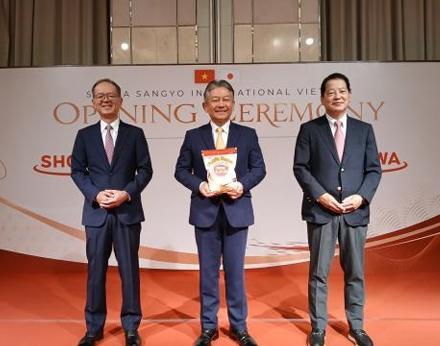 Showa Sangyo Launches Tempura Flour Tailored for Vietnam Market Showa Sangyo, a food company that produces flour and other products, held an opening ceremony on the 22nd for its local unit, Showa Sangyo International Vietnam, at a hotel in central Ho Chi Minh City. The company invited local media and influencers and unveiled a premixed tempura flour made at its Vietnam factory, highlighting adjustments in flavor and color to suit Vietnamese tastes. At the event, the company held cooking demonstrations and tastings using tempura flour produced at the factory, which began operating in March. Showa Sangyo said its immediate goal is to win market share among Vietnamese consumers and restaurants, and it will also consider exporting to global markets. The company said the product was developed to match local preferences. Based on market research, it said Vietnamese consumers tend to prefer a stronger yellow color than typical Japanese tempura, and they rate highly a “crispy” texture with a firm bite. The head of the Japanese cuisine section at the event venue, Hotel Nikko Saigon, demonstrated tempura preparation. “Showa Sangyo’s tempura flour stays crispy for a long time even after frying, which is excellent from an operational standpoint,” he said. Showa Sangyo said it is looking beyond retail sales to supply Japanese restaurants and other food-service operators in Vietnam. It also plans to expand its production lineup step by step, including products for bakeries. For now, the company said it will focus on building share in Vietnam, while longer term it will consider expansion to other countries, including neighboring markets. President Hideyuki Tsukagoshi said the company is also looking to global markets, including across Asia as well as Europe and North America. He added that it aims to create new value by combining the quality control and product development capabilities built in Japan with Vietnam’s rich food culture.* This article has been translated by AI. 2026-04-23 15:26:48
 -
 After rare catch, Han River survey sets sights on new discovery SEOUL, April 23 (AJP) - Expectations are rising for new discoveries in this year’s regular catch season along the Han River, following last year’s rare find of a protected species that underscored improving ecological conditions in the capital’s main waterway. The Seoul Metropolitan Government on Thursday conducted a fish species survey near Bamseom Island beneath Seogang Bridge in Yeongdeungpo-gu, western Seoul, as part of its semiannual monitoring program. Last year’s survey yielded a notable discovery — the endangered golden mandarin fish, designated as a natural monument, was found south of the Jamsil submerged weir. Researchers also identified multiple endemic species native to the Han River, including chamjunggogi, gashinapjiri and kkeokji, pointing to gradual improvements in the river’s waterfront ecosystem. The latest survey aims to assess water quality gains and gauge the extent of ecological restoration. Officials conducted on-site inspections by boat, examining fish distribution and population density across key habitats. The Han River fish survey is carried out twice a year — in the first and second halves — at eight monitoring points across six sections of the river’s main stream. The findings provide granular data on environmental changes and serve as a baseline for a five-year ecosystem research initiative. City officials said the results will support continuous monitoring of the river’s ecological health and help guide policy efforts to restore the natural environment of urban waterways. 2026-04-23 15:26:17
 -
 Analysts See SK Hynix Bonuses Averaging 600 Million Won per Employee Next Year SK Hynix posted more than 37 trillion won in operating profit in the first quarter, and an analysis said the company’s average performance bonus paid early next year could exceed 600 million won per employee. Yonhap Infomax said on the 23rd that a consensus of 17 securities firms that issued reports over the past month forecast SK Hynix’s 2026 revenue at 301.1965 trillion won and operating profit at 227.8154 trillion won. Based on that outlook, the pool for the company’s profit-sharing bonus, known as PS, would total about 22.7 trillion won. A simple calculation suggests roughly 35,000 employees would receive an average of about 630 million won each before tax, though payouts vary by seniority. SK Hynix runs a bonus system that sets aside 10% of operating profit and pays a portion of annual salary once a year. Early this year, it paid a record 2,964% PS bonus based on 2025 results. Expectations are rising that next year’s payout could be more than four times larger. Separately, the company’s productivity incentive, or PI, paid when targets are met in the first and second halves, is also expected to reach a maximum level this year at 150% of base pay. Industry officials said top-tier compensation could help SK Hynix secure semiconductor talent and may also ease the concentration of students seeking medical school. SK Hynix said it recorded first-quarter revenue of 52.5763 trillion won. Revenue rose 198.1% from a year earlier and operating profit increased 405.5%. Operating margin was 72%, net profit was 40.3459 trillion won and net margin was 77%. That marked a sharp improvement from the previous quarter’s revenue of 32.8267 trillion won and operating profit of 19.1696 trillion won. The company said it plans to draw up an execution plan within the year to consider additional shareholder returns, including share buybacks and cancellations, based on an expanding net cash position, in addition to its existing dividend. 2026-04-23 15:26:01
 -
 South Korea’s Youth Future Savings Plan to Offer Tax-Free Interest Up to 75 Million Won in Salary The South Korean government has finalized key details of its planned “Youth Future Savings Plan,” expanding the income threshold for benefits to 75 million won in annual salary and adopting a three-tier support structure that differs from the existing Youth Leap Account. On April 23, the Financial Services Commission said it shared the product structure and eligibility standards at a pre-launch review meeting held the previous day. The plan is a three-year, flexible installment savings product for people ages 19 to 34. Participants can deposit up to 500,000 won a month, with the government providing matching contributions depending on income and eligibility. Compared with the Youth Leap Account, the new plan simplifies support from five tiers to three. Enrollment will also shift from year-round sign-ups to recruitment twice a year, in June and December, making timing more important for applicants. Benefits will vary by total annual salary. The government raised the upper income limit from 60 million won under the Youth Leap Account to 75 million won. For those earning more than 60 million won and up to 75 million won, there will be no government contribution, but interest earned will be tax-free. For those earning 60 million won or less, the standard plan adds a government contribution equal to 6% of monthly deposits. If a participant deposits the 500,000 won monthly maximum, that equals 30,000 won a month, or 1.08 million won over three years, with interest also accruing on the contribution. A preferred plan applies to participants who meet additional requirements, such as employment at small and medium-sized enterprises. If conditions are met, including total annual salary of 36 million won or less, the contribution can rise to as much as 12% of monthly deposits. At the 500,000 won monthly maximum, that would be 60,000 won a month, or 2.16 million won over three years. Assuming a 6% interest rate, the commission said depositing 500,000 won a month for three years would build assets of about 20.8 million won under the standard plan and about 21.9 million won under the preferred plan, including government contributions and interest, on principal of 18 million won. The interest rate has not been set; the commission said it expects details to emerge around late May after selecting participating financial institutions. The maturity period is three years, shortened from five years under the Youth Leap Account. The product will be run as a flexible installment savings plan with a monthly cap of 500,000 won. Work-related conditions are included. Preferred-plan participants employed at small and medium-sized firms must remain on the job for a specified period before maturity to keep benefits, and job changes will be allowed no more than twice during the subscription period. The age rule will be partially eased. While the basic eligibility is ages 19 to 34, people who turned 35 in the gap between the end of the Youth Leap Account and the launch of the new product will be allowed to enroll as an exception. Military service time will be excluded when calculating age eligibility. Current Youth Leap Account holders will be allowed to switch to the Youth Future Savings Plan only during the first recruitment period in June. In that case, even if the existing account is closed early under a special termination process, government contributions and tax benefits will be maintained. Enrollment will be handled online through bank apps. Eligibility will be reviewed through electronic links with the National Tax Service and other systems, without requiring applicants to submit separate documents. 2026-04-23 15:25:05
 -
 Lee Jae-myung housing policy faces doubts as permits fall and non-apartment supply dries up With the Lee Jae-myung government nearing its first anniversary, questions are growing over whether its core real estate approach — expanding housing supply — can deliver results. Critics say the supply structure itself is weakening, with private-sector permits cut roughly in half and construction of non-apartment housing such as multi-family and multiplex homes effectively halted. Democratic Party lawmaker Lee Yeon-hee held a forum at the National Assembly Members’ Office Building on the 23rd titled “Normalizing Real Estate, Asking a New Path to Housing Stability,” saying there is a need to assess the government’s real estate and housing policies over the past year and set a new direction to stabilize housing. Lee said real estate policy is a top task for every administration and that expanding supply is central in a volatile market. She said addressing supply shortages from the previous administration is the starting point for market stability. Lee added that the government’s plan to supply 1.35 million homes will take time to show results, with visible effects expected in the middle to later part of its term. At the forum, Kwon Dae-jung, a chair professor at Hansung University, said the 1.35 million-home plan lacks realism. He said supply in Seoul amounts to only about 27,000 households, and noted that a previously presented plan to supply 300,000 homes has, in some cases, not even reached the presale stage for nearly 10 years. “The biggest problem is the absence of a short-term supply policy,” he said. Kwon called for a more flexible approach, including revitalizing the non-apartment market and exempting small homes below a certain size from regulations. On regulations for owners of multiple homes, Kwon said applying the same rules to “livelihood” multi-home owners has limits. He called for easing financial regulations for young people and those without homes, and for more selective regulation. He also urged expanding supply models such as rent-to-own arrangements. Byun Chang-heum, a former minister of land, infrastructure and transport, said the housing market is showing both a “supply cliff” and regional imbalance, underscoring the need for a policy shift. Byun said private-sector permits fell from 623,000 homes in 2016 to about 304,000 in 2025, and that supply of non-apartment housing such as multi-family and multiplex homes has effectively stopped. He said Korea Land and Housing Corp., known as LH, is partially filling the gap but not enough. Byun said home prices in Seoul have surged while provincial areas remain sluggish, widening asset gaps and a sense of relative deprivation. He also pointed to limits in existing supply methods. Securing unused land has reached its limits due to complaints and practical constraints, he said, while redevelopment and reconstruction produce limited net increases and leave unresolved issues over resettling original residents. He added that development gains are structured to concentrate on buyers of newly sold units. As alternatives, Byun proposed deregulation and institutional changes. He called for easing floor-area ratio and building rules to enable mid-rise, high-density development, and for designating areas near transit hubs as “housing supply promotion zones” with incentives. He also urged better use of semi-industrial zones and looser standards for multi-family and multiplex housing. Byun said units secured through floor-area incentives should be used to encourage resettlement of original residents, and that a supply model with both public and private participation is needed. He said expanding supply should be pursued alongside inclusiveness and regional balance. 2026-04-23 15:15:48
 -
 KB Financial Highlights Social Value Gains; Shinhan Unveils Expanded Shareholder Returns Plan KB Financial Group and Shinhan Financial Group are stepping up efforts on shareholder returns and inclusive finance. KB Financial said April 23 it created 828.6 billion won in social value in the inclusive finance sector in the first quarter. By category, it reported 348.1 billion won tied to support for young people, small and midsize companies and self-employed small businesses, and balanced regional development, and 349.0 billion won related to public livelihood and safety. The group said the results reflect support for household stability and sustainable corporate growth through core financial services, along with social contribution programs that expanded needed local infrastructure. KB Financial said it will further refine its return framework this year after posting cumulative social value of 2.414 trillion won through the third quarter of last year. A KB Financial official said the group will use the measurement results to review the effectiveness of its social contribution programs and strengthen a sustainable support system so the value created spreads across local communities. Shinhan Financial on April 23 announced "Shinhan Value-Up 2.0" and said it will adopt an "uncapped shareholder return ratio" linked to return on equity and growth. Under the plan, the shareholder return ratio would rise without a cap as the group grows. In July 2024, Shinhan Financial said it aimed to achieve by 2027 a 50% shareholder return ratio, 10% ROE, and the purchase and retirement of at least 50 million shares. It said the shareholder return ratio reached 50.2% last year, meeting the target early. With its share retirement plan moving ahead and the price-to-book ratio normalizing, the group said it is now setting the new goal of an uncapped shareholder return ratio. Shinhan Financial also said it will reallocate capital among group affiliates based on return on capital to strengthen nonbank competitiveness on the back of stable bank earnings. It said it plans to raise ROE by linking that approach to groupwide performance measurement, evaluation and compensation systems. The group said it will begin tax-exempt dividends for three years starting with this year-end dividend, and use remaining resources to continue its plan to buy back and retire at least 50 million shares. It also said it will maintain equal quarterly dividends and target annual growth of at least 10% in dividends per share. Shinhan Financial said it approved a first-quarter dividend of 740 won per share and is proceeding with a planned 700 billion won share buyback scheduled through July. A Shinhan Financial official said the plan is significant because it builds a sustainable structure in which group growth and shareholder returns reinforce each other, adding that the company will seek to increase shareholder value through higher ROE and a predictable shareholder return framework. * This article has been translated by AI. 2026-04-23 15:12:53
 -
 Shinhan Investment posts 288.4 billion won Q1 net profit on stock market boom Brokerages have begun reporting first-quarter results, and Shinhan Investment was among the first, posting a sharp jump in profit as a stock market rally lifted trading activity. Other securities firms are also expected to report strong gains. Shinhan Investment said Thursday its first-quarter net profit rose 167.4% from a year earlier to 288.4 billion won. Operating profit climbed 228.5% to 386.4 billion won. Operating revenue increased 90.2% to 701.5 billion won, while operating expenses rose 25.4% to 315.1 billion won, highlighting improved profitability. By revenue source, fee income totaled 407.4 billion won, the largest share. Brokerage commissions accounted for 293.5 billion won, followed by financial product fees of 28.3 billion won and investment banking fees of 42.6 billion won. Product management income came to 162.3 billion won, and net interest income was 131.7 billion won. Profitability indicators also improved, with return on assets at 1.97% and return on equity at 20.00%. The company attributed the gains to higher trading value amid the market upswing. “Along with an increase in stock brokerage commissions, profit and loss from product management improved,” a Shinhan Investment official said, adding that results strengthened broadly across business lines including brokerage, investment banking and financial products. 2026-04-23 15:12:06
 -
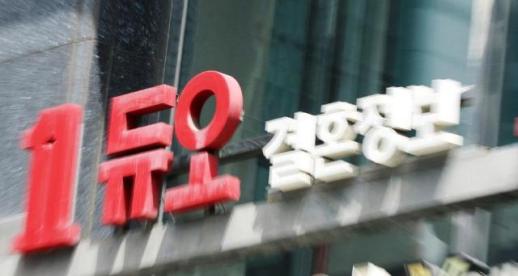 Matchmaking firm Duo slapped with fines for massive data breach SEOUL, April 23 (AJP) - Matchmaking firm Duo was slapped with heavy fines over a massive data leak affecting nearly 430,000 users, a state-run privacy watchdog said on Thursday. The Personal Information Protection Commission imposed about 1.2 billion won (US$810,000) in penalties and fines on the company after a Duo employee's computer was hacked in January last year, exposing sensitive personal information of some 427,464 paid members. The leaked information included names, contact details, resident registration numbers, and passwords, along with personal data such as height, weight, and marriage history. The commission ordered Duo to take immediate steps to correct its lax database management and illegal practices after investigators found that it lacked even basic security measures such as systems to block access after repeated login attempts, making it easy for hackers to gain access to its database. It also used an outdated encryption method that was vulnerable to cyberattacks. The probe also revealed violations in how the company gathered and stored personal data, as it routinely collected sensitive personal information such as resident registration numbers and failed to destroy about 300,000 records of its former members that had been kept beyond the five-year retention period, increasing the scale of the breach. The commission added Duo took 72 hours to report the breach without a valid reason, despite recognizing the leak. "We humbly accept the commission's decision and will do our best to prevent a recurrence and further harm," said a Duo staffer. 2026-04-23 15:11:03