
Journalist

Lee Hugh
=
-
 Hyundai Motor says supplier fire in Daejeon disrupts some production, seeks alternatives Hyundai Motor Co. said Thursday that a fire at an engine valve parts supplier in Daejeon has caused disruptions to some production. Speaking on a conference call after releasing first-quarter results, the company said it is conducting internal tests to qualify replacement parts and expects operations to gradually normalize starting in April. Hyundai Motor said it will also seek alternative parts in global markets and aims to normalize production through the second half of this year. * This article has been translated by AI. 2026-04-23 14:48:13
 -
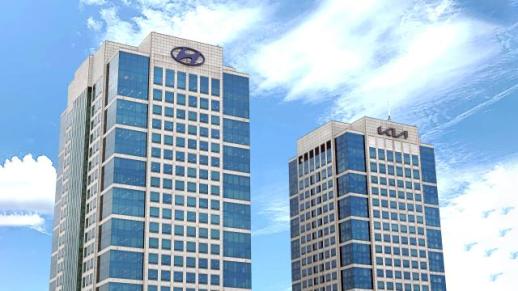 Hyundai Motor profit falls sharply on cost surge, misses expectation SEOUL, April 23 (AJP) - Hyundai Motor, South Korea's largest automaker, posted a sharp drop in first-quarter earnings amid rising cost pressures from U.S. tariff barriers and Gulf-related shocks. Operating profit for the first quarter of 2026 came in at 2.51 trillion won, down 30.8 percent on year and in line with the market consensus of 2.4 trillion to 2.6 trillion won compiled by FnGuide. The underperformance reflects multiple headwinds for carmakers – sharp rise in oil prices, slumped consumer sentiment, and supply-chain disruptions from the outbreak of a war in the Middle East on top of tariff risks and volatile exchange rate. The Korean won's weakening to crisis-period levels drove a sharp increase in warranty-related costs, while tariff burdens and higher raw material prices further squeezed margins. Revenue totaled 46 trillion won, up 3.4 percent from a year earlier and down 1.9 percent from the previous quarter. 2026-04-23 14:45:38
 -
 Unification Minister Jeong Dong-young calls leak allegations ‘political’ and harmful to national interest Unification Minister Jeong Dong-young on Wednesday criticized the controversy over his mention of a uranium enrichment facility in North Korea’s Guseong as “political maneuvering” that “harms the national interest.” Jeong made the remarks after visiting Park In-jun, head of the Korea Conference of Religions for Peace (KCRP) and leader of Cheondoism, at Cheondoism’s Suun Hall in Seoul’s Jongno district. Speaking to reporters, Jeong said those who stirred the issue “must have an intention.” On U.S. steps to limit intelligence sharing with South Korea, Jeong said similar moves had occurred “intermittently” in the past without becoming public. “That’s the national interest — so why create turmoil?” he said. Jeong said the people behind the controversy “could be the United States or could be within our own country,” adding that what had happened before was now being treated as an unprecedented incident. “It may be entertaining to keep inflating the controversy, but it harms the national interest,” he said. He again argued that mentioning Guseong — which South Korean and U.S. authorities have not confirmed as the location of a uranium enrichment facility — did not amount to a leak of classified information. “That place name has been mentioned for 10 years by numerous research institutes and experts, and even in U.S. congressional reports,” Jeong said. “It’s been in the news — is that classified?” Jeong said the core issue is “how serious the North Korean nuclear problem is,” and stressed the need to shift quickly to dialogue and negotiations because “sanctions, pressure and blockade” have not worked. He added that the Ministry of Unification — and he personally — believes South Korea should try to create an opening for U.S.-North Korea talks on the occasion of President Donald Trump’s visit to China. Meanwhile, the People Power Party on Wednesday adopted, as a party line, a motion recommending Jeong’s dismissal. * This article has been translated by AI. 2026-04-23 14:44:21
 -
 Korean Bar Association Urges Government to Cap Bar Exam Passers at 1,500 or Fewer With the announcement of results for the 15th bar exam approaching, lawyer groups held a rally urging the government to cut the number of successful applicants. On the 23rd, the Korean Bar Association and the Seoul Bar Association rallied outside the government complex in Gwacheon, where the Ministry of Justice is located, calling for a reduction in the number of bar exam passers. In opening remarks, Korean Bar Association President Kim Jeong-uk said the 15th bar exam pass list would be released soon, but criticized what he called the government’s “irresponsibility” in deciding how many will pass. Kim said the government had broken a promise made when law schools were introduced to gradually reduce or consolidate adjacent licensed professions whose work overlaps with lawyers. Instead, he said, the government has kept a selection system that produces large numbers of both lawyers and lawyer-like professions at the same time. He said the number of lawyers, about 10,000 when law schools were introduced, is now nearing 40,000, rising at a pace he described as unprecedented globally. He added that, compared with major countries, South Korea has the largest number of lawyer-like professions operating in the market, intensifying competition in a legal market with limited demand. Kim said the influx of new lawyers has far exceeded the market’s capacity, leaving many unable to uphold their professional mission and struggling simply to survive. He urged the Justice Ministry to set this year’s number of successful applicants at 1,500 or fewer. The Korean Bar Association previously held a news conference outside the Gwacheon complex on the 6th, also calling for fewer lawyers. According to the association, the median income in the legal market has fallen to 30 million won a year or less. It said the number of people in lawyer-like professions, including judicial scriveners and tax accountants, totals about 600,000 — about three times Japan’s level on a per-capita basis. The association said the situation has fueled overheated advertising competition and lower legal fees, which it said has led to side effects including poor-quality representation and more disciplinary cases, as the profession becomes oversupplied. The Justice Ministry is set to announce the 15th bar exam pass list on the 24th, legal circles said. Last year, 1,744 people passed out of 3,336 test-takers, for a 52.28% pass rate. * This article has been translated by AI. 2026-04-23 14:43:32
 -
 T’way Holdings Hits 52-Week Low After Announcing 5-for-1 Capital Reduction T’way Holdings shares slid into a 52-week low Thursday as investors reacted to the company’s announcement of a capital reduction without compensation. According to the Korea Exchange, as of 2:26 p.m., T’way Holdings was trading at 268 won, up 37 won, or 12.13%, from the previous session. The stock fell as low as 253 won during the session, marking a new 52-week low. In a filing Wednesday, the company said it decided on an 80% capital reduction by consolidating five common shares into one. After the reduction, paid-in capital will fall to 11.3 billion won from 56.6 billion won, and the number of shares outstanding will drop to 22.63 million from 113.16 million. The company said the move is intended to improve its financial structure by offsetting accumulated losses. A capital reduction without compensation lowers capital by cutting the number of shares to eliminate accumulated deficits. Because it does not bring in cash or directly improve operations, it is often viewed as a sign of financial strain and can weigh on share prices. The record date for the reduction is July 3, and the relisted shares are scheduled to begin trading July 24. Trading in the stock will be suspended July 22-23 under the timetable. The plan is to seek final approval at a shareholders meeting scheduled for June 19. * This article has been translated by AI. 2026-04-23 14:43:00
 -
 Samsung Electro-Mechanics Ends 11-Session Rally, Falls 5% on Profit-Taking Samsung Electro-Mechanics ended an 11-session winning streak and turned lower, as investors locked in gains after a sharp run-up, analysts said. As of 2:29 p.m., the stock was down 44,000 won, or 5.42%, at 768,000 won, according to the Korea Exchange. The shares had risen for 11 straight sessions from April 8 through April 22, surging from 514,000 won to 812,000 won and setting fresh record highs along the way. The rally reflected expectations that demand for electronic components would improve as artificial intelligence use spreads. Investors also focused on anticipated growth in demand for package substrates used in AI servers and multilayer ceramic capacitors, or MLCCs. Brokerages have also raised their price targets. Daishin Securities lifted its target to 920,000 won, citing expectations for an industry upturn. It forecast structurally tight MLCC supply and expanding demand led by AI and automotive electronics. The shift is expected to support broader profitability gains. The company is seen maintaining high utilization in its FC-BGA and MLCC businesses while improving its product mix by increasing the share of higher value-added products. Some in the market expect results to come in above existing forecasts. From the second quarter of 2026, operating profit is expected to top the market consensus in an earnings surprise. While the stock has jumped 66.2% over the past month, adding to near-term 부담, analysts said the pace of earnings improvement suggests further upside may still be possible. Still, the heavy short-term gains appeared to spur profit-taking on the day, pushing the shares lower.* This article has been translated by AI. 2026-04-23 14:42:17
 -
 South Korea Adds 50 Billion Won to Expand Farm Product Discounts, Including Melons and Tomatoes South Korea’s Ministry of Agriculture, Food and Rural Affairs said Thursday it will put 50 billion won in supplementary budget funds into a discount program for agricultural and livestock products to counter rising prices driven by high oil prices and a weaker won linked to the war in the Middle East. With the added funding, the program’s total budget will rise to 158 billion won from 108 billion won. The government said it aims to ease household grocery costs while also boosting consumption. It plans to expand discounted items from five — including carrots, cabbage and onions — to nine in May by adding greenhouse-grown vegetables such as Korean melons, tomatoes and bell peppers. Discount support will continue for chicken and eggs, where prices have kept climbing. Separate discount events for Korean beef and pork will be held using industry-funded promotion money. To improve distribution and access, the ministry said it will raise the share of support going to smaller retail channels — including traditional markets, small and midsize supermarkets and local-food direct sales outlets — to 58% from 55%. The ministry also said it will broaden where government-backed farm discount vouchers can be used, expanding beyond traditional markets to include specialty farm-product retailers. The discount rate, however, will be lowered to 20% from 30% to prevent excessive demand from concentrating in a single channel. Suh Jun-han, the ministry’s director general for distribution and consumer policy, said, “In an unstable environment due to the war in the Middle East and other factors, we will further strengthen discount support for agricultural and livestock products so that this supplementary budget can help ease consumers’ burden from rising prices.”* This article has been translated by AI. 2026-04-23 14:38:19
 -
 Korea Expressway Corp., ChildFund Korea Launch Run-to-Donate Drive for Caregiving Children Korea Expressway Corp. said Thursday it signed an agreement with ChildFund Korea to run the “2026 Run-to-Donate Challenge” to support children in North Gyeongsang Province who are in caregiving blind spots. Under the deal, the company will raise donations through the campaign, and ChildFund Korea will work to ensure the funds are used transparently for living, education and medical needs for 50 households of children who provide family care. The Run-to-Donate Challenge is a public participation social contribution campaign that links running with giving. Participants can apply through the “Runner PICK! Challenge of the Month” on the running app Runday. The program supports smartwatch syncing, allowing participation without carrying a phone. Donations accrue at 1,000 won per cumulative kilometer, with up to 50 million won raised if the group reaches a 50,000-kilometer goal. “Each person’s steps come together to brighten the world,” said Oh Hun-gyo, head of public relations at Korea Expressway Corp. “We hope the 50,000 kilometers driven by the public becomes a path to health and sharing.”* This article has been translated by AI. 2026-04-23 14:35:04
 -
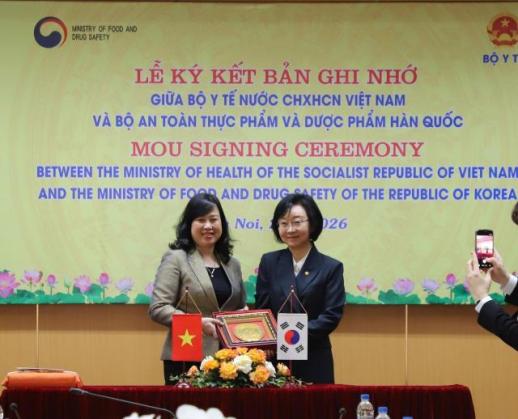 South Korea, Vietnam Sign MOU to Expand Food and Drug Regulatory Cooperation South Korea’s Ministry of Food and Drug Safety said April 23 it signed a memorandum of understanding with Vietnam’s Ministry of Health on April 22 (local time) to strengthen cooperation on the safety of food, pharmaceuticals, cosmetics and medical devices. The signing took place with President Lee Jae-myung and Vietnam’s Party chief and state president, To Lam, in attendance, the ministry said. The MOU calls for exchanging information on laws, approvals, technology and supply chains, and for cooperation in emerging areas such as artificial intelligence, digital technology and biohealth. It also includes steps to promote access to medical products and regulatory trust, and to hold high-level meetings. MFDS Commissioner Oh Yu-kyoung met with Vietnamese Health Minister Dao Hong Lan and discussed the importance of safety cooperation and specific ways to work together, the ministry said. The MFDS introduced South Korea’s food management systems, including HACCP and its SAFE-i 24 electronic import safety review platform. It also asked Vietnam to designate South Korea as a reference country to speed approvals of Korean pharmaceuticals recognized through the World Health Organization’s listing of the country as a stringent regulatory authority. If South Korea is recognized as a reference country, the MFDS said, access could expand to Vietnam’s imported drug market worth about $4.3 billion (about 6.4 trillion won), with an expected annual increase of about 100 billion won in exports of Korean pharmaceuticals. “This MOU will further maximize the outcomes of Korea-Vietnam summit diplomacy through cooperation in safety regulation for food and pharmaceuticals,” Oh said. “We will continue to actively support our companies’ overseas expansion based on regulatory cooperation.”* This article has been translated by AI. 2026-04-23 14:34:32
 -
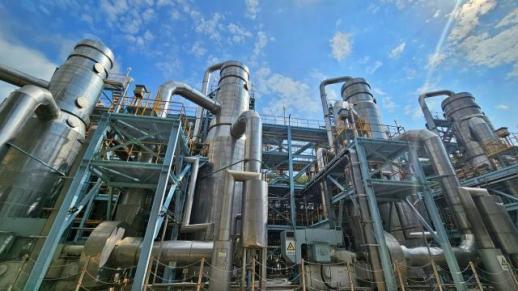 Court Dismisses Damages Suit Against Young Poong Executives Over Environment Ministry Penalty Young Poong said Thursday it welcomed a first-instance court ruling dismissing a damages lawsuit filed against its current and former executives based on an Environment Ministry penalty. In November 2024, the Good Corporate Governance Research Institute and the Citizens’ Coalition for Economic Justice filed the suit, arguing that the executives violated duties under the Commercial Act — including the duty of care and oversight — and caused losses to the company, citing the ministry’s imposition of a penalty. The Seoul Central District Court’s Civil Division 30 rejected the plaintiffs’ claims and dismissed the case in full. The court said the plaintiffs failed to specify concrete illegal acts by Young Poong or its executives. It also found that the penalty alone was insufficient to establish liability for damages and that it was not adequately proven the company suffered actual losses. Young Poong said it has pursued improvements across water, air and soil at its Seokpo smelter since establishing an “environmental improvement innovation plan” in 2019. It said it invested about 540 billion won through the end of last year and plans additional investment. The company also noted it was found not guilty in both the first and second trials in a Water Environment Conservation Act case brought by the Daegu District Prosecutors’ Office in 2022, and the rulings became final after prosecutors did not appeal. The court said at the time it was difficult to conclude the defendants intentionally allowed cadmium to leak, and that they appeared to have worked step by step during their terms to improve smelter facilities and the surrounding environment. A Young Poong official said the ruling again confirmed that some claims the company neglected water pollution or failed to pursue environmental improvements were “groundless speculation.” The official said the company would continue “thorough monitoring and proactive responses” to build a sustainable, eco-friendly workplace for more than 100 years.* This article has been translated by AI. 2026-04-23 14:33:48