
Journalist

Lee Hugh
=
-
 SK hynix sees strong AI-driven memory demand; targets HBM4E mass production in 2027 SK hynix said it expects the memory upcycle to remain strong as demand tied to artificial intelligence expands, and it outlined plans to strengthen its lead in high-bandwidth memory by applying its 1c-nanometer process to next-generation HBM4E. In a first-quarter 2026 earnings conference call on Wednesday, the company reported revenue of 12.4296 trillion won and operating profit of 5.2886 trillion won. SK hynix said some demand has softened in PCs and mobile devices due to rising prices, but server memory demand remains strong and is driving the broader market. It added that as AI spreads, demand for high-performance memory is rising quickly and customers are increasingly prioritizing securing supply over price. The company forecast higher shipments in the second quarter. It said DRAM shipments are expected to rise by a high single-digit percentage from the previous quarter, supported by high-capacity server modules and mobile demand. NAND shipments are expected to increase in the mid-teens, driven by 321-layer products and expanded enterprise SSD sales, it said. SK hynix again highlighted its HBM competitiveness, saying the business depends on overall strength that includes yield and supply stability as well as performance. It said it is preparing to supply HBM4 in line with customers’ mass-production schedules and that demand over the next three years will far exceed current capacity. Still, it said it will maintain a balanced supply strategy between HBM and conventional DRAM within limited production capacity. On HBM4E, the company said it plans to apply its 1c-nanometer process to the core die to meet customer performance requirements. It said it aims to provide samples in the second half of the year and pursue mass production in 2027, adding that the 1c-nanometer process has already reached a stable stage in manufacturability and yield. SK hynix also projected a prolonged supply shortage. It said spot-price swings are not representative of the overall market, and that demand is rising for HBM, server DRAM and enterprise SSDs while supply growth remains limited. If the imbalance persists, the memory price upcycle could last longer than in the past, it said. The company said changes in AI technology are also supporting demand. It said memory-efficiency technologies are evolving to maximize information processing per unit of memory, creating a virtuous cycle that expands the AI services market and increases memory demand. On investment and supply strategy, SK hynix said it sees limited risk of oversupply and will proceed as planned with mid- to long-term investments to secure production capacity, centered on its Yongin cluster. It said long-term supply agreements can improve demand visibility, but current supply constraints make it difficult to meet all customer requests. SK hynix also outlined financial and shareholder-return plans. It said securing financial soundness with net cash of more than 100 trillion won and expanding dividends are goals that can be pursued at the same time. It added that it plans to prepare additional shareholder-return measures, including share buybacks and cancellations, within the year. The company said it is also pursuing access to U.S. capital markets. It said it has submitted a registration statement for an ADR listing and is aiming to list within the year, with details to be decided based on market conditions and other factors.* This article has been translated by AI. 2026-04-23 10:46:15
 -
 Prosecutors Dismiss Complaint Against Choi Sang-mok Over Constitutional Court Appointments Prosecutors have dismissed a complaint accusing Choi Sang-mok, who served as acting president during the Dec. 3 martial law crisis, of abuse of power for appointing Constitutional Court justices. According to legal officials on Wednesday, the Seoul Central District Prosecutors Office’s Criminal Division 1, led by Chief Prosecutor Shin Do-wook, dismissed the case on April 13. A dismissal means the complaint did not meet procedural requirements and was closed without reviewing the merits. Prosecutors said appointing Constitutional Court justices is not subject to Cabinet deliberation and that Choi, as acting president, exercised lawful authority in carrying out a constitutional duty. After then-President Yoon Suk Yeol declared martial law on Dec. 3, 2024, the National Assembly passed an impeachment motion against him on Dec. 14, suspending his duties. Prime Minister Han Duck-soo became acting president. When Han held off on appointing Constitutional Court nominees, the Assembly impeached him as well, and Choi assumed the acting presidency. Unlike Han, Choi appointed two nominees, Jeong Gye-seon and Cho Han-chang. The conservative group Jayu Daehan Hogukdan filed the complaint in January last year, arguing the appointment process was flawed. Prosecutors also dismissed two other complaints filed alongside Choi’s case: one accusing Woo Jong-soo, former head of the National Police Agency’s National Investigation Headquarters, of disclosing facts under investigation, and another accusing Kim Myeong-seok, a former senior prosecutor at the Corruption Investigation Office for High-ranking Officials, of defamation through publications. Woo was reported for remarks during an emergency hearing of the National Assembly’s Public Administration and Security Committee in December 2024, when he said notes in a notebook linked to former intelligence commander Noh Sang-won “match the facts.” Kim was sued by Yeo Woon-kuk, former deputy chief of the anti-corruption office, on suspicion of defamation.* This article has been translated by AI. 2026-04-23 10:41:00
 -
 Pirelli Unveils P Zero R Tire Developed for Porsche 911 Turbo S Italian tire maker Pirelli is expanding development of tires tailored for high-performance sports cars. Pirelli said on the 23rd that it has developed the ultra-high-performance P Zero R tire for the Porsche 911 Turbo S. The Porsche 911 is a flagship sports-car lineup that has continued since its launch in the 1960s and has steadily evolved around high-performance models. Pirelli said the P Zero R was designed for both sporty driving and everyday conditions. Drawing on technology developed in motorsports including Formula 1, the company said it created a new rubber compound to improve responsiveness and grip at the same time. Pirelli is Formula 1’s official tire supplier and has applied race-proven technology to mass-produced tires. The tire was engineered to match the 911 Turbo S’ high output. The model is known for up to 523 kW (about 711 horsepower) and 800 Nm of torque, and Pirelli said the key goal was delivering that power to the road with stability. In high-performance vehicles, tire grip and heat management directly affect performance and safety. Pirelli said the P Zero R was designed to provide balanced grip on both dry and wet roads. The tread pattern was developed to improve water drainage and reduce noise, while lowering rolling resistance to help driving efficiency. The tire industry has been pursuing technology that combines high performance with efficiency. Pirelli also said it is continuing its “Perfect Fit” strategy of supplying dedicated tires developed jointly with automakers. It has maintained a long partnership with Porsche and has supplied model-specific tires for various 911 variants, including the Porsche 911 GTS with a hybrid system. Dedicated tire development tailored to each model’s chassis and drivetrain characteristics has become increasingly common in the high-performance segment. The tire’s sidewall will carry Porsche’s “N” approval mark, indicating it has completed joint testing and certification with the automaker. Sizes are 255/35 ZR 20 for the front and 325/30 ZR 21 for the rear. Pirelli said the rear width was increased by 10 mm compared with the previous specification to expand the contact patch and improve traction. Industry observers expect competition to continue in customized tire development for high-performance sports cars as the spread of electric and hybrid vehicles raises performance requirements for tires.* This article has been translated by AI. 2026-04-23 10:40:12
 -
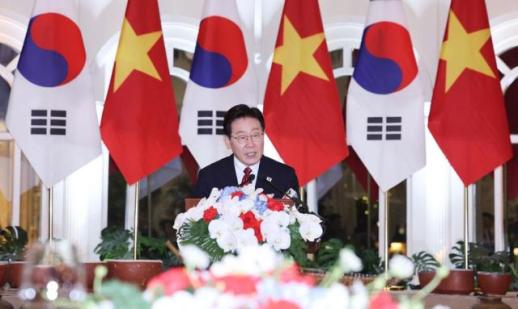 Lee set to meet Vietnamese PM, discuss ways to boost trade SEOUL, April 23 (AJP) - President Lee Jae Myung, on a state visit to Hanoi, is set to hold a series of meetings on Thursday with senior Vietnamese officials including Prime Minister Lu Minh Hung to expand bilateral cooperation. Lee's meeting with Hung comes after his summit the previous day with Vietnamese President Tô Lâm, who also serves as general secretary of the Communist Party. During the meeting, the two leaders agreed to cooperate across various sectors, including nuclear power, infrastructure, artificial intelligence, critical minerals, and energy, reaffirming a goal of increasing bilateral trade from the current $94.6 billion to $150 billion by 2030. Lee is expected to discuss further details with Hung on deepening ties including major urban development projects to enhance Viet Nam's infrastructure such as Hyundai Rotem's railway project in Ho Chi Minh City, which was among the deals signed at the summit. Lee is also scheduled to have a luncheon meeting with Vietnamese National Assembly chairman Tran Thanh Man before attending a forum later in the day with business leaders from both countries to discuss ways to expand trade and investment. Among the attendees for the forum are major business leaders such as Samsung Electronics chairman Lee Jae-yong, SK Group chairman Chey Tae-won, LG Group chairman Koo Kwang-mo, Lotte Corporation chairman Shin Dong-bin, POSCO Holdings chairman Chang In-hwa, and HD Hyundai chairman Chung Ki-sun, among others. Lee returns home on Friday after touring the UNESCO World Heritage site of the Imperial Citadel of Thang Long, the final stop on his itinerary in Viet Nam. 2026-04-23 10:38:17
 -
 Korea Tourism Organization Hosts Barrier-Free Sharing Trip to Hwangmaesan Park The Korea Tourism Organization held a special “sharing trip” at Hwangmaesan County Park in Hapcheon, South Gyeongsang Province, for people considered vulnerable in travel, marking “Open Travel Week.” The newly completed park, despite its mountainous terrain, added barrier-free walkways and deck paths so wheelchair users and older visitors can reach the azalea colony near the summit. The park also removed level differences at the summit parking-lot rest area and upgraded accessible restrooms. It set up an assistive-device rental station and expanded amenities, including “sharing carts” that can carry wheelchairs. Hwangmaesan, along with the nearby Tripitaka Koreana Theme Park and Hapcheon Image Theme Park, has emerged as a key barrier-free tourism hub in the province. At the event held on the 22nd, about 50 people — including people with disabilities and older residents living in Hapcheon, as well as members of the sharing trip group — were invited as special guests. They watched an open-mic performance for JTBC’s music program “Begin Again,” staged against a backdrop of fully bloomed red azaleas. Local governments supported operations and transportation. Hapcheon County provided the sharing carts, and Ulsan Metropolitan City provided a wheelchair lift-equipped vehicle. Footage from the event is scheduled to be released in May via JTBC and YouTube. Park Jeong-ung, head of the Korea Tourism Organization’s National Tourism Division, said he hopes Hwangmaesan’s azaleas and the music will be remembered as “an unforgettable spring gift.” He said the agency will seek related projects that people vulnerable in travel can feel directly, aiming to build a tourism powerhouse without barriers. The Open Tourism Site development program supports renovations to tourism infrastructure so people with disabilities, older adults and families traveling with infants and young children can travel without restrictions. It also provides comprehensive support for experience content, visitor guidance systems and worker training. Launched in 2015, the program has surpassed 200 open tourism sites nationwide this year. 2026-04-23 10:35:12
 -
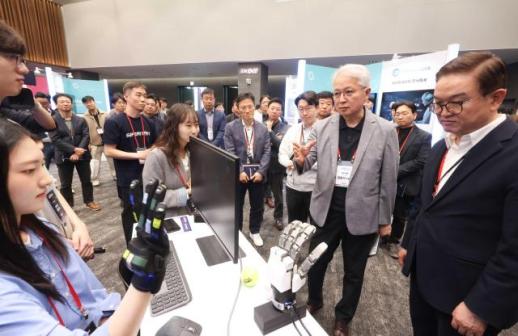 LG Launches Platform to Develop University Startup Teams, Aiming for ‘Baby Unicorns’ LG has introduced a new platform to identify and develop university startup teams, aiming to broaden South Korea’s youth startup ecosystem. LG said it held its startup scouting event, 'Superstart Day 2026,' on Wednesday at LG Sciencepark in Seoul’s Magok district, where it unveiled its new 'Rookie Program' for university-founded teams. The program is designed to find promising campus-born ideas early and connect them to commercialization. Launched in 2018, Superstart Day has become a venue where startups seek collaboration with LG affiliates as well as investors and institutions. LG said the event has drawn a cumulative 30,000 visitors from 30 countries. This year’s event was attended by Kwon Bong-seok, COO of LG Corp., and about 30 technology executives, including chief technology officers from major affiliates. Venture capital firms, accelerators, public institutions and universities also took part to assess commercialization potential. At the event, 41 deep-tech startups presented their technologies. In robotics, solutions that convert hand movements into data for robot learning and technologies for manipulating irregularly shaped objects drew attention. LG also showcased technologies in what it calls the ABC areas — artificial intelligence, bio and cleantech — which it has identified as future businesses. LG said about 120 investment and partnership meetings were held on site. The new Rookie Program targets university startup teams. Teams selected through recommendations from major universities and research institutions, including Seoul National University, POSTECH and Hanyang University, delivered pitches aimed at raising investment and securing business cooperation. Three teams — Pinta AI, Motomind and Forbody — were chosen as final winners and received prize money, a document-review exemption for the Ministry of SMEs and Startups’ Early-Stage Startup Package, and opportunities to work with LG affiliates. They will also receive benefits from the 'Superstart Incubator,' including office space, support for demonstration costs and welfare services. LG said it will provide all participating teams with technology mentoring and on-site tours regardless of selection, and plans to expand the program. The company said it aims to build a support system that links early-stage startups to growth. Jeong Su-heon, CEO of LG Sciencepark, said, “Through the Rookie Program, we will discover young innovative startups early and build LG’s differentiated innovation ecosystem.” The government is also expanding startup support. It has declared this year the start of a “National Startup Era” and set a budget of about 1.9 trillion won to support youth startups and jobs. The Ministry of SMEs and Startups allocated 150 billion won of that total to support startups less than three years old.* This article has been translated by AI. 2026-04-23 10:34:19
 -
 Japan Urges Halt to MBK Bid for Makino, Citing High Risk of Military Use Japan’s government has urged a halt to South Korean private equity firm MBK Partners’ plan to acquire a Japanese machine tool maker, citing the foreign exchange control law. Nikkei reported on the 23rd that the government issued the recommendation because the products are sensitive goods with a high potential for military diversion and are widely used by domestic defense equipment manufacturers. Machine tools are considered dual-use items for both military and civilian purposes and are designated a “core industry” under the law. As a result, overseas investors must undergo a government review before acquiring shares. A company receiving a halt recommendation must decide within 10 days whether to accept it. If it refuses, the Japanese government can issue a stop order. The only previous stop order under the law was in 2008, when a British investment fund sought to increase its stake in electric power company J-Power. Makino Milling Machine Co., also known as Makino, said its tender offer agreement with MBK remains valid. The company said it is considering steps including measures to raise corporate value and strengthen shareholder returns through higher dividends and share buybacks. MBK confirmed on the 23rd that it received the government’s recommendation, dated the 22nd, to halt the acquisition plan. MBK told Nikkei it is reviewing its next steps, including whether to accept the recommendation. MBK Partners previously announced in June last year that it planned to acquire Makino through a tender offer and make it a subsidiary. 2026-04-23 10:33:33
 -
 Finance Minister Koo Yun-cheol to announce 4th fuel price cap at 7 p.m.; Q1 GDP up 1.7% Koo Yun-cheol, deputy prime minister and minister of finance and economy, said April 23 the government will announce a fourth round of maximum prices for petroleum products at 7 p.m. and apply them starting April 24. Koo made the remarks while convening the seventh meeting of the interministerial task force on special management of consumer prices at the Government Complex Seoul. He said gross domestic product grew 1.7% in the first quarter from the previous quarter, the highest growth rate in five years and six months. The government attributed the rebound mainly to strong exports driven by a semiconductor boom, capital market activation and policy steps to support consumption. Still, it said it will focus on macroeconomic stability and easing household burdens as ceasefire talks in the Middle East war are delayed and uncertainty over an end to the conflict remains high. To stabilize crude supply, the government said it has secured 118 million barrels of alternative crude for April and May and will smoothly provide 32 million barrels of stockpile oil swaps requested by refiners. Koo said the fourth price cap, to take effect April 24, will be announced at 7 p.m. after consultations with relevant agencies, including discussions at the meeting, taking into account international oil price trends, petroleum consumption, the fiscal burden and the impact on households. On measures for items under special consumer-price management, the government said it has operated a “public suggestion window” with a council of consumer groups since February and received 117 proposals. Areas cited as imposing heavy price burdens included food, energy, and housing and communications costs. The government said it has reflected the input by preparing price-stabilization steps such as improving the system for non-apartment maintenance fees and revising mobile phone plans. From this month through June, it will spend 32 billion won to offer discounts of up to 50% on major agricultural, livestock and fisheries products. It also said it will expand the cut in the idle tax on LPG butane, a common fuel for low-income households, to 25% from the current 105 and extend the application period by two months through the end of June. To stabilize supplies of raw materials for construction materials, the government said it will strengthen monitoring through special on-site inspections and support supply-chain diversification, including simplifying import procedures. Koo said items requiring price adjustments due to supply disruptions will be promptly reflected in unit prices for public construction projects, and financial support for the construction industry, including new funding and discounts on guarantee fees, will proceed without disruption. The meeting also discussed findings from inspections and investigations into collusion in the printing paper sector and measures to prevent repeat collusion. The government said it caught six paper companies colluding on printing paper prices and decided to impose a total of 338.3 billion won in penalties, order independent price resets and refer the case to prosecutors. To push repeat offenders out of the market, the government said it will improve the system so that penalties for repeat collusion are increased by 100% and, if necessary, registrations and permits can be revoked. Koo said the government will restrict eligibility to participate in public bids not only for bid rigging but also for non-bid collusion such as price fixing. He said the restriction period will be extended by six months for both ringleaders and minor participants to “eradicate collusion at its source.” 2026-04-23 10:29:39
 -
 LG Unveils Europe-Only Built-In Appliance Package to Target 40% Share of Global Market LG Electronics is rolling out a built-in appliance package designed specifically for Europe as it steps up efforts to compete in the world’s largest built-in market. LG said Thursday it unveiled the “LG Built-in Package” for the first time at EuroCucina, the kitchen appliances and furniture exhibition held as part of Milan Design Week 2026 in Milan, Italy, running from local time April 20-26. Europe has been a hub for built-in kitchens since the concept spread from Frankfurt, Germany, in the 1920s. Market researcher Euromonitor estimates the global built-in appliance market at about $64.5 billion last year, with Europe accounting for roughly 40%. The new package combines an oven, induction cooktop, refrigerator and dishwasher into an integrated kitchen solution. LG said customers can maintain a consistent look tailored to their kitchen layout and preferences, and can also replace units in stages when moving or remodeling. The lineup was designed for European housing conditions. LG said it expanded its range of products in the 20-inch class for smaller kitchens and strengthened hinge and heat-dissipation technologies. It also applied a “seamless design” that minimizes gaps between appliances and cabinetry and reduces protruding parts. LG also highlighted energy efficiency and smart features. The dishwasher includes an “AI SenseClean” function that analyzes soil levels and adjusts wash settings. The refrigerator uses “AI Fresh” to adjust temperature based on usage patterns. LG said the dishwasher and refrigerator deliver energy efficiency 30% and 10% higher, respectively, than Europe’s top A rating. LG said it will pursue a “dual-track” strategy in Europe by offering both its ultra-premium built-in brand SKS and the new package. The company plans to expand its 30-inch-and-larger SKS lineup in Europe to broaden premium options. LG also said it will strengthen its business-to-business push targeting luxury home builders and multi-family housing developers. During the exhibition, it plans cooking shows and wine-tasting programs and will also take part in Fuorisalone events across Milan to raise brand awareness. “By offering built-in solutions optimized for European living spaces and lifestyles, we will further strengthen our position in the premium market,” said Baek Seung-tae, vice president and head of LG’s HS Business Division.* This article has been translated by AI. 2026-04-23 10:28:28
 -
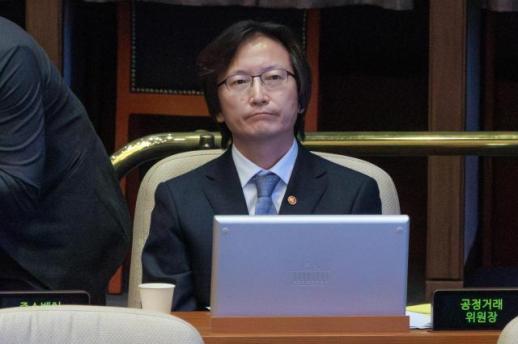 Korea Fines Six Paper Makers 338.3 Billion Won for Alleged Price-Fixing, Orders Price Reset Joo Byung-ki, chair of the Fair Trade Commission, said Wednesday the agency decided to impose a combined 338.3 billion won in administrative fines on six paper makers for collusion, file corporate complaints and order the companies to reset prices. Speaking at a meeting of ministers on special management of consumer prices at the Government Complex Seoul, Joo said leading domestic paper companies including Hansol Paper and Moorim secretly agreed on prices for printing paper used widely in education, publishing and other everyday areas. He said the conduct lasted 3 years and 10 months starting in 2021. Joo called it an unfair practice that sought to respond to industry headwinds — including a shrinking printing-paper market and low profitability — not through productive competition but by shifting harm to consumers and other market participants. He said the FTC will continue monitoring and guidance until prices distorted by collusion return to normal levels, including through the price-reset order. Joo also signaled tougher steps against repeat offenders, including sanctions severe enough to push companies out of the market. He said the government plans to revise relevant laws to strengthen penalties by expanding surcharge increases for repeat cartels and reducing leniency for voluntary reporting. He added the FTC is considering a system to order the dismissal or suspension of executives who led collusion. He said the agency is also reviewing strong structural remedies — including corporate breakups, share sales and business divestitures — to eradicate serious unfair practices such as cartels. Joo said the government will pursue legal and institutional changes, in consultation with relevant ministries, to meaningfully restrict repeat cartel participants from market activity. He added the FTC is considering expanding to other industries a system used in construction and real estate that cancels registrations or permits for repeat collusion participants.* This article has been translated by AI. 2026-04-23 10:23:47