
Journalist

Lee Hugh
=
-
 Taiwan President Lai’s Eswatini Trip Canceled After African States Revoke Overflight Permits Taiwan President Lai Ching-te’s planned trip to Eswatini, the island’s only diplomatic ally in Africa, was canceled a day before departure after three countries withdrew overflight permission for his charter flight. Taiwan said China’s economic pressure was behind the move and condemned it. According to Hong Kong’s Ming Pao and other outlets on April 22, Pan Meng-an, secretary-general of Taiwan’s Presidential Office, said at a news conference the previous evening that Seychelles, Mauritius and Madagascar canceled the overflight permits without prior notice. Lai had planned a state visit to Eswatini from April 22 to 27. Pan said the “real reason” was that Chinese authorities applied heavy pressure, including economic coercion, on the three countries. He said attempts to use coercive means to change a third country’s sovereign decision undermine aviation safety, violate international norms and practices, and amount to “blatant interference” in other countries’ internal affairs. He added that the move disrupts regional order and hurts the feelings of the Taiwanese people. A Taiwanese security official, speaking on condition of anonymity, told AFP that China pressured the countries by raising the possibility of reversing debt relief, cutting off funding and imposing economic sanctions. Wu Chih-chung, Taiwan’s deputy foreign minister, said he understood the countries’ heavy economic dependence on China but said he hoped the incident would make the international community clearly recognize that China is intervening in other countries’ internal affairs through various means. It was the first time a Taiwanese president’s overseas trip was derailed by a revoked overflight permit. Lai said on Facebook that he accepted his national security team’s recommendation to postpone the visit, adding, “The schedule has been postponed, but our respect and friendship for Eswatini remain unchanged.” Taiwan plans to send a special envoy instead to events marking the 40th anniversary of the Eswatini king’s accession. Lai, who took office in early 2024 and is from the Democratic Progressive Party, has made only one overseas trip that year: a December tour of three South Pacific diplomatic allies that included a stop in Hawaii. In July last year, he also sought to travel to Central and South America via the United States, but the trip fell through after the U.S., then preparing for tariff talks with China, did not allow the transit. Bloomberg said it was the longest gap in overseas travel by a Taiwanese president since 2012, excluding the COVID-19 pandemic period. The episode comes as China expands its influence in Africa. China has been Africa’s largest trading partner for 16 consecutive years, wielding significant economic leverage. A “2025 China Belt and Road Investment Report” released early this year by Australia’s Griffith University and China’s Fudan University said Chinese investment and construction project contracts in Africa totaled $61.2 billion last year, up 283% from the previous year. Africa has overtaken the Middle East as the biggest beneficiary region of China’s Belt and Road projects. The Center for Strategic and International Studies said countries in the Global South within China’s sphere of influence support the “one China” principle, which it said is a key factor in Taiwan’s international isolation. On the same day Lai’s trip was called off, China’s state-run Xinhua News Agency reported that Chinese President Xi Jinping met in Beijing with Mozambique President Daniel Chapo, who was on a state visit, and agreed to elevate ties to a “China-Mozambique community with a shared future in the new era.” The two leaders also signed a joint statement with 28 provisions, including support for China’s unification. Chapo said, “China is Mozambique’s true friend,” adding that Mozambique firmly supports the one China principle and supports national unification.* This article has been translated by AI. 2026-04-22 16:43:47
 -
 Democratic Party Weighs Special Subsidies, 30 Trillion Won Fund to Draw Firms to Mega Special Zones The Democratic Party is considering special subsidies and support from a 30 trillion won National Growth Fund to attract companies to “mega special zones” it is promoting in five regional hubs outside the Seoul metropolitan area, according to reporting by Aju Business Daily. The party has been discussing a package of measures aimed at boosting regional economies and fostering national strategic industries. The plan would offer what it calls top-level preferential treatment for anchor companies and partner firms in the designated zones, including special subsidies, large-scale investment through the National Growth Fund and an expansion of industry-academia convergence districts, the report said. As part of broader investment incentives, the party plans to create a new “growth engine” special subsidy. It is also considering expanding subsidies for local investment and foreign investment, with additional preferential support tied to the growth-engine program. In finance, the party plans to invest 30 trillion won in the National Growth Fund and 700 billion won in a Regional Growth Fund by year’s end, the report said. The package would include preferential policy-finance loan rates, expanded insurance and guarantee limits, and continued export voucher support. The plan also includes tax support. For large-scale local investment, the party would designate “opportunity development special zones” and provide tax benefits using investment, employment and R&D tax credits, according to the report. The party also discussed steps to strengthen the business environment and build a more active industrial ecosystem in the regions to help the mega special zones take hold. Measures under review include establishing nine “growth engine” branded colleges and convergence research institutes at key national universities, expanding industry-academia convergence districts, and strengthening cooperation programs such as “K-Quick Start,” which trains job candidates. For infrastructure, the plan would use advanced national industrial complexes, MAX clusters and RE100 industrial parks to build regional hubs and concentrate investment in core facilities and innovation infrastructure, the report said. To develop industrial ecosystems, the party is considering expanding regional block-funding R&D, including large “growth engine” projects that combine technology development, talent training, and testing and demonstration infrastructure. Other measures include building startup cities and giving preferential treatment to startup support programs. The party is also considering operating a one-stop corporate investment support center to provide close, one-on-one assistance and speed up permitting and approvals within the mega special zones. In addition, the party is pushing to enact a special law to support the policies. It plans to draft legislation covering designation and operating procedures for the mega special zones, broad regulatory exemptions and the policy package, then submit a bill after consultations with relevant ministries, the report said. A lawmaker on the party’s Special Committee on Balanced National Growth said in a phone interview with Aju Business Daily on the 22nd that the amount and scale of subsidies have not been finalized. “The amount and scale of the subsidies are not yet clearly set,” the lawmaker said. “But we will continue support at a fairly large level.” The lawmaker added that the party aims to pass the special law for designating mega special zones within this year, saying it will move as quickly as possible to establish a legal foundation.* This article has been translated by AI. 2026-04-22 16:40:00
 -
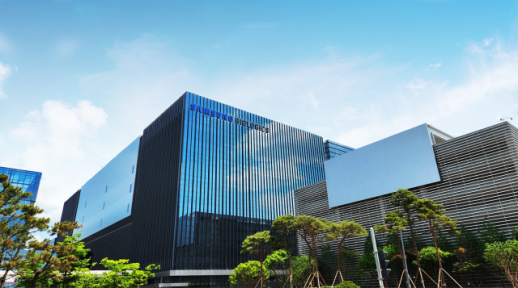 Samsung Biologics posts record Q1 but faces first-ever strike threat SEOUL, April 22 (AJP) - Samsung Biologics, the world's largest biopharmaceutical contract manufacturer, delivered its strongest-ever quarterly results on Tuesday but faces a looming walkout by its union, casting a shadow over an otherwise buoyant earnings report. Regulatory filings released Wednesday reported that operating profit surged 35 percent year-on-year to 580.8 billion won ($392.7 million), while revenue climbed 26 percent to 1.26 trillion won from the year-earlier quarter, the results marking the strongest opening quarter in the company's history. The Incheon-based contract development and manufacturing organization said it would maintain its full-year revenue growth guidance of 15 to 20 percent, first issued in January. The forecast does not yet incorporate contributions from a newly acquired production facility in Rockville, Maryland, which the company said it would factor into updated projections at a later date. Samsung Biologics completed the Rockville acquisition at the end of March, securing two current good manufacturing practice plants with a combined 60,000-liter drug substance capacity. The deal gives the company its first U.S. manufacturing footprint and positions it to serve North American pharmaceutical clients with shorter supply chains and faster turnaround times. The company's cumulative order book now stands at $21.4 billion across 112 contract manufacturing and 169 contract development agreements. Samsung Biologics has also begun ramping up its fifth plant in Incheon, which is expected to drive additional revenue growth through the remainder of the year. In a separate development, Samsung Biologics said it had agreed with Eli Lilly to establish Lilly Gateway Labs in Songdo, Incheon — the first instance of a global pharmaceutical firm's open innovation program partnering with a Korean company to set up a domestic hub. The facility is intended to foster academic and industry partnerships around next-generation biologic therapies. The record earnings come as the company faces its first-ever labor dispute. Samsung Biologics' union, which represents about 75 percent of the workforce, voted overwhelmingly in late March to authorize a strike and held a rally outside the Songdo campus on Wednesday, threatening a walkout from May 1 to 5. The two sides remain at odds over wage increases and personnel policy reforms after 13 rounds of bargaining failed to produce a deal. Shares of Samsung Biologics closed at 1,567,000 won per stock, 1.32 percent lower than the day before. 2026-04-22 16:39:55
 -
 Former Vietnam Ambassador Says Lee Jae-myung Visit Can Lift Korea-Vietnam Partnership Nguyen Vu Tung, a professor of international politics at the Diplomatic Academy of Vietnam who served as Vietnam’s ambassador to South Korea from 2020 to 2023, said President Lee Jae-myung’s state visit to Vietnam from April 21-24 could be a turning point that lifts the two countries’ “comprehensive strategic partnership” to a higher level. Tung wrote in an online commentary published Monday (local time) by Viet Nam News that the trip is significant because it is the first visit by a foreign head of state since Vietnam reshuffled its party and government leadership. He said it shows “South Korea fully supports Vietnam’s major political agenda, the new leadership and its future socio-economic development direction.” He said sustained top-level exchanges have strengthened political trust and the foundation for cooperation. He cited a series of high-level visits last year, including a trip to South Korea in August by Party General Secretary To Lam, a visit by former President Luong Cuong tied to the Asia-Pacific Economic Cooperation leaders meeting in November, and National Assembly Speaker Woo Won-shik’s visit to Vietnam that same month. Tung also highlighted economic ties, saying South Korea is Vietnam’s largest source of foreign direct investment, its second-largest tourism market and a provider of official development assistance. He said South Korea is also Vietnam’s third-largest trading partner and an overseas labor market for Vietnamese workers. He said defense and security cooperation is expanding into areas such as the defense industry and capacity building, while people-to-people exchanges are rising quickly through tourism, study abroad and labor cooperation. As of 2025, he wrote, South Korea accounted for the second-largest share of foreign visitors to Vietnam, with 4.3 million people, or 21% of the total. Looking ahead, Tung said cooperation in advanced sectors is likely to become a central pillar of the relationship. “Expectations for expanded cooperation in emerging areas such as energy, science and technology, semiconductors, digital transformation and artificial intelligence are higher than ever,” he wrote, adding that these areas are forming an important axis alongside existing cooperation. He also said the two countries should coordinate more closely amid fast-changing international conditions, including global tensions, conflicts and growing nontraditional security threats. Tung, who said he was directly involved in 2022 when Korea-Vietnam diplomatic ties were elevated to a comprehensive strategic partnership, expressed strong interest in further deepening the relationship. “Deepening and upgrading the Vietnam-Korea comprehensive strategic partnership is also an opportunity for both countries to contribute to regional peace, cooperation and prosperity,” he wrote, adding that the relationship has been built on an increasingly solid foundation over time. He said he expects agreements reached during the visit to raise cooperation another step and deliver tangible benefits to companies and citizens. He said the relationship has been shaped by “close links of mutual interests, stronger institutional cooperation mechanisms, deeper trust at the highest level, cultural similarities and mutual goodwill between the two peoples,” and voiced hope for a successful state visit.* This article has been translated by AI. 2026-04-22 16:39:05
 -
 Hanwha heir Kim Dong-seon leaves Hanwha Corp. to focus on new Tech & Life holding company Hanwha Group Vice President Kim Dong-seon, the conglomerate chairman’s third son, has left Hanwha Corp. and will concentrate his management efforts on the Tech & Life business that is set to be spun off, according to the business community. Some analysts said the move suggests the group’s third-generation management structure is nearing completion. According to the business community on Tuesday, Kim is believed to have resigned from Hanwha Corp. at the end of March. He had served as head of the overseas business division at Hanwha Corp.’s construction unit, overseeing overseas development projects and expansion into new businesses. Hanwha said Kim’s departure was a decision made to focus on related work as the company pursues a planned split and the establishment of a new holding company. The move comes as the group’s business reshuffle gains momentum, and was seen as Kim taking direct charge of a new growth pillar. Hanwha Corp. previously announced in January that it would spin off its Tech Solution and Life Solution divisions and set up a separate holding company. The new company, tentatively named Hanwha Machinery & Service Holdings, will bundle businesses Kim has led, including retail, leisure and robotics. The split is scheduled to be completed in July after procedures including an extraordinary shareholders meeting in June. Business circles said the latest personnel change further clarifies the division of roles among the owner family’s third generation. Vice Chairman Kim Dong-kwan, the eldest son, leads core businesses including defense, shipbuilding and energy, while President Kim Dong-won, the second son, oversees the financial arm. Kim Dong-seon has been expanding his role around future consumer and service businesses such as retail, leisure and robotics.* This article has been translated by AI. 2026-04-22 16:38:14
 -
 Stablecoin-Linked Stocks Jump in South Korea on U.S. CLARITY Act Hopes As the U.S. Congress moves toward taking up the CLARITY Act, a key digital-asset regulation bill, South Korea’s market for stablecoin-related plays is reacting quickly. Expectations that global rules will be clarified, along with domestic policy signals, have helped lift related shares and investor interest. According to the securities industry on the 22nd, investors are increasingly betting that if regulators set standards to classify assets as securities or commodities, regulatory uncertainty will ease and mainstream adoption will accelerate. Analysts also say that if oversight authority is clearly divided, institutional participation could increase and market restructuring could move faster. The mood has been reinforced by the release of guidance from the U.S. Securities and Exchange Commission, which market participants viewed as a more concrete policy signal. As the direction of global regulation becomes clearer, expectations have spread quickly in South Korea. Attention intensified after Shin Hyun-song, a candidate for Bank of Korea governor, said stablecoins “can coexist with central bank digital currency.” The remark was seen as a shift from the monetary authorities’ previously cautious stance, fueling expectations that institutional discussions could gain speed. With overseas and domestic factors converging, stablecoin-related shares have strengthened in South Korea, with buying focused on payments, fintech and blockchain-infrastructure companies. Funds have concentrated on names seen as potential policy beneficiaries, widening short-term volatility. Many in the market say the rally is not just a short-lived theme trade. They argue that if stablecoins take hold as payment and remittance infrastructure, they could drive broader structural change across the financial industry, supporting a longer-term growth narrative. Still, analysts caution that beneficiaries may differ depending on who issues stablecoins and how regulation is defined, and that expectations and uncertainty are likely to coexist until policy direction becomes clearer.* This article has been translated by AI. 2026-04-22 16:33:05
 -
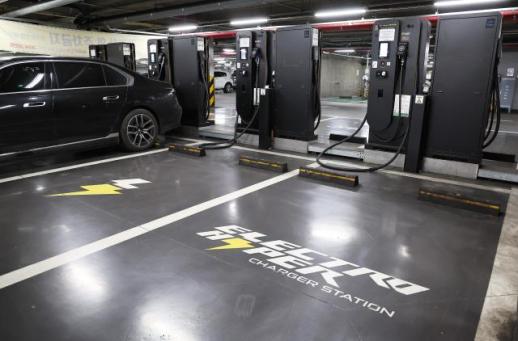 Korea auto industry calls for tax incentives as Chinese EV share hits 33.9 percent SEOUL, April 22 (AJP) — After dominating the rechargeable bus market, smaller electrified four wheels of Chinese origin are rapidly proliferating on South Korean roads. Chinese brands accounted for 33.9 percent of Korea's electric vehicle market in 2025, up sharply from 4.7 percent in 2022, according to a report presented at the Automobile & Mobility Industry Development Forum hosted by the Korea Automobile & Mobility Industry Association (KAMA) in Seoul. Over the same period, the share of domestically produced EVs fell from 75.0 percent to 57.2 percent, underscoring a rapid shift in market dynamics. The trend has accelerated further this year. In the first quarter, sales of Chinese EVs surged 286.1 percent from a year earlier to 25,000 units, outpacing the 126.1 percent increase in domestic EV sales, which reached 51,000 units. “Competition with low-priced Chinese EVs is intensifying in the domestic market,” KAMA Chairman Jung Dae-jin said. “A weakening production base could lead to a contraction of the broader industrial ecosystem and, in the long term, the hollowing out of domestic manufacturing.” Industry officials warned that the impact could extend beyond automakers, given the sector’s tightly integrated supply chain. “Erosion of the domestic production base could undermine the parts industry and affect employment stability,” said Lee Taek-sung, chairman of the Korea Auto Industries Coop. Association (KAICA), calling for tax incentives to support local manufacturing. Experts said China’s edge is expanding beyond pricing into next-generation vehicle technologies. “Chinese EVs combine strong cost advantages with rapid progress in technologies such as software-defined vehicles and autonomous driving,” said Cho Chul, a senior researcher at the Korea Institute for Industrial Economics and Trade. He called for coordinated efforts by the government, industry and labor to lower domestic production costs through R&D support, tax incentives and infrastructure investment. Major economies have already adopted production-linked support measures. The United States has introduced incentives under the Inflation Reduction Act, Japan has incorporated EVs into its domestic manufacturing tax credit schemes, and the European Union has rolled out the Net-Zero Industry Act. “Without a comparable framework, there is a real risk that Korea’s global competitiveness will erode,” said Song Dong-jin, managing partner at The Wiz Law Firm, urging tax credit programs to encourage companies to maintain production onshore. 2026-04-22 16:30:27
 -
 Samsung Biologics Q1 revenue tops 1.2 trillion won; operating profit 580.8 billion won Samsung Biologics said it extended its growth streak in the first quarter, starting the year strongly as it targets annual revenue of 5 trillion won. The company reported first-quarter revenue of 1.2571 trillion won and operating profit of 580.8 billion won, it said in a regulatory filing on the 22nd. Revenue rose 25.8% from a year earlier and operating profit increased 35%. Samsung Biologics maintained its full-year revenue growth guidance of 15% to 20%, citing full utilization at Plants 1 through 4 and a ramp-up at Plant 5. The outlook, first presented in January, does not include any revenue contribution from its acquisition of a manufacturing site in Rockville, Maryland. The company said it plans to provide updated guidance reflecting that deal later. As of the end of the first quarter of 2026, Samsung Biologics reported assets of 11.9950 trillion won, equity of 7.9228 trillion won and liabilities of 4.0722 trillion won. It said its balance sheet remained stable, with a debt-to-equity ratio of 51.4% and a borrowing ratio of 11.6%. The company also reported steady order activity across contract manufacturing (CMO) and contract development (CDO). Cumulative orders since its founding totaled 112 CMO deals and 169 CDO deals, with cumulative contract value reaching $21.4 billion, it said. Samsung Biologics said it is expanding global production capacity. It completed the acquisition of the Rockville facility at the end of March, securing local staff and infrastructure and building a continuous production system. It said it is also strengthening order competitiveness through closer coordination with global drugmakers. The company said it has enhanced its service portfolio by bringing master cell bank production and vector construction in-house, enabling an end-to-end service that can move from vector build to an IND submission within nine months. It also said it secured flexible production capacity through the CEPI network to improve its ability to respond to global public health crises. Despite the strong results, labor risk was cited as a potential burden. The Samsung Biologics Mutual Growth Labor Union held a rally on the 22nd and stepped up pressure in wage and collective bargaining talks. Labor and management have held 13 rounds of negotiations since December but have not reached an agreement. The union said it plans a large-scale strike on May 1 if differences are not narrowed. Market participants have raised concerns that a strike could disrupt production and increase earnings volatility. Samsung Biologics posted 2025 revenue of 4.5570 trillion won, up 30.3% from a year earlier, and has set a 2026 revenue target of 5.3200 trillion won. A bio industry official said, "If the union goes ahead with a strike, disruptions to the May production schedule are unavoidable," adding, "We cannot rule out penalties for contract violations with global clients and potential damage to trust."* This article has been translated by AI. 2026-04-22 16:30:20
 -
 LIG D&A Signs First Export Deal for Haegung Naval Missile With Malaysia South Korea’s shipborne guided weapon system Haegung will be exported for the first time. LIG D&A and Malaysia’s Defense Ministry signed a supply contract for Haegung on Tuesday at the DSA 2026 defense exhibition in Kuala Lumpur, the company said. The deal, Haegung’s first overseas export, is worth $94 million (about 140 billion won). The missile is to be installed on Malaysia Navy littoral patrol vessels built by Turkish defense company STM. Haegung is a domestically developed ship-to-air missile designed to intercept a range of aerial threats, including anti-ship guided missiles and aircraft. Led by the Agency for Defense Development, the system was developed in 2011 and later deployed by the South Korean Navy, where it established reliability during force modernization. It is assessed as a system that can replace or complement close-in weapon systems. LIG D&A says Haegung’s key strength is accuracy. Using a dual-mode seeker, it can track targets steadily even in electronic-warfare conditions or amid complex interference. “Accuracy directly maximizes a ship’s survivability, so it is seen as an effective weapon system in Malaysia,” said Hong Jun-gi, a senior manager at LIG D&A. Korean air defense systems that have already posted results in the Middle East also drew attention from Southeast Asian countries. Cheongung-II, which has been evaluated as having proven performance through exports to the Middle East and operational use, was among the exhibition’s key items. It is cited for layered defense that can respond to aircraft and ballistic missiles at the same time, operational efficiency and price competitiveness. Hong said demand from Southeast Asian countries is growing for Cheongung-II as “an effective weapon system that can intercept aircraft and ballistic missiles simultaneously, along with high accuracy.” Korean defense firms also highlighted naval platforms. The Malaysia Navy is pursuing a project this year to acquire two multi-role support ships, and HD Hyundai Heavy Industries used the exhibition to begin its bid. The company’s proposed ship is about 11,000 tons, about 154 meters long and 24 meters wide. It can operate two helicopters at the same time and carry troops, armored vehicles and supplies needed for amphibious operations. The platform is presented as suitable for Southeast Asia’s mixed security needs, including troop transport, amphibious operations, disaster relief and humanitarian assistance. “The advantage is strong combat power and amphibious capability, including the ability to carry at least 18 armored vehicles and move more than 140 troops at once for operations,” said Park Yong-yeol, vice president and head of HD Hyundai Heavy Industries’ naval ship business division. Beyond the multi-role support ship, the company proposed coastal mission ships, coastal combat ships, next-generation patrol vessels and submarines, and delegations from the Philippines and Thailand also visited the booth.* This article has been translated by AI. 2026-04-22 16:27:18
 -
 BIGBANG Opens Official b.stage Fan Community Ahead of August World Tour 그룹 빅뱅(BIGBANG)이 데뷔 20주년을 맞아 글로벌 팬덤 플랫폼 비스테이지(b.stage)에 공식 팬 커뮤니티를 열고 팬들과의 소통 강화에 나섰다. 오는 8월 월드투어를 앞두고 그룹 활동의 구심점을 마련한 셈이다. 22일 YG엔터테인먼트에 따르면 빅뱅은 지난 21일 데뷔일인 8월 19일을 상징하는 오후 8시 19분에 맞춰 비스테이지에 공식 팬 커뮤니티와 사회관계망서비스(SNS) 채널을 동시에 오픈했다. YG 측은 “오는 8월부터 월드투어를 예정하고 있는 만큼 팬들과 소통하며 더욱 뜻깊은 20주년을 만들어 나가고 싶다는 멤버들의 의지가 컸다”며 “이 채널을 통해 빅뱅이라는 이름으로 팬들의 마음에 더욱 가까이 다가설 것”이라고 밝혔다. 이번 커뮤니티는 멤버들이 그룹 활동 소식과 콘텐츠를 팬들에게 직접 전하고, 팬들 역시 게시판을 통해 자유롭게 소통할 수 있는 공간으로 운영된다. 향후 글로벌 투어를 비롯한 20주년 프로젝트 관련 공식 소식과 다양한 혜택도 순차적으로 공개될 예정이다. 빅뱅 멤버 지드래곤, 태양, 대성은 이미 각자의 솔로 활동을 통해 비스테이지에서 공식 팬 커뮤니티를 운영해왔다. 이번 그룹 커뮤니티 역시 같은 플랫폼에 오픈하면서 솔로 활동과 그룹 활동을 하나의 공간에서 이어갈 수 있게 됐다. 소통을 위한 첫 콘텐츠로는 새로운 로고 모션 영상이 공개됐다. ‘BIGBANG’과 ‘20TH ANNIVERSARY’ 문구를 담은 영상에는 코첼라 현장에서 촬영한 세 멤버의 뒷모습도 포함됐다. 빅뱅은 지난 12일과 19일(현지시간) 미국 캘리포니아에서 열린 ‘2026 코첼라 밸리 뮤직 앤드 아츠 페스티벌’ 무대에 올라 약 67분간 17곡을 선보였다. ‘뱅뱅뱅’, ‘판타스틱 베이비’, ‘하루하루’ 등 대표곡과 함께 태양의 ‘링가 링가’, 지드래곤의 ‘파워’, 대성의 ‘한도초과’ 등 솔로 무대도 펼쳤다. 해외 매체도 호평했다. 빌보드는 “관객들을 K팝의 황금기로 완벽히 소환했다”고 했고, 포브스는 빅뱅을 “K팝의 황제”라고 치켜세우며 귀환을 반겼다. 특히 빅뱅은 지난 19일 공연에서 오는 8월부터 월드투어를 시작한다고 공식 발표했다. 2017년 ‘라스트 댄스(LAST DANCE)’ 이후 9년 만에 빅뱅이라는 이름으로 선보이는 공연이다. YG엔터테인먼트는 “완벽한 공연을 만들기 위해 스태프 모두 최선을 다하겠다”고 밝혔다. 한편 비스테이지 관계자는 “K팝의 역사를 써온 빅뱅과 솔로에 이어 그룹 활동까지 비스테이지를 팬 소통 거점으로 제공하게 돼 기쁘다”며 “20주년이라는 특별한 해에 전 세계 팬들이 하나의 공간에서 모이고 앞으로 펼쳐질 글로벌 투어와 다양한 프로젝트를 함께 경험할 수 있도록 최선을 다해 지원하겠다”고 전했다. 2026-04-22 16:22:30